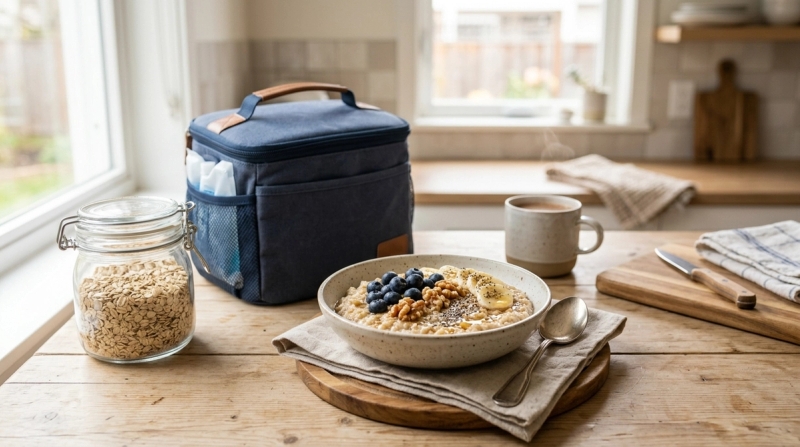
Oats feel like the kind of food you should not have to think too hard about. They are cheap, filling, easy to pack, and they work almost anywhere: at home, in a hotel room, at your desk, in a hostel kitchen, on a road trip, or during a rushed morning.
But there is one important catch.
Dry oats and wet oats are not the same from a food safety point of view.
Dry oats can sit safely in your pantry. Cooked oats, soaked oats, and oats mixed with milk, yogurt, water, fruit, protein powder, nut butter, or anything else wet are different. Once moisture is involved, oats become perishable.
So, can cooked oats stay outside? Only for a short time. Cooked oatmeal should not sit out all morning, all day, or overnight.
Quick Answer
#Cooked oats should not stay outside for more than 2 hours at room temperature. If the oats are somewhere hot, like a warm car, sunny bag, picnic basket, train platform, or room without air-conditioning, use the stricter 1-hour rule.
Here is the simple version:
- Cooked oats at room temperature: eat them or refrigerate them within 2 hours.
- Cooked oats in hot conditions above 90°F or 32°C: eat them or chill them within 1 hour.
- Cooked oats left out overnight: throw them away.
- Overnight oats left at room temperature: throw them away.
- Dry oats: fine at room temperature as long as they stay dry and sealed.
If you are packing oats for work, school, travel, hotels, hostels, or a long day out, the safest plan is easy: keep them cold, keep them hot, or pack them dry and add liquid when you are ready to eat.
Why Cooked Oats Need Different Rules
#Dry oats are shelf-stable because they are low in moisture. Bacteria do not grow well in dry grains when they are stored properly.
Cooked oatmeal is another story. Once oats are mixed with water, milk, or another liquid, they become moist. That moisture makes them perishable. Add-ins like yogurt, dairy milk, plant-based milk, fresh fruit, nut butter, protein powder, or sweet toppings can make the bowl even more sensitive to time and temperature.
That is the main idea behind cooked oatmeal food safety. The oats themselves are usually not the issue. The issue is the wet, cooked environment.
Food safety guidance often refers to the temperature range between 40°F and 140°F, or 4°C and 60°C, as the danger zone. In that range, bacteria can multiply more quickly.
The tricky part is that unsafe food does not always look or smell bad. Oatmeal can seem completely normal and still be risky if it has sat out too long. That is why time matters.
The 2-Hour Rule and the 1-Hour Hot-Weather Rule
#For everyday situations, use this rule:
If cooked oats have been sitting out for 2 hours or more, throw them away.
For hot conditions, use this one:
If cooked oats have been sitting in heat above 90°F or 32°C for 1 hour or more, throw them away.
And “hot conditions” does not only mean a picnic in July. It can also mean:
- A parked car.
- A warm backpack.
- A sunny windowsill.
- A lunchbox without enough ice.
- A room without air-conditioning.
- A crowded bus or train station.
- A hostel kitchen where food sits around too long.
If you do not know how long the oats have been out, or the container feels warm and you cannot confirm it stayed properly chilled or hot, it is safer to toss it.
Yes, wasting food is annoying. But oats are cheap. Food poisoning is not.
Cooked Oats vs Dry Oats vs Overnight Oats
#Different types of oats have different safety rules. The big difference is moisture.
Dry Oats
#Dry rolled oats, quick oats, steel-cut oats, and instant oats do not need refrigeration before cooking, as long as they stay dry.
Store dry oats in:
- A sealed container.
- A cool, dry place.
- A pantry, cupboard, or travel bag away from moisture.
Commercial dry oats can last a long time when stored well, often many months or longer, depending on the product and packaging.
Do not use dry oats if they:
- Smell stale or rancid.
- Look moldy.
- Have insects in them.
- Have become damp, sticky, or clumpy from moisture.
For travel, dry oats are usually the easiest and safest option. They are light, simple to portion, and only become a food safety concern once you add liquid.
Cooked Oatmeal
#Cooked oatmeal is perishable.
That includes oats cooked with:
- Water.
- Milk.
- Plant-based milk.
- Broth.
- Any other wet mixture.
If you cook oats and do not eat them right away, put them in a clean, covered container and refrigerate them within 2 hours. Your fridge should be at 40°F or 4°C or below.
Properly chilled cooked oats are generally best used within 3 to 5 days. Throw them away sooner if they smell sour, look moldy, feel slimy, or were left out too long before chilling.
Overnight Oats
#Overnight oats are not cooked, but they are still wet and perishable once mixed.
This is where the name can be a little misleading. “Overnight oats” does not mean the jar should sit on the counter overnight.
For overnight oats room temperature safety, the rule is simple: do not leave them out. Once you mix oats with milk, yogurt, water, or any other liquid, put the container straight into the refrigerator.
They will soften safely while chilled.
If overnight oats were left out all night, throw them away.
Can You Eat Cooked Oats Left Out Overnight?
#No. Cooked oats left out overnight should be thrown away.
Reheating them is not a reliable fix. Heat may kill some bacteria, but it does not make every food safety risk disappear after food has spent too long at room temperature.
If oatmeal sat overnight on the counter, stove, desk, bedside table, or in a bag, do not eat it.
This is true even if it looks fine. Unsafe oatmeal can still smell normal, look normal, and taste normal. The clock is more reliable than a sniff test.
Oatmeal Lunchbox Safety for Work and School
#For oatmeal lunchbox safety, choose one of two plans: keep the oats cold or keep them hot.
Option 1: Pack Cold Oats Safely
#This works for overnight oats or cooked oats you plan to eat chilled.
Use:
- A clean, sealed jar or container.
- An insulated lunch bag.
- One or two frozen ice packs.
- A spot away from direct sun or heat.
The goal is to keep the oats cold until you eat them. If the ice packs have fully melted and the container feels warm, do not gamble. Toss the oats.
This matters even more if your oats contain milk, yogurt, fresh fruit, or other perishable toppings.
Option 2: Pack Hot Oats Safely
#If you want hot oatmeal at lunch, use a good insulated food jar or thermos.
A practical method:
- Fill the thermos with boiling water and let it sit for a few minutes.
- Pour the water out.
- Add very hot cooked oatmeal.
- Seal the thermos tightly.
- Eat the oatmeal within a normal lunch window.
The goal is to keep the oats hot, not just lukewarm. If the oatmeal is only slightly warm after several hours, it may have spent too much time in the danger zone.
Hotel-Room Oats: What Is Safest?
#Hotel oats can be a great cheap breakfast, especially when you do not want to buy every meal out. The safest option depends on whether you have a reliable fridge.
If You Have a Reliable Fridge
#Treat the oats like you would at home:
- Refrigerate cooked oats within 2 hours.
- Put overnight oats in the fridge right after mixing.
- Use clean containers.
- Do not leave jars sitting out overnight.
Be careful with mini-fridges. Some are not very cold, and some cool unevenly. If the fridge does not feel cold, or the food inside feels barely cool, do not rely on it for perishable oats.
If You Do Not Have a Reliable Fridge
#Pack dry oats instead.
Good hotel-room options include:
- Instant oatmeal packets.
- Plain rolled oats in small sealed bags.
- Dry toppings like nuts, seeds, or dried fruit.
- Shelf-stable single-serve items, if they work for your trip.
Add hot water only when you are ready to eat. That way, you are not trying to store wet oats without refrigeration.
Hostel Oats: Shared Kitchen Safety
#Hostels are great for simple meals, but shared kitchens can be unpredictable. Fridge doors open constantly, shelves get crowded, containers get moved, and food sometimes sits out while people come and go.
For hostel oats, keep things simple:
- Store dry oats in your bag or food box.
- Cook only what you plan to eat.
- Do not leave cooked oats on the counter while you go out.
- Label and chill leftovers quickly if you trust the fridge.
- Toss leftovers if you are not sure how long they sat out.
If the fridge seems questionable, skip leftover cooked oats. Make a fresh bowl when you need one.
Road Trips, Flights, and Long Travel Days
#For travel oats, dry is usually safest.
A jar of wet oatmeal may seem convenient, but it can be hard to keep safe during a long travel day unless you can keep it cold the entire time.
Safer Travel Choices
#Pack foods like:
- Dry instant oatmeal packets.
- Dry rolled oats in small portions.
- Granola bars.
- Dry cereal.
- Trail mix.
- Nuts, seeds, or dried fruit.
If hot water is available, add it when you are ready to eat.
Be Careful With Cars
#Cars heat up quickly, even when the weather outside does not feel that hot. Cooked oats or overnight oats left in a car should be treated as hot-weather food.
If they have been in a warm car for more than 1 hour, throw them away.
Cooler Bags Can Help, But Only If They Stay Cold
#If you travel with cooked oats or overnight oats, use a properly packed cooler or insulated bag with enough ice packs.
When you open it, the container should still feel cold. If it feels warm, do not eat it.
What to Chill, What to Toss, and What to Pack Instead
#Here is a quick decision guide.
Chill
#Chill cooked oats if:
- They have been out for less than 2 hours.
- They have not been sitting in hot weather.
- They were handled with clean utensils.
- You can get them into a fridge at 40°F or 4°C or below.
Also chill overnight oats immediately after mixing. Do not let them soften on the counter first.
Toss
#Toss cooked oats if:
- They were left out overnight.
- They sat at room temperature for more than 2 hours.
- They sat in hot weather or a warm car for more than 1 hour.
- The container feels warm after being packed in a lunchbox.
- You do not know how long they were out.
- They smell sour, look moldy, or feel slimy.
- They have been in the fridge too long.
When in doubt, throw them away. Oats are not worth a food safety gamble.
Pack Instead
#For days without a fridge, pack dry foods:
- Instant oatmeal packets.
- Dry oats with separate toppings.
- Granola bars.
- Dry cereal.
- Trail mix.
- Nuts and dried fruit.
If you want oatmeal, add hot water or another liquid at mealtime instead of carrying cooked oats for hours.
Practical Examples
#You cooked oats at 7 a.m. and forgot them on the counter until 10 a.m.
#Toss them. They have been out for more than 2 hours.
You made overnight oats before bed but left the jar on the counter.
#Toss them. Overnight oats need to go in the fridge right after mixing.
You packed cold oats with ice packs, and the jar is still cold at lunch.
#That is the safer setup. Eat them if they stayed cold and were packed cleanly.
You left oatmeal in a parked car during warm weather.
#Use the 1-hour hot-weather rule. If it has been more than 1 hour, toss it.
You are traveling without a fridge.
#Pack dry oats and add liquid when you are ready to eat.