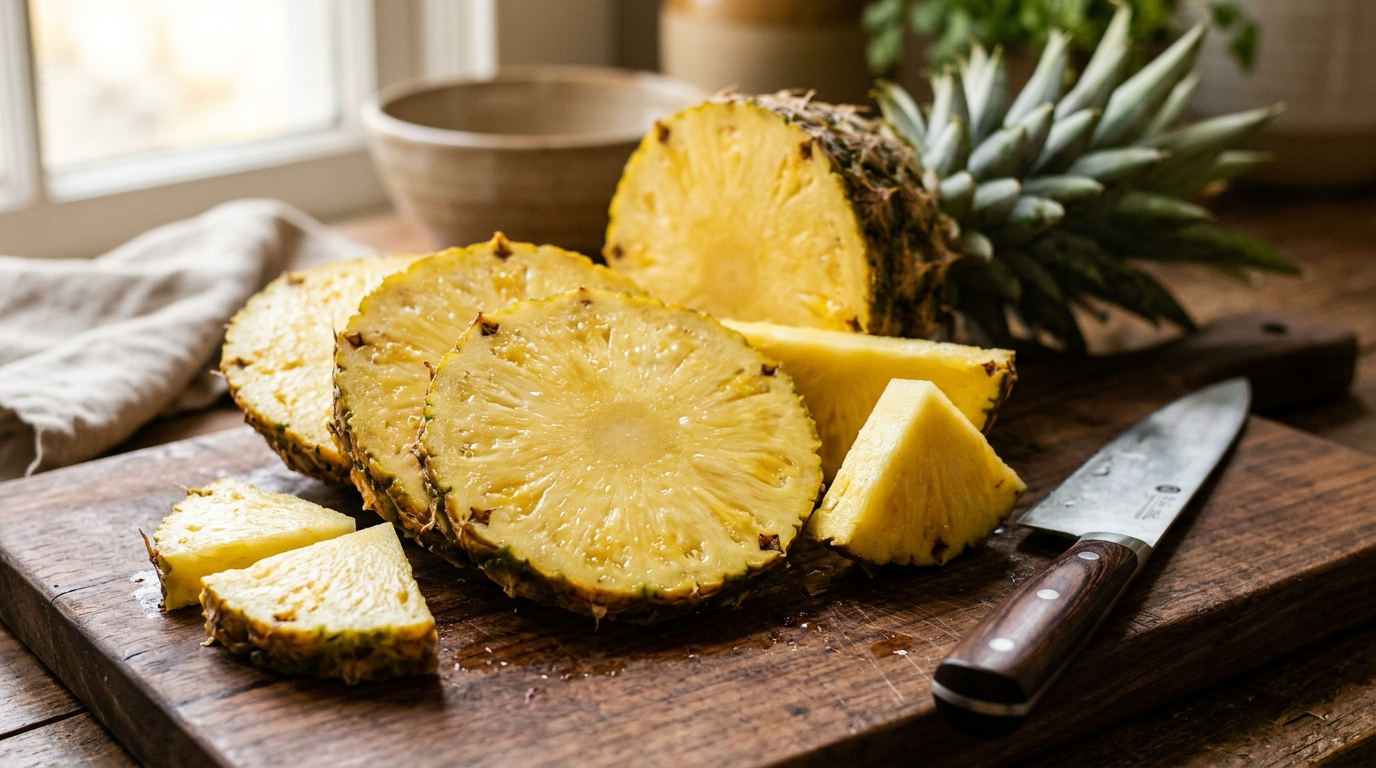
Few things taste better on a warm afternoon than a bowl of freshly sliced, golden ripe pineapple. The first couple of bites are sweet, fragrant, and bursting with tropical juice. 
Then, right around your fourth or fifth piece, your mouth starts to revolt. Your tongue begins to prickle. The inside of your cheeks feels strangely sandpapered, your lips sting, and if you keep eating, the center of your tongue feels like you scrubbed it with a scouring pad.
You might wonder if you are having a mild allergic reaction, or if the fruit was underripe and full of harsh acid. 
Neither is true. What you are experiencing is one of the strangest biological quirks in the culinary world: while you are eating the pineapple, the pineapple is literally trying to eat you back.
The fruit contains a concentrated mixture of protein-digesting enzymes called bromelain. When you chew raw pineapple, that enzyme goes to work breaking down the protective protein layer on your tongue and lips. Combined with the fruit's natural acidity, exposed nerve endings trigger that sharp, sandpaper prickle.
Understanding how bromelain works—and how simple heat or salt permanently neutralizes it—will let you enjoy fresh pineapple without destroying your mouth.
What Bromelain Is and How It Attacks Proteins
#Pineapple (Ananas comosus) is the only edible fruit in the world that produces substantial quantities of bromelain. 
Bromelain is not a single compound. It is a family of protease enzymes found in high concentrations throughout the fruit's flesh, core, and stem. In nature, plants use protease enzymes as chemical warfare. Herbivorous insects, pests, and foraging animals that try to eat the plant's leaves or unripe fruit get their mouthparts chemically irritated, discouraging them from chewing further.
In biochemical terms, a protease enzyme acts like a microscopic pair of molecular scissors:
- Proteins in your body are made of long chains of amino acids linked together by peptide bonds.
- Protease enzymes seek out those specific bonds and snip them into shorter pieces.
- When you bite into meat, bromelain cuts tough collagen and muscle fibers into soft fragments.
- When you bite into pineapple, bromelain cuts the proteins on your tongue and mouth lining.
The human mouth is protected by a thin mucosal barrier. Your saliva is rich in mucin, a slippery protective protein that shields your taste buds and sensitive oral tissue from rough food textures and acidic juices.
When raw pineapple juice washes over your mouth, bromelain immediately begins digesting that mucin barrier. Within two to three minutes, that protective layer is thinned out. The enzymes then begin acting on the surface cells of your tongue and cheeks, causing microscopic surface irritation.
Why the Acid Makes It Sting Worse
#If bromelain were the only thing in pineapple, your tongue would feel slightly rough or tender. What turns that roughness into a sharp, stinging burn is the fruit's natural acid.
Pineapples are acidic fruits, with a pH usually between 3.2 and 4.0. That acidity comes from two main organic compounds:
- Citric acid: The same sharp, bright acid found in lemons, limes, and oranges.
- Malic acid: The tart acid responsible for the sour snap in green apples.
Normally, the protective mucosal lining of your mouth shields your nerve endings from mild fruit acids. You can eat an orange or a strawberry without your tongue burning because the acid never touches raw cellular tissue.
With pineapple, you face a double punch. First, the bromelain strips away the protein shield. Second, the citric and malic acids seep directly into the exposed, sensitized surface tissue. 
Those acids stimulate pain and temperature receptors called nociceptors located around your taste buds. Your brain interprets those combined signals as a stinging, prickling burn.
Why Your Tongue Heals So Fast
#If pineapple enzymes are strong enough to tenderize raw steak, why does your mouth not suffer permanent damage?
The answer lies in the incredible regenerative speed of human oral tissue:
- Your mouth is one of the fastest-healing environments in the entire human body.
- Salivary glands continuously produce fresh saliva, which rapidly flushes residual pineapple juice down into your stomach.
- Once bromelain enters your stomach, powerful gastric hydrochloric acid immediately denatures the enzyme, rendering it completely harmless.
- Within two to four hours of putting the pineapple away, your oral mucosa produces a fresh coating of protective mucin.
- By the next morning, the surface epithelial cells on your tongue have fully replenished themselves.
Unless you eat an entire raw pineapple in one sitting—which can cause temporary minor bleeding from severe surface abrasion—the stinging sensation is completely temporary and harmless.
Why Canned, Grilled, or Baked Pineapple Never Stings
#Have you ever noticed that you can eat an entire can of pineapple rings, drink canned pineapple juice, or devour a grilled pineapple spear without feeling even the slightest prickle on your tongue?
The reason comes down to protein denaturation through heat:
- Enzymes are specialized proteins folded into precise three-dimensional geometric shapes.
- An enzyme can only perform its chemical job if that specific shape remains intact.
- When you heat bromelain above sixty-five degrees Celsius (one hundred and forty-nine degrees Fahrenheit), the thermal energy breaks the weak hydrogen bonds holding the enzyme's structure together.
- The enzyme permanently uncoils and loses its shape. Once unfolded, it can never fold back, and its ability to cut proteins is destroyed forever.
Commercial canning processes always heat pineapple to high temperatures during pasteurization to kill bacteria and ensure long shelf life. That canning heat completely destroys every molecule of bromelain in the can.
The same thing happens on your stove or backyard grill. Sautéing pineapple chunks in a skillet for three minutes or searing thick pineapple wedges over hot coals for two minutes on each side denatures the bromelain, deepens the natural sugars through caramelization, and leaves the fruit completely comfortable to eat.
How a Simple Salt Water Soak Neutralizes the Burn
#If you want to eat raw, crisp, refreshing pineapple without cooking it, you do not have to endure the tongue prickle. Traditional fruit vendors across Southeast Asia, India, and Latin America have used an ingenious chemical fix for generations: soaking the fruit in mild saltwater.
This is not just a flavor pairing; it is practical kitchen chemistry:
- Salt consists of sodium and chloride ions.
- When dissolved in water, these charged ions bind to polar regions on the surface of the bromelain enzyme.
- This ionic interaction alters the enzyme's surface charge and alters its active binding site, making it significantly harder for the enzyme to attach to mucosal proteins in your mouth.
- Furthermore, salt draws out a small amount of surface moisture through osmosis, taking concentrated enzyme droplets with it.
- A touch of salt also suppresses our perception of sourness and bitterness while enhancing perceived sweetness, making the pineapple taste even richer.
The 2-Minute Kitchen Salt Soak Method
#Here is the exact method to prepare fresh pineapple so anyone can eat it pain-free:
- Peel and core your fresh pineapple, then slice the fruit into bite-sized chunks or wedges.
- In a wide bowl, stir one level teaspoon of standard fine table salt or kosher salt into two cups of cool water until fully dissolved.
- Add your cut pineapple pieces to the saltwater, ensuring they are completely submerged.
- Let the fruit soak for sixty to ninety seconds. Do not soak it for ten minutes, or the fruit will absorb too much salt.
- Drain the pineapple in a colander and rinse it briefly under cold running water for five seconds to wash away surface salinity.
- Shake off the excess water and serve.
The resulting pineapple remains completely crisp, cold, and fresh, but the aggressive tongue sting is reduced by over eighty percent.
The Difference Between Normal Stinging and a Real Pineapple Allergy
#Because raw pineapple causes stinging and prickling, many people mistakenly assume they are mildly allergic to it. In almost all cases, tongue irritation is a purely mechanical and enzymatic reaction that affects every single human being on earth.
However, true pineapple allergies do exist, and it is vital to know the difference:
Normal Enzymatic Reaction (Not an Allergy)
#- A sandpaper roughness, tickle, or prickling sensation confined strictly to the tongue, inner cheeks, and lips.
- The sensation starts two to five minutes into eating and fades within one to three hours.
- No swelling of the throat or tongue, and no breathing difficulty.
- Canned, baked, or grilled pineapple causes zero symptoms.
Real Pineapple Allergy (Immune System IgE Response)
#- Swelling of the lips, tongue, face, or throat that feels tight or swollen.
- Raised, red, intensely itchy hives or rash breaking out on your skin.
- Severe stomach cramps, nausea, vomiting, or diarrhea shortly after ingestion.
- Wheezing, coughing, shortness of breath, or dizziness.
- Symptoms occur even when eating cooked or canned pineapple because other pineapple proteins trigger the immune system regardless of heat.
If you ever experience facial swelling, lip puffiness, hives, or trouble breathing after eating pineapple, stop eating immediately and seek urgent medical care.
How Chefs Use Bromelain as a Secret Weapon
#While bromelain can be an annoyance when snacking on raw fruit, professional cooks consider it one of the most powerful natural tools in the kitchen.
Because bromelain aggressively breaks down collagen and tough muscle proteins, fresh pineapple juice makes an unmatched meat tenderizer:
- A two-hour marinade with fresh pineapple puree can turn tough cuts of skirt steak, chuck roast, or pork shoulder exceptionally tender.
- Mexican al pastor relies heavily on pineapple juices and slices cooked alongside pork to tenderize the meat and balance the rich chili marinade.
- However, timing is critical. Because bromelain does not stop cutting proteins until heated, leaving meat in a fresh pineapple marinade for more than four hours will turn the meat fibers into an unappetizing, mushy paste.
- If you ever make gelatin desserts like jell-o, you must never use fresh pineapple. Bromelain digests the gelatin proteins before they can form a gel matrix, leaving you with a permanent liquid soup. If you want pineapple in your gelatin, you must always use canned fruit.
Practical Tips for Pain-Free Pineapple
#- Cut away the tough central core thoroughly; the woody core contains the highest concentration of bromelain in the entire fruit.
- Choose pineapples that are fully ripe. Ripe pineapples have slightly lower enzyme concentrations and higher sugar levels, which helps buffer mouth irritation.
- Give freshly sliced fruit a one-minute cold saltwater bath before chilling in the fridge.
- If your tongue already stings after eating pineapple, eat a spoonful of plain dairy yogurt or drink a glass of whole milk. The calcium and casein proteins in dairy give the remaining bromelain something else to digest, taking the pressure off your tongue.