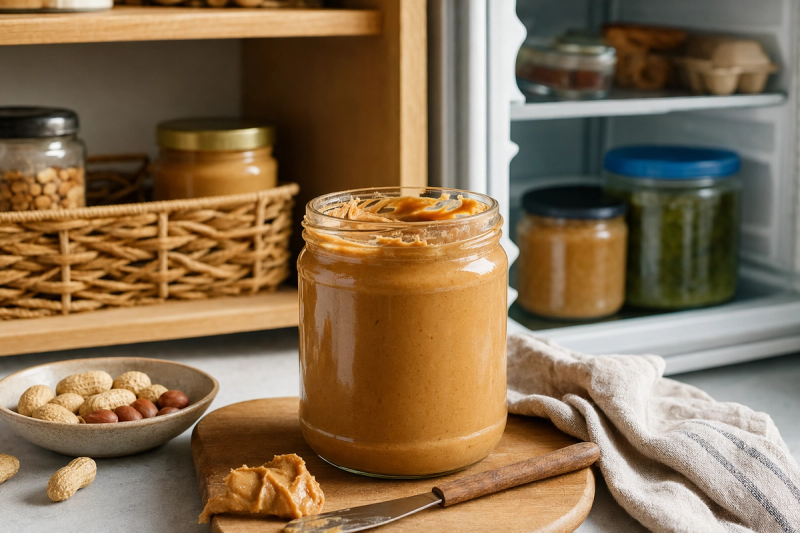
The peanut butter jar on my counter has a whole personality
#So here’s the weirdly emotional question that started a small argument in my kitchen last week: once you open peanut butter, does it live in the pantry or the fridge? I was standing there with a spoon in one hand and toast getting cold, staring at this jar like it had personally offended me. My husband said, “fridge, obviously,” which made me gasp a little because cold peanut butter on soft bread is basically cement. I’m being dramatic, yes. But also... am I wrong?
I grew up in a pantry peanut butter house. The jar lived beside the honey, the crackers, and the suspiciously old bottle of vanilla extract that nobody ever threw away. Peanut butter was warm, scoopable, a little salty, and always ready for toast, apple slices, celery logs, or those after-school sandwiches that got squished in my backpack until they were almost one solid food brick. The fridge was for milk and leftovers. Peanut butter? Pantry. End of story.
Except, well, not always. Because now we’ve got natural peanut butter, powdered peanut butter, homemade peanut butter, no-stir peanut butter, almond-peanut blends, peanut butter with flax, peanut butter with honey, peanut butter pretending to be dessert... and some of these jars really do behave differently after opening. So the real answer is not as neat as I wanted it to be. Annoying, but useful.
Short answer, because I know some of you are holding an open jar right now
#For most regular commercial peanut butter, the kind with stabilizers and salt and that smooth spreadable texture, the pantry is usually fine after opening, as long as it’s cool, dry, and you use it within a couple months. That’s the classic answer. USDA FoodKeeper-style guidance and the advice you’ll see from peanut industry sources generally puts opened commercial peanut butter at around 2 to 3 months in the pantry, or longer in the fridge, often around 6 to 9 months. But labels matter, because brands formulate things differently.
For natural peanut butter, especially the kind where the oil separates and you have to stir it like you’re mixing concrete, I usually refrigerate after opening. Not because it’s going to instantly become dangerous on the counter, but because the flavor holds up better and the oil doesn’t go rancid as fast. Also some labels straight-up say refrigerate after opening, and honestly I’ve learned not to argue with the jar. The jar knows itself.
- Regular shelf-stable peanut butter: pantry is usually okay after opening if it stays clean, cool, and dry.
- Natural peanut butter: fridge is usually the safer bet for flavor and longer keeping, especially once stirred.
- Homemade peanut butter: fridge, always. It doesn’t have the same controlled processing and preservatives.
- If the label says refrigerate after opening, just do that. Even if it makes spreading annoying.
Why peanut butter can sit out at all, which is honestly kind of amazing
#Peanut butter feels like it should be risky because it’s rich and oily and full of protein, right? But the thing that makes it shelf-stable is low water activity. Basically, there isn’t much available water for microbes to party in. Bacteria need water, and peanut butter is dry in that sneaky, sticky way. That’s why a jar can hang out in the pantry longer than, say, opened salsa or cooked beans or that sad container of rice you forgot behind the pickles.
But low moisture doesn’t mean immortal. Peanut butter can still go stale, absorb weird pantry smells, separate, dry out, and eventually taste rancid. Rancid is that bitter, crayon-ish, old-nut flavor that ruins your whole morning. I had a jar once that smelled like a cardboard box left in a hot garage. I still tried it because I am stubborn and apparently not that bright before coffee. Regrets. Huge regrets.
Also, peanut butter can be contaminated if you’re careless. Like, if you spread it on toast and then shove the buttery, jammy knife back into the jar, you’ve introduced moisture and crumbs and possibly dairy. Same if kids use apple slices as spoons and double dip. Cute? Sure. Food safe? Ehh, not ideal. I’m not trying to be the pantry police, but clean utensils matter more than people think.
Pantry peanut butter: my first love, my lazy weeknight hero
#I will always have a soft spot for pantry peanut butter because it spreads like a dream. There is nothing more satisfying than dragging a warm spoonful across hot toast and watching it melt into the little bread holes. Add banana slices and flaky salt and I’m suddenly a person who has her life together. For five minutes, anyway.
The pantry works best if your kitchen doesn’t get too hot. A cool cabinet away from the stove is ideal. Not on the sunny windowsill. Not above the oven. Not next to the dishwasher if that cabinet turns into a little steam cave. Heat speeds up rancidity, and oily foods are fussy like that. I learned this during one summer in an apartment with no real ventilation, where my peanut butter tasted tired after just a few weeks. Everything in that kitchen tasted tired, actually. Even me.
If you’re already the kind of person who debates whether onions belong in the pantry or fridge, you’ll get this same vibe. Storage is never just one answer, it depends on humidity, heat, airflow, and how fast your household eats the thing. I went down that rabbit hole with onions too, and this How to Store Onions: Pantry, Fridge & Freezer Guide has the same practical energy: know the food, know your kitchen, don’t pretend every house is the same.
When I keep opened peanut butter in the pantry
#I keep the big, standard jar in the pantry when I know we’ll finish it quickly. In my house, that means a classic creamy peanut butter is gone in maybe three weeks if we’re in smoothie season, or two months if everyone suddenly decides they’re “not really into peanut butter right now,” which is a suspicious statement but whatever. Pantry storage is perfect for lunch sandwiches, peanut sauce emergencies, cookie baking, and my midnight spoonful habit that I do not need comments on.
My pantry rules are not fancy. Lid tight. Clean knife. Back of the cabinet, not by heat. Don’t mix jam into the jar unless you are prepared to own the consequences. And I write the opening month on the lid with a marker if I’m feeling organized, which is maybe 40 percent of the time. Okay, 25.
Fridge peanut butter: annoying, but sometimes the right move
#Refrigerated peanut butter is not my favorite texture. It gets stiff and cold and it tears bread if you’re impatient. And I am very impatient around toast. But the fridge has its place, especially for natural peanut butter. Once you stir that oil back in, chilling helps keep it from separating again quite so dramatically. It also slows down oxidation, which is the fancy word for the oils getting stale and rancid.
I started refrigerating natural peanut butter after a road trip breakfast in a tiny cafe in Vermont years ago. They served thick sourdough toast with house jam and peanut butter that tasted like actual roasted peanuts, not candy. It was slightly gritty, deeply nutty, and not too sweet. I asked the server what brand it was because I am that person, and she said they kept their natural nut butters cold because they went through them slowly between brunch rushes. That stuck with me. Food people are always teaching you things when you’re just trying to eat toast.
Now, if I buy the runny natural stuff, I stir it very thoroughly the day I open it, which is a workout and a spiritual test, then I park it in the fridge. Before using, I let it sit on the counter for 10 or 15 minutes. Or I microwave a spoonful in a little bowl for a few seconds if I’m making oatmeal. Don’t microwave the whole jar, please. Especially not if there’s foil under the lid. We are not doing kitchen fireworks today.
The upside of cold peanut butter, even though I complain
#Cold peanut butter is actually brilliant in some situations. It makes thicker smoothie bowls. It holds shape inside dates with chocolate. It’s nice in energy bites because it doesn’t get too greasy while you roll them. And for peanut butter cups, the fridge texture is a gift. So yes, I grumble about spreading it, then happily eat cold peanut butter stuffed into a Medjool date with a pinch of salt like it’s a restaurant dessert. Humans are complicated.
Natural, no-stir, homemade: not all jars are living the same life
#This is where a lot of confusion comes from. “Peanut butter” sounds like one thing, but the ingredient list changes the storage story. A no-stir supermarket jar usually has stabilizers that keep the oil from separating, and it’s designed to be pantry friendly. Natural peanut butter might only have peanuts and salt, and sometimes no salt at all. Homemade peanut butter has even fewer safeguards, plus it may have been processed in a home blender or food processor that isn’t sterile, because no normal kitchen is sterile. Clean, yes. Sterile, no.
| Type of peanut butter | Best storage after opening | Why I’d choose it |
|---|---|---|
| Classic commercial, no-stir | Pantry for short-term use, fridge for longer keeping | Stays spreadable and is made to be shelf-stable |
| Natural with oil separation | Fridge after stirring, unless label says otherwise | Better flavor over time and less oil separation drama |
| Homemade peanut butter | Fridge | No commercial stabilizers, shorter life, more fragile |
| Peanut butter with added honey, chocolate, seeds, or flax | Follow the label, often fridge is smart | Extra ingredients can change texture and shelf life |
| Powdered peanut butter after mixing with water | Fridge and use quickly | Once water is added, it’s not shelf-stable anymore |
The powdered peanut butter thing trips people up. Dry powder in the pantry? Fine, keep it sealed and dry. But once you mix it with water, it becomes a moist food and should go in the fridge if you’re not eating it right away. Same general lesson as any opened pantry ingredient: dryness is protective, humidity is chaos. If you’re into opened-package storage nerdiness, especially with foods that hate moisture, the guide on How to Store Rice Paper Wrappers: Opened Packs, Humidity, and Fresh Roll Fixes is weirdly satisfying.
How to tell peanut butter has gone bad, because your nose knows
#Peanut butter doesn’t usually go bad in the dramatic way milk does. It’s sneakier. The biggest issue is rancidity, and you can smell it before you fully taste it. Fresh peanut butter smells roasted, warm, nutty, maybe a little sweet. Bad peanut butter smells bitter, dusty, metallic, plasticky, or like old oil. Sometimes it tastes sharp in the back of your mouth. If you’ve ever eaten a stale walnut, you know the exact sadness I mean.
- Smell it first. If it smells bitter, soapy, paint-like, or like old crayons, don’t talk yourself into it.
- Look for mold, especially around the rim or under the lid. Any mold means toss the whole jar.
- Check texture. Drying or oil separation can be normal, but weird fuzz, wet pockets from contamination, or bubbling is not normal.
- Taste only if it smells fine. And even then, a tiny taste. No heroic spoonfuls.
Please don’t scrape off mold from peanut butter and keep eating the rest. I know wasting food hurts. I hate it too. But oily, dense foods can hide problems, and mold isn’t always just the spot you see. I feel the same about oil-covered pickles or ferments when something looks off. The safety mindset in this Fermented Green Chilli Pickle: Salt, Brine, Oil and Safety Rules applies here too: visible mold, strange smells, or a questionable oil layer is not a fun little science project. It’s trash day.
The big stir: my messy method for natural peanut butter
#Natural peanut butter always looks so innocent until you open it and there’s half an inch of oil sitting on top like a moat. I used to hate stirring it. I’d jab a butter knife down the middle and oil would slosh over the edge, down the jar, onto the counter, somehow onto my sleeve. Very glamorous food blogger behavior. Then the bottom would stay dry and cement-like, and the top would be oily soup. Terrible.
Now I do this: I set the jar on a towel, use a sturdy butter knife or a chopstick first to poke channels all the way down, then stir slowly from the bottom up. After that I switch to a spoon and fold it like thick batter. If it’s really separated, I sometimes dump the whole thing into a mixing bowl, stir properly, then scrape it back into the jar. Is this annoying? Yes. Does it save the jar? Also yes.
- Open the jar over a towel, because the oil will betray you.
- Stir slowly at first, reaching the bottom corners.
- Once smooth, refrigerate it upside down if the lid seals well. This can help redistribute oil, though I only do it with jars I trust.
- Let it sit out a few minutes before spreading, unless you enjoy shredded bread.
My favorite peanut butter meals, because storage only matters if you actually eat it
#The best peanut butter storage plan is the one that gets you to delicious food before the jar goes stale. I know that sounds obvious, but I’ve bought fancy natural peanut butter and then “saved it” until it tasted like a dusty candle. Use the good stuff. Put it on breakfast. Whisk it into sauce. Eat it with chocolate after a bad day. Life is short and jars are not museum pieces.
My favorite quick dinner is peanut noodles with lime, soy sauce, chili crisp, garlic, a little brown sugar, and hot water to loosen everything. If the peanut butter is pantry-soft, it whisks in like a dream. If it’s fridge-cold, I warm it in the bowl first with the hot water. Then noodles, cucumbers, herbs if I have them, fried egg if I’m feeling extra. I’ve had fancy restaurant versions with hand-pulled noodles and beautiful garnishes, and sure, those are incredible, but my slightly chaotic version eaten standing at the counter is still one of my favorite meals.
For breakfast, I do peanut butter toast with sliced strawberries when they’re good, or banana when they’re not. A drizzle of honey. Cinnamon if I remember. Sometimes a tiny bit of miso mixed into peanut butter for toast, which sounds odd until you try it. Salty, nutty, savory-sweet. A chef friend showed me that after a late shift years ago, when me and him were too tired to cook but too hungry to sleep. We ate it on thick toast at 1 a.m. and I still think about it.
So... pantry or fridge? Here’s my actual answer
#If you buy regular commercial peanut butter and your kitchen is reasonably cool, keep it in the pantry after opening and try to use it within a couple months. That gives you the best texture and the easiest everyday eating. If you don’t eat it often, or your kitchen runs hot, or you bought a huge warehouse-sized jar that may outlive your current hobbies, put it in the fridge to slow flavor decline.
If you buy natural peanut butter, refrigerate after opening unless the label gives you a different instruction and you know you’ll finish it fast. Stir it well first. If you make peanut butter at home, refrigerate it and treat it like a fresh food with a shorter life. And no matter what kind it is, use clean utensils, keep the lid tight, and trust your senses. Your nose is a better food safety tool than your optimism.
My peanut butter rule is simple: pantry for convenience, fridge for longevity, trash for anything that smells like old oil or has mold. Not poetic, but it works.
A few mistakes I’ve made so you don’t have to
#I once stored peanut butter above the stove because the cabinet was “right there.” Bad idea. It warmed up every time I cooked pasta, and the jar went stale fast. I also once used a jammy knife in the peanut butter jar for a week because I was in a rush every morning. By Friday there were little purple streaks and crumbs in the jar and I finally admitted I had made a tiny swamp. Into the bin it went, and I was mad at myself because good peanut butter is not cheap.
Another mistake: buying too many novelty jars. I love food shops, especially the ones with handmade jams, nut butters, tiny chili oils, and labels that look like someone’s cousin designed them beautifully. I get excited. Then suddenly I have maple peanut butter, espresso peanut butter, spicy peanut butter, and one with chia seeds that seemed like a good idea in the store. Open one or two at a time. Finish them. Then buy another. This is advice I give and only sometimes follow.
Final peanut-buttery thoughts from my kitchen counter
#Opened peanut butter is one of those small kitchen decisions that reveals your whole food personality. Pantry people want softness, speed, and toast that doesn’t rip. Fridge people want freshness, control, and less oil weirdness. I’m mostly pantry for classic jars and fridge for natural ones, which feels like a peaceful compromise in a world with too many strong opinions about sandwiches.
The main thing is don’t treat every jar the same. Read the label, think about your kitchen temperature, notice how fast you eat it, and don’t ignore funky smells. Peanut butter should taste like roasted peanuts and comfort and maybe childhood lunchboxes, not regret. And if you’re as oddly into these little kitchen storage debates as I am, wander over to AllBlogs.in sometime. I’ve lost plenty of tea breaks there reading food guides when I was supposed to be doing, you know, literally anything else.