What Is Creamy Tuscan Chicken: The Anatomy of a Modern Classic
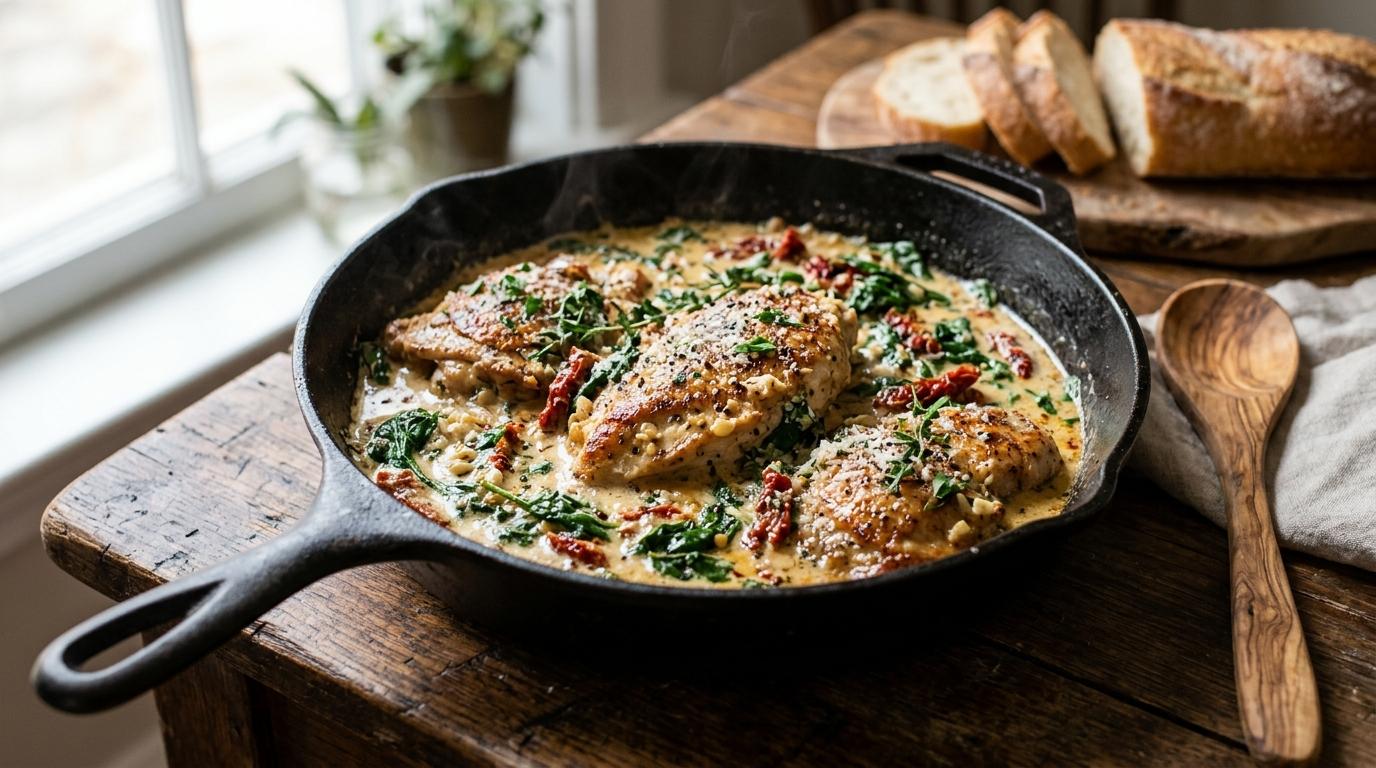
#Creamy Tuscan chicken has become one of the most beloved skillet dinners worldwide. It combines tender, golden pan-seared chicken cutlets with a luxurious sauce made of heavy cream, fresh garlic, baby spinach, sun-dried tomatoes, and Parmigiano-Reggiano. 
While named after the rustic culinary traditions of Tuscany, the dish is an Italian-American skillet creation. Authentic Tuscan cuisine historically emphasizes lean cuts, olive oil, white beans, and simple braises. The American interpretation borrows quintessential Tuscan pantry staples—sun-dried tomatoes, robust garlic, and earthy greens—and brings them together into an indulgent, velvety restaurant-style sauce.
The dish owes its widespread appeal to three culinary factors:
- Speed: The entire dish comes together in thirty minutes from cutting board to table.
- Efficiency: Everything cooks in a single twelve-inch skillet, preserving cooking juices and making cleanup effortless.
- Balance: Rich dairy fat is naturally offset by the tart acidity of sun-dried tomatoes, the punch of fresh garlic, and the mineral freshness of tender greens.
When executed properly, the chicken stays tender and moist, while the sauce coats the back of a spoon without feeling greasy or heavy.
The Problem with Typical Skillet Chicken: Dry Meat and Split Sauce
#Most home cooks struggle with two recurring issues when making creamy chicken skillets:
First, whole chicken breasts dry out. Thick chicken breasts take ten to twelve minutes to cook through to the center in a skillet. By the time the thickest core reaches a safe internal temperature of 165°F (74°C), the tapered outer edges have reached 185°F (85°C), forcing out moisture and leaving the meat rubbery and chalky.
Second, the cream sauce breaks or turns grainy. When cold cheese or low-fat dairy hits a boiling skillet containing acidic sun-dried tomatoes or wine, milk proteins coagulate into tight clumps. The fat separates from the liquid, leaving a thin, watery puddle rimmed by pools of yellow oil.
Understanding meat anatomy and dairy emulsion science prevents both issues completely.
The Chicken Technique: Cutlets, Dredging, and Fond Creation
#The path to tender chicken begins with butchery and preparation before the skillet ever touches the burner.
Halving into Cutlets
#Never cook thick, uneven chicken breasts whole in a quick pan sauce. Place each boneless, skinless chicken breast flat on your cutting board. Press your non-knife hand firmly on top of the meat. Using a sharp chef's knife or boning knife, slice horizontally through the equator of the breast to create two thinner, mirror-image cutlets.
This simple butcher cut provides three decisive advantages:
- Uniform thickness: Thin cutlets cook evenly in three to four minutes per side, eliminating the risk of dry outer edges.
- Increased surface area: Slicing two breasts into four cutlets doubles the surface area available for browning and sauce adhesion.
- Rapid cooking time: Thinner meat cooks quickly enough that internal juices do not have time to boil out into the pan.
Patting Dry and Light Seasoning
#Moisture is the mortal enemy of pan searing. If chicken cutlets enter a hot pan with surface moisture, the energy of the pan is spent converting water into steam rather than browning meat proteins. Pat every cutlet thoroughly with paper towels until the meat feels tacky.
Season both sides generously with fine sea salt, freshly cracked black pepper, and dried Italian herb blend. Salt draws out surface proteins that subsequently caramelize into a flavorful savory crust.
The Light Flour Dredge
#Dredging chicken lightly in all-purpose flour (or cornstarch for gluten-free cooking) serves a dual functional purpose:
- Moisture barrier: A thin starch dusting seals the exterior of the cutlet, trapping juices inside the muscle fibers.
- Fond engine and sauce thickener: As the flour browns in hot fat, microscopic starch particles adhere to the skillet, forming fond. When deglazed with broth later, these gelatinized starches dissolve into the cream, naturally stabilizing the sauce without needing heavy roux.
Always tap the cutlets firmly against your hands to shake off excess flour. You want a faint, translucent veil of starch, not a thick batter.
The Secret Ingredient: Sun-Dried Tomato Oil
#Most recipes tell you to discard the oil in jarred sun-dried tomatoes and cook with plain olive oil. This is a massive missed opportunity for flavor.
The oil packed around sun-dried tomatoes is already infused with concentrated tomato essences, dried herbs, and garlic during weeks or months of jar storage. Searing your dredged chicken cutlets directly in two tablespoons of this ruby-tinted oil imparts deep savory notes straight into the crust. Furthermore, the tomato sugars present in the oil accelerate the Maillard reaction, yielding a deeper golden color in half the time.
Cookware Showdown: Choosing the Right Skillet
#The skillet you choose dictates how heat transfers to the cutlets and how easily fond develops.
| Cookware Type | Heat Retention | Fond Development | Acid Reactivity | Best Use Case |
|---|---|---|---|---|
| Enameled Cast Iron | Superior | High | Non-reactive | Ideal for even searing and gentle cream simmering |
| Traditional Cast Iron | Superior | High | Mildly reactive to acid | Excellent if well-seasoned; do not leave tomato sauce resting overnight |
| Tri-Ply Stainless Steel | Moderate to High | Maximum | Non-reactive | Professional standard for developing dark, rich pan fond |
| Ceramic Nonstick | Low to Moderate | Very Low | Non-reactive | Easy cleanup, but produces minimal fond and weaker pan sauce |
| Hard-Anodized Nonstick | Moderate | Low | Non-reactive | Acceptable for beginners, but lacks deep browned flavor development |
A twelve-inch enameled cast iron or tri-ply stainless steel skillet provides the optimal thermal mass and non-reactive cooking surface for this recipe.
The Sauce Science: Building Fond, Deglazing, and Emulsion
#A great pan sauce is not simply cream poured into a dirty pan. It is an orderly chemical sequence that extracts browned proteins and stabilizes dairy fat.
Searing the Cutlets
#Heat your skillet over medium-high heat until the oil shimmers. Lay the seasoned cutlets into the pan away from you so hot oil does not splatter. 
Do not move the cutlets for the first three to four minutes. The chicken needs undisturbed contact with the hot metal to form a crisp, golden crust. Once golden, flip the cutlets and cook for two to three minutes on the second side until an instant-read meat thermometer inserted into the center reads 160°F to 165°F (71°C to 74°C).
Remove the chicken to a clean plate immediately. Tent loosely with a sheet of aluminum foil. As the meat rests, residual carryover cooking will bring the internal temperature to a perfect 165°F, while relaxed muscle fibers reabsorb internal juices.
Deglazing the Fond
#Look at the bottom of your skillet after removing the chicken. You will see a layer of golden-brown residue stuck to the metal. In culinary French, this is called fond. Fond consists of caramelized amino acids, meat sugars, and toasted starches from the flour dredge. It contains eighty percent of the savory flavor of the entire dish.
Add a tablespoon of butter to the remaining pan oil, lower the heat to medium, and add your minced garlic. Cook the garlic for thirty to forty seconds, stirring constantly. Garlic burns rapidly, and burnt garlic turns bitter; keep it moving until fragrant and pale golden.
Pour in half a cup of low-sodium chicken broth (or a dry white wine such as Pinot Grigio or Sauvignon Blanc). The cold liquid immediately drops pan temperature and generates steam. Use a flat-edged wooden spoon to scrape the bottom of the skillet vigorously, lifting all the browned fond into the liquid.
Simmer the broth for two minutes until it reduces by roughly half. Reducing the liquid concentrates flavor and cooks off raw alcohol notes.
Heavy Cream vs Milk: The Fat Chemistry
#Now comes the foundation of the sauce: heavy cream.
Why must you use heavy whipping cream containing at least 36% milkfat? Why does whole milk or half-and-half ruin this sauce?
Dairy is an emulsion of fat droplets suspended in water, stabilized by casein proteins. When you introduce heat and acid—such as the lactic and citric acids found in sun-dried tomatoes and white wine—casein proteins lose their electrical charge and attract one another.
In milk or half-and-half (which contains between 3.5% and 12% fat), there is very little fat to cushion the proteins. The casein chains link together into dense curdles, causing the sauce to separate into cloudy whey and floating curds.
In heavy cream (36% to 40% fat), fat globules outnumber protein molecules. The dense cloud of fat physically blocks casein proteins from colliding and linking together, preventing curdling even in the presence of acidic tomatoes and wine. Heavy cream also reduces cleanly without requiring synthetic stabilizers or excessive flour.
Melting the Parmigiano-Reggiano
#Once the heavy cream and sun-dried tomatoes have simmered together for three to four minutes, lower the heat to low.
Never add cheese over high heat. Hard aged cheeses like Parmigiano-Reggiano and Pecorino Romano consist of tightly bound protein matrices. If dumped into boiling liquid, the proteins seize into elastic, rubbery clumps that never dissolve.
Ensure your cheese is finely grated using a microplane or the small star holes of a box grater. Pre-shredded cheese from plastic bags is coated in cellulose and potato starch to prevent clumping on store shelves; these anti-caking agents prevent the cheese from melting cleanly into the sauce.
Sprinkle the finely grated cheese across the surface in two batches, whisking gently between additions. The cheese will melt into the warm cream within thirty seconds, yielding a glossy, homogenous sauce.
Wilting the Baby Spinach
#Add three packed cups of fresh baby spinach to the skillet in handfuls. At first, the mound of leaves will look oversized for the pan. Within sixty to ninety seconds, steam from the sauce will collapse the leaves by eighty percent.
Toss the spinach gently with tongs just until wilted. Do not boil or simmer the greens for extended periods. Overcooking degrades chlorophyll into pheophytin, turning vibrant bright emerald leaves into a dull, muddy olive-brown.
Step-by-Step Cooking Walkthrough
#Here is the precise visual timeline for executing this 30-minute skillet dinner:
- Minute 0 to 5: Halve two large chicken breasts into four thin cutlets. Pat dry, season, and lightly dust with flour. Mince five garlic cloves and slice sun-dried tomatoes.
- Minute 5 to 13: Heat sun-dried tomato oil in the skillet over medium-high heat. Sear cutlets four minutes on side one, flip, and sear three minutes on side two. Transfer to a resting plate.
- Minute 13 to 17: Lower heat to medium. Melt butter, sauté minced garlic for thirty seconds, and pour in chicken broth. Scrape up the browned fond and reduce by half.
- Minute 17 to 22: Pour in heavy cream and sun-dried tomatoes. Simmer gently over medium-low heat until bubbles turn thick and glossy.
- Minute 22 to 26: Drop heat to low. Whisk in freshly grated Parmigiano-Reggiano. Add baby spinach and fold until wilted and bright green.
- Minute 26 to 28: Slide rested chicken cutlets and any pooled plate juices back into the skillet. Spoon sauce over the cutlets and let warm through.
- Minute 28 to 30: Remove from heat. Garnish with chopped fresh parsley and cracked black pepper. Serve directly from the skillet.
Troubleshooting Common Sauce Pitfalls
#Even seasoned cooks occasionally encounter texture anomalies in cream sauces. Here is how to diagnose and fix them instantly:
| Problem | Root Cause | Immediate Kitchen Fix |
|---|---|---|
| Sauce is too thin and watery | Insufficient reduction or excess water released from wet greens | Simmer uncovered on medium-low for 3 to 4 minutes; or whisk 1 teaspoon cornstarch dissolved in 1 tablespoon cold water |
| Sauce separated into greasy oil | Heat was too high when adding cheese or cream boiled too aggressively | Pull pan off heat; whisk in 2 tablespoons of cold heavy cream or chicken broth vigorously until emulsion reforms |
| Cheese clumped into a rubbery ball | Pan was too hot or pre-shredded bagged cheese was used | Lower heat; whisk continuously with a fork to break apart; blend briefly with an immersion blender if necessary |
| Sauce tastes overly rich or heavy | Lack of balancing acidity to cut through 36% milkfat | Squeeze 1 to 2 teaspoons of fresh lemon juice into the sauce right before serving |
| Chicken exterior is pale and soggy | Skillet was crowded or meat was not patted dry before searing | Sear in two separate batches; ensure pan is fully preheated before laying cutlets down |
Flavor Variations and Smart Substitutions
#While the classic garlic, cream, sun-dried tomato, and spinach combination is timeless, several variations elevate the recipe for different dietary needs:
Adding Mushrooms
#Earthy brown cremini or baby bella mushrooms pair exceptionally well with cream and garlic. Slice eight ounces of mushrooms and sauté them in the skillet immediately after removing the seared chicken. Let them brown deeply for four to five minutes before adding the garlic and deglazing liquid.
Swapping Protein: Chicken Thighs or Salmon
#Boneless, skinless chicken thighs offer rich flavor and natural juiciness. Cook them for five to six minutes per side until the internal temperature reaches 175°F (80°C).
For seafood lovers, salmon fillets seared skin-side down for four minutes, flipped for two minutes, and nestled into the sauce create an elegant dinner party alternative.
Dairy-Free Adaptation
#To prepare a dairy-free Tuscan chicken:
- Replace heavy cream with full-fat canned coconut milk (stirred well) or unsweetened cashew cream (raw cashews soaked in boiling water and blended until smooth).
- Replace Parmigiano-Reggiano with nutritional yeast flakes or a dairy-free parmesan alternative.
- Add one extra teaspoon of fresh lemon juice and half a teaspoon of Dijon mustard to provide savory depth.
What to Serve with Tuscan Chicken
#Because Tuscan chicken features a rich, velvety sauce loaded with garlic and cheese, it requires accompaniments capable of absorbing sauce:
- Long Pasta: Toss warm fettuccine, linguine, or pappardelle directly into the skillet with extra sauce.
- Short Tubular Pasta: Rigatoni and penne rigate hold creamy sauce inside their ridges and hollow centers.
- Creamy Polenta: Soft, buttery yellow polenta forms a comforting bed for seared cutlets and spooned garlic sauce.
- Garlic Mashed Potatoes: Classic buttery Yukon Gold mash complements the Italian-American flavor profile.
- Crusty Bread: Warm ciabatta, sourdough batard, or focaccia sliced thick for swiping the skillet clean.
- Low-Carb Vegetables: Roasted asparagus spears, steamed broccolini with lemon zest, or spiralized zucchini noodles.
Storage, Freezing, and Gentle Reheating
#Knowing how to handle leftovers ensures that day-two Tuscan chicken tastes just as velvety as when freshly cooked.
Refrigeration
#Allow leftover chicken and sauce to cool completely at room temperature for no longer than sixty minutes. Transfer to an airtight glass container and store in the refrigerator for up to four days.
Freezing Considerations
#Freezing dishes containing heavy cream and cooked greens is generally not recommended. As dairy fat freezes, ice crystals form that puncture the fat emulsion. Upon thawing, the sauce will break into watery liquid and grainy fat globules. Spinach also turns slimy after thawing. If you must freeze, freeze only the cooked chicken cutlets and make the sauce fresh.
The Stovetop Reheat Method
#Never reheat creamy Tuscan chicken on high power in a microwave. The intense heat instantly breaks the emulsion and turns the chicken tough.
Instead, place leftover chicken and sauce into a small skillet over low heat on the stovetop. Splash in one to two tablespoons of chicken broth, water, or fresh cream to restore lost moisture. Cover with a lid and warm gently for five to seven minutes, stirring the sauce around the chicken occasionally, until steaming throughout.
Frequently Asked Questions
#Can you use milk or half-and-half instead of heavy cream in Tuscan chicken?
#Heavy cream containing at least 36% milkfat is strongly recommended. High milkfat insulates dairy proteins against coagulation when heated alongside acidic sun-dried tomatoes and white wine. Lower-fat milks such as whole milk or half-and-half contain high moisture and low fat, which causes the sauce to separate or curdle unless stabilized with a separate flour or cornstarch slurry.
Can I use chicken thighs instead of chicken breasts?
#Yes. Boneless, skinless chicken thighs make an outstanding substitute. Trim exterior fat, pat completely dry, and sear over medium-high heat for five to six minutes per side until deeply golden and cooked to an internal temperature of 175°F (80°C). Thigh meat contains more collagen and fat, making it virtually impossible to overcook in a skillet sauce.
How do you reheat leftover creamy Tuscan chicken without splitting the sauce?
#Reheat refrigerated chicken and sauce gently in a skillet over low heat on the stovetop. Add one to two tablespoons of chicken broth, water, or milk to replenish evaporated moisture. Stir frequently until heated through to 165°F. Avoid high-power microwaving, as rapid boiling ruptures the delicate dairy emulsion, causing oil separation.
What are the best side dishes to serve with creamy Tuscan garlic chicken?
#Because the sauce is savory, rich, and plentiful, it pairs best with starch foundations that capture sauce: buttered fettuccine, penne, warm polenta, garlic mashed potatoes, or thick crusty ciabatta. For lower-carbohydrate meals, pair with roasted asparagus, steamed garlic broccolini, or sautéed zucchini ribbons.