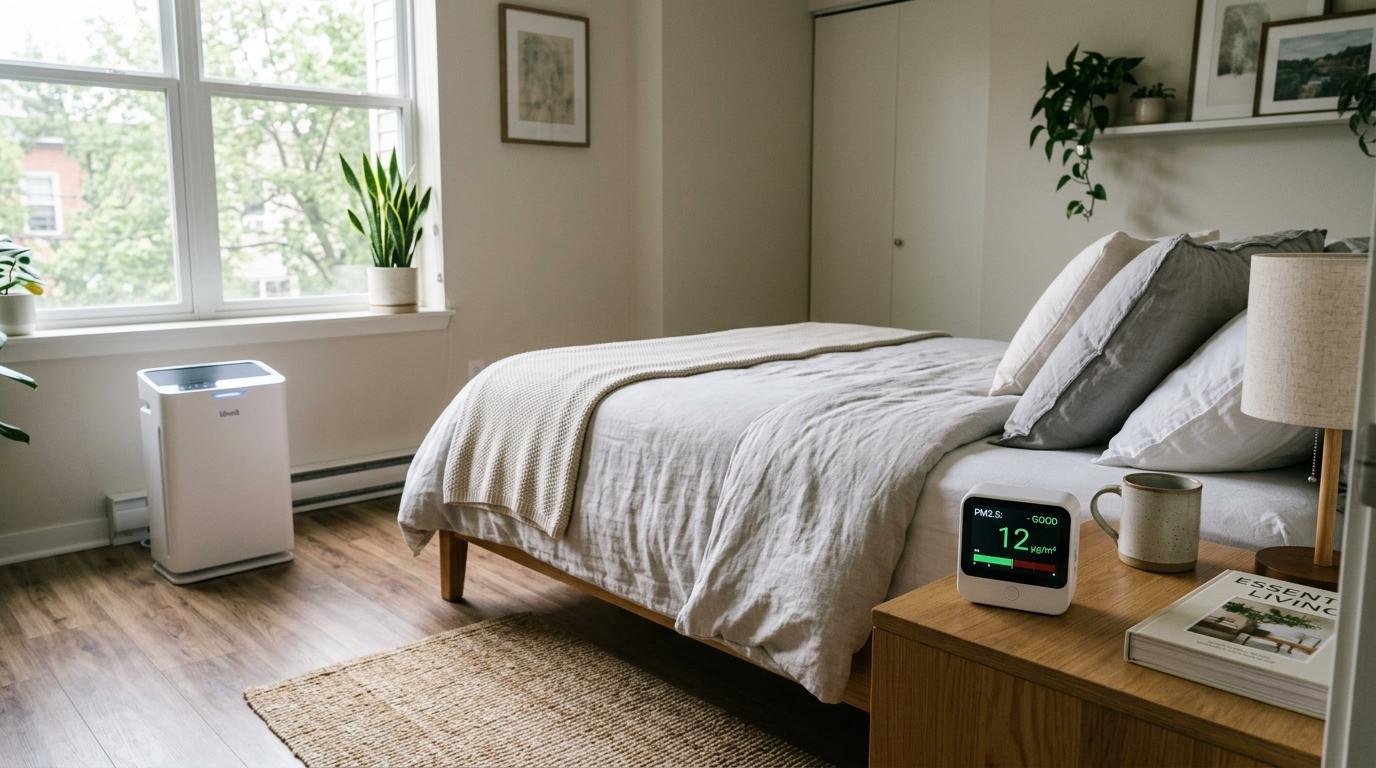
If you’re comparing a PM2.5 monitor vs an air purifier sensor, the honest answer is: don’t trust either one blindly.
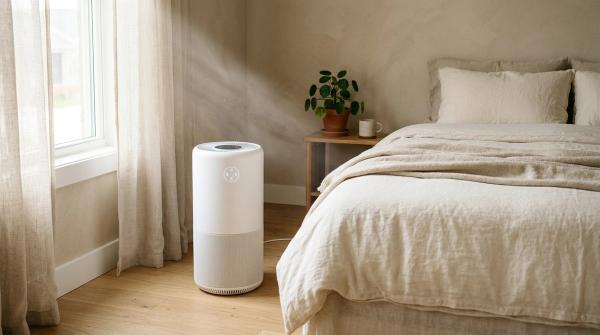
Your air purifier’s built-in sensor is useful, but it mainly helps the purifier run itself. It tells the machine when to speed up or slow down, especially in auto mode. What it doesn’t always tell you is what the air is like across the whole room.
If you want a better idea of the air you’re actually breathing, a standalone PM2.5 monitor is usually more helpful. Place it away from the purifier, around sitting or sleeping height, and watch the trend over time.
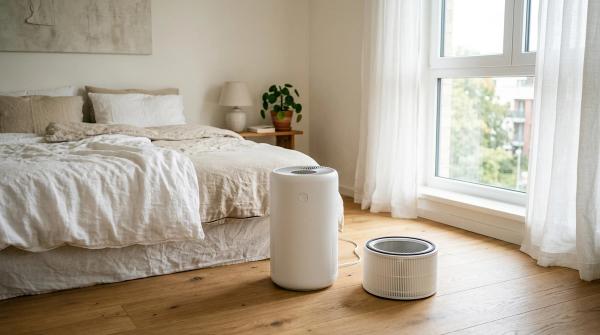
An air purifier cleans air. An air quality monitor measures air. Some newer purifiers try to do both with a sensor, display, number, or colour light. That can be useful, but it can also give you a false sense of comfort if you treat the purifier’s display as a full-room reading.
This guide explains when to trust a standalone monitor, when your purifier sensor is good enough, when it makes sense to use both, and when you should be skeptical of all the numbers.
First, what are PM2.5 and PM10?
#Most home air quality devices talk about “PM.” PM stands for particulate matter, which simply means tiny particles floating in the air.
PM10
#PM10 means particles up to 10 microns wide. These are larger airborne particles, such as coarse dust, pollen, construction dust, road dust, and some pet-related particles.
In many Indian homes, PM10 is the kind of dust you actually notice. It settles on balcony railings, window grills, ceiling fans, shelves, floors, and furniture. It can come from nearby roads, construction sites, dry weather, open windows, and normal household movement.
PM2.5
#PM2.5 means particles 2.5 microns wide or smaller. These are much finer particles. They are commonly linked with smoke and combustion sources such as vehicle exhaust, cooking smoke, incense, firecrackers, seasonal smog, and outdoor pollution.
PM2.5 is harder to see. A room can look perfectly clean and still have fine particles in the air. That’s why a PM2.5 monitor for home can be useful, especially during winter pollution, traffic-heavy hours, cooking, or festival seasons when smoke and fireworks are common.
Air quality monitor vs air purifier: they do different jobs
#Here’s the simplest way to look at it:
- An air purifier cleans the air.
- An air quality monitor measures the air.
A purifier may have a sensor inside it, but that doesn’t automatically make it a full-room testing device. Most built-in sensors sit inside or near the purifier body, often close to the air intake. So they mostly read the air near the machine.
A standalone monitor can be placed where people actually spend time — near the bed, sofa, desk, study table, or baby cot. That makes it more useful if you want to understand the air in the room, not just the air around the purifier.
So when people ask about an air quality monitor vs air purifier, the better question is not “which one is better?” It’s “what do you want it to do?”
If you want to reduce particles, you need a purifier.If you want to understand what’s happening in the room, you need a monitor.If you want both action and feedback, use both.
Why your air purifier sensor may look better than the room really is
#A lot of people have seen this happen.
The purifier starts on red, orange, or high fan speed. After a few minutes, the light turns green. The fan slows down. Everyone feels better.
And sometimes, that’s perfectly fine. The air may really be improving.
But sometimes the purifier is mostly measuring cleaner air near itself.
Think about how the machine works. It pulls air in, filters it, and pushes cleaner air back out. If the sensor is near the purifier’s body or intake area, that small zone can improve faster than the rest of the room.
So if your room is large, has poor airflow, open windows, dust coming in from outside, or cooking smoke drifting in from the kitchen, the air across the room may still be worse than the purifier display suggests.
That’s why air purifier sensor accuracy is not only about the quality of the sensor. Placement matters a lot too.
A built-in sensor is stuck in one place. You can’t move it to your bed, sofa, desk, or child’s study area.
Built-in air purifier sensor vs standalone PM2.5 monitor
#Should you trust air purifier auto mode?
#You can use air purifier auto mode, but use it with a little caution.
Auto mode depends on the purifier’s built-in sensor. If that sensor reads clean air near the purifier, the machine may slow down even if PM2.5 is still high on the other side of the room.
This does not mean auto mode is useless. It can be convenient on normal days, especially in small rooms where air mixes well. But during heavy outdoor pollution, cooking smoke, winter smog, dusty weather, or after windows have been open, manual mode is often more reliable.
A practical approach:
- Use auto mode on routine, low-pollution days.
- Use a steady manual speed when outdoor pollution is high.
- Use a standalone monitor to check whether the room is actually improving.
- If the purifier says “good” but the monitor across the room still shows high PM2.5, keep the purifier running stronger for longer.
In short, auto mode is helpful. Just don’t let it make every decision for you.
Where a standalone PM2.5 monitor helps most
#A standalone indoor air quality monitor is useful when you want answers to everyday questions like:
- Is outdoor pollution entering my bedroom at night?
- Does cooking raise PM2.5 in the living room?
- Is my purifier cleaning the whole room or mainly the air around itself?
- Should I keep the windows closed during certain hours?
- Is auto mode reducing the fan speed too early?
- Does dust rise after sweeping, vacuuming, or opening balcony doors?
This is where a standalone monitor starts to feel less like a gadget and more like a practical home tool.
The number may not be laboratory-perfect, and that’s okay. The trend is usually the useful part. If the reading jumps during frying, incense use, or evening traffic hours, you learn something. If it drops after running the purifier on a steady fan speed, you learn something too.
You don’t need to obsess over every small change. You’re looking for patterns.
What official guidance says about consumer air sensors
#It’s important not to overclaim what home monitors can do.
The U.S. Environmental Protection Agency, or EPA, says low-cost air quality monitors can help people understand indoor air conditions, but they have limitations. They are not the same as regulatory-grade instruments.
EPA guidance on air cleaners also says air cleaners can reduce indoor pollutants, but they do not remove all pollutants.
NIST, the National Institute of Standards and Technology, also cautions that consumer indoor air quality sensors should not be accepted blindly. Readings can be affected by sensor design, placement, humidity, aging, dust, and other real-world conditions.
So the balanced view is this:
A standalone PM2.5 monitor is usually better than relying only on a purifier’s built-in display, but it is still a consumer device. Use it for patterns, comparisons, and day-to-day decisions — not as a medical, legal, or regulatory instrument.
India-aware notes: dust, smog, cooking, and real homes
#Indian homes often deal with a mix of indoor and outdoor particle sources. The exact situation depends on the city, season, road nearby, building type, ventilation, and lifestyle. But a few patterns are common.
Outdoor dust enters easily
#Road dust, construction dust, dry winds, open plots, and traffic can push particles indoors. Even if your windows stay mostly closed, dust can enter through gaps, balconies, doors, exhaust openings, and frequent foot traffic.
This is where PM10 and visible dust matter. A PM2.5 monitor may not tell the full story if heavier coarse dust is settling on surfaces.
Winter pollution can raise indoor readings
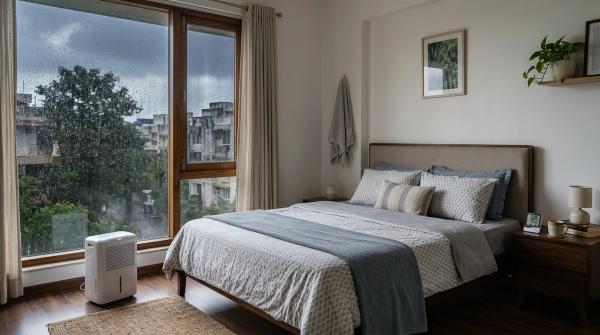
#In many Indian cities, winter outdoor pollution affects indoor air too. When outdoor PM2.5 is high, opening windows can raise indoor levels quickly.
A standalone monitor can help you see whether ventilation is helping or hurting at a particular time. Sometimes opening a window feels like the right thing to do, but the monitor tells a different story.
Cooking can create sharp PM2.5 spikes
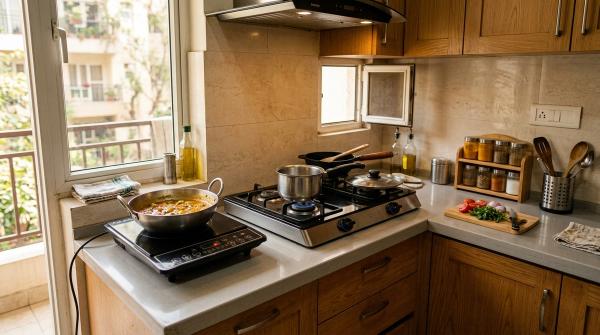
#Frying, roasting, grilling, tempering spices, and smoke from overheated oil can raise fine particle readings. A monitor in the living or dining area may show a spike even if the kitchen is separate.
This surprises many people at first because the room may not look smoky.
Incense, candles, and firecrackers can affect readings
#Indoor smoke sources like incense sticks, dhoop, candles, or nearby outdoor firecrackers can raise PM2.5 levels. During festival periods, outdoor smoke can also enter through windows, balconies, doors, and small ventilation gaps.
None of this means you need to panic. It just means the readings make more sense when you connect them to what is actually happening at home.
Air quality monitor placement: where to put it
#Good air quality monitor placement matters more than most people think. A poorly placed monitor can make even a decent device look confusing.
Place it away from the purifier
#Do not put the monitor right next to the purifier. That only tells you how clean the air is near the machine.
A better setup is to place the monitor across the room, or at least several feet away from the purifier. Ideally, keep it near the area where people spend time.
Keep it at breathing height
#Place the monitor around sitting or sleeping height. A desk, side table, TV unit, or bedside table can work well.
Avoid placing it directly on the floor, where settled dust may affect the reading. Also avoid very high shelves near the ceiling if that is not where people are breathing most of the time.
Avoid direct sources
#Do not place the monitor right next to:
- A stove
- An incense stick
- A humidifier
- A steamy bathroom door
- An open window
- A fan blowing directly into it
- The purifier’s clean-air outlet
You want a useful room reading, not a dramatic reading from one direct source.
Use one location for trends
#If you move the monitor every hour, the numbers become harder to understand. Pick one main location, like a bedroom nightstand or living room side table, and watch patterns over time.
You can still move it occasionally to test another room, but for daily use, consistency helps.
When to trust the purifier sensor
#A built-in air purifier sensor can still be useful. It’s not pointless.
Trust it for:
- Basic machine feedback
- Convenience
- Detecting obvious nearby spikes
- Running auto mode in smaller rooms
- A quick visual cue that air near the purifier has improved
But don’t treat it as proof that the whole room is clean.
It is especially limited when:
- The purifier is in a corner
- The room is large
- Air is not mixing well
- Pollution is entering from a window or door
- People sit far away from the purifier
- Auto mode slows down too quickly
- The display always says “good,” no matter what is happening
In short, the built-in sensor is a helper. It is not the final judge.
When to trust a standalone PM2.5 monitor
#Trust a standalone monitor more than the purifier display when you want to know what is happening away from the machine.
It is useful for:
- Bedrooms
- Living rooms
- Home offices
- Children’s study areas
- Apartments near busy roads
- Homes affected by winter smog
- Checking purifier placement
- Comparing manual mode with auto mode
But don’t overread every tiny change. Consumer monitors can fluctuate. Focus on clear patterns, like repeated spikes during cooking or readings that stay high during traffic-heavy hours.
A single number can make you anxious. A pattern can help you make better decisions.
When to use both together
#For many homes, the best setup is both:
- A purifier to reduce particles.
- A standalone PM2.5 monitor to check the air where people actually spend time.
This combination is especially helpful if:
- You live in a dusty or high-pollution area
- You use the purifier mostly in auto mode
- You are not sure whether one purifier covers the room properly
- You want to know when to close windows
- You want to understand cooking-related spikes
- Your purifier display seems too optimistic
Using both does not have to be complicated. Put the purifier where it can move air well. Put the monitor across the room. Then watch whether the monitor reading improves after the purifier has run for some time.
If the purifier display turns green but the standalone monitor still stays high, your purifier may need more time, better placement, or a higher fan speed.
When to trust neither reading completely
#There are times when both devices can mislead you.
Be careful if:
- The monitor is beside a humidifier or steamy bathroom
- The purifier sensor is clogged with dust
- The device is placed in direct cooking smoke
- The room has poor airflow
- The monitor is in sunlight or near heat
- Readings change wildly without any clear reason
- You are trying to make health, legal, or regulatory decisions from consumer sensor data
In these cases, step back and check the setup. Clean the purifier’s sensor area according to the manufacturer’s instructions. Move the monitor to a better location. Compare readings over time instead of reacting to one sudden number.
Practical buying checklist
#Use this checklist before buying another device.
Buy an air purifier first if:
#- You already know dust, smoke, or outdoor pollution enters your home
- You live near heavy traffic, construction, or a dusty road
- You mainly want to reduce airborne particles
- You do not need detailed data yet
- You are willing to run it on manual speed when needed
Remember, EPA guidance says air cleaners can reduce indoor pollutants, but they do not remove all pollutants.
Buy a standalone PM2.5 monitor first if:
#- You are unsure whether your home has a particle problem
- You want to compare rooms
- You want to understand the effect of cooking, incense, or window opening
- You already own a purifier but don’t fully trust its display
- You want to check whether auto mode is working well
Buy both if:
#- You live in an area with frequent smog or high dust
- You want the purifier to clean and the monitor to verify
- You have a large room where the purifier display may not represent the whole space
- You want better control over when to use manual mode
- You want practical feedback instead of guessing
Do not buy either yet if:
#- You expect a device to diagnose symptoms or guarantee health outcomes
- You want one perfect number with no interpretation
- You cannot place the device properly
- You are not ready to act on the information
A monitor gives information. A purifier takes action. Neither replaces good housekeeping, sensible ventilation, source control, or professional advice when needed.
What to look for in a home PM2.5 monitor
#You don’t need the most complicated device. For most homes, useful features are simple:
- Clear PM2.5 reading
- Easy-to-read display
- Stable trend tracking
- Ability to place it away from the purifier
- Simple app or history view, if you want overnight patterns
- Clear instructions for cleaning and maintenance
- No confusing claims that make it sound medical or laboratory-grade
Also check whether the monitor mainly measures particles or whether it mixes several values into one vague “air quality score.” A simple PM2.5 number is often more useful than a mysterious score that no one explains properly.
Bottom line: what should you trust at home?
#For everyday home use, trust a standalone PM2.5 monitor more than a purifier’s built-in sensor if you want to understand room air trends.
Trust the purifier sensor as a rough guide to what is happening near the machine.
Use both together if you want the most practical setup. The purifier cleans. The monitor checks whether the room is actually improving.
And trust neither blindly. Consumer sensors are useful tools, not perfect instruments. Placement, airflow, humidity, dust, and daily activities all affect what you see.
The best home setup is not the one with the fanciest display. It is the one that helps you make better, calmer decisions.
Disclaimer: This article is for practical household information only. Consumer air quality readings should not be used as medical advice or as a substitute for professional environmental testing.