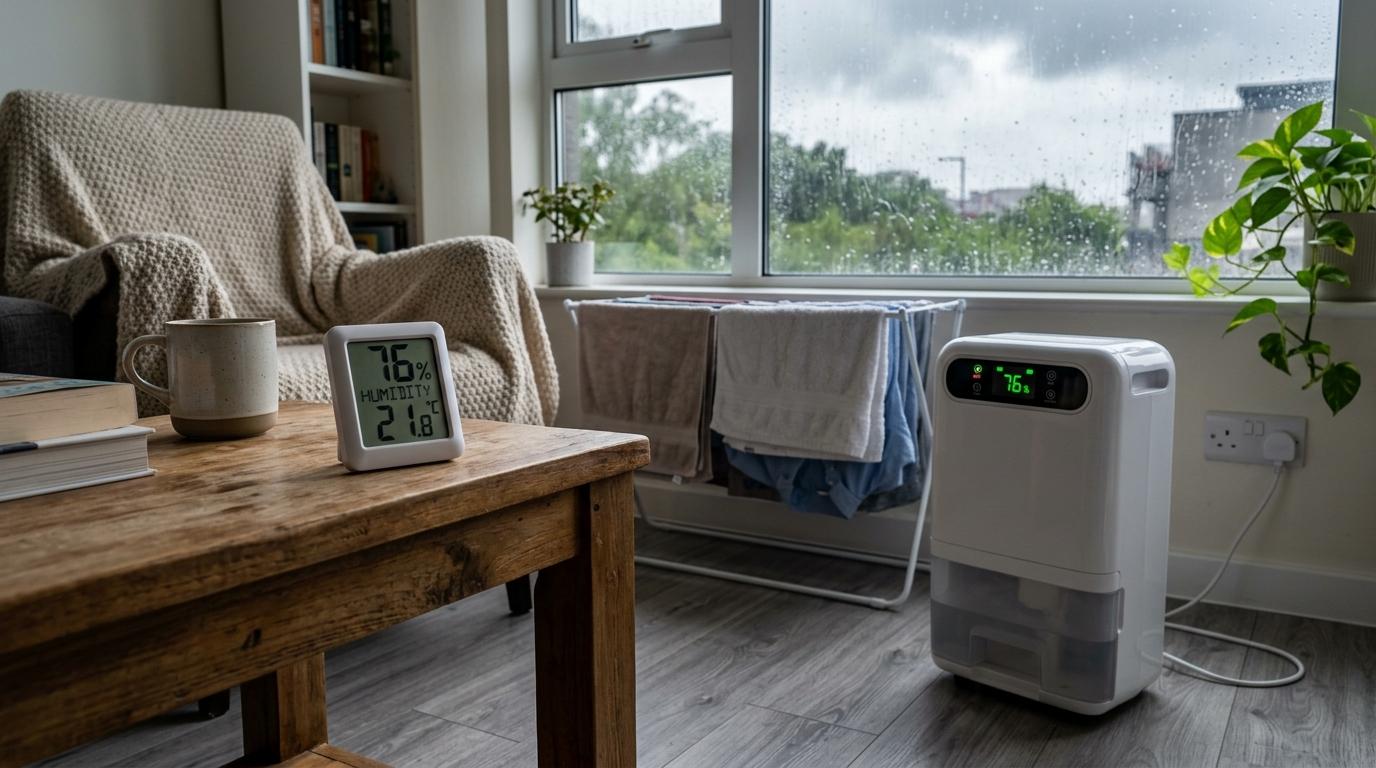
First, what is the difference?
#A humidity meter measures how much moisture is in the air. It usually shows this as a percentage called relative humidity, or RH.
A dehumidifier pulls moisture out of the air and collects it as water.
Think of it like this:
- A humidity meter is the test.
- A dehumidifier is one possible treatment.
So if a bedroom smells musty, clothes take forever to dry, or a wardrobe feels clammy, the first question should not be, “Which dehumidifier should I buy?”
It should be: “How humid is this room, really?”
That one number can save you from buying the wrong thing.
The simple rule: measure first, then decide
#For most damp rooms, a humidity meter should come first.
It helps you answer questions like:
- Is the room actually too humid?
- Does the humidity rise only after showers, cooking, rain, or laundry?
- Does opening a window help or make things worse?
- Is the problem in the whole room, or just inside a wardrobe?
- Are your fixes actually working?
Without a meter, you are mostly guessing. And dampness is tricky. A room can smell closed-up without being seriously humid. Another room can feel only slightly muggy but stay at high humidity for hours.
A small meter gives you the room’s real pattern.
What indoor humidity should you aim for?
#A good practical target is 30% to 50% indoor relative humidity.
EPA moisture guidance recommends keeping indoor relative humidity in the 30% to 50% range where possible, and ideally below 60%, to help control moisture and mold. CDC mold guidance also advises keeping home humidity as low as practical, no higher than 50%, using air conditioning, dehumidifiers, or exhaust fans when needed.
Here is a simple way to read your humidity meter:
One high reading is not always a disaster. Humidity naturally rises after a hot shower, heavy rain, cooking, or indoor laundry.
What matters is the pattern.
If your room keeps sitting above 50%, or stays close to 60% even after basic fixes, that is when you should take it more seriously.
Quick decision table
#How to use a humidity meter properly
#Do not check it once and make a big decision. Use it for a few days.
Place the meter:
- On a table, shelf, or stable surface
- Away from direct sunlight
- Away from AC vents or heaters
- Away from open windows
- Not right beside wet laundry
- Not directly outside a bathroom door
- At normal living height, not hidden in a corner
Then check the reading at different times:
- Morning
- Afternoon
- Evening
- During rain
- After bathing
- After cooking
- While drying clothes indoors
- After using an exhaust fan
- After using AC dry mode
You are looking for a pattern.
For example:
- If the bedroom is usually 45% but jumps to 58% after showers, the bathroom is probably the main source.
- If the living room is 48% but the wardrobe smells damp, the issue may be inside the wardrobe, not the whole room.
- If a room stays around 62% for days during monsoon, even after airflow and fan use, a dehumidifier starts to make sense.
When ventilation may be enough
#Sometimes a room is not seriously damp. It is just closed up.
This is common in apartments where windows stay shut because of dust, traffic noise, mosquitoes, rain, security, or air conditioning. The air gets stale, smells musty, and feels heavy.
Ventilation may be enough if:
- Humidity rises briefly, then drops
- The room smells better after fresh air
- Readings return to around 30% to 50%
- Dampness appears mainly after showers, cooking, or laundry
- There is no spreading mold or visible water damage
But during monsoon or very humid weather, opening windows can backfire. Outdoor air may be wetter than indoor air.
That is where the meter helps. Open a window and watch the reading. If humidity climbs, close it and try an exhaust fan or AC dry mode instead.
When an exhaust fan may be enough
#Bathrooms and kitchens create a lot of moisture quickly. If that moisture spreads into nearby rooms, the bedroom or living room may feel damp even though the real source is elsewhere.
Use an exhaust fan when:
- Bathroom mirrors stay foggy for a long time
- Tiles and walls remain wet after showers
- Steam moves from the bathroom into the bedroom
- Cooking makes the kitchen feel humid
- Humidity spikes briefly and then drops after fan use
If you have an attached bathroom, this matters even more. Moisture can move into bedsheets, curtains, wardrobes, and clothes.
In that case, buying a dehumidifier for the bedroom might help a little, but it does not solve the main problem. Start by removing moisture at the source.
When AC dry mode may be enough
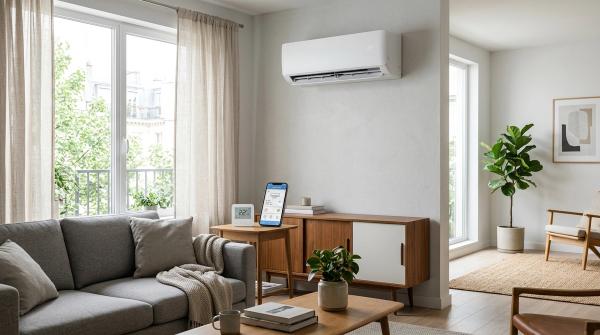
#Many air conditioners have a dry mode, often shown with a water drop symbol. It reduces moisture while cooling less aggressively than normal cooling mode.
AC dry mode can be useful when:
- The room feels sticky during rain
- The temperature is not very high, but the air feels muggy
- Humidity rises in the evening
- The dampness is mild or seasonal
- Readings improve after using dry mode
This is especially common in monsoon apartments. Sometimes a short dry-mode run is enough to make the room comfortable again.
But dry mode is not always a full replacement for a dehumidifier.
If you dry laundry indoors every day, live in a ground-floor room, have poor ventilation, or see high readings for long hours, a standalone dehumidifier may work better.
When a moisture absorber may be enough
#Moisture absorbers are best for small, closed spaces. They are not designed to dry an entire room.
They work well in:
- Wardrobes
- Shoe racks
- Storage boxes
- Suitcases
- Cupboards
- Closed shelves
This is a common mistake: the room humidity is normal, but the cupboard smells musty, so people assume they need a dehumidifier.
Not always.
If your room reads 40% to 50% but the wardrobe smells stale, the problem is probably trapped moisture and poor airflow inside the wardrobe. Try airing it out, avoid overpacking clothes, and use a moisture absorber or silica gel pack.
A room dehumidifier is usually overkill for a small closed cupboard unless the whole room is also humid.
When you should consider a dehumidifier
#A dehumidifier becomes useful when humidity stays high even after basic fixes.
Consider buying one if:
- Your humidity meter often shows readings above 50%
- The room stays near or above 60%
- Ventilation does not help
- Exhaust fans reduce humidity only briefly
- AC dry mode helps for a while, but humidity climbs again
- Clothes dry slowly indoors and start smelling musty
- A bedroom feels damp for days during rainy weather
- A ground-floor, basement-style, or poorly ventilated room stays clammy
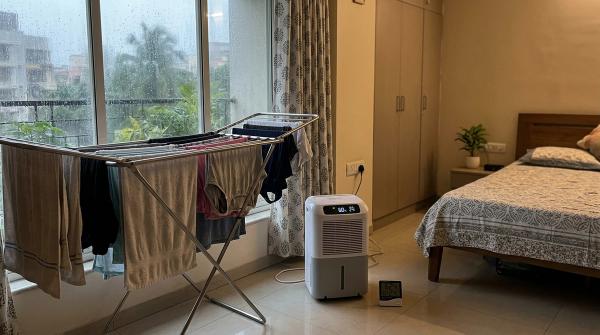
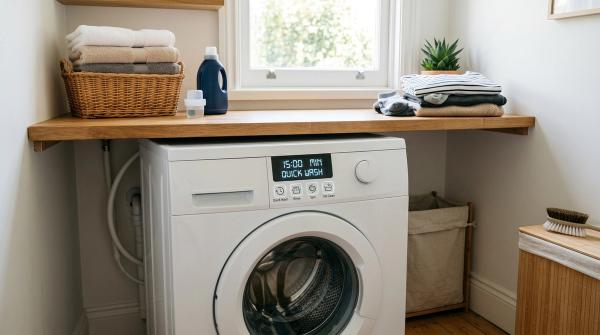
Indoor laundry is one of the biggest reasons people end up needing a dehumidifier. Wet clothes release moisture into the air. If they dry in a closed room, humidity can remain high for hours.
A meter makes this obvious. You may see the room jump from 48% to 62% while laundry is drying, then stay there most of the day. That is useful information. It tells you the drying setup needs to change, or a dehumidifier may be worth it.
Real-life examples
#1. The bedroom that smells musty after rain
#The room smells damp during rainy evenings. The meter reads 50% in the afternoon and 58% after sunset. There is no visible mold or leak.
Try this first:
- Use AC dry mode if available
- Improve airflow when outdoor humidity is lower
- Keep wet towels out of the bedroom
- Check whether bathroom steam is entering the room
A dehumidifier may not be the first purchase unless the readings stay high for long periods.
2. The apartment where laundry takes forever to dry
#Clothes are dried indoors during rainy weeks. The meter reads 60% or higher in the drying room for several hours.
Try this first:
- Dry clothes in one dedicated area
- Use an exhaust fan if possible
- Avoid drying laundry in bedrooms
- Use AC dry mode if suitable
- Keep moisture from spreading to other rooms
If the readings still stay high and clothes smell musty, a dehumidifier may be useful.
3. The wardrobe that smells damp
#The bedroom meter reads 45%, but clothes inside the wardrobe smell stale.
Try this first:
- Open the wardrobe doors regularly
- Do not pack clothes too tightly
- Make sure clothes are fully dry before storing
- Use a moisture absorber inside the cupboard
A room dehumidifier is probably not the first answer because the room itself is not too humid.
4. The ground-floor room that always feels clammy
#The room feels damp even when no laundry is drying. The meter stays around 60% or more for several days.
Try this first:
- Check for leaks, seepage, or wall dampness
- Improve airflow where possible
- Use exhaust fans or AC dry mode if available
If there is no leak and the humidity still stays high, this is a stronger case for a dehumidifier.
When this is not a DIY problem
#A humidity meter is useful, but it cannot fix serious moisture problems. A dehumidifier can remove water from the air, but it cannot repair a leak, stop seepage, or make mold damage safe.
Get professional help if you notice:
- Large mold patches
- Mold that keeps spreading
- Black, green, or fuzzy growth on walls or ceilings
- Active water leaks
- Dampness from plumbing, roof damage, or seepage
- Moisture near switches, sockets, wiring, or fuse boxes
- Breathing symptoms linked to the damp room
Do not use a dehumidifier to hide a leak. And do not ignore damp electrical points.
If children, older adults, or people with asthma or allergies live in the home, take mold and dampness more seriously.
Simple buying logic
#If you are trying to decide between a humidity meter and a dehumidifier, follow this order.
Step 1: buy or borrow a humidity meter
#Place it in the damp room for a few days. Do not rely on one reading.
Step 2: watch the pattern
#Aim for 30% to 50% where possible. If readings often go above 50%, take action. If they stay near or above 60%, the problem is more serious.
Step 3: fix obvious moisture sources
#Check bathrooms, kitchens, wet towels, indoor laundry, closed wardrobes, and poor airflow.
Step 4: try simple controls
#Use ventilation, exhaust fans, AC dry mode, or moisture absorbers depending on the problem.
Step 5: check the meter again
#If readings improve, you may not need a dehumidifier. If they stay high, the decision becomes much clearer.
Related AllBlogs guides
#For nearby decisions, also read these existing AllBlogs guides:
- AC Dry Mode vs Dehumidifier for Monsoon Humidity: What Should You Use at Home?
- Bathroom Exhaust Fan vs Dehumidifier: What Should Small Apartments Use?
- Moisture Absorber vs Dehumidifier for Indian Monsoon Wardrobes: What Should You Buy?
Bottom line
#In the humidity meter vs dehumidifier decision, the humidity meter should usually come first.
It is small, affordable, and helps you stop guessing. It tells you whether the room is actually too humid, when the humidity rises, and whether simple fixes are working.
Use ventilation, exhaust fans, AC dry mode, and moisture absorbers for mild, temporary, or local dampness.
Consider a dehumidifier when humidity stays high despite those steps, especially during monsoon weather, indoor laundry drying, or in rooms that stay damp for days.
And if you see severe mold, leaks, damp wiring, or health symptoms, treat it as a safety or repair issue, not just a shopping decision.