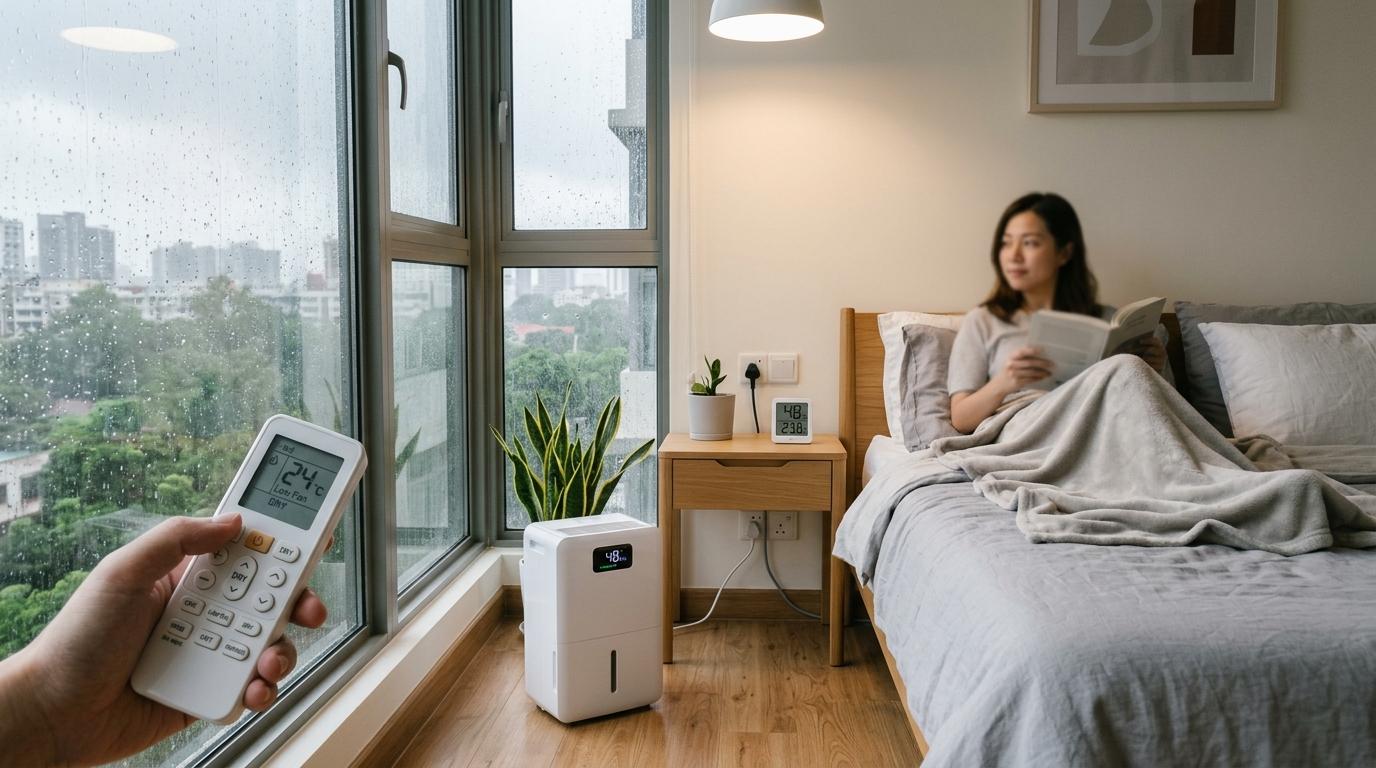
If your room only feels a little sticky during the monsoon, AC dry mode is usually enough. But if you’re dealing with a damp smell that keeps coming back, mold spots, wet walls, swollen wooden furniture, or musty clothes inside cupboards, a dehumidifier is the better choice.
That’s the short answer.
AC dry mode is great for mild humidity, especially when the room is also slightly warm. A dehumidifier is built for more serious and regular moisture control. It helps when your home stays damp for days, which is very common during the rainy season.
Monsoon discomfort is not always about heat. Sometimes the temperature is fine, but the room still feels sticky, heavy, and stale. That usually means there’s too much moisture in the air.
So the AC dry mode vs dehumidifier question comes up every monsoon. The right choice depends on how damp your home gets, how often it happens, and whether you’re just feeling uncomfortable or actually dealing with dampness, mold, smell, or seepage.
Let’s make it simple.
The simple rule
#Use AC dry mode when:
- The room feels sticky, but not badly damp
- You want comfort for a few hours
- There is no visible mold
- Walls, wardrobes, mattresses, and clothes don’t smell musty
- You already have an AC and don’t want full cooling
Use a dehumidifier when:
- The damp smell keeps returning
- Clothes, shoes, books, or wardrobes smell musty
- You see mold on walls, furniture, leather, bags, or fabric
- Windows fog up often
- The room feels damp even when it isn’t hot
- You live in a coastal, high-rainfall, or poorly ventilated apartment
Use ventilation when:
- The weather outside is sunny, breezy, and not too humid
- You need to remove bathroom steam, cooking moisture, or stale air
- Rain is not blowing directly into the room
During the monsoon, ventilation is all about timing. Opening windows during heavy rain can make the room even more humid.
Why monsoon humidity feels so uncomfortable indoors
#A room can feel sticky and uncomfortable even when it isn’t very hot. This happens because sweat doesn’t evaporate easily in humid air. Your body feels clammy, clothes take longer to dry, and bedsheets, curtains, sofas, and mattresses start holding moisture.
For most homes, a comfortable indoor humidity range is around 40% to 60% relative humidity. You don’t have to obsess over the number, but it helps to know roughly where your room stands.
When indoor humidity stays above 60% for long periods, you may start noticing:
- Damp smell in rooms
- Musty wardrobes
- Mold on walls, shoes, bags, mattresses, or curtains
- Swollen wooden doors or furniture
- Sticky floors and surfaces
- Slow-drying laundry
- Discomfort even with the fan running
This is especially common in Indian monsoon apartments where sunlight is limited, ventilation is poor, or there is already some seepage in the walls.
The idea is not to panic. It’s simply to control moisture before it becomes a regular home problem.
What is AC dry mode?
#AC dry mode is the setting on your air conditioner remote that usually has a water-drop symbol.
In regular cool mode, the AC mainly works to reduce the room temperature. In dry mode, it focuses more on removing moisture from the air. The fan usually runs slower, and the compressor cycles differently so humid air passes over the cold coil and water condenses out.
The room may become a little cooler, but dry mode is not the same as full cooling. Its main job is to make the room feel less sticky.
When AC dry mode is enough
#AC dry mode works well for mild to moderate monsoon humidity.
Use it when:
- The room is warm and sticky, but not smelling damp
- You want comfort while sleeping or working
- Humidity rises only during rainy spells
- You don’t have visible mold
- You want to avoid running cool mode unnecessarily
Dry mode often uses less electricity than normal cooling mode because the AC is not trying to cool the room aggressively. But the actual power use depends on your AC model, room size, insulation, temperature setting, and outside weather.
Where AC dry mode falls short
#AC dry mode is not designed for serious dampness.
It may not be enough if:
- Your room smells musty every day
- Your wardrobe smells damp even after cleaning
- Walls stay wet, stained, or cold to touch
- Mold comes back after wiping
- Laundry takes too long to dry indoors
- You don’t want the room to become colder
Yes, an AC does remove some moisture. But it also cools the room. During the monsoon, there are many days when the room isn’t hot enough for AC, but the humidity is still high. That’s when a dehumidifier makes more sense.
What does a dehumidifier do?
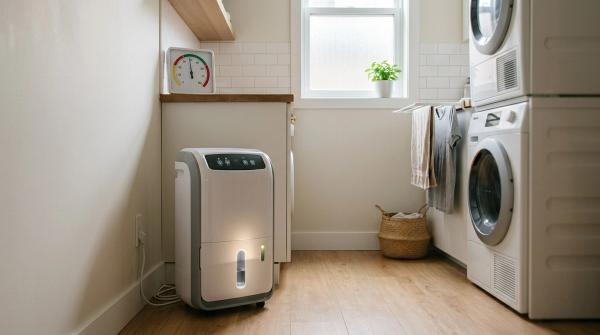
#A standalone dehumidifier is made specifically to remove water from indoor air.
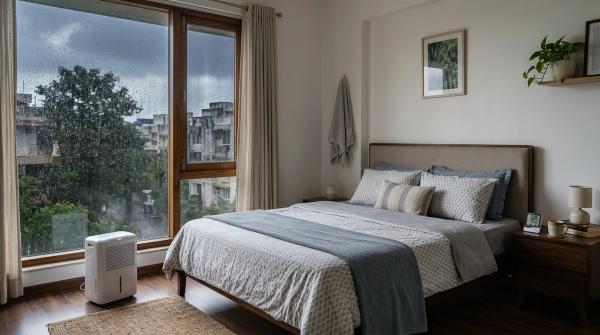
It pulls humid air in, condenses the moisture into a tank or drain pipe, and releases drier air back into the room. Unlike an AC, it does not cool the room. In fact, the air coming out may feel slightly warm.
That may sound like a drawback, but during damp monsoon weather, it can actually help. The room feels less clammy, wardrobes stay drier, clothes dry better, and musty smells reduce once the moisture is under control.
When a dehumidifier is worth buying
#A dehumidifier for monsoon use makes sense when moisture is a repeated problem, not just an occasional sticky feeling.
Consider buying one if:
- You live in a coastal, high-rainfall, or low-sunlight area
- Your apartment has poor cross-ventilation
- One bedroom, wall, or wardrobe always smells damp
- Mold appears on shoes, bags, clothes, books, or wooden furniture
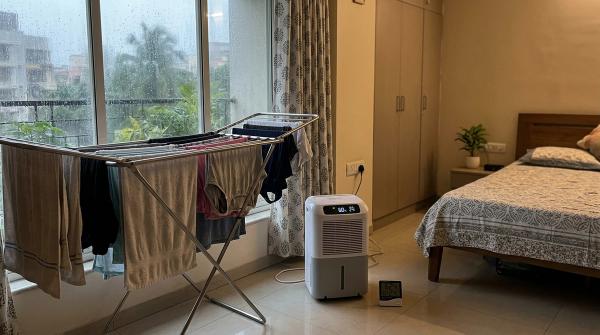
- You dry clothes indoors often
- A room stays closed for long hours
- AC dry mode helps for a while, but the damp smell returns
For renters, a dehumidifier can be especially useful. You may not be able to fix building-level seepage or change the ventilation properly. A dehumidifier will not repair leakage, but it can help control indoor moisture.
AC dry mode vs dehumidifier vs ventilation
#The most practical answer is usually not one device forever. Use dry mode for comfort, ventilate when the weather allows, and use a dehumidifier if moisture keeps coming back.
Can you use AC dry mode and a dehumidifier together?
#Yes, you can use an AC and a dehumidifier together in very humid conditions. But you don’t need to run both all the time.
Using both may help when:
- A room is hot and damp
- You want faster moisture reduction
- The room has a strong damp smell
- You are drying indoor laundry during rain
- Humidity remains high even after using dry mode
There are trade-offs. Running both will increase electricity use. Also, if you run them for too long, the room can become too dry.
A simple way to avoid guessing is to buy a small digital hygrometer. It shows indoor relative humidity. Once the room is around 50% to 60%, you can reduce usage or switch off the dehumidifier.
Buyer guidance: how to choose a dehumidifier without brand hype
#Don’t buy a dehumidifier only because the product page looks fancy or the discount looks tempting. For monsoon humidity at home, focus on what the machine actually does.
1. Check the type
#For Indian monsoon use, compressor-based dehumidifiers are usually the practical choice for regular rooms. They are designed to remove a meaningful amount of moisture in warm, humid conditions.
Very small thermo-electric or Peltier-style units may work only for tiny enclosed spaces. They are usually not enough for a damp bedroom or living room during the monsoon.
2. Choose capacity based on room and dampness
#For a standard bedroom or small living room, many buyers look at units around the 20-litre per day class. Bigger rooms, very damp homes, or frequent indoor laundry may need higher capacity.
Don’t judge only by square footage. Also think about:
- How damp the room gets
- Whether it gets sunlight
- Whether windows stay closed most of the day
- Whether you dry clothes indoors
- Whether there is seepage or wall dampness
3. Look at tank size and drainage
#A small water tank fills faster, especially during peak monsoon. If you don’t want to keep emptying the tank, look for:
- A larger tank
- Auto shut-off when the tank is full
- Continuous drainage option with a hose
Continuous drainage is useful if you can safely route the water to a bathroom drain or balcony drain.
4. Check noise level if it is for a bedroom
#Dehumidifiers make some sound because they use a fan and compressor. If you plan to use one while sleeping, check the noise specifications and user reviews carefully.
Some people get used to the sound. Some don’t. So don’t ignore this part.
5. Avoid buying too small
#A weak unit may run for hours and still not fix the damp smell. It is better to buy based on the room’s actual humidity problem instead of choosing the smallest model only because it is cheaper.
Humidity checklist for Indian monsoon apartments
#Use this simple checklist during the rainy season.
- Buy a basic hygrometer. It helps you know whether the room is actually humid or just feels stuffy.
- Aim for roughly 40% to 60% indoor humidity. Don’t chase perfection. Just avoid long periods of dampness.
- Use AC dry mode on sticky, warm days. It helps when the room needs comfort but not strong cooling.
- Run bathroom exhaust fans after bathing. Keep them on for a while after showers to clear steam.
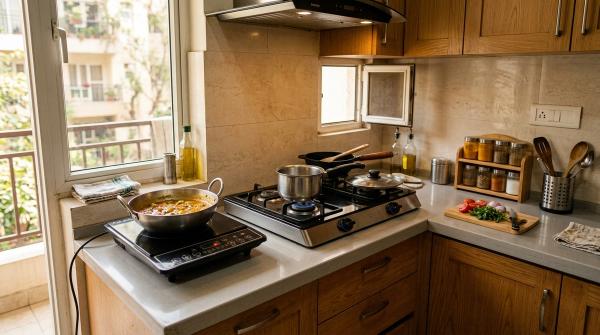
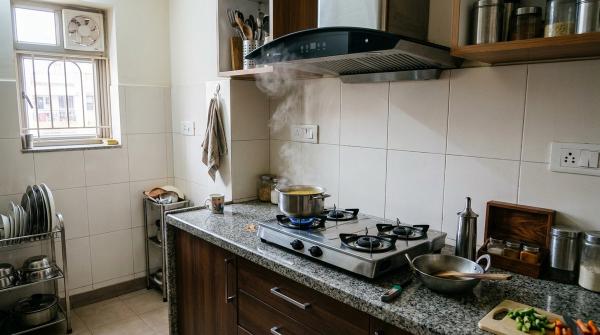
- Use the kitchen exhaust while cooking. Boiling, steaming, and frying all add moisture to indoor air.
- Ventilate when the weather allows. Open windows during sunny, breezy breaks, not during heavy rain.
- Avoid drying clothes indoors when possible. If you must, use a dehumidifier or strong exhaust airflow nearby.
- Keep wardrobes slightly aired. Open cupboard doors sometimes when the room is dry.
- Move furniture slightly away from damp walls. This improves air movement behind wardrobes and beds.
- Check hidden spots weekly. Look behind curtains, beds, wardrobes, shoe racks, and under mattresses.
- Clean early mold patches quickly. Don’t wait until it spreads across a wall or cupboard.
- Treat seepage as a repair issue. Appliances can manage air moisture, but they cannot fix water entering through walls or ceilings.
Safety cautions: mold, electrical hazards, and severe dampness
#Humidity control helps a lot, but safety matters too.
Mold caution
#A dehumidifier can reduce the moisture that helps mold grow, but it does not magically remove existing mold.
If you see small patches, clean them carefully and dry the area well. Wear a mask and gloves if you are sensitive to dust or mold smell. Keep children and pets away while cleaning.
If mold covers a large area, keeps returning quickly, or is linked to seepage, treat it as a deeper home repair issue. You may need professional cleaning or waterproofing advice.
Electrical caution
#Dehumidifiers collect water, and water near electricity needs care.
- Keep the appliance on a stable, flat surface
- Don’t touch plugs or switches with wet hands
- Unplug before emptying the water tank
- Keep cords away from wet floors
- Don’t use damaged extension boards
- Avoid placing the unit where rainwater can splash in
This is especially important in balconies, utility areas, bathrooms, and rooms with seepage.
Severe dampness caution
#If your wall is wet, paint is bubbling, water is dripping, or the ceiling has active leakage, don’t rely only on AC dry mode or a dehumidifier.
These appliances can reduce indoor humidity, but they cannot stop water from entering the structure. In that case, the real fix is repair, sealing, plumbing work, or waterproofing.
Over-drying caution
#More drying is not always better.
If indoor humidity drops below about 40%, some people may feel dry throat, dry skin, or eye irritation. Use a hygrometer and avoid running a dehumidifier all day on maximum if the room is already dry enough.
Related AllBlogs reads
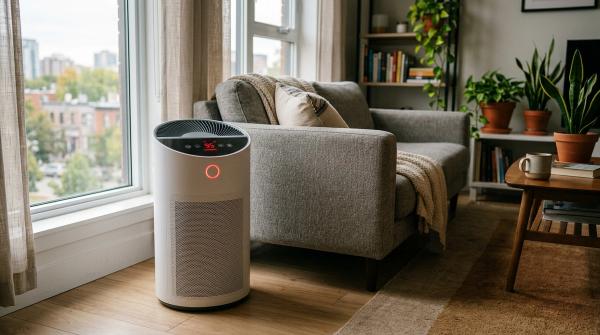
#- Air Purifier vs Dehumidifier for Indian Monsoon Homes — useful if you are also comparing damp smell with indoor air filtration.
- Moisture Absorber vs Dehumidifier for Indian Monsoon Wardrobes — useful if the problem is mainly cupboard smell, shoes, bags, or clothes.
- Monsoon Mold Smell at Home: Wardrobe, Wall & AC Fixes — useful for musty room smell and recurring damp patches.
- Monsoon Laundry Smell in India: Drying & Wardrobe Fixes — useful if indoor drying is making clothes smell damp.
- Rainproof Apartment Before Monsoon India: Home Checklist — useful if leaks, seepage, balcony drainage, or windows are part of the issue.
So, what should you use at home?
#Here’s the everyday answer.
If the room feels sticky after rain, start with AC dry mode. It is simple, already available in many homes, and useful for comfort.
If the room smells damp, cupboards smell musty, mold appears, or the problem keeps coming back, use a dehumidifier. It is the better appliance for ongoing monsoon humidity at home.
If the weather is clear, sunny, and breezy, use ventilation. Open windows, run exhaust fans, and let stale air move out. But during heavy rain, be careful. Monsoon air outside may be more humid than the air indoors.
For most homes, the best routine is a mix of all three: dry mode when it feels sticky, ventilation when the weather allows, and a dehumidifier when dampness becomes a regular problem.