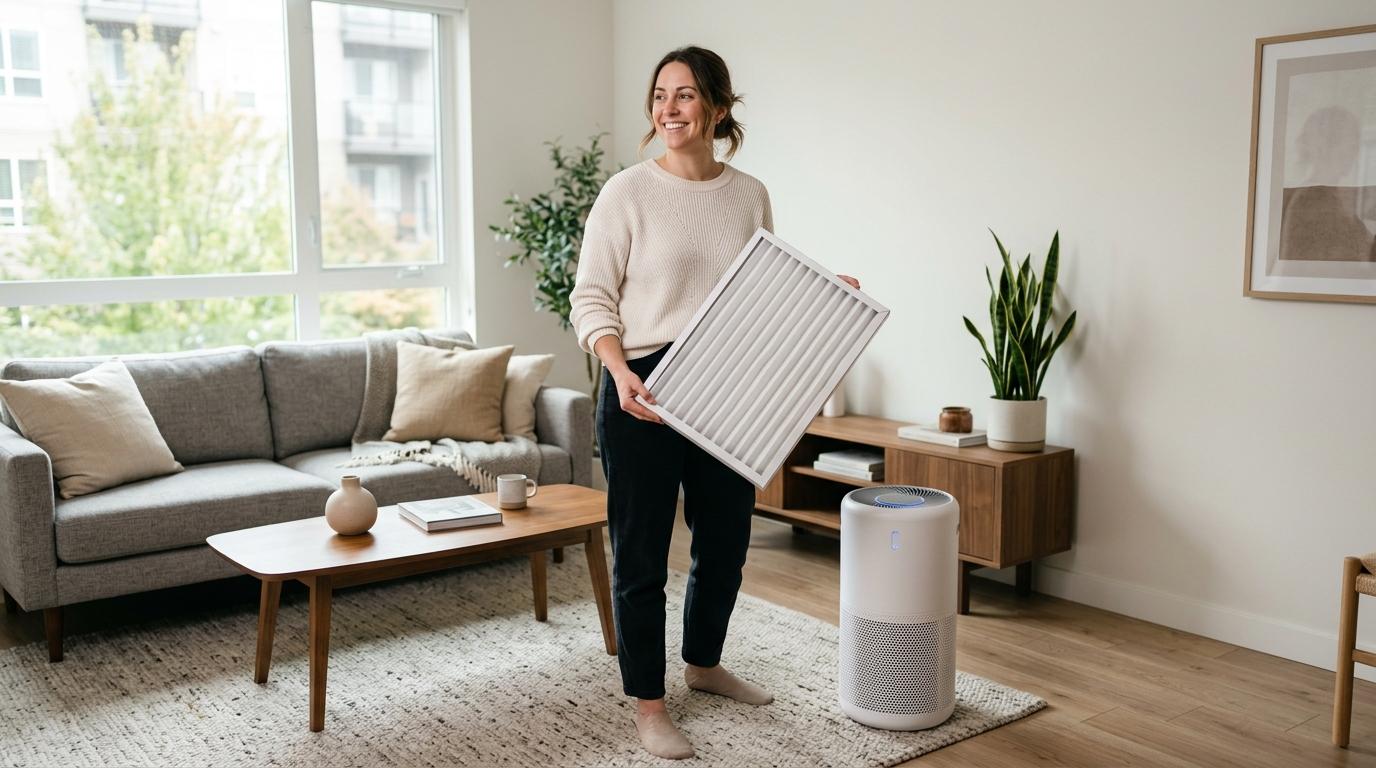
If you’re trying to improve the air inside your home, the choice usually comes down to this: use a MERV 13 filter if you have a central HVAC system that can handle it, and use a portable true HEPA air purifier if you want cleaner air in a bedroom, living room, office, apartment, or any specific space.
One thing is worth saying right away: don’t put a HEPA filter into a normal furnace or central AC filter slot. Even if you can make it fit, that doesn’t mean it should be there. True HEPA filters are very dense, and most standard home HVAC systems are not designed to pull air through them.
Air filter shopping can get confusing fast. You’ll see terms like MERV, HEPA, CADR, “true HEPA,” room coverage, filter life, airflow, and a lot of marketing language that sounds more helpful than it actually is.
Here’s the simple version:
- MERV 13 is usually for central HVAC systems.
- HEPA is usually for portable air purifiers.
- CADR helps you choose the right size purifier for a room.
Portable air cleaners and HVAC filters can reduce indoor air pollution, but they do not remove every pollutant. The goal is not to create a perfect clean-air bubble. The goal is to choose something that fits your home, moves enough air, and is easy enough to maintain.
MERV 13, HEPA and CADR in plain English
#Before comparing MERV 13 and HEPA, it helps to understand that these terms do not all measure the exact same thing.
MERV
#MERV stands for Minimum Efficiency Reporting Value. It is a filter rating system used by ASHRAE, the American Society of Heating, Refrigerating and Air-Conditioning Engineers.
MERV ratings describe how well a filter captures particles in the 0.3 to 10 micron range. In general, the higher the MERV rating, the better the filter is at catching smaller particles.
But there is a tradeoff: higher-efficiency filters can also create more resistance to airflow.
A MERV 13 filter is considered a higher-efficiency HVAC filter. Many newer home systems can use one, but not every system can.
HEPA
#HEPA stands for High-Efficiency Particulate Air.
A true HEPA filter is designed to capture at least 99.97% of particles at 0.3 microns under test conditions.
That is excellent particle filtration. But HEPA filters are much denser than typical HVAC filters, which is why you usually find them inside portable air purifiers, not in standard furnace or central AC filter slots.
CADR
#CADR stands for Clean Air Delivery Rate. It is used for portable air purifiers and is associated with AHAM, the Association of Home Appliance Manufacturers.
CADR tells you how much filtered air a purifier can deliver for three types of particles:
- Smoke
- Dust
- Pollen
For most people, CADR is more useful than vague claims like “covers up to 800 sq ft.” It gives you a better idea of whether a purifier can actually move enough clean air for the room you want to use it in.
MERV 13 vs HEPA comparison table
#When a MERV 13 HVAC filter makes sense
#A MERV 13 filter can be a good upgrade if you have a central forced-air HVAC system and want better filtration throughout the home.
It may make sense if:
- Your HVAC manual says MERV 13 is allowed
- An HVAC technician confirms your system can handle it
- Your ductwork and return air setup are in good shape
- You want filtration when the HVAC fan is running
- You like the idea of one filter serving multiple rooms
MERV 13 is often a practical middle ground. It captures smaller particles better than many basic low-MERV filters, but it is still usable in many residential systems.
The important word is many. Not all.
A filter can slide into the slot and still be a bad match for your system. That is where people often get into trouble.
The airflow warning most people miss
#It is easy to think, “Higher rating means better filter, so I should just buy the highest one.”
That sounds reasonable, but with HVAC systems, it is not always that simple.
Your HVAC system is designed to move a certain amount of air. Every filter adds some resistance. A more restrictive filter can reduce airflow, especially if the system is older, the ducts are undersized, the return air is limited, or the filter gets dirty and stays in too long.
Poor airflow can lead to problems like:
- Weak heating or cooling
- Longer run times
- Higher energy use
- Frozen AC coils
- Furnace overheating
- Extra stress on the blower motor
This is why you should not force a dense HEPA filter into a normal residential HVAC filter slot. Most home HVAC systems are not built for that level of resistance.
Even with MERV 13, it is worth checking first. Look at your HVAC manual. If you are not sure, ask an HVAC technician. A static pressure check can help confirm whether your system is still moving air properly.
Yes, it is one more step. But it is a lot cheaper than damaging your HVAC system.
When a portable HEPA air purifier makes sense
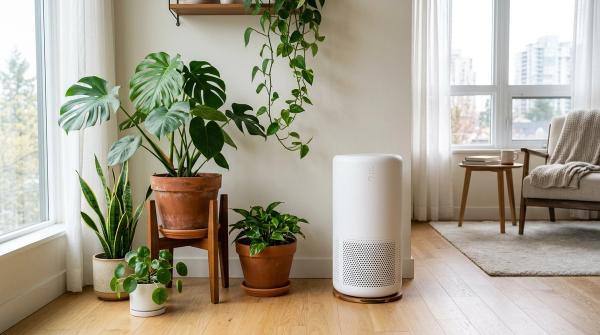
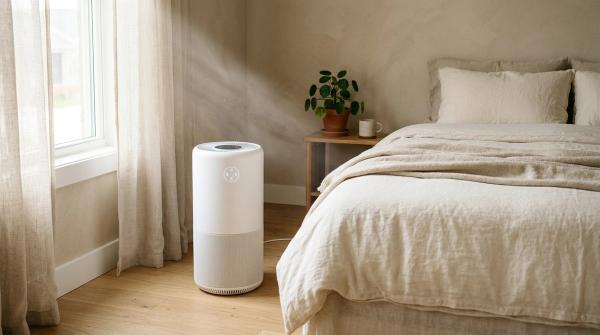
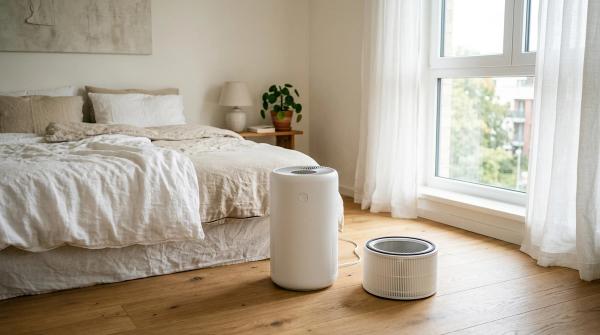
#A portable HEPA air purifier is usually the better choice when you want cleaner air in one specific room.
It makes sense if:
- You do not have central HVAC
- You live in an apartment or rental
- Your HVAC system cannot handle MERV 13
- You want stronger filtration in a bedroom or office
- You use split ACs, window ACs, or no AC
- You want filtration even when the HVAC system is off
Portable HEPA purifiers are not whole-home solutions unless you use multiple units. They work best when they are matched to the room size and placed where air can move freely.
For many homes, a good setup looks like this:
- MERV 13 in the central HVAC, if the system supports it
- A portable HEPA purifier in the bedroom or main living area, if you want extra filtration
You do not always have to choose one or the other. If your home and budget allow for it, MERV 13 and HEPA can work together nicely.
CADR and room-size checks before buying a purifier
#Do not buy a portable air purifier just because the box says something like “covers up to 800 sq ft.”
Those room-size claims can be hard to compare. Sometimes they are based on very low air changes per hour, which may not give you the level of filtration you expect.
Instead, look for the CADR.
AHAM’s CADR rating shows filtered air delivery for smoke, dust, and pollen. A higher CADR means the purifier can clean more air per minute.
A common AHAM-based rule of thumb is:
Choose a purifier with a CADR that is at least two-thirds of the room’s square footage.
For example:
- A 120 sq ft bedroom needs a CADR of about 80 or higher
- A 180 sq ft room needs a CADR of about 120 or higher
- A 300 sq ft living room needs a CADR of about 200 or higher
Also pay attention to the units being used. Some brands list square feet, others use square meters, and some focus on air changes per hour. Compare the purifier to the actual room where you plan to use it.
A small purifier might be perfectly fine for a compact bedroom. It probably will not do much in a large open living and dining area.
Apartment notes, especially useful for India and similar homes
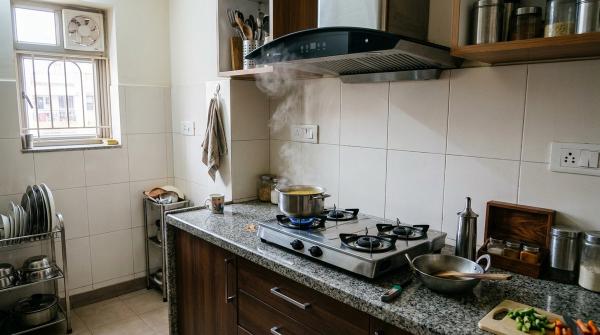
#Many homes in India, and in many other countries as well, do not use central forced-air HVAC.
Apartments often rely on:
- Split ACs
- Window ACs
- Ceiling fans
- Exhaust fans
- Natural ventilation
In those homes, a MERV 13 HVAC filter may not be relevant at all because there is no central ducted system to put it in.
A split AC usually has a washable mesh screen. That screen helps protect the AC from larger dust buildup, but it is not the same as a MERV 13 filter or a HEPA filter.
Do not stuff a dense filter into a split AC unless the manufacturer specifically designed and approved that accessory. It can block airflow and affect performance.
For apartment residents dealing with traffic dust, construction dust, seasonal pollution, or general city air particles, a properly sized portable HEPA purifier is usually the more practical choice.
Use the AC for cooling, open windows when outdoor air is actually decent, use exhaust fans when needed, and use the purifier for room-level particle filtration.
This applies to Indian cities, but it also applies to high-rise apartments, rentals, and non-ducted homes anywhere.
MERV 13 vs HEPA: which should you choose?
#Here is the practical decision path.
Choose MERV 13 if:
#- You have central HVAC
- Your system manual or HVAC technician says MERV 13 is acceptable
- You want filtration across the home
- You are willing to check and replace filters regularly
Choose portable HEPA if:
#- You live in an apartment or rental without central HVAC
- You use split ACs or window ACs
- You want stronger filtration in one room
- Your HVAC system cannot handle MERV 13
- You want filtration while sleeping or working
Use both if:
#- Your HVAC system supports MERV 13
- You also want extra room-level filtration
- You are dealing with more dust, smoke, pollen, or outdoor pollution than usual
- You can keep up with replacement filter costs
The best choice is the one your home can actually support. A clean, properly sized, well-maintained setup will do more for you than a fancy-sounding filter used in the wrong place.
Maintenance and replacement checklist
#Use this checklist to avoid the most common filter mistakes.
- Check HVAC filters monthly. Even if the package says “up to 90 days,” look at it sooner.
- Replace MERV 13 filters when dirty or on schedule. Many homes fall somewhere in the 30 to 90 day range, depending on dust, pets, usage, and outdoor conditions.
- Do not wash disposable HVAC filters. Replace them.
- Watch for airflow warning signs. Weak vents, longer cooling times, frozen coils, or strange system behavior can point to a clogged or overly restrictive filter.
- Check purifier pre-filters. If your purifier has a washable or vacuumable pre-filter, clean it the way the manual says.
- Replace HEPA filters on the manufacturer’s schedule. Many portable purifiers use 6 to 12 month replacement intervals, but check your manual.
- Do not wash true HEPA filters unless the manual clearly says they are washable. Most true HEPA filters are not designed to be washed.
- Keep purifier intakes and outlets clear. Do not push the unit against curtains, furniture, or walls if that blocks airflow.
- Use the right fan speed. A purifier on a very low setting is quieter, but it also moves less air.
- Recheck sizing if you move the purifier. A unit that works well in a bedroom may be too small for a living room.
Common buying mistakes to avoid
#Buying a HEPA filter for a furnace slot
#A true HEPA filter is not a normal replacement for a standard home HVAC filter. Unless your system is specifically designed for HEPA filtration, do not use one there.
Upgrading to MERV 13 without checking compatibility
#MERV 13 can be a smart upgrade, but only if your HVAC system can move enough air through it. Check the manual or ask a technician before switching.
Ignoring CADR
#A purifier with a true HEPA filter can still be too small for the room. CADR helps you understand whether the unit can deliver enough filtered air.
Forgetting replacement costs
#Filters are not one-time purchases. If replacement filters are hard to find or too expensive, you may put off replacing them. That hurts performance.
Blocking airflow
#Filters and purifiers both depend on airflow. A clogged HVAC filter or a purifier trapped behind furniture will not perform well.
Bottom line
#For most homes, MERV 13 belongs in compatible central HVAC systems, and HEPA belongs in portable room air purifiers.
If you have central HVAC, first check whether your system can handle MERV 13 without airflow problems.
If you live in an apartment, use split ACs, or want cleaner air in one specific room, look for a true HEPA purifier with a CADR that matches the room size.
Clean air equipment works best when it is properly sized, used in the right place, and maintained on schedule.