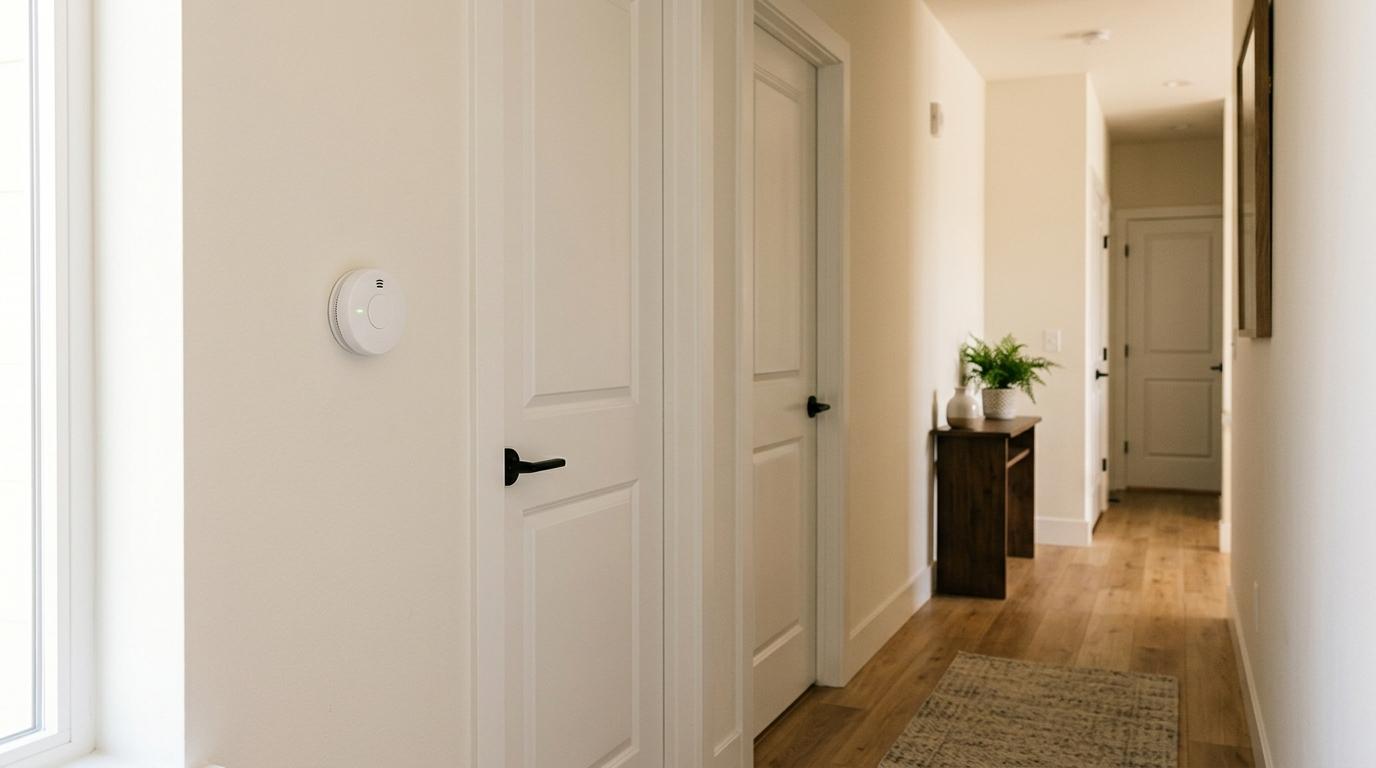
Carbon monoxide detector placement is one of those small home safety tasks that is easy to put off — but it can make a huge difference.
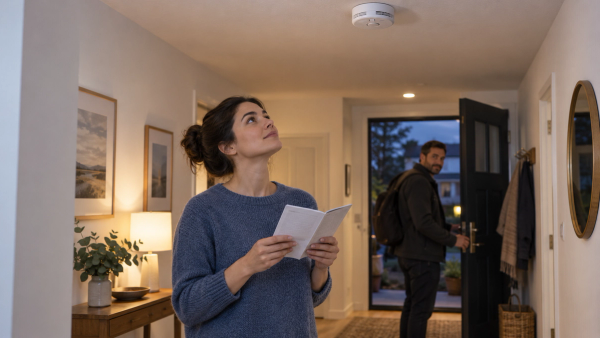
The basic rule is simple: install carbon monoxide alarms on every level of your home, including the basement, and place one in a central spot outside each sleeping area.
That matches the general guidance from safety organizations such as the NFPA and CPSC. You should also avoid placing CO alarms too close to kitchens, bathrooms, vents, windows, or garages, because steam, cooking fumes, drafts, and vehicle exhaust can cause false alarms or stop the alarm from working properly.
Test your CO alarms every month. Replace the batteries once a year if your alarm uses replaceable batteries. And if the alarm sounds continuously, do not investigate first — leave the home immediately.
Safety emergency disclaimer: This article gives general home safety guidance. It does not replace your local building codes, the instructions that came with your alarm, or advice from fire safety professionals. If your carbon monoxide alarm goes off continuously, get everyone, including pets, into fresh air right away. Then call your local emergency number or fire department from outside the home.
Why Carbon Monoxide Detector Placement Matters
#Carbon monoxide, often shortened to CO, is a gas produced when fuel does not burn completely. It can come from LPG, natural gas, petrol, diesel, wood, coal, oil, and other fuels.
The dangerous part is that carbon monoxide gives you no warning on its own. You cannot see it. You cannot smell it. You cannot taste it. That is why a properly placed carbon monoxide alarm is so important.
Good CO detector placement comes down to three things:
- Put alarms where people can hear them, especially while sleeping
- Place them where air can reach the sensor easily
- Keep them away from spots that cause false alarms or poor detection
The NFPA recommends placing CO alarms in a central location outside sleeping areas and on every level of the home. The CPSC also recommends installing CO alarms on each level, outside sleeping areas, testing them monthly, and replacing batteries yearly.
Best Height for Carbon Monoxide Alarm Placement
#A common myth is that carbon monoxide detectors must be installed low on the wall because CO is “heavy.” That is not quite right.
Carbon monoxide is slightly lighter than air, and in a normal room it mixes with the surrounding air. So you do not need to place a CO alarm near the floor.
In most homes, a carbon monoxide alarm can work well when placed:
- On a wall at about eye level, roughly 5 feet from the floor
- On the ceiling, if the alarm is designed for ceiling mounting
- High enough that children and pets cannot easily touch it
That said, always follow the instructions for your specific alarm. Some plug-in CO detectors are meant to sit in lower wall outlets. Others are made for wall or ceiling mounting. The manual may not be exciting, but it matters.
Room-by-Room Carbon Monoxide Detector Placement Table
#Use this checklist to decide where your CO alarms should go. Larger homes, split-level homes, apartments, and homes with attached garages may need more than one alarm.
India-Aware Notes: LPG Kitchens, Gas Geysers, and Apartments
#Many Indian homes use LPG cylinders, gas geysers, generators, or shared building services. That makes carbon monoxide safety especially important.
LPG Kitchen Safety
#A carbon monoxide detector is not the same as an LPG leak detector.
A CO alarm detects carbon monoxide, which can be produced when fuel burns badly or incompletely. It does not detect raw LPG leaking from a cylinder, pipe, regulator, or stove knob.
For raw LPG leaks, you need a combustible gas alarm specifically designed for LPG.
Still, a CO detector can be useful in a home that cooks with LPG, especially if the stove is old, poorly maintained, or the flame is not burning properly. Just do not put the CO alarm directly beside the stove. A better spot is a nearby dining area, passage, or central space where it can sense air from the kitchen without being hit by everyday cooking fumes.
Gas Geyser Safety
#Gas geysers can be risky when installed in small, closed, or poorly ventilated spaces. A sealed bathroom is especially dangerous because carbon monoxide can build up quickly.
Do not place a CO alarm inside the bathroom. Steam and humidity can affect the device. If a gas geyser serves a bathroom or is installed nearby, place the carbon monoxide alarm just outside the bathroom door, where it stays dry and can still be heard clearly.
For gas geyser safety, proper installation and ventilation are just as important as the alarm itself. If you are unsure whether your setup is safe, call a qualified technician or your gas service provider.
CO Detectors for Apartment Living
#If you live in an apartment, do not assume you are safe just because you do not personally use gas.
Carbon monoxide can come from a neighboring unit, a shared service room, enclosed parking, or a generator placed too close to windows or vents. In apartments, place a CO alarm outside sleeping areas. You may also want another one near the main living area if your flat has shared walls, nearby enclosed parking, or fuel-burning equipment close by.
Where Not to Place Carbon Monoxide Detectors
#Good CO alarm placement is not only about where to install the detector. It is also about knowing where not to put it.
Avoid placing carbon monoxide alarms:
- Directly beside gas stoves, LPG burners, ovens, or fireplacesCooking fumes and short bursts of combustion can cause nuisance alarms.
- Inside bathrooms or very humid areasSteam from showers can affect the sensor and shorten the life of the alarm.
- Inside garagesCar and bike exhaust contains carbon monoxide and can trigger the alarm repeatedly. Put the detector inside the home near the garage entry instead.
- Near windows, fans, or air ventsDrafts can move air away from the sensor and delay detection.
- Behind curtains, furniture, cabinets, or doorsA blocked alarm cannot sample room air properly, and people may not hear it clearly.
- In dusty, greasy, or dirty areasDust and grease can build up over time and interfere with the alarm.
- In dead air cornersAvoid tight corners where the wall meets the ceiling, especially where air does not move well.
Monthly Testing and Battery Maintenance Checklist
#A carbon monoxide alarm only helps if it has power and the sensor is still working. The CPSC recommends testing CO alarms monthly and replacing batteries every year if your model uses replaceable batteries.
Use this simple CO detector maintenance checklist:
- Test every monthPress the test button until the alarm sounds. This checks the horn and basic circuit.
- Check that everyone can hear itMake sure the alarm is loud enough from bedrooms, especially at night when doors are closed.
- Clean the outside monthlyWipe the cover with a dry cloth or gently vacuum the outside using a soft brush attachment. Do not spray cleaners on the alarm.
- Replace batteries once a yearIf your alarm uses replaceable batteries, change them at least once a year, or sooner if the device chirps for low battery.
- Do not ignore chirpingA short chirp every 30 to 60 seconds often means low battery or end of life. Check the label or manual for your model.
- Check the replacement dateCO sensors do not last forever. Replace the full alarm when it reaches the manufacturer’s end-of-life date.
- Take a real alarm seriouslyDo not just reset the alarm and stay inside. Leave the home first, then call emergency services.
What CO Alarms Cannot Fix
#A carbon monoxide alarm is a warning device. It cannot repair unsafe appliances, improve ventilation, stop a leak, or make risky fuel use safe.
The CDC, EPA, and CPSC warn against using fuel-burning equipment in unsafe indoor or semi-indoor spaces. Keep these rules simple and strict:
- Never use a portable generator indoors
- Never use a generator in a garage, basement, balcony, or enclosed area
- Never place a generator near windows, doors, or vents
- Never use a charcoal grill, hibachi, or camping stove indoors
- Never use a grill or camping stove inside a tent
- Never leave a car running in an attached garage
- Never use a gas oven or stovetop to heat the home
Also remember that a normal CO alarm cannot detect raw LPG or natural gas leaks. It only detects carbon monoxide. If you want protection from gas leaks too, you need a separate LPG or combustible gas detector, or a combination device designed for that purpose.
When to Call a Professional
#Call a qualified technician, gas service provider, plumber, or your building maintenance team if:
- A gas geyser is installed in or near a bathroom
- You see a yellow, sooty, or uneven flame on a gas appliance
- A fuel-burning appliance smells unusual, smokes, or does not vent properly
- Your CO alarm keeps sounding or chirping after the batteries are replaced
- You live in an apartment and suspect fumes from shared parking, generators, or another unit
- You are not sure where to install alarms in a multi-level home
Call emergency services or the fire department if your carbon monoxide alarm sounds continuously. Leave first. Call from outside or from a safe place.
Quick Placement Checklist
#For most homes, start with this:
- One CO alarm on every level
- One outside each sleeping area
- Extra alarm inside bedrooms if doors stay closed at night
- One near, but not inside, areas connected to attached garages
- One near, but not inside, areas with gas geysers or fuel-burning appliances
- No alarms inside bathrooms, kitchens, or garages
- No alarms behind furniture, curtains, or cabinets
- Monthly test scheduled
- Annual battery replacement scheduled
- End-of-life date checked