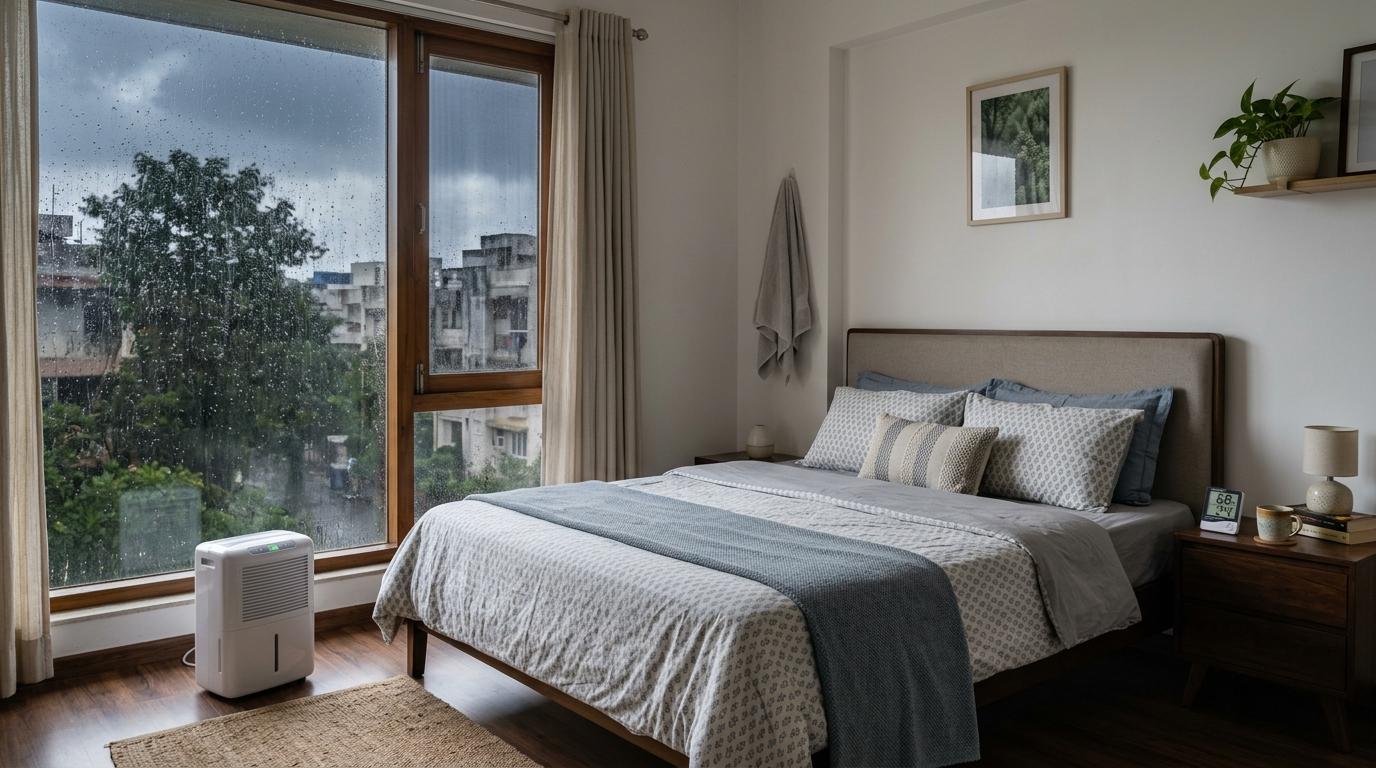
Buying a dehumidifier sounds easy until you start comparing models. One product says 12 litres/day. Another says 20 litres/day. One has a small tank, one has a drain pipe, and one looks compact but weighs a lot.
The simple answer: choose dehumidifier size by room area plus dampness level, not just the biggest number on the box. For many Indian monsoon bedrooms, a 10 to 16 litres/day unit is a sensible starting range. For larger living rooms or visibly damp spaces, consider 16 to 20+ litres/day, depending on layout and symptoms.
Before buying, do three basic things:
- Measure the room.
- Check humidity with a small humidity meter.
- Compare tank size, drainage, noise, electricity use and service support.
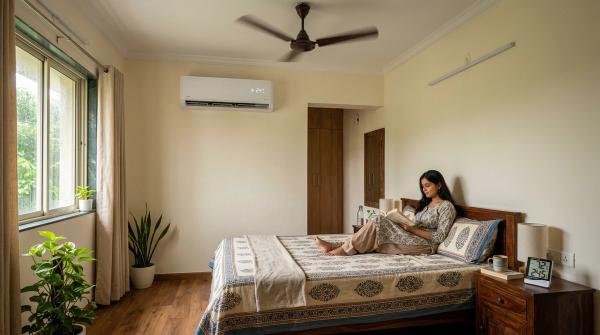
Monsoon dampness is not always obvious. Sometimes the room looks normal, but the bedsheet feels slightly cold. Clothes take too long to dry. Cupboards smell odd. Wooden doors become tight. Windows fog up. The floor feels sticky even after cleaning.
A dehumidifier can help in these situations, but only when the size is right. If it is too small, it may run for hours and still struggle. If it is much bigger than needed, you may spend extra without getting much extra benefit.
What does dehumidifier capacity mean?
#A dehumidifier’s capacity is not the same as its tank size.
When a product says 12 litres/day, 16 litres/day or 20 litres/day, it usually means the amount of water the machine can remove from the air in 24 hours under test conditions. ENERGY STAR and the U.S. Department of Energy also define dehumidifier capacity as water removed per 24 hours. In the U.S., this is often listed in pints/day instead of litres/day.
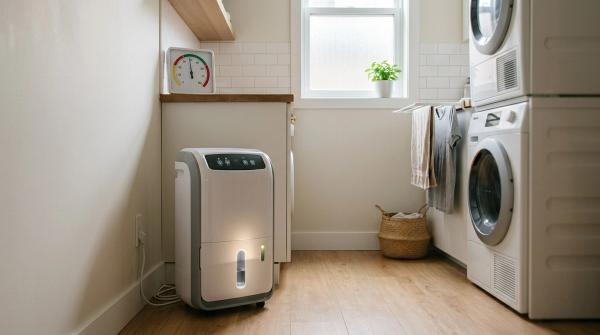
The tank is separate. A 20 litres/day dehumidifier does not usually have a 20 litre tank. The tank may be much smaller. Once the tank fills, the machine stops until you empty it, unless you connect continuous drainage.
When comparing models, check both:
- Extraction capacity: how much moisture it can remove per day.
- Tank capacity: how much water it can hold before you empty it.
Both matter during monsoon. Many buyers look only at the litres/day number, ignore the tank, and then get annoyed when they have to empty it repeatedly.
What humidity level should you aim for indoors?
#EPA guidance recommends keeping indoor relative humidity below 60%, and ideally between 30% and 50% RH.
That does not mean you need to panic every time your room crosses 60%. In many Indian cities, monsoon humidity can rise quickly. This is common in Mumbai, Kochi, Kolkata, Goa, Chennai, Bengaluru during wet weeks, and in ground-floor homes almost anywhere.
The issue is when humidity stays high for long periods and you also notice dampness symptoms.
Watch for:
- Musty smell inside wardrobes
- Bedsheets or pillows feeling damp
- Condensation on windows
- Sticky floors or walls
- Clothes drying very slowly
- Swollen wooden doors or furniture
- Damp corners, dark patches or mold-like spots
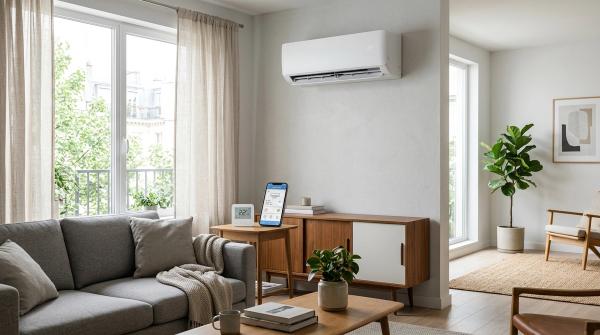
A small digital humidity meter, also called a hygrometer, is worth buying before the dehumidifier. A basic one is enough to understand whether your room is actually humid and how often it crosses 60% RH.
Dehumidifier size guide by room type
#Use this table as a practical starting point. It is not a fixed rule because every home behaves differently.
Ceiling height, wall seepage, ventilation, open doors, window gaps, wet bathrooms, indoor clothes drying and furniture placement can all affect how much capacity you need.
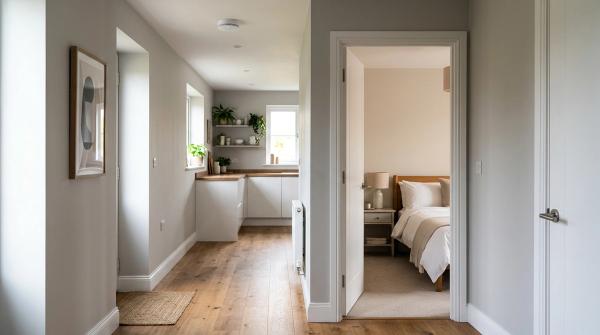
A dehumidifier does not understand room boundaries the way you do. If your bedroom door is open to a corridor, kitchen or living room, the machine may try to dry that larger connected space too. That makes it work harder. If possible, close doors while running it.
If the area must remain open, choose a higher capacity or consider using more than one unit.
How to choose the right size without overspending
#Start with the room that troubles you the most.
Do not immediately buy one big machine expecting it to dry the whole flat. In most homes, that does not work very well. Air does not move evenly from room to room, especially when doors are closed.
A more practical method:
- Pick the main problem room.
- Measure its size.
- Check humidity for a few days.
- Match the capacity to room size and dampness.
- Decide whether one portable unit is enough or separate units make more sense.
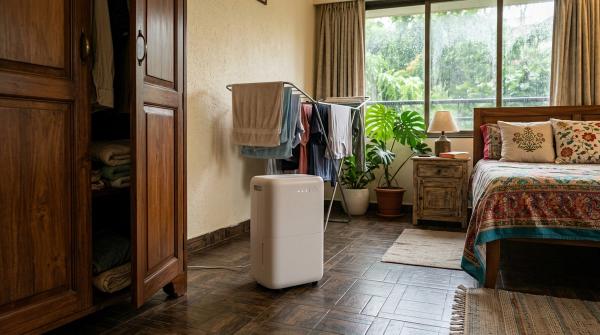
For renters, a portable dehumidifier with wheels or a carry handle can be useful. You can run it in the bedroom at night and move it to the living room during the day, as long as its capacity is suitable for both spaces.
If your bedroom is average-sized and regularly feels damp in monsoon, 12 to 16 litres/day is usually a reasonable place to start.
Checklist before buying a dehumidifier
#1. Measure the room area
#Do not guess. Measure the room.
Use this simple formula:
Length × width = room area in square feet
For example, a 12 ft × 14 ft bedroom is 168 sq. ft. That puts it in the standard bedroom range.
But room size is only the first step. If that same bedroom has a damp wall, poor ventilation or indoor laundry drying, you may need the higher side of the capacity range.
2. Use a humidity meter
#Buy or borrow a small hygrometer before buying the dehumidifier.
Check humidity at different times:
- Morning
- Evening
- After heavy rain
- With windows closed
- During normal daily use
- Near the problem area, such as a wardrobe, damp wall or window
If your room regularly stays above 60% RH and also smells damp or feels sticky, a dehumidifier may help.
If the humidity reading is normal but the smell is still bad, investigate other causes too. It could be a hidden leak, damp wooden furniture, mold behind a cupboard, dirty curtains, wet shoes, old mattresses or poor ventilation.
3. Think about drainage
#Drainage is a big deal in monsoon.
Most dehumidifiers offer one or both of these options:
- Manual tank emptying: simple, but you need to empty the tank regularly.
- Continuous drainage: useful if you can drain water into a bathroom, floor drain or safe outlet.
If you plan to run the machine for long hours, continuous drainage is convenient. But check the actual room layout before assuming it will work.
Some models have a drain port, but if there is no nearby drain or the hose cannot slope properly, you may still end up emptying the tank manually.
4. Check the noise level
#A dehumidifier is not silent.
Compressor-based models usually make a steady humming sound along with fan noise. In a living room, this may not bother you much. In a bedroom, it can be annoying, especially if you are a light sleeper.
Before buying, check:
- Noise rating
- Fan speed options
- Sleep or low-noise mode
- User reviews from people using it in bedrooms
A good bedroom dehumidifier should have a lower fan mode. Some people run the unit for 2 to 3 hours before sleeping and switch it off at night. That can work if the room is not extremely damp.
5. Look at power use
#Do not buy only by choosing the biggest capacity number.
An undersized unit may run all day and still not reduce humidity properly. An oversized unit may cost more upfront and may not be necessary for a small closed room.
The best choice is usually the smallest capacity that can comfortably handle your room and dampness level.
Useful features to look for:
- Humidity setting or humidistat
- Auto shut-off
- Timer
- Fan speed control
- Clear power consumption details
- Filter cleaning indicator, if available
Be careful with exact electricity bill claims in product listings. Your actual cost depends on your local electricity tariff, room humidity, leakage from outside air and how many hours you run the appliance.
6. Check tank size and handling
#If continuous drainage is not possible, tank size becomes important.
In a damp room, a small tank may fill quickly. Once full, the machine stops. If nobody is home to empty it, the dehumidifier simply sits there doing nothing.
Check these details:
- Tank capacity
- Ease of removal
- Whether it has a handle
- Whether it spills while carrying
- Full-tank auto shut-off
- Whether elderly family members can handle it safely
A bigger tank is useful, but remember that it becomes heavier when full.
7. Confirm service support
#This is boring but important: check service support before buying.
A dehumidifier has filters, coils, a tank, a fan, a compressor in many models, and electronic parts. Over time, it may need cleaning, servicing or replacement parts.
Before ordering, look for:
- Customer support in your city
- Clear warranty terms
- Easy-to-clean filter and tank
- Availability of replacement filters, if used
- Local repair options
- Brand or seller response quality
Do not buy only because a model has attractive online ratings. If servicing is difficult, even a highly rated appliance can become frustrating later.
Dehumidifier or AC dry mode: which is better?
#AC dry mode can reduce humidity because air conditioners remove some moisture while cooling the air. For short periods, this may be enough.
But monsoon weather is tricky. The room may already feel cool, while the air is still damp. If you keep using AC dry mode, the room may become uncomfortably cold before it feels properly dry.
A standalone dehumidifier is useful when moisture is the main problem, not heat.
It can help in:
- Bedrooms
- Wardrobe areas
- Closed rooms
- Laundry drying rooms
- Damp corners
- Ground-floor rooms
- Rooms that smell musty after rain
For best results, keep doors and windows closed while running it. If windows are open during monsoon, humid outdoor air keeps entering and the machine has to work much harder.
Common sizing mistakes to avoid
#Buying only by room size
#Room size matters, but symptoms matter too.
A 180 sq. ft. bedroom with mild humidity and a 180 sq. ft. bedroom with a damp wall may need different capacities.
Confusing tank size with extraction capacity
#A large tank does not always mean stronger moisture removal.
Always check the litres/day or pints/day capacity separately from the tank capacity.
Expecting one unit to dry the whole apartment
#A portable dehumidifier works best in the room where it is placed. If doors are closed, air from other rooms will not reach the unit properly.
You can move one unit between rooms, but it will not magically dry the whole home at once.
Keeping windows open while using it
#During monsoon, open windows bring in humid outdoor air. Close doors and windows while the machine runs, otherwise it keeps fighting new moisture.
Ignoring the source of dampness
#If water is entering through walls, ceilings, pipes or windows, a dehumidifier can reduce air moisture but it cannot fix the leak.
You still need to repair the source of dampness.
Related AllBlogs guides to read next
#If you are still comparing options, these existing AllBlogs guides cover nearby decisions:
- AC Dry Mode vs Dehumidifier for Monsoon Humidity
- Humidity Meter vs Dehumidifier: What Should You Use First in a Damp Room?
- Air Purifier vs Dehumidifier for Indian Monsoon Homes
- Moisture Absorber vs Dehumidifier for Indian Monsoon Wardrobes
- Bathroom Exhaust Fan vs Dehumidifier: What Should Small Apartments Use?
Use this article for sizing. Use those guides when you are still deciding whether a dehumidifier is the right tool at all.
Safety and health notes
#A dehumidifier is a home comfort and moisture-control appliance. It is not medical advice and it is not a medical device.
Please get professional help if you notice:
- Severe or spreading mold
- Active water leaks
- Damp electrical sockets or wiring
- Water near appliances
- Breathing trouble, wheezing or persistent cough
- Dampness after flooding or major seepage
- Burning smell or sparks near wet areas
For breathing symptoms, speak with a qualified healthcare professional. For leaks, waterproofing, mold removal or electrical risks, call the right trained professional.
Do not depend on a dehumidifier to solve unsafe building problems.
Source notes
#This guide uses EPA indoor humidity guidance, which recommends keeping indoor relative humidity below 60% and ideally between 30% and 50% RH.
It also follows the ENERGY STAR and DOE approach of treating dehumidifier capacity as water removed per 24 hours under test conditions.
General appliance buying guidance, including the importance of matching capacity to room size, is also consistent with consumer technology explainers and current dehumidifier buying guidance.