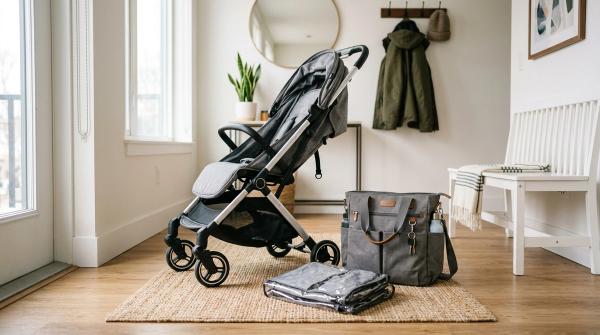
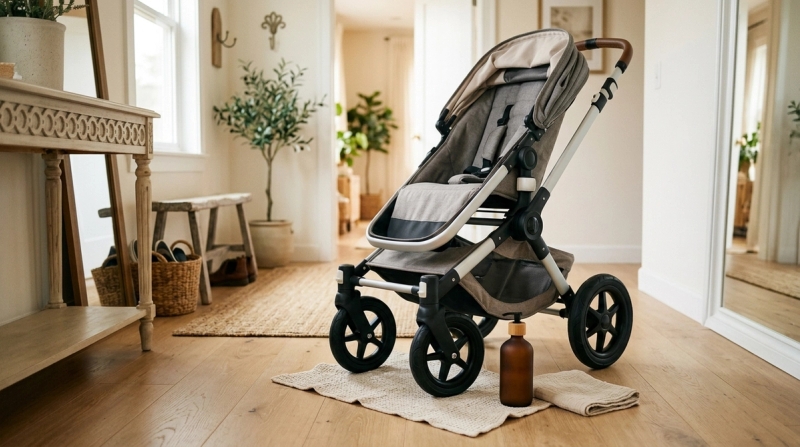
A stroller picks up more dirt than we realize. Crumbs settle into the seat, milk dries around the straps, mud sticks to the wheels, and rainwater can hide in folds and joints. The safest approach is simple: vacuum dry mess first, spot-clean fabric, wipe straps gently, clean wheels and frame, dry everything fully, then check brakes, harness, wheels and folding locks before the next ride.
This guide offers general stroller care advice. Always follow your stroller’s original instruction manual first. For child positioning, restraint use, sleep safety, or medical concerns, follow guidance from your child’s doctor or another qualified pediatric professional.
Why stroller cleaning is also a safety habit
#A stroller goes almost everywhere your baby goes: sidewalks, parks, parking lots, elevators, malls, dusty entrances, rainy roads and sometimes right through a snack spill you did not notice in time.
Over time, crumbs get stuck in seams, food residue collects on the harness straps, and mud or hair builds up around wheels. Water can also sit in fabric folds or frame joints if the stroller is folded before it dries.
Cleaning helps you notice problems early, including sticky buckles, weak brakes, dragging wheels, loose folding latches or fraying straps. These are not just cosmetic issues. Current stroller safety rules focus on stability, brakes, restraints, latches, folding mechanisms, structural integrity, cords, wheels and openings, so the parts you clean are often the same parts that matter most for safe everyday use.
Stroller cleaning checklist
#Read the manual before cleaning
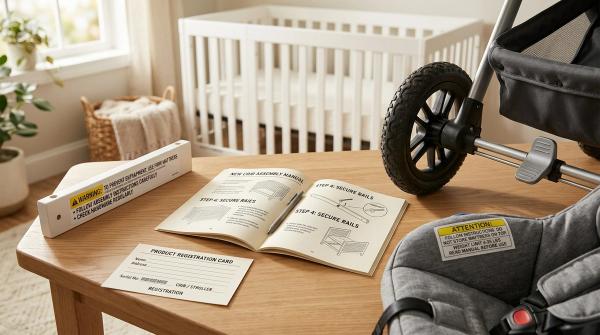
#Every stroller is different. Some fabrics can be removed and washed. Some are spot-clean only. Some wheels pop off with a release button, while others do not. Some folding joints may allow a specific lubricant, while others should never be lubricated.
Before cleaning, check the manual for:
- Whether the seat fabric, canopy, basket or padding can be removed
- Washing and drying instructions
- Whether the wheels are removable
- Warnings about straps, buckles, brakes and folding parts
- Approved cleaning products or lubricants, if any
If you no longer have the paper manual, look up the manufacturer’s official manual using the stroller brand and model name. When safety parts are involved, guessing is not worth it.
Supplies you need
#Keep the cleaning kit gentle and simple:
- Vacuum with crevice tool
- Soft cloths or microfiber towels
- Mild soap or gentle detergent
- Warm water
- Soft brush or old toothbrush
- Tweezers for hair or thread around wheels
- Dry towel
- Small bowl or bucket
- Manual-approved lubricant only if your manual allows it
Avoid bleach, harsh chemical cleaners, abrasive scrub pads, pressure washers, machine washing harness straps and folding the stroller while it is damp.
Step 1: Clean the fabric and canopy
#Start dry. Shake out loose crumbs if possible, then vacuum the seat base, backrest seams, side pockets, recline folds, canopy folds, basket corners and footrest area. A crevice tool helps with tight seams.
For stains, use warm water, a soft cloth and a small amount of mild soap. Dab or gently rub the area instead of scrubbing hard. If a sticky patch will not lift, hold a damp cloth over it for a minute, then wipe again.
Only machine wash removable fabric if the stroller manual says it is allowed. Removable does not always mean machine washable. Canopies often include shaped panels, supports or seams that can be damaged by machine washing, so spot-cleaning is usually safer unless the manual says otherwise.
After cleaning, leave the stroller open in a ventilated place until the seat, canopy, basket, straps, wheels and frame joints are fully dry.
Step 2: Clean stroller straps gently
#Stroller straps are part of the restraint system, so treat them carefully. Do not soak, bleach, boil, iron or machine-wash harness straps unless the manufacturer specifically says it is safe.
To clean straps:
- Open or recline the stroller so you can reach the full strap.
- Remove crumbs around the buckle and crotch strap.
- Dampen a microfiber cloth with warm water.
- Add a tiny amount of mild soap if the straps are sticky.
- Wipe along the strap length.
- Wipe again with a clean damp cloth to remove soap.
- Pat dry with a towel.
- Leave straps open until fully air-dry.
While cleaning, click the buckle closed and release it again. It should click firmly and open normally. If the buckle sticks, feels loose or does not lock properly, stop using the stroller until you check the manual or contact the manufacturer.
Step 3: Clean stroller wheels
#If the stroller feels hard to push, pulls to one side, squeaks or rolls unevenly, check the wheels.
First, see if the wheels are removable. If they are, follow the manual’s release instructions. If not, clean around them while attached.
Brush off dry dirt before adding water. Then use warm water, mild soap and a soft brush to clean the tire surface, wheel edges, axle areas, front swivel areas and brake contact zones without bending or forcing parts.
Hair, thread and thin plastic can wrap tightly around axles. Use tweezers carefully to remove visible debris. After cleaning, dry the wheels, axles, pins and nearby frame parts with a towel, especially after rain, muddy walks or monsoon use.
Step 4: Wipe the frame and folding joints
#Use a damp cloth with mild soap to wipe the handlebar, side rails, footrest, frame tubes and basket supports. Pay attention to folding joints and latch areas, but do not spray water directly into joints, brakes, buckles or latch mechanisms.
Dry the frame with a towel before folding. If the stroller fold feels stiff or the wheels squeak after cleaning, check the manual before applying lubricant. Do not spray random oils near fabric, brakes, buckles, straps or places your child can touch.
Routine stroller safety checks
#Cleaning time is the easiest time to inspect the stroller. If a safety part looks damaged or does not work properly, do not patch it with tape, glue, wire or a DIY repair. Check the manual and contact the manufacturer for proper guidance or replacement parts.
Brake check
#Place the stroller on a flat surface, engage the brake, and gently try to push the stroller. It should stay in place. Then release the brake and check that the wheels move normally.
Watch for slipping brakes, loose brake pedals, wheels moving while the brake is engaged, debris blocking the brake or cracked brake parts.
Harness check
#Look for frayed straps, torn stitching, twisted webbing, cracked buckles, sticky release buttons, loose adjustment sliders or straps that no longer tighten properly. The buckle should click closed and stay closed until released.
Folding latch and frame lock check
#The stroller should open fully and lock before your child is placed inside. Check that the lock clicks as expected, the frame does not feel unusually wobbly, and no fabric, straps, fingers or basket items are caught in the folding area.
Wheel check
#Confirm wheels are attached securely, quick-release wheels click back into place, front swivel wheels turn smoothly, and tires or wheel surfaces are not badly cracked. If a wheel keeps sticking, wobbling or detaching, stop using the stroller until you follow the manual or contact the manufacturer.
Do not skip recall checks
#A stroller can be recalled after it has already been sold if a safety problem is found. Recall notices may involve brakes, restraints, latches, folding mechanisms, wheels, frames, cords, openings or stability.
Every few months, check the official recall database or the manufacturer’s recall page for your stroller brand and model. If there is a recall, follow the official instructions instead of improvising a fix.
Storage tips for apartments, heat, rain and monsoon weather
#For small apartments, wipe wheels before bringing the stroller deep inside, let wet parts dry before folding, store it upright only if the model allows it, and avoid piling heavy items on top.
In hot weather, avoid storing the stroller next to heaters or inside a hot car trunk for days. Let hot metal, plastic or buckles cool before placing your child in the stroller.
After rain or monsoon use, do not fold and store the stroller immediately. Wipe the frame, wheels, axles and brake areas, open the canopy fully, and let the stroller stand in a dry, ventilated room until everything is fully dry.
Common cleaning mistakes to avoid
#Avoid these shortcuts:
- Folding the stroller while damp
- Soaking harness straps
- Using bleach or harsh cleaners without manual approval
- Machine washing spot-clean-only parts
- Spraying water into joints, brakes or buckles
- Ignoring sticky brakes or buckles
- Using random lubricant
- Storing the stroller dirty after park, rain or city use
- Skipping recall checks
Regular gentle cleaning is better than one aggressive deep clean every few months.
Simple maintenance routine
#Before walks, check that the stroller opens and locks, test the brake, click and release the harness buckle, and look at the wheels.
After messy outings, shake out crumbs, wipe spills, brush dirt off wheels and dry the stroller if it got wet.
Weekly, vacuum the seat and basket, wipe the frame, clean sticky straps and check the brake and buckle.
Monthly, clean wheels more thoroughly, remove hair from axles, inspect frame locks and check for frayed straps or cracked buckles.
Every few months, check recalls and review the manual if you notice stiffness, squeaking or loose parts.
Related AllBlogs guides to read next
#- Baby Stroller Buying Checklist for New Parents
- When Can Baby Use a Stroller? A Practical Age, Fit, and Safety Guide
- Stroller vs Baby Carrier: What Should New Parents Buy First?
- Baby Gear Recall Checklist: What New Parents Should Check Before Buying