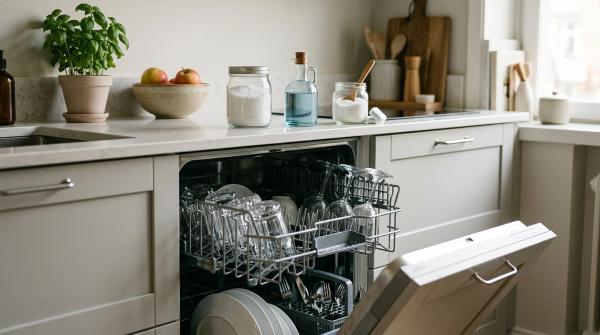
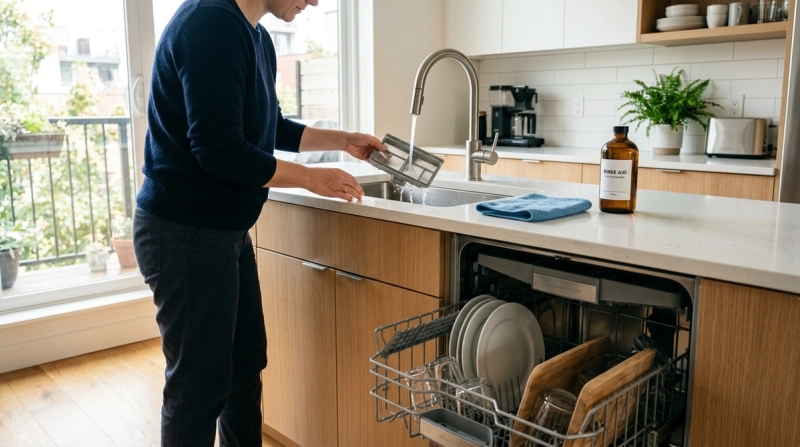
A dishwasher smell is usually not a sign that the machine is ruined. Most of the time, it is something ordinary: food stuck in the filter, stale water near the drain, grease around the door seal, clogged spray arm holes, or hard-water buildup. Start with the filter, then check the gasket, drain area, spray arms, rinse aid and hard-water settings.
Dishwashers are warm, wet, and closed for hours. Even a small amount of food residue can start smelling bad if it sits long enough. Rice grains, dal, curry, egg, dairy, chutney, oily gravies and tiny food scraps can all get trapped in places you do not notice right away.
Quick Comparison: Dishwasher Smell Causes and Fixes
#The Dishwasher Maintenance Checklist
#You do not need a complicated toolkit for basic dishwasher odor checks. In most cases, warm water, mild dish soap, a soft brush, a microfiber cloth and white vinegar are enough.
Do not mix strong cleaners. Do not mix bleach with vinegar or any other product. Do not open electrical panels, pump housings or any part that looks like it belongs to a technician.
1. Clean the Filter First
#The filter is the first place to check when you have dishwasher odor. Many modern dishwashers have manual filters that catch food particles. If the filter is not cleaned regularly, food softens, breaks down and smells. This can happen faster if your dishwasher handles oily pans, rice, dal, eggs, dairy, meat, chutneys or thick curry residue.
How to Clean a Dishwasher Filter Safely
#- Pull out the bottom rack.
- Look at the base of the dishwasher tub.
- Find the round or cylindrical filter.
- Twist and lift it out, if your model allows that.
- Rinse it under warm running water.
- Use a soft brush or old toothbrush to clean the mesh.
- Wash it with mild dish soap if it feels greasy.
- Reinstall it properly before running the dishwasher again.
Do not use steel wool, metal wire, knives or anything sharp on the filter. If you damage the mesh, food can move into parts of the dishwasher where it should not go. If the filter does not come out easily, stop and check the manual.
For regular use, once a month is a good starting point. If you use the dishwasher daily, wash oily dishes often or live in a hard-water area, check it every two weeks at first.
2. Check the Drain Area Without Taking Plumbing Apart
#A dishwasher drain smell often means water is not leaving properly, or dirty water is coming back into the machine. A small amount of water below the filter area can be normal in some models, but visible standing water in the bottom of the tub is different.
After removing the filter, look into the recessed area where the filter sits. Remove obvious debris such as rice grains, lemon seeds, food scraps, loose labels or small bones. Wear gloves if needed. If you see broken glass and cannot remove it safely, do not risk cutting yourself.
Now check the kitchen sink. If the sink drains slowly, the dishwasher may also struggle because both often use connected drainage. This is especially common in apartments.
Do not dismantle the sink trap, remove hoses or adjust plumbing if you are not trained. If the sink is slow, the dishwasher has standing water, or the smell is sewage-like, call building maintenance, your landlord or a plumber.
3. Wipe the Door Gasket and Door Edges
#The rubber gasket around the door keeps water from leaking out. It also collects moisture, grease, detergent residue and tiny food particles. This area is easy to forget because it does not always get washed directly during a normal cycle.
Open the dishwasher fully. Wipe around the rubber seal with warm water and a little mild dish soap. Gently clean inside the folds, especially along the bottom door edge. Dry the area with a clean cloth.
Avoid knives, pins, toothpicks or sharp tools near the gasket. A cut gasket can lead to leaks, which is a bigger problem than smell.
After a cycle, leave the dishwasher door slightly open for a while if it is safe. This helps moisture escape in humid weather, during monsoon months and in small apartment kitchens with poor ventilation.
4. Inspect the Spray Arms
#Spray arms push water around the dishwasher. If the small holes get blocked, the wash becomes weaker. Food remains on dishes, residue builds up and the dishwasher smell can return quickly.
Common blockers include rice grains, seeds, eggshell pieces, tiny bones, food particles and mineral scale from hard water.
If your manual says the spray arms are removable by hand, remove them and rinse them under running water. If they are not removable, inspect them while still in place. Use a wooden toothpick gently if something is stuck. Avoid metal skewers, pins or needles.
Before running a cycle, spin the spray arm by hand. If a tall plate, kadai, pan handle or large bowl blocks it, the dishwasher will not clean properly.
5. Run a Simple Cleaning Cycle
#Once you have cleaned the filter, checked the drain area, wiped the gasket and inspected the spray arms, run an empty cleaning cycle.
Place one cup of white vinegar upright on the top rack. Run a hot cycle with no dishes inside. This can help loosen grease and reduce odor.
Do not pour vinegar into a dishwasher that already has bleach or another chemical cleaner inside. Do not mix vinegar with bleach. If your dishwasher manual recommends a specific dishwasher cleaner, use that instead.
Hard-Water Dishwasher Smells: India-Aware Notes
#Hard water is common in many Indian cities and apartment complexes, especially where borewell water or mixed water supply is used. Hard water can leave mineral deposits inside the dishwasher. These often look like white chalky marks, cloudy film or scale on the tub, racks and dishes.
Hard water itself may not smell much. The problem is that scale creates rough surfaces where grease and food residue can stick. Over time, that trapped residue can create a musty dishwasher odor.
Some dishwashers have a built-in water softener compartment. If yours does, keep it filled with dedicated dishwasher salt as directed in the manual. Do not use table salt. If your dishwasher does not have a softener compartment, do not throw salt into the tub.
Rinse aid helps water slide off dishes and interior surfaces more easily. Less water sitting inside the machine means less chance of a musty smell. In hard-water areas, rinse aid can also reduce spotting, cloudy marks and drying issues.
Do Not Over-Rinse Every Dish
#Scrape food into the bin before loading, but do not wash every plate until it looks spotless. Modern dishwashers are designed to clean dirty dishes, and many use soil-sensing cycles that adjust the wash based on how dirty the water appears.
The better habit is simple: scrape solids, remove bones and large food pieces, clear sticky rice lumps, wipe very thick curry or gravy residue, and load the dishes properly.
For Indian cooking, it is helpful to remove heavy oil, stuck rice, thick dal and chunky masala before loading. But let the dishwasher do the actual washing.
Loading Habits That Help Prevent Dishwasher Odor
#Do not overload the dishwasher. If water cannot reach bowls, pans and plates, food residue stays behind. Keep tall items away from the spray arms. Use detergent made for dishwashers, not regular hand dishwashing liquid.
If your machine has an intensive, heavy or high-temperature cycle, use it for oily or heavily soiled loads, as long as the dishes and cookware are dishwasher-safe.
After unloading, take a quick look at the bottom of the tub. If you see a lemon seed, rice clump, sticker or food piece, remove it before it reaches the filter.
When to Call Service Safely
#Stop troubleshooting and call service, building maintenance or a qualified plumber if the dishwasher still has standing water after you clean the filter, the smell is electrical or smoky, water leaks onto the floor, the dishwasher trips power, the drain smell returns quickly, or you suspect an issue with the drain hose, pump, inlet valve or wiring.
Do not open the motor area, door panel, pump housing or electrical sections. Do not cut, extend or reroute drain hoses yourself. If you live in an apartment, do not make plumbing changes without approval from the owner or building maintenance team.
A Simple Weekly and Monthly Routine
#After Each Cycle
#- Leave the door slightly open for drying, if safe.
- Check that no food pieces are sitting in the tub.
- Refill rinse aid when the indicator shows low.
Weekly
#- Wipe the door edge and gasket.
- Check that the spray arms spin freely.
- Look for visible residue around the filter.
Every Two Weeks to One Month
#- Remove and rinse the filter.
- Check the sump area for food bits.
- Run an empty hot cycle if odor is starting.
As Needed in Hard-Water Areas
#- Refill dishwasher salt if your model has a softener.
- Use rinse aid regularly.
- Watch for white scale or cloudy residue.
This routine is not glamorous, but it usually works.