If your washing machine has started draining slowly, leaving lint on clothes, or giving off that damp, stale smell, the filter may be overdue for a clean.
As a simple rule, clean your washing machine filter every 1 to 3 months. If you wash clothes daily, have pets, wash towels often, or live in a humid place, clean it closer to once a month.
For a front-load washing machine, this usually means cleaning the drain pump filter near the bottom front panel. For many top-load washing machines, it means removing and rinsing the lint filter inside the drum.
Before you start, check your owner’s manual. And if anything feels stuck, starts leaking, smells electrical, or needs force, stop there. That is not the moment to “try one last time”.
Washing machine filter cleaning is not exciting, but it saves you from a lot of annoying laundry problems. Slow draining. Grey lint on black clothes. Musty smells. Water sitting in the drum. That weird rotten egg smell near the washer.
In many Indian apartments, especially during monsoon, these problems show up faster. The machine sits in a damp bathroom, utility corner, or service balcony. The drum does not dry properly. Detergent residue builds up. Wet lint stays trapped. And slowly, the machine starts smelling like it needs help.
The good news is that basic filter cleaning is usually simple. You do not need to open the machine body or repair anything. You just need to know which filter your washer has, how to drain it safely, and when to call a technician.
Let’s keep it practical.
First, Know Which Filter Your Washing Machine Has
#Not every washing machine has the same kind of filter. Front-load and top-load machines handle lint and debris differently, so the cleaning method is different too.
Front-load washer filter: the drain pump filter
#Most front-load washing machines have a drain pump filter. Some people call it a coin trap because, honestly, that is often what you find inside.
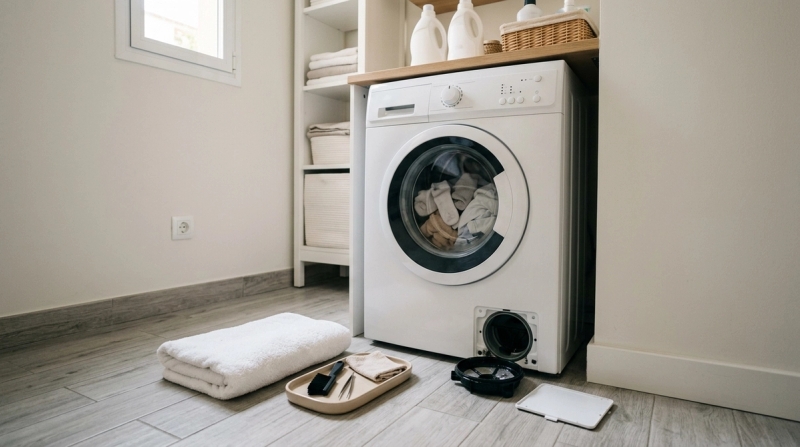
It is usually behind a small access door near the bottom left or bottom right of the front panel.
This filter protects the drain pump from things that should never reach it, such as:
- Coins
- Hair pins
- Safety pins
- Threads
- Lint clumps
- Pet hair
- Small fabric pieces
- Buttons
- Tissue bits from pockets
When the drain pump filter gets blocked, you may notice:
- The washer drains slowly
- Water stays inside the drum
- Cycles take longer than usual
- Clothes come out too wet
- The machine smells musty
- A drain error appears on the display
Top-load washer filter: the lint filter
#Many top-load washing machines have a lint filter inside the drum. It may look like a small plastic mesh panel, a removable cassette, or a little mesh bag attached near the tub wall.
This filter catches loose fibres, lint, tissue pieces, and other small laundry debris during the wash.
When the lint filter is full, you may see:
- Lint stuck on dark clothes
- Grey or white residue on laundry
- Poor rinsing
- A stale smell from wet lint and detergent scum
- More lint floating around in the drum
Some newer washing machines do not have an obvious removable lint filter. If you cannot find one, do not start unscrewing random parts. Check the manual first.
Safety Checklist Before Cleaning the Washing Machine Filter
#A washing machine uses both water and electricity, so take a few minutes to do this safely.
Most appliance brands give the same basic advice: follow the manual, unplug the machine, and drain trapped water before opening the filter area.
Use this checklist every time.
- Switch off and unplug the machineDo not just press the power button. Remove the plug from the wall socket before opening any filter cover.
- Check the owner’s manualFilter location, cap direction, emergency drain hose design, and cleaning steps can vary by model.
- Let hot water cool firstIf the last wash used hot water, wait before draining water from the filter area.
- Keep towels and a shallow tray readyEven if you drain the water properly, some water will spill. It always finds a way.
- Drain water before removing a front-load filterThis is the step that saves your floor from becoming a small indoor pond.
- Do not force stuck partsIf the drain pump filter will not turn by hand, do not use pliers or tools. You may crack the cap or damage the pump housing.
- Avoid electrical or plumbing repairsCleaning an accessible filter is fine. Opening internal panels, fixing wiring, changing pumps, or modifying drain pipes is service work.
How to Clean a Front-load Drain Pump Filter
#Time needed: 10 to 15 minutesYou’ll need: old towel, shallow tray, small bowl if needed, old toothbrush, flashlight
Step 1: Prepare the floor
#Place an old towel in front of the washing machine. This is especially important if your washer is in a bathroom, kitchen corner, or service balcony.
Slide a shallow tray under the filter access area.
Now open the small access door near the bottom front of the machine.
Step 2: Find the emergency drain hose
#Many front-load washers have two things behind this small door:
- A small rubber drain hose with a stopper
- A larger round drain pump filter cap
Pull the small hose out gently. Remove the stopper and let the water drain slowly into the tray.
Do not rush this part. The tray may fill quickly, and you may need to empty it more than once.
If your machine does not have a small drain hose, check the manual. Some models drain directly from the filter cap, which can be messier.
Step 3: Remove the drain pump filter
#Once the water stops flowing, put the stopper back on the small hose and clip the hose into place.
Now turn the large round filter cap. In most machines, it opens counterclockwise. Pull the filter out slowly.
A little more water may come out, so keep the towel in place.
Step 4: Remove dirt and debris
#Take out anything stuck in the filter.
You may find:
- Coins
- Hair clips
- Threads
- Lint balls
- Buttons
- Small fabric pieces
- Tissue pulp
- Pet hair
Rinse the filter under running water. Use an old toothbrush to scrub away slimy detergent buildup, lint, and grime stuck in the grooves.
Step 5: Check the filter cavity
#Use a flashlight and look inside the opening where the filter sits.
If you see lint or debris near the front, remove it carefully with your fingers.
Do not push tools deep into the pump area. Do not try to rotate, poke, or repair internal pump parts.
Step 6: Fit the filter back tightly
#Put the filter back in place and turn it clockwise until it feels secure.
It should sit firmly and not feel loose.
Close the access door. Plug the machine back in and run a short rinse or drain cycle. Watch the filter area for leaks.
If water drips, switch off the machine, unplug it, and check whether the filter cap is seated properly.
How to Clean a Top-load Lint Filter
#Time needed: about 5 minutesYou’ll need: old toothbrush
Step 1: Find the lint filter
#Open the lid and look inside the drum.
The lint filter may be:
- On the side wall of the tub
- Near the agitator
- Close to the upper rim
- Inside a small removable plastic panel
If you cannot see it, check the owner’s manual. Some machines hide it surprisingly well.
Step 2: Remove it gently
#Press the release tab or slide the filter out, depending on the design.
Do not pull too hard if it does not come out easily. A broken filter is more annoying than a dirty one.
Step 3: Remove lint by hand
#Peel off the lint layer and throw it in the dustbin.
Avoid washing big lint clumps down the sink. They can add to drain blockages later.
Step 4: Rinse and scrub the mesh
#Hold the filter under running water.
Use an old toothbrush to clean:
- The mesh
- The corners
- The plastic frame
- Any sticky detergent residue
If you use too much detergent, the filter can develop a slippery, greyish layer over time.
Step 5: Put it back properly
#Refit the lint filter until it clicks or sits firmly.
A loose filter will not trap lint properly during the next wash.
How to Fix Washing Machine Smell, Including Rotten Egg Smell
#A smelly washing machine usually comes from trapped moisture, wet lint, detergent residue, body oils, and stagnant water.
In Indian homes, the smell can be stronger because many machines are kept in bathrooms, enclosed utility spaces, or service balconies with limited airflow.
During monsoon, the problem gets worse. Clothes take longer to dry, the air stays damp, and the washer drum may remain moist for hours after use.
The EPA recommends keeping indoor humidity below 60%, ideally between 30% and 50%, to reduce mould-friendly conditions. That is not always easy in monsoon weather, but you can still reduce moisture inside the washer.
What to do after every wash
#A few small habits make a big difference:
- Leave the washer door or lid open for a few hours.
- Pull the detergent drawer out slightly so it can dry.
- Wipe the front-load rubber door seal, especially the lower fold.
- Remove wet laundry as soon as the cycle ends.
- Keep the area around the washer ventilated when possible.
Clean the rubber door seal
#Front-load machines have a rubber gasket around the door. This area quietly collects water, hair, lint, detergent slime, and sometimes even small objects.
Gently pull back the folds and wipe them with a clean cloth.
Do this weekly if:
- You wash clothes daily
- You live in a humid area
- You notice black marks
- The machine smells musty
- Water collects in the gasket fold
Use the right amount of detergent
#More detergent does not mean cleaner clothes.
Too much detergent can leave residue inside the drum, drain pump filter, hose, detergent drawer, and rubber gasket.
Use the amount recommended for your machine and detergent type, especially if you have a front-load or high-efficiency washer.
If your machine has a tub clean or drum clean cycle, run it as recommended in the manual. A washing machine cleaner or descaling product can help with residue and mineral buildup, but it does not replace manual filter cleaning.
Monthly and 1 to 3 Month Washer Maintenance Schedule
#A simple routine can prevent most lint, smell, and slow-drain problems.
After every wash
#- Remove clothes soon after the cycle ends.
- Leave the door or lid open to dry.
- Wipe the front-load gasket if it feels wet.
- Keep the detergent drawer slightly open when possible.
Weekly
#- Check the rubber gasket on front-load machines.
- Wipe the detergent drawer area if you see residue.
- Remove visible lint from the drum or door area.
- During monsoon, give the machine extra drying time.
Monthly
#- Run the tub clean or drum clean cycle, following the manual.
- Clean the top-load lint filter if your machine has one.
- Check the drain hose area for visible kinks or water pooling.
- Wipe the outside and control panel with a lightly damp cloth.
Do not use a soaking wet cloth on the control panel.
Every 1 to 3 months
#- Clean the front-load drain pump filter.
- Clean the top-load lint filter more thoroughly.
- Check whether smells, slow draining, or lint marks keep coming back.
- Clean monthly if you wash daily, have pets, wash towels often, or deal with heavy lint.
When to Stop and Call Service
#Basic washing machine filter cleaning is useful, but it has limits.
Stop and call authorised service or a qualified technician if:
- The drain pump filter is stuck and will not turn by hand.
- Water keeps leaking even after the filter cap is tightened.
- The machine still does not drain after the filter is cleaned.
- You hear grinding or strange pump noises during draining.
- The washer shows a drain error again and again.
- You smell burning, see sparks, or suspect an electrical issue.
- You need to remove large machine panels to reach the problem.
- You think the issue is in the building drain or plumbing line.
If you are renting or living in an apartment, inform the landlord or building maintenance team before doing anything beyond basic cleaning.
Keep your DIY work limited to accessible filters, towels, trays, wiping, rinsing, and routine care.
Quick Troubleshooting Guide
#Helpful AllBlogs reads to consider next
#- Front Load Washing Machine Smell: Gasket, Drawer and Filter Checklist
- Washing Machine Settings Explained: Rinse, Spin, Quick Wash and Tub Clean
- Washing Machine Anti-Vibration Pads vs Stand: What Apartment Homes Should Buy?
- Dishwasher Smell Checklist: Filter, Drain, Rinse Aid and Apartment Fixes