If you’re comparing HEPA vs carbon filter, here’s the easiest way to understand it: HEPA handles particles. Carbon handles smells and gases. If your home feels dusty, a HEPA filter matters most. If your room smells of cooking, smoke, pets, paint, traffic fumes or new furniture, activated carbon matters. In many city apartments, the best option is usually an air purifier with both.
This article is for general home and appliance guidance only. It is not medical advice. If you have asthma, allergies, COPD, or any breathing-related condition, speak with a qualified healthcare professional about your indoor air needs.
Why this choice actually matters
#Most people do not buy an air purifier randomly. Usually, there is a reason.
Maybe dust returns the day after cleaning. Maybe your bedroom feels stuffy at night. Maybe cooking smells stay in the living room for hours. Maybe traffic fumes enter from the balcony. Maybe there is pet smell, dampness, incense smoke or that closed-room feeling that does not go away.
In many Indian homes, especially apartments, it is not just one problem. It is a mix.
That is why choosing the right filter matters. Product pages can be confusing because they mention HEPA, activated carbon, pre-filters, UV, ionisers and multi-stage purification. They sound similar, but they do not do the same job.
Indoor air pollution is not one single thing. Some pollutants are tiny solid particles. Some are gases. Some are odours. A filter that works well for dust may do little for smells. A filter that reduces odours may not help much with PM2.5.
The basic difference is simple:
- HEPA filters capture particles
- Activated carbon filters help with gases and odours
Official air-cleaner guidance also separates particle filtration from gas-phase filtration. Mechanical filters such as HEPA are used for particles, while activated carbon and other gas-phase filters are used for gases and odours.
What a HEPA filter removes
#HEPA stands for High-Efficiency Particulate Air.
In normal language, it is a dense physical filter that traps tiny particles as air passes through it. Think of it like a very fine net. The purifier pulls room air in, the filter catches dust and other particles, and cleaner air comes out.
A HEPA air purifier is most useful when your main problem is dust, pollen, pet dander or fine outdoor pollution.
HEPA helps with
#- Dust
- Lint
- Pet hair
- Pet dander
- Pollen
- Mould spores
- Dust mite particles
- PM2.5 and PM10
- Fine smoke particles, including soot and ash
If you are looking for an air purifier for dust, HEPA is the filter that matters most. A carbon filter alone will not fix a dusty room because carbon is not designed to trap particles floating in the air.
What to check when buying a HEPA purifier
#Look for clear terms such as:
- True HEPA
- H13 HEPA
- A specific HEPA grade mentioned by the brand
Be careful with vague phrases like:
- “HEPA-type”
- “HEPA-like”
- “HEPA-style”
These may sound reassuring, but they do not always mean the filter meets the same standard as a proper HEPA filter.
Also remember this: HEPA does not remove smells by itself. Your room may become less dusty but still smell of frying oil, damp clothes, smoke, paint, pets or old furniture. For that, you need carbon.
What an activated carbon filter does
#An activated carbon filter works differently from HEPA.
Activated carbon is treated so that it has a large internal surface area full of tiny pores. Odour molecules and some gases stick to this surface through a process called adsorption.
That is why carbon is useful for smells and gases, not dust.
Activated carbon helps with
#- Cooking smells
- Frying oil odours
- Smoke smell
- Pet odours
- Bathroom smells
- Damp or musty smells
- Some VOCs from paint, polish, cleaning sprays and new furniture
- Some traffic and exhaust-related fumes
If you want an air purifier for smell, do not depend on HEPA alone. You need activated carbon.
But not all carbon filters are equal. Some purifiers have a thin black foam sheet with a light carbon coating. This may help with mild odours for a while, but it will not perform like a thicker carbon layer or carbon pellet filter.
If odours, VOCs, cooking smoke or traffic fumes are a serious issue in your home, do not just check whether the purifier says “carbon.” Check what kind of carbon filter it actually has.
What neither HEPA nor carbon can fix
#An air purifier can make indoor air feel cleaner and more comfortable, but it cannot solve every air problem in your home.
It will not create fresh oxygen
#An air purifier filters the air already inside the room. It does not bring in fresh outdoor air, and it does not reduce carbon dioxide the way ventilation does.
If a room feels stale because it has been closed for too long, you may still need ventilation when outdoor air quality is reasonable.
It will not protect you from carbon monoxide
#Carbon monoxide is a dangerous gas that can come from faulty gas appliances, generators, heaters and other combustion sources.
A normal home air purifier is not a carbon monoxide safety device. If there is any risk of carbon monoxide, use a proper CO detector and follow local emergency guidance.
It will not remove dust already sitting on surfaces
#An air purifier for dust reduces dust floating in the air. It cannot clean dust already settled on shelves, fans, curtains, mattresses, sofas or floors.
Regular cleaning is still required.
It will not remove the source of the problem
#If there is indoor smoking, damp walls, poor kitchen exhaust, frequent use of strong sprays or pollution constantly entering from open windows, an air purifier can help reduce what is floating in the air. But it should not be the only solution.
Source control matters too.
HEPA vs carbon filter vs both: quick comparison
#Which one should you choose for your home?
#For most people, the practical answer is: choose both HEPA and activated carbon.
But your priority can change depending on your home, location and daily routine.
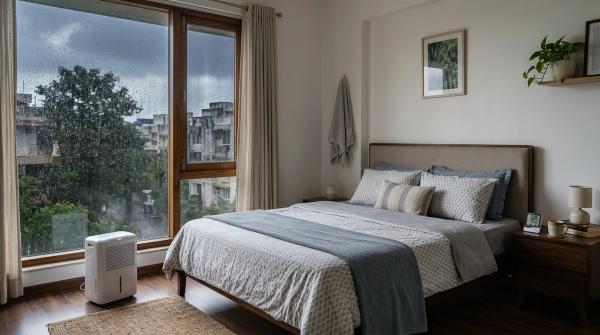
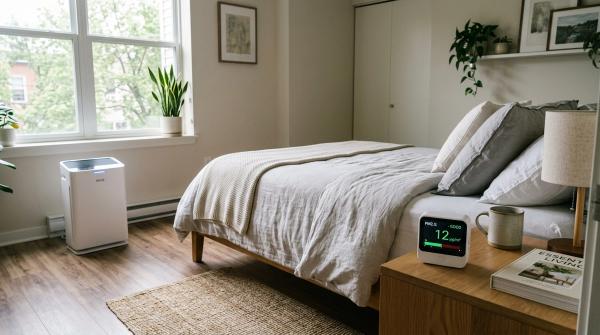
Bedroom air purifier for dust and morning discomfort
#If you are buying a bedroom air purifier because the room feels dusty or you wake up with blocked-nose discomfort, focus on HEPA first.
A True HEPA filter can help reduce airborne dust, pollen, pet dander, lint and fine pollution that enters through windows, doors, clothes or bedding.
A carbon layer is still useful for general freshness, but do not compromise on HEPA quality for a bedroom purifier.
Also check the noise level. Many purifiers are quiet only on the lowest speed. If the lowest speed is too weak for your room, you will need a higher setting. If that setting is too loud, you may switch it off at night.
That defeats the purpose.
Small rented flat with cooking smells
#In many Indian apartments, the kitchen is close to the living room or bedroom. Sometimes there is barely any separation.
When you cook with tadka, frying, fish, strong spices or heavy oil, the smell spreads quickly and stays around.
Here, activated carbon becomes very important.
HEPA can trap some smoke particles, but it will not remove the smell of oil, spices or masala from the air. For that, you need a proper activated carbon filter.
If cooking smells are a daily issue, avoid purifiers that only have a very thin carbon sheet. Look for a more substantial carbon filter.
Also use your kitchen exhaust fan or chimney whenever possible. An air purifier can help, but it should not be expected to handle all cooking smoke on its own.
Apartment near a main road
#If your home faces a busy road in Delhi, Mumbai, Bengaluru, Kolkata, Pune, Gurugram, Noida or another traffic-heavy area, you may be dealing with dust, PM2.5, smoke particles and fumes.
Here, the HEPA vs carbon filter question becomes easy. You want both.
HEPA helps with fine particles and dust. Activated carbon helps with some gas and odour components from traffic pollution.
Keep expectations realistic. If windows are open all day, polluted air will keep entering. A purifier works best when the room is reasonably closed while it runs.
Newly painted room or new furniture smell
#Fresh paint, polish, adhesives, plywood, laminates and some new furniture can release VOCs.
HEPA will not remove VOCs because VOCs are gases. Activated carbon is the relevant filter here.
If VOCs or chemical smells are your main concern, look for a purifier with a stronger carbon filter. Also check replacement filter availability before buying, because carbon filters do not last forever.
Ventilation and reducing the source are also important.
Home with pets
#If you have a dog or cat, you are usually dealing with two things:
- Pet hair and dander
- Pet smell
For pet hair and dander, HEPA is the key filter. For pet odours, activated carbon helps.
A purifier with a washable pre-filter, HEPA filter and activated carbon filter is usually more practical for pet homes than a HEPA-only purifier.
The pre-filter catches larger hair. HEPA captures finer dander. Carbon helps reduce odour.
The closed-window rule
#An air purifier can only clean the air that passes through it.
If your windows and balcony door are wide open, outdoor air keeps entering. The purifier then has to keep cleaning new polluted air again and again.
This is especially important in Indian apartments during:
- High-pollution days
- Traffic peak hours
- Nearby construction
- Crop-burning season in affected regions
- Dusty summer days
- Heavy outdoor smoke or fumes
You do not need to seal your home forever. But when you want the purifier to work properly, run it in a closed room for some time.
Once the air feels better, decide when to ventilate based on outdoor air quality.
Checklist before buying an air purifier
#Before you click buy, check these things.
Match CADR to room size
#CADR stands for Clean Air Delivery Rate. It tells you how much filtered air the purifier can deliver.
A small purifier in a large living room will struggle. Always choose a purifier that matches your actual room size.
Check for True HEPA or a clear HEPA grade
#If dust, PM2.5, pollen, pet dander or allergy triggers are your main concern, do not rely on vague “HEPA-type” claims.
Look for True HEPA or a specific grade like H13 if the brand provides it.
Look closely at the activated carbon filter
#If smell, VOCs, traffic fumes or cooking smoke matter to you, carbon quality is important.
A proper carbon filter will usually perform better than a thin carbon-coated sheet.
Check filter replacement cost
#Air purifier filter replacement is not optional.
Before buying, check:
- How much replacement filters cost
- How often they need changing
- Whether they are easily available
A cheap purifier with expensive or unavailable filters can become frustrating later.
Check noise at usable speed
#Do not only check the lowest noise level on the box.
Many purifiers are quiet on sleep mode but not powerful enough on that setting for quick cleaning. For a bedroom, this matters.
Do not buy only for gimmicks
#UV lights, ionisers, smart modes, app controls and fancy displays can sound attractive.
But the basics matter more:
- Good HEPA filtration
- Useful activated carbon
- Correct room size
- Affordable replacement filters
- Comfortable noise level
Check the pre-filter
#A washable pre-filter is useful in dusty homes and pet homes.
It catches larger dust, lint and hair before they reach the HEPA filter. This can help extend the life of the main filter.
Think room by room
#One purifier may not clean your entire flat properly.
A bedroom purifier should be sized for the bedroom. A living room purifier should be sized for the living room.
If you move one purifier around, use it with closed doors in the room where you need it most.
Maintenance and filter replacement
#An air purifier is not a one-time purchase. Filters wear out, and performance drops when they are not replaced on time.
HEPA filter replacement
#HEPA filters often need replacement every 6 to 12 months, depending on pollution levels, daily usage, dust load, pets, smoke exposure and brand instructions.
A clogged HEPA filter can reduce airflow, make the purifier louder and lower cleaning performance.
Activated carbon filter replacement
#Activated carbon may need replacement sooner, often around 3 to 6 months.
It may wear out faster if your purifier regularly handles cooking smells, smoke, VOCs, traffic fumes or pet odours.
Once activated carbon is saturated, it stops adsorbing gases properly. Your nose is often the clue. If the purifier no longer reduces smells the way it used to, the carbon filter may be finished even if it still looks clean.
Do not wash HEPA or carbon filters unless the manual says so
#Most HEPA and activated carbon filters are not washable.
Washing them can damage the HEPA structure and reduce the effectiveness of activated carbon. Usually, only the outer pre-filter is washable. Always follow the manufacturer’s manual.
Helpful next reads on AllBlogs
#If you are still comparing air purifier decisions, these related guides may help:
- Air Purifier CADR and Room Size Guide: Choose the Right Fit
- Air Purifier Placement Guide: Bedroom, Living Room & Apartment
- HEPA Filter Replacement Checklist: When to Change Air Purifier Filters
- Indoor Plants vs Air Purifier: What Actually Cleans Indoor Air?
So, what should your air purifier have?
#If your main problem is dust, pollen, pet dander or PM2.5, choose a HEPA air purifier.
If your main problem is smell, cooking odour, VOCs, smoke smell or fumes, choose a purifier with a good activated carbon filter.
If you live in a city apartment and deal with dust plus smells, outdoor pollution plus cooking, or pets plus odours, choose both.
For most everyday homes, especially Indian apartments, HEPA and activated carbon together make the most practical combination.
The best air purifier is not the one with the longest feature list. It is the one with the right filters, the right size for your room, reasonable replacement costs and a setup you will actually use.