Cleaning your AC filter is one of those little home maintenance jobs that is easy to ignore — until the AC starts blowing weak air, smelling musty, or taking forever to cool the room.
The good news? Cleaning the filter is usually simple. You do not need special tools or technical skills. In most homes, all you need to do is switch off the AC, turn off the power, open the front panel, remove the washable mesh filter, clean off the dust, rinse it with normal water, let it dry completely, and put it back.
If your AC runs every day in summer, clean the filter every 2 to 4 weeks. Do it more often if you live near a busy road, have pets, keep windows open often, have construction nearby, or notice damp smells during monsoon.
A clean AC filter will not turn your air conditioner into an air purifier. But it can help your AC breathe better, improve airflow, reduce dust buildup inside the unit, cut down on musty smells, and reduce unnecessary strain on the system.
For families, renters, flatmates, and apartment residents, this is one of the easiest AC care habits to build.
Why AC Filter Cleaning Matters
#Your AC filter is usually a washable mesh screen inside the indoor unit. It sits before the cooling coil and blower area, catching larger dust, lint, hair, and debris before they get deeper into the machine.
That small mesh filter does more than it looks like.
First, it helps with airflow. When the filter gets clogged, air cannot move through the AC properly. The room may take longer to cool, the air coming out may feel weaker, and the AC may keep running longer than needed. Some maintenance guides suggest that a clogged filter can make the system work around 10 to 15% harder, although the actual impact depends on your AC model, room size, weather, and usage.
Second, it helps keep the inside of the AC cleaner. Dust trapped on the filter can hold moisture, especially in humid weather. During monsoon, this damp dust can lead to that stale, musty smell many people notice when they switch on the AC. Cleaning the filter may not solve every odor problem, but it is usually the best first step.
There is also a small indoor air quality benefit. A clean filter can reduce some dust recirculation, but it is important to be realistic. A regular AC mesh filter does not replace fresh air, regular home cleaning, kitchen exhaust, bathroom ventilation, humidity control, or a proper air purifier if you need one.
AC Filter Cleaning Checklist
#Use this simple checklist as a reminder for regular home AC maintenance.
A good rule of thumb: if you can see a grey layer of dust on the mesh, it is time to clean it.
What You Need Before You Start
#You do not need an expensive AC cleaning kit for basic filter cleaning at home. Keep it simple.
Useful items:
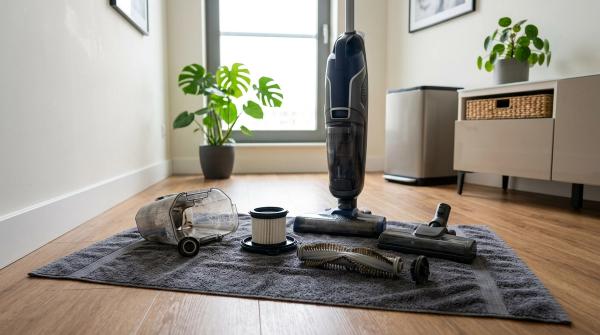
- Soft brush or old clean paintbrush
- Microfiber cloth
- Handheld vacuum cleaner, if available
- Bucket, sink, or bathroom tap
- Mild liquid soap, only if the filter feels greasy
- Dry towel for patting the filter frame
Avoid using bleach, harsh detergents, hot water, pressure washers, or stiff scrubbing brushes. These can damage the mesh or bend the plastic frame.
If you still have your AC manual, check it once. Some models come with extra filters, such as deodorizing filters or fine dust filters, and those may have different cleaning or replacement instructions.
Safety Steps Before Cleaning Any AC Filter
#Basic AC filter cleaning is safe for most adults, as long as you only handle the removable filter area.
Follow these steps every time:
- Turn off the AC with the remote.Wait until the fan stops completely before opening the unit.
- Switch off the power supply.For a split AC, turn off the wall switch or isolator if you have one. For a window AC, unplug it if the plug is easy and safe to reach. Do not tug at wires.
- Do not touch wiring or internal metal parts.The filter area is meant to be accessed. The coil fins behind it are not. They can be sharp and delicate.
- Do not spray water into the indoor unit.Wash only the removable washable filter unless your manual clearly says otherwise.
- Use a stable stool or ladder.Split ACs are often mounted high on the wall. Do not balance on a bed, chair, window ledge, or anything shaky.
- Let the filter dry fully.A damp filter can make musty smells worse and encourage moisture buildup.
If the panel feels stuck, cracked, or difficult to open, stop. Call a technician or your building maintenance person instead of forcing it.
How to Clean a Split AC Filter Safely
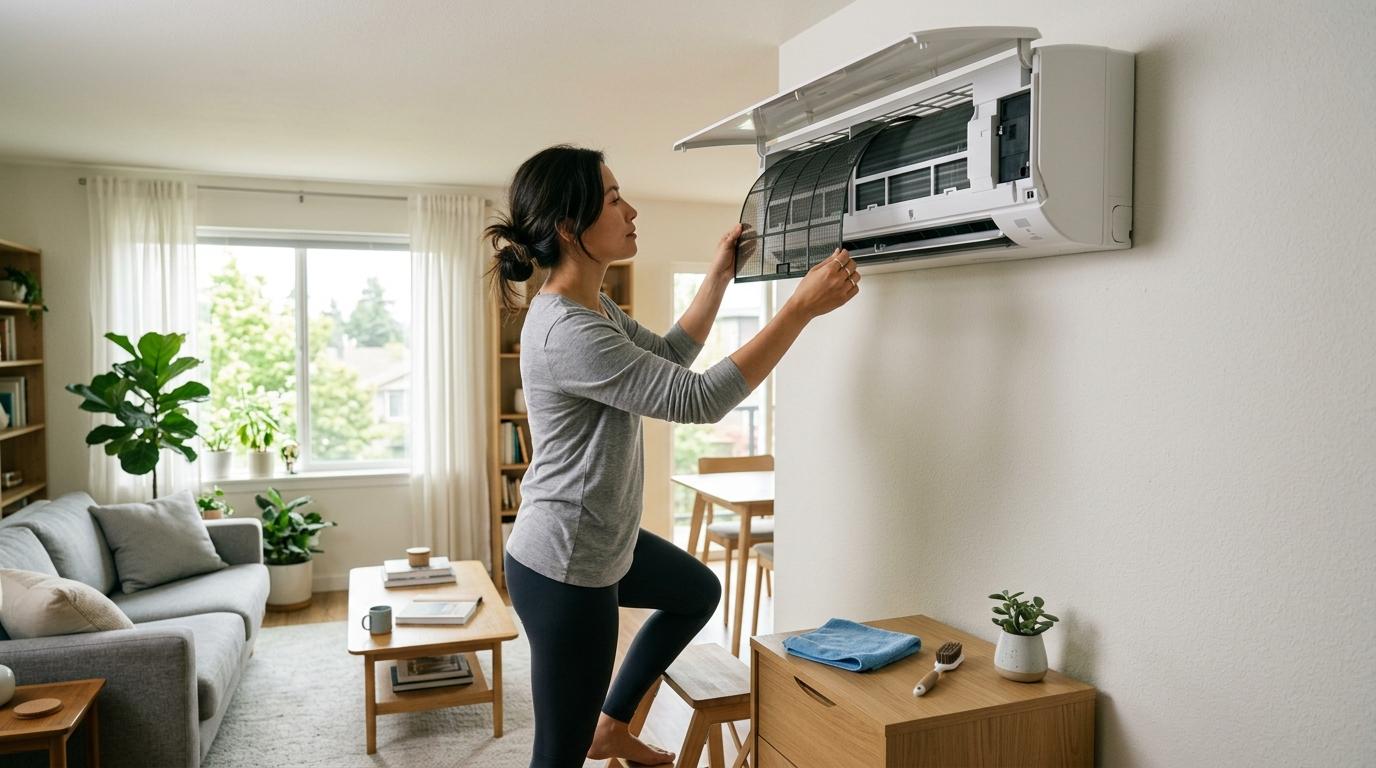
#Split AC filter cleaning is usually straightforward because the indoor unit has a front panel that lifts up.
Step 1: Turn off the AC and power
#Switch off the AC using the remote. Then turn off the power supply from the wall switch or AC isolator. Wait for a minute before opening the panel.
Step 2: Open the front panel gently
#Stand securely. Hold the front panel from both sides and lift it upward. Many panels click into place when fully open.
If it feels stuck, do not force it. Pause and check the manual or look for clips.
Step 3: Remove the mesh filters
#Most split ACs have two curved mesh filters. Slide each filter slightly upward to release it, then pull it down and out gently.
If the filter does not move easily, check the direction in the manual or look for small locking tabs.
Step 4: Remove loose dust first
#Take the filters to a balcony, bathroom, or outdoor area. Tap them gently over a dustbin, or use a vacuum cleaner with a soft brush attachment.
This step helps because dry dust can turn into a muddy paste if you rinse the filter straight away.
Step 5: Rinse with room-temperature water
#Rinse the filter under normal tap water using gentle pressure. If possible, rinse from the cleaner side toward the dirtier side so the dust comes out instead of being pushed deeper into the mesh.
If the filter feels greasy, which can happen in rooms near kitchens, use a tiny amount of mild liquid soap and a soft brush. Rinse well until no soap remains.
Step 6: Dry completely in shade
#Shake off the extra water. Pat the plastic frame lightly with a clean towel. Then leave the filter in a shaded, airy place until it is fully dry.
Do not use a hair dryer, heater, open flame, or strong direct sunlight. Heat can warp the plastic frame.
Step 7: Reinstall and close the panel
#Once the filter is completely dry, slide it back into its slot. Close the front panel gently. Turn the power back on and use the AC normally.
How to Clean a Window AC Filter Safely
#Window AC filter cleaning is similar, but the filter location can vary depending on the model.
Step 1: Turn off and unplug if safe
#Switch off the AC. If the plug is easy to reach, unplug it. If it is difficult or unsafe to access, do not pull or strain the wire. Use the wall switch instead.
Step 2: Find the filter
#In many window ACs, the filter sits behind the front grille. Some models allow the filter to slide out from the front or side without removing the grille.
Step 3: Open only the filter access area
#Unclip or slide out the filter as designed. Do not remove heavy covers, metal panels, or screws unless the user manual clearly says this is required for filter access.
Step 4: Vacuum or brush off dust
#Window AC filters can collect sticky dust, especially in homes near roads, markets, construction zones, or open drains. Vacuuming or brushing the dust first makes washing much easier.
Step 5: Rinse and dry fully
#Wash the filter with room-temperature water. Use mild soap only if needed. Dry it completely in shade before reinstalling.
Step 6: Wipe the grille
#Wipe the outer grille with a dry or slightly damp microfiber cloth. Do not spray water into the AC unit.
AC Filter Cleaning During Monsoon
#Monsoon makes AC maintenance a little tricky. The air is more humid, rooms often stay closed for longer, and dust on the filter can become damp.
If your AC smells musty when it starts, clean the filter first. A dirty, damp filter can hold odor. After washing it, make sure it dries fully before you put it back. This is especially important in humid weather.
A few practical monsoon habits help:
- Clean the filter every 2 weeks if the AC runs often.
- Keep the area around the indoor unit dry and dust-free.
- Never reinstall a filter that still feels even slightly damp.
- If the smell comes back quickly after cleaning, the problem may be inside the coil, blower, or drain tray.
- If water drips indoors, do not assume the filter is the reason. The drain line may be blocked.
Hard water can also leave mineral spots on the mesh. After rinsing, shake the filter well and pat the frame lightly before air-drying. Do not scrape the mesh.
What AC Filter Cleaning Helps With
#Regular air conditioner filter cleaning can help with:
- Better airflow from the indoor unit
- Less visible dust around the AC intake
- More even cooling in the room
- Reduced dust buildup on internal parts
- Lower chance of damp dust causing musty smells
- Less strain from airflow blockage
This is especially useful for renters and apartment residents. If you move into a new flat and the AC is already installed, check the filter before running it for long hours. It is a small task, but it can tell you a lot about how well the unit has been maintained.
What AC Filter Cleaning Cannot Fix
#Cleaning the filter is important, but it cannot solve every AC or air quality problem.
It cannot fix:
- Refrigerant gas leaks
- Compressor faults
- Fan motor problems
- Clogged drain lines
- Ice forming on coils due to deeper issues
- Mold or dirt deep inside the blower or coil
- Electrical faults
- Poor ventilation in the home
- Smoke, gases, VOCs, or very fine particles that a standard mesh filter cannot capture well
A standard split or window AC mesh filter is not the same as a HEPA air purifier filter. It mainly catches larger dust, hair, lint, and debris. It can support cleaner indoor air, but it should not be treated as a complete solution for allergies, asthma, smoke exposure, or infection control.
For better indoor air quality, combine clean AC filters with good home habits: reduce indoor smoke, use kitchen exhaust while cooking, control dampness, clean dust regularly, and allow fresh air when outdoor air quality is suitable.
When to Call a Technician
#Stick to basic filter cleaning at home. Call a trained technician if you notice any of these signs:
- Weak cooling even after cleaning the filterIf airflow improves but cooling is still poor, the issue may be refrigerant level, coil condition, compressor operation, or another internal fault.
- Ice on the indoor coilIf you open the panel and see frost or ice on the metal fins, turn off the AC and call for service. Do not chip away at the ice.
- Water leaking indoorsA clogged drain line, dirty drain tray, or installation issue may be involved.
- Musty smell that keeps coming backIf the filter is clean and dry but the smell remains, the blower, coil, or drain area may need professional cleaning.
- Burning smell, sparks, or power trippingTurn off the unit and do not use it until it has been inspected.
- Unusual noisesGrinding, rattling, scraping, or loud humming may point to fan or motor issues.
- Damaged filter or broken panel clipsA torn filter lets dust pass through. Replace it with the correct part for your AC model.
- You cannot safely reach the unitIf the AC is mounted too high or access feels unsafe, do not take risks. Safety matters more than saving one service visit.
A Simple Monthly AC Filter Cleaning Routine
#Here is an easy routine you can actually stick to:
- Pick one fixed day every month, like the first Sunday.
- Check all AC filters in the home.
- Clean the bedroom and living room ACs first if they are used most often.
- During summer or monsoon, shorten the gap to every 2 weeks.
- Add a reminder to your phone calendar.
- Book professional servicing before peak summer, or whenever cooling drops.
This works well in shared flats too. Add AC filter cleaning to the household chore list. Otherwise, everyone assumes someone else did it — and no one does.
Final Takeaway
#The easiest AC filter cleaning checklist is this: switch off the power, remove the washable filter gently, vacuum or brush off loose dust, rinse with room-temperature water, dry it fully in shade, and reinstall it only when it is completely dry.
Do this every 2 to 4 weeks during regular use. Clean it more often if there is dust, pet hair, traffic pollution, construction nearby, or monsoon humidity.
It is a small job, but it helps your AC breathe better, cool more comfortably, and keep your home feeling fresher.
For leaks, ice, electrical issues, deep odors, or poor cooling, stop at the filter and call a technician.