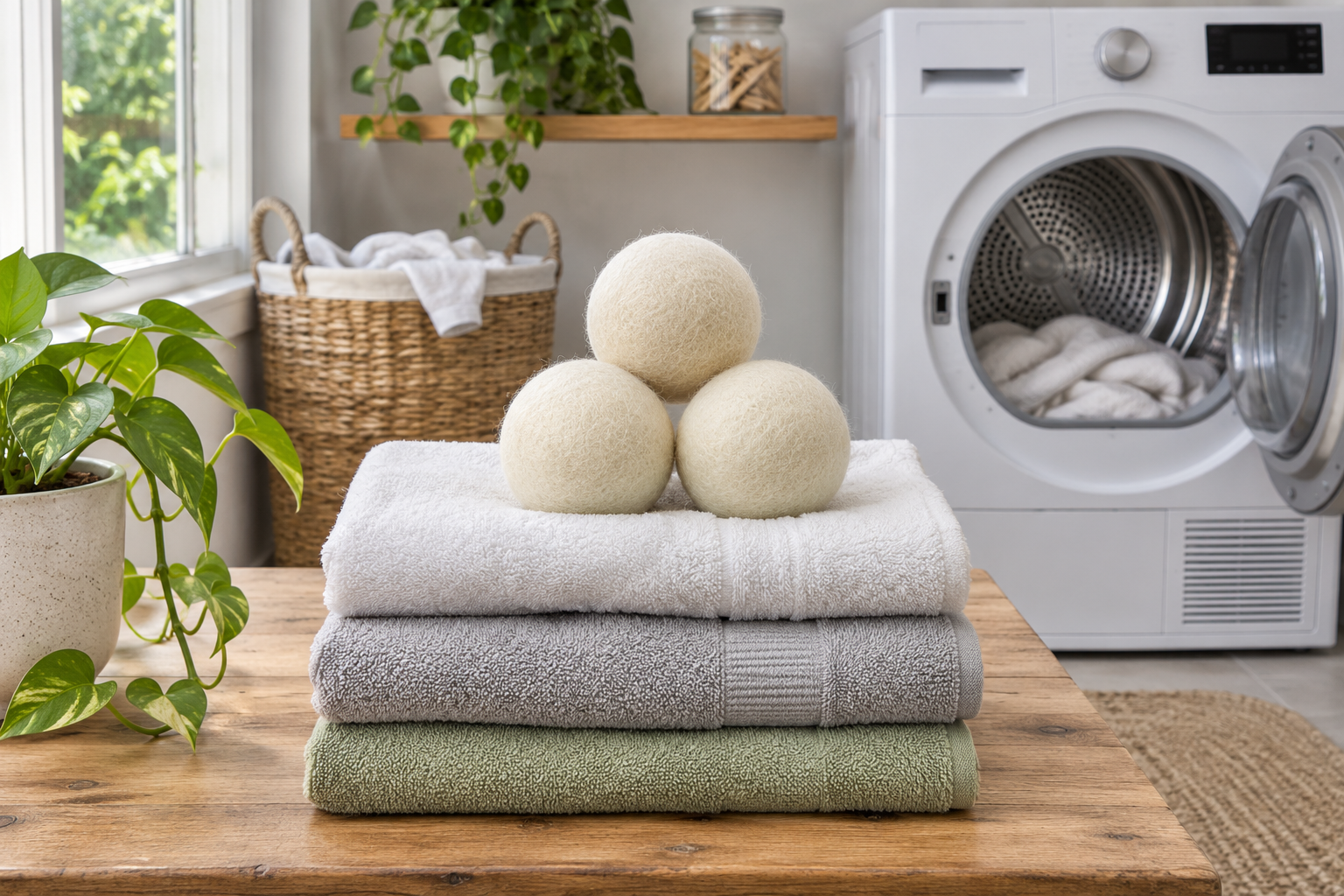
Pull a fitted sheet out of the dryer and it can feel ready to fold right up until a damp pillowcase drops out of the corner. That’s the load I’d try wool dryer balls on. If the pillowcase still comes out wet, I’d put more faith in changing how I load the sheet than in buying a bigger bag of balls.
Wool dryer balls tumble with laundry and can help separate pieces so air reaches more of the fabric. They’re reusable. Drying time, static and noise depend on the load, the dryer and the cycle. If you try them, compare similar loads at the same settings and check how dry they actually are when the dryer stops.
Which load would give them a fair chance?
#| Load | What I’d look for | What I’d do first |
|---|---|---|
| Similar cotton towels | Damp folds or corners at the end | Leave room for the towels to tumble |
| Sheets and pillowcases | Smaller pieces trapped inside a sheet | Shake the sheet open and avoid packing the drum |
| Mixed shirts and heavy denim | Thin pieces dry before thick seams | Group items of similar weight and care needs |
| Mostly synthetics | Cling after a long or hot cycle | Check the care labels and reduce overdrying |
| A crowded drum with any fabric | Laundry falls in one mass | Split the load or use the machine’s size guidance |
The balls have to move through the laundry to do anything. If you open the door and have to push everything in with your arm, there’s very little room for the load to turn. I’d split it first. Adding something to a full drum would make it harder to tell whether the accessory had a chance to help.
Sheets are a good example of the difference between a tool and a loading habit. I’d smooth out a fitted sheet and drop it into the dryer loosely. If another piece was already wrapped inside, take it out before starting. A ball can travel between folds that are moving. An item tucked into a deep corner might still need you to shake it free.
How I’d compare the loads
#Use items you dry often. Two loads of similar cotton towels are easier to compare than towels today and workout clothes tomorrow. Use the same wash spin and dryer program. Start with a load size you normally use and follow the dryer maker’s instructions and the ball maker’s directions. Keep the amount of laundry, cycle settings and target dryness the same.
Run one load without balls, then a similar load with them. Note the clock time from start to stop as well as how dry the towels feel. Look at the largest towel and the corners first. If you’d normally restart the dryer for ten minutes to finish the load, count that time too. I’d repeat at least once if the first comparison was close. Try swapping which load goes first on the next laundry day so a dryer that starts already warm doesn’t always favor the same setup.
A sensor cycle is allowed to change its run time. Compare how dry the load is when it stops. If the balls shorten one cycle but there are damp pieces to hang up afterward, you’ve learned something about your normal program and this load. On a fixed timer, compare dryness at the same time first. You can test a shorter program later if both loads finish dry.
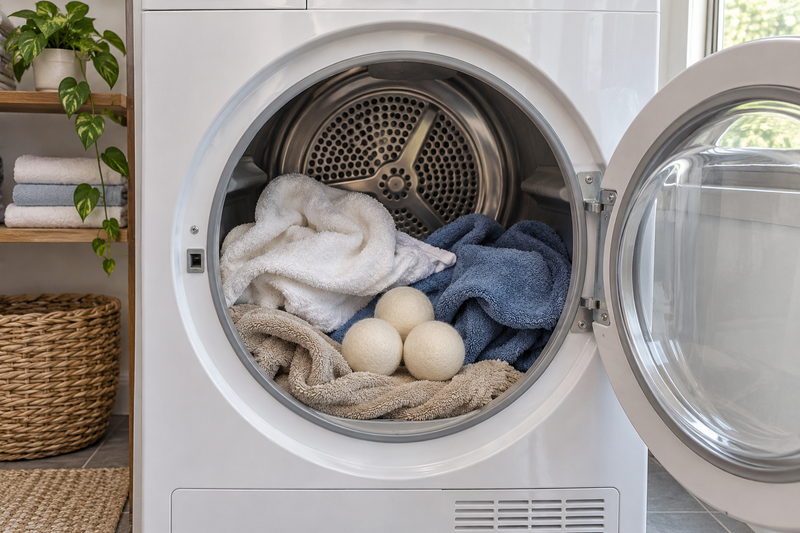
What 53 minutes means if the towels are still damp
#Suppose the dryer stops after 53 minutes with balls and 60 without. Those numbers are made up, but the next part is what matters. Check the thick corners of the towels, the folded edge of a hand towel and any fabric tucked against itself. If the 53-minute load needed another eight minutes, record 61. If both loads came out equally dry, repeat before deciding seven minutes is typical. A single run can be affected by how wet the fabrics were before they went in.
You could also get 60 minutes both times and prefer the result with the balls. Perhaps you used a timed cycle and the damp spot you usually find in a large towel was gone. Write down that improvement rather than subtracting minutes that never changed. For a household that tends to run one full timed cycle and hang any odd damp piece afterward, even drying may be more valuable than shaving time off a cycle.
If you mainly dry fitted sheets, test that separately. Use roughly comparable bedding and shake each piece open both times. Photograph or jot down the usual problem at the end. One load might leave a damp crease and the other might trap a whole pillowcase. They’re two different annoyances. The next time you change the setup, keep the one thing you know helped and compare the other change.
The same goes for noise. Listen from the room where you usually spend the time, with the laundry door in its ordinary position. A few knocks that are obvious when you stand at the machine might disappear behind a closed utility-room door. In a small flat with the dryer beside your desk, that same sound could be the deciding factor.
Write down the part you actually care about
#There are several ways to like the change. You may get the sheets out without pulling a damp wad from the center. You may prefer the feel of towels with a reusable accessory. You may find you hear the balls every time they hit the drum and decide the noise isn’t worth it. I’d choose the thing I’m trying to improve before starting the test.
Track minutes if you’re interested in drying time. To compare energy use, use a safe reading method appropriate to the dryer, such as the appliance’s own energy report if available. Minutes alone don’t tell you how much electricity or gas it used. I’d keep a household decision simple if I had no safe way to measure energy: did the load finish drier, more evenly, or faster at the same dryness?
What I’d check before buying or giving up
#Look for the instructions for your dryer and the product. Follow clothing care labels and keep the balls clean and dry between uses. I’d choose plain balls for a trial so I can judge whether I like them without adding fragrance or another treatment. If one starts to come apart, replace it as directed. If your machine or the laundry calls for a special cycle or drying rack, follow that guidance.
Static can be harder to judge across two loads because the fabrics and finishing dryness matter. If your usual problem is cling, try matching fabric types and ending the cycle at the dryness you need. Take notes on that change before you compare dryer accessories. A towel test tells you about towels, and it won’t tell you what to expect from a load of synthetic clothes.
If a dryer suddenly takes much longer with the loads you normally use, I’d check the regular cleaning and maintenance steps in the manual before adding dryer balls. That includes the lint filter and any other areas the manufacturer tells you to maintain. A reusable accessory is a small experiment for a dryer already working as it should. If the fitted sheet still swallows the pillowcase, hang the sheet separately next time or give it more room in the drum.