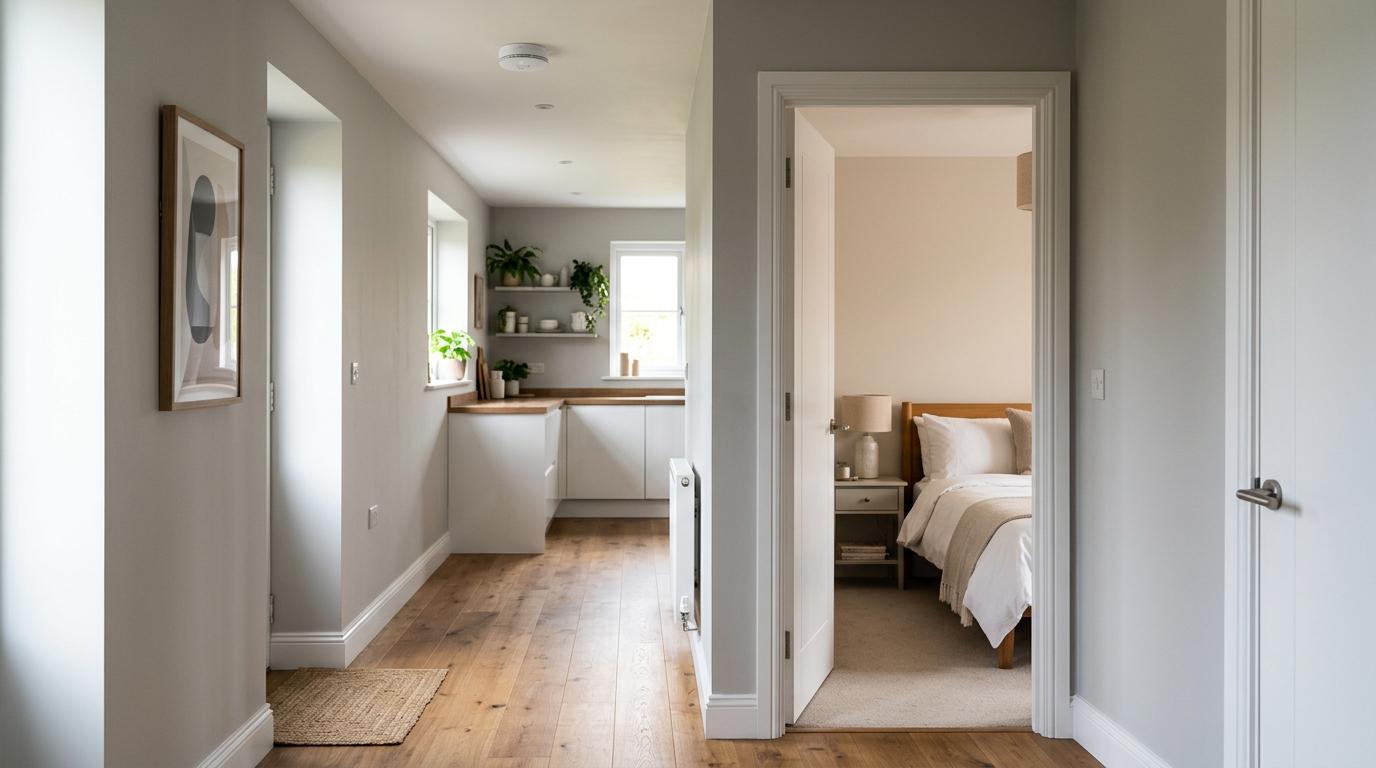
Smoke alarms are easy to ignore until you need them. They sit quietly on the ceiling, collect dust, chirp at the worst possible time, and sometimes go off when you burn toast.
But when there is a real fire, a working smoke alarm in the right place can give you the extra seconds you need to get out safely.
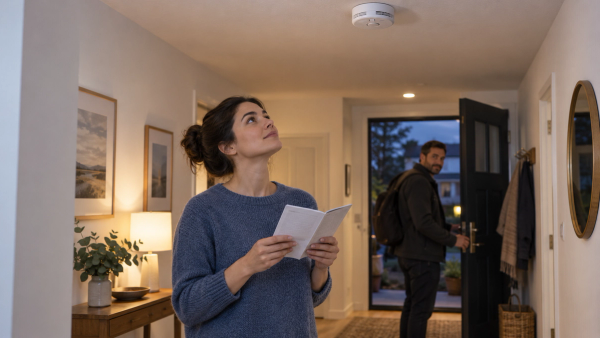
Here’s the simple rule: install smoke alarms inside every bedroom, outside each sleeping area, and on every level of your home, including the basement. Mount them on the ceiling or high on a wall, and keep them away from kitchens, bathrooms, fans, vents, windows, and corners.
The NFPA and U.S. Fire Administration also recommend testing smoke alarms every month and replacing them when they are 10 years old.
This guide walks through where to put smoke alarms room by room, what to avoid, how apartments are different, and how smoke alarms compare with carbon monoxide and gas leak detectors.
First, Know What You’re Buying
#Before you install anything, make sure you’re buying the right type of alarm.
A smoke alarm, carbon monoxide detector, and gas leak detector are not the same thing. They detect different dangers and usually belong in different places.
Smoke alarms
#Smoke alarms detect smoke from a fire.
Because smoke rises, smoke alarms are usually installed on the ceiling or high on a wall. You need them in and around bedrooms, hallways, living areas, basements, and on every level of the home.
Carbon monoxide detectors
#Carbon monoxide, or CO, is a dangerous gas that you cannot see or smell. It can come from fuel-burning appliances, heaters, generators, fireplaces, and other sources.
A carbon monoxide detector is not a smoke alarm. A smoke alarm is not a carbon monoxide detector.
Some devices combine smoke and CO detection in one unit, which can be useful. Just make sure you follow the manufacturer’s placement instructions, because smoke and CO alarms may have different location requirements.
LPG, PNG, and natural gas leak detectors
#Gas leak detectors are different again. They detect leaking fuel gas, not smoke.
This matters a lot in homes that use LPG cylinders or piped gas.
- LPG detectors: LPG is heavier than air, so LPG gas detectors are usually placed low, close to the floor and near the gas source.
- PNG or natural gas detectors: Natural gas is lighter than air, so these detectors are usually placed higher, closer to the ceiling.
Always follow the instructions for the exact device you buy.
And don’t rely on only a gas leak detector. It will not replace smoke alarms.
Room-by-Room Smoke Alarm Placement Checklist
#Use this checklist for a house, apartment, flat, rental home, duplex, or studio. Your layout may change the exact number and position of alarms, but the basic placement rules stay the same.
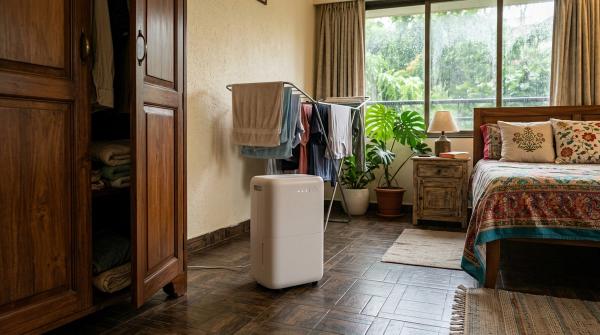
1. Bedrooms
#Put a smoke alarm inside every bedroom.
If someone sleeps in the room, the room should have its own smoke alarm.
Best placement
#- On the ceiling, ideally near the center of the room
- High on a wall, if the alarm instructions allow wall mounting
- Away from ceiling fans, windows, AC vents, and air coolers
- Not behind curtains, wardrobes, shelves, or tall furniture
Why this matters
#Bedroom doors are often closed at night. If a fire starts outside the room, smoke may take longer to enter. A smoke alarm inside the bedroom gives the sleeping person a better chance of waking up quickly.
This is especially important for children, older adults, and anyone who sleeps deeply.
2. Hallways Outside Bedrooms
#Put a smoke alarm outside each sleeping area.
In many homes, this means the hallway just outside the bedrooms. If bedrooms are in different parts of the home, each sleeping area needs nearby coverage.
Best placement
#- On the hallway ceiling
- High on a wall, if wall mounting is allowed
- Away from corners and strong airflow
- Not hidden behind decor, beams, cupboards, or curtains
Example
#If three bedrooms open into the same short hallway, one hallway alarm may cover that sleeping area.
But if one bedroom is on the other side of the flat or house, that separate sleeping area should have its own nearby alarm too.
3. Every Level of the Home
#Install smoke alarms on every level, even if nobody sleeps there.
That includes:
- Ground floor
- First floor or upper floors
- Basement
- Loft or attic areas, if used as living or sleeping space
- Split-level areas, depending on the layout
Best placement
#- One alarm on each floor
- In basements, place the alarm on the ceiling near the bottom of the stairs leading up
- In main living areas, choose a central spot away from vents, fans, and windows
Don’t rely only on alarms near bedrooms. Fires can start in kitchens, living rooms, storage rooms, electrical panels, basements, utility areas, or garages.
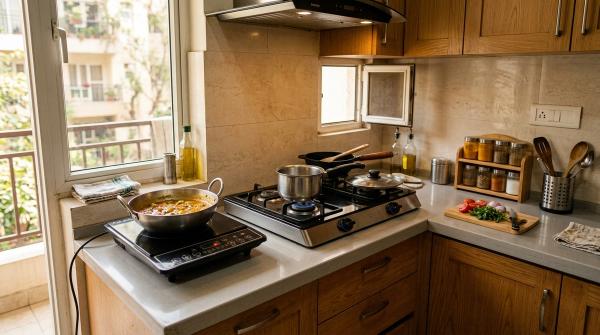
4. Kitchens
#Kitchen smoke alarm placement needs a little judgment.
You want the alarm close enough to detect a real fire, but not so close that it goes off every time you cook tadka, toast bread, fry something, or open the oven.
A common NFPA guideline is to keep smoke alarms at least 10 feet, or about 3 metres, away from cooking appliances where possible.
Avoid placing smoke alarms
#- Directly above the stove or hob
- Right beside a toaster, oven, microwave, or air fryer
- In the path of steam or cooking smoke
- Next to an exhaust fan
- Near a ceiling fan
- Beside a window with strong airflow
Practical tip for small kitchens
#In a small apartment or studio, you may not have a full 10 feet of space. That’s common.
In that case, follow the manufacturer’s instructions and choose the least troublesome location. Usually, that means somewhere near the kitchen entrance rather than directly above the stove.
For homes with LPG cylinders, remember this: a smoke alarm detects smoke from fire. It does not detect an LPG leak. For gas leaks, you need a proper LPG gas detector placed according to its instructions.
5. Bathrooms and Shower Areas
#Do not install smoke alarms inside bathrooms with showers.
Steam can trigger nuisance alarms, especially in small flats where the bathroom opens into a hallway.
Better placement
#- Outside the bathroom area
- Not directly beside the bathroom door
- Away from the usual steam path
- In the nearby hallway, if that also works for bedroom coverage
If your hallway alarm keeps going off after hot showers, the problem may be the location. Check the manual and see if the alarm can be moved slightly farther away from steam.
But don’t remove the alarm completely. A working alarm in the right place is the goal.
6. Living Rooms and Family Rooms
#Living rooms often have plenty of fire risks: chargers, extension boards, lamps, electronics, curtains, sofas, candles, mosquito repellents, and sometimes home temples or diyas.
A smoke alarm in or near the living room can be useful, especially if that level does not already have proper coverage.
Best placement
#- On the ceiling or high on a wall
- Away from ceiling fans and AC vents
- Away from balcony doors and drafty windows
- Not behind curtains, beams, shelves, or tall furniture
For open-plan homes, placement is a balance. Keep the alarm close enough to living areas, but not so close to the kitchen that it goes off during normal cooking.
7. Basements, Utility Rooms, and Storage Areas
#Basements need smoke alarms because smoke from a lower floor can move upstairs quickly.
Best placement for basements
#- On the ceiling near the bottom of the stairs
- Away from dusty corners
- Away from damp areas
- Away from vents and strong airflow
For utility rooms, laundry areas, electrical rooms, and storage spaces, follow the alarm manufacturer’s instructions and local fire safety rules.
Dust, moisture, insects, and extreme temperatures can affect some alarms, so don’t install one in a harsh spot unless the model is designed for it.
8. Apartments, Flats, and Rental Homes
#Smoke alarm placement in apartments can be tricky because everything is close together.
In a small flat, the kitchen, bathroom, AC, balcony door, and bedroom entrance may all be within a few steps of each other. That makes placement more important, not less.
The basic checklist still applies:
- Smoke alarm inside every bedroom
- Smoke alarm outside each sleeping area
- Smoke alarm on every level, if the unit has more than one level
Apartment-specific tips
#- Keep alarms away from split AC airflow.
- Don’t place alarms right next to ceiling fans.
- Avoid balcony doors where wind can affect smoke movement.
- In studio apartments, place the alarm away from the cooking area while still covering the sleeping space.
- If you rent, speak to your landlord, building manager, or Resident Welfare Association before changing hardwired alarms.
Never disconnect a smoke alarm just because it is annoying.
If it keeps going off while cooking or showering, the alarm may be in the wrong place, dirty, too old, or the wrong type for that location.
Ceiling and Wall Placement Rules
#Smoke rises, but corners can have “dead air” where smoke may not reach the alarm quickly. That’s why the height and spacing matter.
If mounting on the ceiling
#Place the smoke alarm at least 4 inches, or about 10 cm, away from the nearest wall.
If mounting on a wall
#Place the top of the alarm 4 to 12 inches, or about 10 to 30 cm, below the ceiling.
Avoid these locations
#Do not place smoke alarms:
- In corners where the wall and ceiling meet
- Next to ceiling fans
- Next to AC vents or heating vents
- Beside windows or balcony doors with strong airflow
- Inside bathrooms with showers
- Directly above or beside stoves, ovens, or toasters
- In very dusty, damp, hot, or cold areas unless the alarm is made for that location
How Many Smoke Alarms Do You Need?
#The number depends on your home.
A small one-bedroom flat may need fewer alarms than a large house, but the placement logic is the same.
At minimum, you should have:
- One smoke alarm inside every bedroom
- One outside each sleeping area
- One on every level of the home
- One in the basement, if you have one
Example
#A three-bedroom home with all bedrooms in one hallway and one main living level may need at least five alarms:
- One in bedroom 1
- One in bedroom 2
- One in bedroom 3
- One in the hallway outside the bedrooms
- One on the main living level
A duplex, split-layout flat, larger house, or home with a basement may need more.
Test Smoke Alarms Monthly
#A smoke alarm is not a “fit it and forget it” device.
Test every smoke alarm once a month by pressing the test button. The sound should be loud and clear.
If someone in your home may not hear a standard alarm easily, such as an older adult, young child, heavy sleeper, or person with hearing loss, look into suitable alarm options. Some alarms include strobe lights, bed shakers, or other alert features.
Replace Smoke Alarms After 10 Years
#Smoke alarms do not last forever.
Replace the entire alarm when it reaches 10 years from the manufacture date, or sooner if the manufacturer says so.
The manufacture date is usually printed on the back of the unit. If you’ve never checked it, take a few minutes and do it today.
If the alarm is older than 10 years, don’t just change the battery. Replace the full unit.
Follow the Battery Instructions
#Some smoke alarms use replaceable batteries. Others have sealed long-life batteries.
Follow the instructions for your exact model.
Do not ignore low-battery chirps. That annoying chirp usually means the alarm needs attention.
Also:
- Keep alarms clean.
- Remove dust as recommended by the manufacturer.
- Do not paint over a smoke alarm.
- Do not cover it with tape, plastic, cloth, or decoration.
Anything blocking the sensor can stop the alarm from working properly.
Interconnected Smoke Alarms
#Interconnected smoke alarms sound together.
That means if one alarm detects smoke in the kitchen, the alarms in the bedrooms also sound. This can be very helpful at night or in larger homes.
Interconnected alarms are especially useful in:
- Duplex homes
- Multi-storey houses
- Homes with basements
- Long apartments
- Homes where bedrooms are far from the kitchen or living room
Some interconnected alarms are hardwired. Others connect wirelessly.
If you live in an apartment building, don’t alter hardwired or shared alarm systems without approval from the building manager, landlord, or responsible authority.
Quick Smoke Alarm Placement Checklist
#Use this before buying or installing alarms.
- Smoke alarm inside every bedroom
- Smoke alarm outside each sleeping area
- Smoke alarm on every level of the home
- Smoke alarm in the basement, if present
- Alarms mounted on ceilings or high on walls
- Ceiling alarms at least 4 inches from walls
- Wall alarms placed 4 to 12 inches below the ceiling
- Kitchen alarms at least 10 feet from cooking appliances where possible
- No smoke alarms inside bathrooms with showers
- Alarms kept away from fans, vents, windows, and balcony drafts
- Smoke alarms not confused with CO or LPG/PNG gas detectors
- Alarms tested monthly
- Alarms replaced after 10 years
- Manufacturer instructions and local code followed
Common Mistakes to Avoid
#Mistake 1: Putting one alarm in the hallway and assuming that’s enough
#A hallway alarm is important, but it does not replace alarms inside bedrooms.
Bedroom doors may be closed at night, and people need the earliest possible warning.
Mistake 2: Installing a smoke alarm directly above the stove
#This is one of the main reasons smoke alarms become annoying.
If your alarm screams every time you cook, it may be too close to the stove. Keep it at least 10 feet away from cooking appliances where possible.
Mistake 3: Confusing smoke alarms with gas leak detectors
#A gas detector does not detect smoke.
A smoke alarm does not detect LPG, PNG, or natural gas leaks unless it is a special multi-sensor device designed for that purpose.
Read the product label carefully before buying.
Mistake 4: Forgetting the manufacture date
#A smoke alarm can look fine and still be too old to trust.
Check the manufacture date on the back. Replace the unit when it reaches 10 years old.
Mistake 5: Removing the battery because the alarm is irritating
#This is dangerous.
If an alarm keeps going off during cooking or showers, fix the problem. Move it if allowed, clean it, replace it if needed, or choose a better-suited model.
But don’t leave your home without working smoke alarms.
Source Notes
#This guide follows core public safety guidance from the National Fire Protection Association (NFPA) and the U.S. Fire Administration, including installing smoke alarms inside every bedroom, outside each sleeping area and on every level of the home; testing monthly; replacing smoke alarms after 10 years; and following manufacturer instructions and local fire code.
Safety Disclaimer
#This article is for general home-safety information only. It is not professional electrical, legal, building-code, or emergency-response advice.
Always follow your smoke alarm manufacturer’s instructions, local fire code, building rules, and landlord or property requirements.
In a fire or suspected emergency, leave the area immediately and contact your local emergency services.