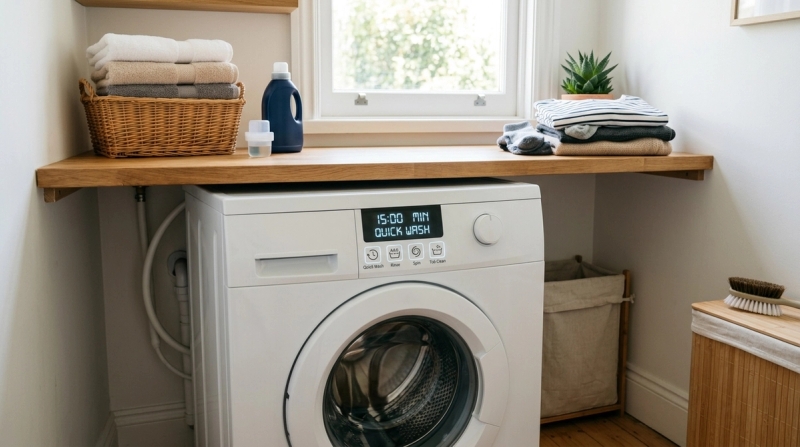
If you have ever stood in front of a washing machine wondering whether to press Quick Wash, Rinse + Spin, Spin Only or Tub Clean, you are not alone.
Here is the simple answer: use Quick Wash for a small load of lightly used clothes, Rinse + Spin when clothes need a water rinse but not a full detergent wash, Spin Only when clothes are already wet and you want to remove extra water, and Tub Clean to clean the empty washing machine drum.
Check your clothing label and machine manual when unsure. Cycle names vary by brand and model.
Why washing machine settings matter
#Most people learn laundry by habit. Someone at home uses Normal Wash for everything, a roommate uses Quick Wash for every load, or a rented flat has a machine with buttons you have never seen before.
That works sometimes, but not always.
A t-shirt worn for two hours does not need the same wash as muddy jeans. Towels need more cleaning power than a light office shirt. A delicate kurta cannot be treated like bedsheets. And if your washing machine smells musty, adding more scented detergent will not fix the real problem.
Modern washing machines use different settings because clothes need different combinations of time, water, drum movement, rinsing and spin speed. The names may vary, but the basic idea is usually this:
- Quick Wash is for lightly used clothes.
- Rinse + Spin is for rinsing clothes and removing water.
- Spin Only is for removing water from already wet clothes.
- Tub Clean is for cleaning the washer itself.
Once you understand that, laundry becomes much less confusing.
Quick comparison: common washing machine cycles
#Rinse vs spin vs quick wash: what is the difference?
#These three settings are easy to confuse because they all sound like shorter versions of a normal wash. They are not the same.
Quick Wash means a short wash
#Quick Wash is still a wash cycle. It usually washes, rinses and spins the clothes, just in less time than a Normal or Cotton cycle.
Use Quick Wash for:
- A shirt worn for a few hours
- Light office wear
- Clothes that just need a quick refresh
- A small load when you are in a hurry
- Lightly used clothes that do not smell strongly
Avoid Quick Wash for:
- Muddy clothes
- Sweaty gym clothes
- A full laundry basket
- Towels and bedsheets
- Jeans or thick garments
- Stained clothes that need proper cleaning
The biggest mistake is filling the drum completely and pressing Quick Wash to save time. Clothes need space to move around. If the drum is overloaded, detergent cannot spread properly, dirt may stay trapped and clothes may come out half-clean.
Quick Wash is useful, but it is not a replacement for Normal Wash.
Rinse + Spin means rinse first, then remove water
#Rinse + Spin usually skips the main detergent wash. The machine adds water, moves the clothes around to rinse them, drains the water and then spins the clothes to remove moisture.
Use Rinse + Spin when clothes are not truly dirty but need a clean water rinse.
Good examples include:
- Swimwear after pool or beach use
- Hand-washed clothes that still feel soapy
- Clothes from a wash where you used too much detergent
- Towels or baby clothes that feel stiff from detergent residue, if the fabric label allows machine rinsing
Rinse + Spin is not meant for dirty laundry. It will not properly remove sweat, oil, food stains or body odour because there is no full detergent wash.
If a shirt smells bad, has stains or feels genuinely dirty, use a proper wash cycle.
If your clothes often feel slippery, stiff or foamy after washing, the issue may be too much detergent. An extra rinse can help that load, but the better long-term fix is to use less detergent next time.
Spin Only means remove water, not wash
#Spin Only, sometimes called Drain + Spin, is for removing water from clothes that are already wet.
In most machines, this setting does not add fresh water. It does not use detergent. It does not wash clothes. The drum simply spins fast and pushes water out of the fabric.
Use Spin Only for:
- Hand-washed clothes that are dripping wet
- Towels that need extra water removal
- Clothes left wet after a power cut
- Heavy garments that take too long to dry
- Clothes you want to dry faster on a balcony or drying stand
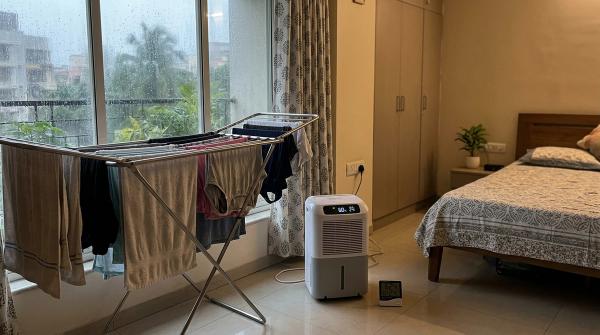
This setting is useful in apartments, especially when clothes have to dry indoors. Less water in the clothes means less dripping, less dampness and faster drying.
Be careful with delicate fabrics. Some clothes can stretch, lose shape or get damaged in a strong spin. If the care label says not to wring, twist or spin, avoid high spin settings.
What about Normal, Cotton and Daily Wash?
#Normal, Cotton and Daily Wash are the regular everyday cycles. Different brands use different names, but these cycles usually do the full process: wash, rinse and spin.
Use them for:
- Regular t-shirts
- Cotton shirts
- Undergarments
- School uniforms
- Bedsheets
- Everyday mixed laundry
- Most daily clothes, if the fabric label allows it
Normal Wash is not safe for everything. Woollens, silk, lace, heavily embroidered clothes and some ethnic wear may need Gentle, Wool, Hand Wash or dry cleaning.
When in doubt, check the garment tag. It takes a few seconds and can save a good shirt, kurta or saree blouse from shrinking, fading or losing shape.
Tub Clean: what it does and what not to do
#Tub Clean, also called Drum Clean or Self Clean, is not a clothes-washing cycle. It is for cleaning the washing machine itself.
Over time, detergent residue, fabric softener, lint, body oils and minerals from water can collect inside the drum area. In front-load machines, moisture can also sit around the rubber door gasket. That is one reason washing machines start smelling damp or musty.
Tub Clean helps clean and flush the drum area. Some machines use hot water. Some run for a longer time. Some need a washing machine cleaner or descaler. Some do not. This is one setting where you should follow your manual instead of guessing.
Important Tub Clean cautions
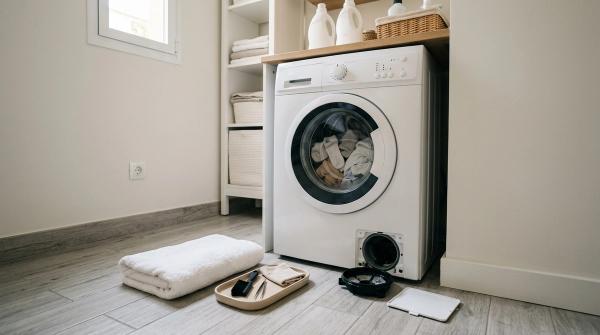
#- Run Tub Clean with the drum empty.
- Do not put clothes in during Tub Clean.
- Do not add shoes, mats or random laundry items.
- Do not mix cleaning chemicals.
- Use only a cleaner or descaler recommended for washing machines.
- Do not pour large amounts of detergent into the drum.
- If there is a burning smell, leakage, electric shock, error code or strange noise, stop using the machine and call authorised service support.
Tub Clean is normal maintenance. Opening panels, touching wiring, bypassing locks or trying electrical repairs at home is not a laundry hack. It is dangerous.
How often should you use Tub Clean?
#For many homes, running Tub Clean about once a month is a useful habit. The right frequency depends on how often you use the machine, your water quality, your detergent type and your machine model.
You may need Tub Clean more often if:
- The machine smells musty
- Clothes come out with residue
- You use too much detergent
- You use fabric softener often
- The washer door stays closed after use
- Your area has hard water
- The drum feels slimy or looks dirty
In many Indian cities and apartment buildings, hard water is common. Borewell water or mixed water supply can leave mineral deposits and make detergent harder to rinse out. If your manual allows it, a washing machine descaler may help.
One small habit makes a big difference: after washing, leave the door or lid open for a while so the drum can dry.
For front-load machines, wipe the rubber gasket now and then, especially if water collects there. It takes less than a minute and helps prevent that stale washing-machine smell.
India-aware tips for apartments and rented homes
#Laundry in Indian apartments has its own problems: small balconies, shaded drying areas, hard water, changing water pressure, shared utility spaces, machines kept in bathrooms, fixed water timings and neighbours who can hear every spin cycle.
Use higher spin when drying space is limited
#If clothes have to dry indoors or on a small balcony, a higher spin can remove more water. This helps towels, bedsheets and jeans dry faster.
Do not use high spin for delicate clothes. They may stretch, wrinkle badly or lose shape.
Do not overload the machine because water timings are fixed
#In some apartments, people rush laundry because water supply comes only at certain times. They stuff the machine as full as possible.
Overloading reduces cleaning and rinsing. Clothes need space to move. A slightly smaller load usually comes out cleaner.
Measure detergent, especially in front-load machines
#Too much detergent can cause poor rinsing, stiff clothes, white marks, extra foam, bad smell and detergent buildup.
Use the detergent scoop or cap. Front-load and high-efficiency machines usually need less detergent than people think. More detergent does not automatically mean cleaner clothes.
Be careful with late-night spin cycles
#Spin cycles can get noisy, especially if the machine is not level or the load is unbalanced. In apartments, that sound can travel through floors and walls.
If your machine has a lower spin speed, silent mode or night mode, use it late at night.
Check landlord-owned machines before using them
#If you are renting and the washing machine came with the flat, check the model number and look up the manual online if you do not have the paper copy.
If it smells stale, run an empty Tub Clean cycle as per the manual. Report leaks, damaged plugs, electric shocks, burning smells or strange sounds to the landlord or authorised service centre.
Keep the machine area ventilated
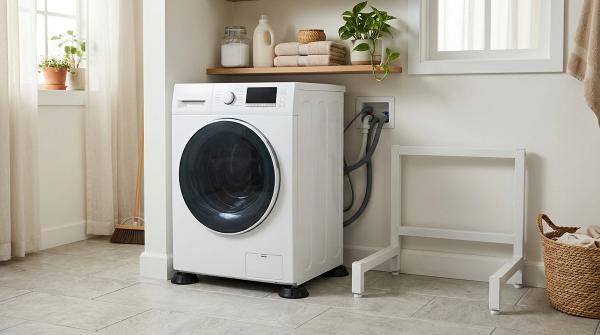
#Washing machines kept in closed bathrooms or tight utility corners stay damp for longer.
After washing, leave the door or lid open for some time. If your manual allows it, keep the detergent drawer slightly open too. Avoid covering the machine tightly while it is still moist.
Choosing the right cycle without overthinking
#Use this simple decision guide:
- Clothes are dirty and it is a regular load: Use Normal, Cotton or Daily Wash.
- Clothes are lightly used and the load is small: Use Quick Wash.
- Clothes are clean but soapy: Use Rinse + Spin.
- Clothes are washed but too wet: Use Spin Only.
- Clothes are delicate: Use Delicate, Gentle or the care-label setting.
- Machine smells or needs cleaning: Use Tub Clean with an empty drum only.
The best cycle is not always the longest cycle. It is the one that matches the fabric, dirt level and load size.
Common mistakes to avoid
#- Using Quick Wash for every load
- Adding extra detergent for extra cleaning
- Washing delicates on Normal without checking the label
- Closing the washer door immediately after every wash
- Putting clothes in the Tub Clean cycle
- Using Spin Only on fabrics that should not be spun
- Ignoring the manual because another brand has a similar cycle name
- Overloading the drum and expecting perfect washing
Cycle names are not fully standard across brands. One machine’s Daily Wash may not work exactly like another machine’s Mixed Load. General guidance helps, but your machine manual is still the final word.
Final takeaway
#Quick Wash saves time only when the load is small and lightly soiled. Rinse + Spin is for rinsing, not deep cleaning. Spin Only removes extra water, but does not wash. Tub Clean keeps the washing machine fresher and should always be run with an empty drum.
Laundry gets easier once you stop treating every button like a mystery. Match the cycle to the fabric, dirt level and load size. Use the right amount of detergent. Do not overload the drum. Check your manual when you are unsure.