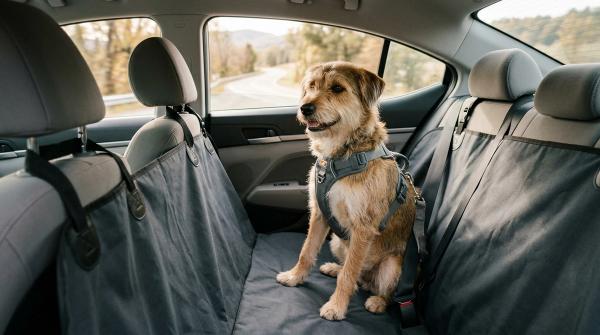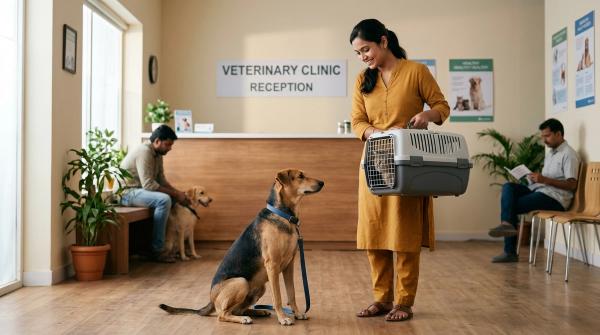

Dog muzzle training means teaching your dog to wear a muzzle calmly, slowly, and without fear. It is not punishment, and it does not mean your dog is “bad”. A good muzzle is more like a seatbelt: most days you may not need it, but in stressful, painful, crowded, or unpredictable moments, it can protect your dog and the people around them.
A properly fitted basket muzzle can help prevent bites and reduce scavenging while still allowing your dog to pant, drink water, and take treats. That last part is very important, especially in warm weather or during walks.
If the word “muzzle” makes you uncomfortable, you are not alone. Many pet parents worry that people will judge their dog or assume they are aggressive. But muzzle training is actually a responsible, thoughtful safety skill. It can be useful for vet visits, grooming, injury care, crowded walks, scavenging, travel, apartment living, and behaviour training.
For dog parents living in apartments or busy neighbourhoods, muzzle training can be especially helpful. Think lifts, staircases, society compounds, parks, markets, traffic-heavy roads, and places where food waste, bones, wrappers, or sharp objects may be lying around.
The safest approach is simple: choose the right muzzle, check the fit carefully, introduce it slowly, use rewards, and never use a muzzle to punish or frighten your dog.
Why Dog Muzzle Training Can Be So Useful
#You do not need to wait for a crisis to introduce a muzzle. In fact, the best time to start is when your dog is relaxed, healthy, and at home.
If the first time your dog sees a muzzle is during a painful vet visit, they may quickly learn to hate it. But if you introduce it gently, with treats and patience, the muzzle can become just another normal thing in your dog’s life.
1. Vet Visits and Medical Emergencies
#Even the gentlest dog can bite when they are scared or in pain.
A dog with a sore ear, injured paw, painful wound, stomach pain, or sudden injury may react very differently from their usual self. It is not because they are mean. It is because pain and fear can make any animal defensive.
If your dog already knows how to wear a muzzle, emergency care can be safer and less stressful for everyone, including your dog.
2. Grooming and Handling
#Some dogs find grooming difficult. Nail trims, ear cleaning, brushing, bathing, or coat clipping can feel overwhelming, especially if the dog has had a bad experience before.
A muzzle should never be used to force a terrified dog through grooming. But it can be one part of a careful, low-stress handling plan.
If grooming is a big struggle, work with a vet, qualified trainer, or groomer who understands gentle handling. Going slowly may feel inconvenient, but it is much kinder and safer than “just getting it done”.
3. Scavenging on Walks
#Many dogs love picking things up from the ground. Unfortunately, in busy neighbourhoods, this can become risky.
Dogs may grab:
- Old food
- Cooked bones
- Plastic wrappers
- Spoiled leftovers
- Sharp objects
- Garbage
- Unknown substances
A basket muzzle can help reduce the risk while you continue teaching skills like “leave it”, “drop it”, loose-leash walking, and calmer outdoor behaviour.
This can be especially useful in apartment complexes, parks, roadside walking routes, and market areas where food waste is common.
4. Reactive Dog Safety
#A muzzle can be helpful for a reactive dog who barks, lunges, growls, snaps, or becomes overwhelmed around people, dogs, vehicles, visitors, lifts, staircases, or crowded spaces.
But a muzzle is not a cure for reactivity.
Reactivity usually needs a proper behaviour plan. That may include distance, management, positive reinforcement training, environmental changes, and sometimes veterinary support.
If your dog has bitten, tried to bite, or seems extremely distressed, please work with a qualified trainer or veterinary behaviour professional. A muzzle can reduce risk, but it does not solve the emotional reason behind the behaviour.
5. Puppy Muzzle Training
#Puppy muzzle training is not about expecting your puppy to become aggressive.
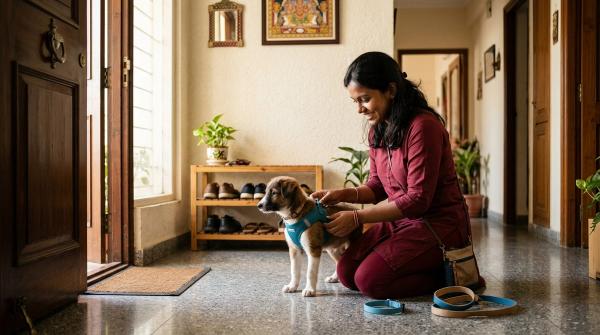
It is simply about helping your puppy learn that a muzzle is normal, just like a collar, harness, brush, crate, or car ride.
Keep it very short, fun, and easy. Puppies grow quickly, so check the muzzle fit often and never leave it on for long periods.
What Type of Muzzle Should You Use?
#For most everyday situations, a basket muzzle is the safest and most practical choice.
A properly fitted basket muzzle gives your dog room to open their mouth, pant, drink water, and take treats. This matters because dogs cool themselves by panting. A muzzle that holds the mouth shut is not safe for walks, exercise, hot weather, or longer wear.
Dog Muzzle Types Compared
#If you are just starting to learn how to muzzle train a dog, begin with a well-fitted basket muzzle and focus on comfort before anything else.
Basket Muzzle Fit Checklist
#A safe muzzle must fit your dog’s actual face, not just their breed or weight.
Two dogs from the same breed can have very different head shapes, so always check the fit carefully.
1. Pant Room
#Your dog should be able to open their mouth wide enough to pant comfortably.
This is one of the most important muzzle safety checks. If the muzzle keeps your dog’s mouth closed, it is not suitable for walks, exercise, or warm weather.
2. Nose Clearance
#The front of the muzzle should not press into your dog’s nose.
There should be a little space between the nose and the end of the basket so it does not rub when your dog moves.
3. Eye Clearance
#The muzzle should not ride up into your dog’s eyes.
If it blocks vision, makes your dog squint, or presses near the eyes, it is probably the wrong size or shape.
4. Treat Access
#You should be able to feed small treats through the front or side openings.
This makes training much easier. If you cannot reward your dog while they are wearing the muzzle, the process can become frustrating for both of you.
5. Secure Straps
#The muzzle should stay in place without being painfully tight.
Your dog should not be able to paw it off easily, but the straps should not dig into the skin, pull the ears, or rub behind the head.
6. No Rubbing or Pressure Marks
#After short practice sessions, check your dog’s:
- Nose bridge
- Cheeks
- Chin
- Behind the ears
Redness, hair loss, sore spots, or repeated pawing may mean the muzzle does not fit well or the training is moving too fast.
When to Use a Muzzle
#A muzzle can be helpful in specific, supervised situations.
You may use a muzzle:
- During vet exams when your dog may be scared or in pain
- During grooming or handling, as part of a low-stress plan
- On walks to help prevent scavenging unsafe items
- During behaviour modification exercises with professional guidance
- In public spaces where housing, transport, or local rules require it
- As an extra safety layer for a dog with known bite risk
A muzzle works best when it is paired with smart management.
That may mean:
- Giving your dog more distance from triggers
- Avoiding crowded lifts when possible
- Walking at quieter times
- Using baby gates at home
- Keeping your dog away from visitors until they are settled
- Choosing calmer routes instead of busy ones
The muzzle is one safety tool. It should not be the whole plan.
When Not to Use a Muzzle
#A muzzle is not a shortcut for training, care, supervision, or proper behaviour support.
Do not use a muzzle:
- To punish your dog
- To stop barking without understanding why your dog is barking
- To leave your dog unattended
- To force your dog into a situation that terrifies them
- To allow risky interactions with people, children, or other dogs
- To avoid calling a vet, trainer, or behaviour professional when your dog needs help
- For long wear if it restricts panting, drinking, or comfort
- During heavy exercise or hot weather if your dog cannot pant fully
Soft and grooming muzzles need extra caution. They may be useful only for very short, supervised procedures because they can restrict panting.
Positive Reinforcement Dog Muzzle Training Steps
#The best way to teach muzzle comfort is slowly, with rewards.
Do not push the muzzle onto your dog’s face. Do not buckle it on and hope they “get used to it”. That can scare your dog and make muzzle training much harder later.
The goal is simple: your dog learns that the muzzle predicts good things.
Use small, high-value treats your dog really enjoys. This could be tiny bits of chicken, cheese, kibble, or a dog-safe spread on a spoon, depending on your dog’s diet.
Keep early sessions short. One to three minutes is enough.
Step 1: Let Your Dog Notice the Muzzle
#Place the muzzle on the floor or hold it in your hand.
When your dog looks at it, sniffs it, or moves toward it, praise gently and give a treat.
Do not move the muzzle toward your dog yet. Let your dog explore it at their own pace.
Repeat this over a few short sessions until your dog seems relaxed around it.
Step 2: Turn the Muzzle Into a Treat Bowl
#Hold the basket muzzle like a small bowl.
Put a treat inside so your dog chooses to place their nose in to get it. Keep your hand still. Your dog should move toward the muzzle, not the other way around.
If your dog backs away, make it easier. Put the treat closer to the opening.
Step 3: Add a Simple Cue
#Once your dog happily puts their nose into the muzzle, add a cue.
You can use something like:
- “Muzzle”
- “Snoot”
- “Face in”
Say the cue once, present the muzzle, then reward when your dog places their nose inside.
Keep your voice relaxed and cheerful. No pressure.
Step 4: Build Duration Slowly
#Now begin feeding treats through the muzzle while your dog’s nose is inside.
Start very small:
- 1 second
- 2 seconds
- 3 seconds
Do not rush. If your dog pulls away, let them. The choice to move away helps your dog feel safe, and that trust is important.
Step 5: Touch the Straps Without Fastening Them
#When your dog can keep their nose in the muzzle comfortably, gently lift the straps behind their head for a moment.
Do not buckle it yet.
Touch the straps, give a treat, then release.
Repeat until your dog stays relaxed.
Step 6: Buckle for One Second
#Fasten the buckle for just one second.
Feed a treat through the basket, unbuckle it, and remove the muzzle.
That is enough for the first try.
Slowly increase the time over several sessions. Move from 1 second to 3 seconds, then 5 seconds, then 10 seconds.
Step 7: Add Gentle Movement
#Once your dog can wear the muzzle indoors for short periods, invite them to move a little.
Ask for easy behaviours they already know, such as:
- Sit
- Touch
- Walking beside you for a few steps
- Looking at you
Reward often. Keep the mood light and calm.
Step 8: Practise in Real-Life Settings
#Before using the muzzle for a vet visit or busy walk, practise in calm places.
Try:
- A quiet room
- Your hallway
- Your building compound at a quiet time
- A low-traffic street
- A short, peaceful walk
If possible, do not make the first real use a stressful event. Let your dog build confidence first.
Signs You Are Moving Too Fast
#Slow down if your dog:
- Backs away when the muzzle appears
- Freezes
- Paws repeatedly at the muzzle
- Rubs their face on the floor
- Refuses treats they normally love
- Whines, shakes, or hides
- Tries to bite the muzzle
These signs do not mean your dog is stubborn or dramatic. Most of the time, they mean the session is too hard, too long, or the muzzle is uncomfortable.
Go back to an easier step. Check the fit again. Use better rewards. Keep sessions shorter.
When to Call a Vet or Qualified Trainer
#Many pet parents can start basic muzzle training at home. But some situations need professional help.
Please involve a veterinarian, qualified trainer, or veterinary behaviour professional if:
- Your dog has bitten a person or animal
- Your dog has snapped, lunged, or growled in a way that worries you
- Your dog panics when handled
- Your dog is highly reactive on walks, in lifts, or around visitors
- Your dog guards food, toys, resting places, or people
- Your dog seems painful, suddenly irritable, or unusually sensitive to touch
- You cannot safely fit or remove the muzzle
A muzzle can reduce bite risk, but it does not treat pain, fear, anxiety, or aggression by itself. If the behaviour is serious, the muzzle should be part of a wider safety and training plan.
Common Muzzle Training Mistakes to Avoid
#Mistake 1: Waiting Until an Emergency
#If the first time your dog wears a muzzle is during pain, panic, or a crowded clinic visit, they may form a bad association with it.
Practise before you need it.
Mistake 2: Using the Wrong Muzzle
#Soft and grooming muzzles are not suitable for walks or long wear.
For most training and everyday use, choose a basket muzzle that allows panting, drinking, and treats.
Mistake 3: Forcing the Muzzle On
#Forcing the muzzle may work once, but it often creates fear.
Positive reinforcement builds cooperation, and cooperation is much safer than a struggle.
Mistake 4: Ignoring the Fit
#A muzzle that rubs, blocks vision, presses the nose, or prevents panting is not safe or comfortable.
Fit matters as much as training.
Mistake 5: Using a Muzzle to “Test” Your Dog
#Do not use a muzzle to put your dog into situations they cannot handle.
A muzzled dog can still feel scared, trapped, overwhelmed, or unsafe. They can also still get hurt.
Quick Safety Summary
#For safe dog muzzle training:
- Choose a basket muzzle for most everyday use
- Make sure your dog can pant, drink, and take treats
- Introduce the muzzle slowly with rewards
- Keep sessions short and positive
- Never use a muzzle as punishment
- Never leave a muzzled dog unattended
- Do not use a muzzle to avoid veterinary or behaviour help
- Get professional support for bite risk, severe fear, or reactivity
A well-trained dog does not need to enjoy every situation. They need to feel safe, understood, and supported.
Muzzle training can be one small but important part of that.
Sources Consulted
#This guide was written with safety principles cross-checked against veterinary and welfare guidance from Cornell University College of Veterinary Medicine, VCA Animal Hospitals, AKC, Dogs Trust, AAHA and SPCA-style muzzle training resources. Always ask your own veterinarian or a qualified behaviour professional for advice about your specific dog.
Disclaimer: This article is for educational purposes only. It does not replace professional veterinary or behavioural advice. If your dog has bitten, panics during handling, or shows serious reactivity, speak with a veterinarian or qualified trainer.