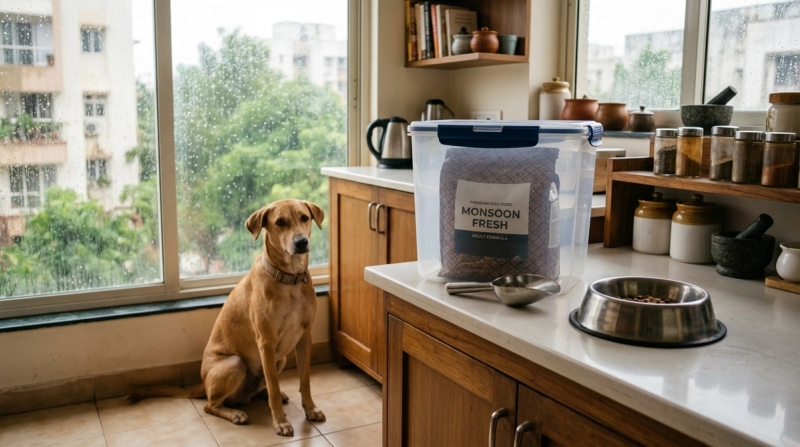
Monsoon makes everything feel a little better — cooler evenings, fresher walks, hot chai, the works. But if you have a dog at home, you also know the less charming side of the season: damp corners, ants near the food bowl, kibble that smells a bit “off”, and a fridge already packed with dabbas.
The good news? Safe dog food storage during the Indian monsoon does not need anything complicated or expensive.
The basic rule is simple: keep dry kibble in its original bag, place that bag inside an airtight container, and store it in a cool, dry spot away from damp walls, floor moisture and sunlight. Opened wet food and homemade dog food should go into the fridge and be used within 3 to 4 days. And during humid weather, try to buy only as much dry food as your dog can finish within about 30 days after opening.
That’s it. A few small habits can save you from mold, ants, stale food and unnecessary waste.
Why Dog Food Storage Matters More During Monsoon
#Dry dog food, or kibble, may look sturdy and shelf-safe, but it is still food. It contains fats, oils, vitamins and nutrients that can spoil when exposed to air, heat and moisture.
Wet dog food and homemade meals are even more sensitive once opened or cooked.
During the Indian monsoon, three things become harder to control:
- Humidity — kibble can lose freshness faster and may become more prone to mold.
- Ants and insects — one tiny crumb near the bowl is enough to invite a full ant committee.
- Smell — closed windows, damp air and small kitchens can make pet food odours stronger.
Most pet food safety advice says the same basic things: store food in a cool, dry place, use clean hands and utensils, keep the original packaging details, and refrigerate opened wet or fresh food. Opened dry food is best used within about 30 days, while opened wet food and homemade food should usually be used within 3 to 4 days if refrigerated.
So during monsoon, the most practical rule is: don’t overbuy.
The 30-Day Rule: Buy the Right Bag Size
#Buying a big bag of dog food feels like the smart thing to do. It is usually cheaper, you don’t have to keep reordering, and it feels convenient.
But in humid weather, a huge opened bag sitting around for weeks can become a problem.
For better kibble storage, choose a pack size your dog can finish in about 30 days after opening. This matters even more in humid cities like Mumbai, Chennai, Kolkata, Kochi, Goa and other coastal or high-rainfall areas.
If you have one small dog, a very large bag may not be worth it. If you have two large dogs, a bigger bag may be perfectly fine because it gets used faster.
The problem is not the size of the bag. The problem is how long the opened food stays exposed to air and humidity.
Fresh food is always better than food that has been open for too long.
Kibble, Wet Food and Homemade Food: Storage Guide
#Use this as a quick daily reference.
The Best Way to Use an Airtight Container
#A dog food storage container is very useful during monsoon, but there is one common mistake many pet parents make: pouring kibble directly into the container.
It is better to keep the kibble inside its original bag and place the entire bag inside the airtight container.
Why? Because the original bag is designed to protect the food. It also has important details like the batch number, barcode and best-before date. If there is ever a quality issue or product recall, those details matter.
Simple container checklist
#- Keep the original food bag.
- Place the full bag inside an airtight pet food container.
- Roll or clip the bag closed after every use.
- Save the lot number, barcode and best-before date.
- Do not mix old kibble with new kibble.
- Wash the container between refills.
- Let the container dry completely before using it again.
- Use a clean, dry scoop.
- Keep the container closed when not in use.
An airtight container helps, but it does not make food safe forever. It only works well if the container is clean, dry and properly shut.
Where to Store Dog Food in an Indian Home
#The best place to store dog food is a cool, dry cupboard or shelf away from heat, dampness and direct sunlight.
Try not to keep dog food in:
- Balconies where rainwater or damp air can enter
- Utility areas near washing machines
- Kitchen corners with seepage
- Damp floors
- Spots near windows with direct sunlight
- Areas close to gas stoves, ovens or hot appliances
- Places near cleaning liquids, dustbins or pest sprays
If possible, keep the container slightly raised on a shelf, rack, stand or sturdy stool. This helps protect the food from floor moisture, mopping water and insects.
Also check the wall behind the storage area. If the paint is peeling, the wall smells musty, or the corner feels damp, move the food somewhere else.
That musty smell is usually your warning sign.
How to Prevent Mold and Stale Kibble During Monsoon
#Humidity is the real troublemaker. Every time you open the food bag, moist air gets in. Over time, kibble can absorb some of that moisture and lose freshness.
Helpful monsoon habits
#- Open the container only when needed.
- Scoop the food quickly.
- Close the original bag tightly.
- Shut the airtight container properly.
- Do not leave kibble sitting in the bowl for hours.
- Keep the feeding area dry.
- Avoid storing food near wet mops, buckets or leaky sinks.
- Check the food regularly for clumps, insects or strange smells.
Mold is not always dramatic or easy to spot. Sometimes it looks like small fuzzy spots, greyish patches, webbing, unusual powder, or clumps that do not look normal.
If you are unsure, do not taste it, do not keep smelling it, and do not try to “save” the good-looking part.
Just throw it away.
It may feel wasteful in the moment, but feeding spoiled food can lead to a much bigger problem later.
How to Keep Ants Away from Dog Food
#Ants are honestly too efficient. They can find one crumb before you find your phone charger.
During monsoon, ants and insects often become more active indoors. The best way to stop them is to remove crumbs, smell trails and easy access to food.
Try these steps
#- Wipe the feeding area after meals.
- Wash your dog’s bowl regularly.
- Pick up leftover food once your dog is done.
- Keep the storage container sealed.
- Do not leave treat packets open.
- Clean around the container, not just inside it.
- Check under feeding mats or stands where crumbs may collect.
If ants keep reaching the bowl, you can create a simple water barrier. Place your dog’s food bowl inside a slightly larger shallow dish with a little water around it, like a moat.
Just make sure it is stable. Some dogs get annoyed if their bowl moves too much, and then you have a different mess to clean.
Avoid spraying insect killer near food bowls, kibble bags or water bowls. If pest control is done at home, keep all pet food sealed and away from treated areas.
Smell Control in Small Apartments
#Dog food smell can become stronger during monsoon because windows stay shut and damp air holds odours. In small flats, this becomes noticeable very quickly.
For dry kibble
#- Keep the original bag tightly closed.
- Use a proper airtight container.
- Wipe the outside of the container if food dust collects.
- Avoid storing the container in your bedroom if possible.
- Keep it away from onions, cleaning liquids and dustbins.
For wet dog food
#- Do not keep an opened can uncovered in the fridge.
- Transfer leftovers to a clean, sealed container.
- Use refrigerated leftovers within 3 to 4 days.
- Throw away food that smells sour, spoiled or unusually strong.
For homemade dog food
#- Cool it before refrigerating.
- Store it in a covered container.
- Avoid keeping large open bowls in the fridge.
- Use smaller containers if fridge space is tight.
- Label the container with the date if you tend to forget.
If your fridge is always full, cook smaller portions more often instead of storing a large batch for too long. It is better to cook less and store safely than to keep too much and keep wondering, “Is this still okay?”
Safe Handling: Small Steps That Make a Difference
#Pet food safety is not only about the container. Your everyday routine matters too.
Before serving food:
- Wash your hands.
- Use a clean, dry scoop or spoon.
- Check the smell and appearance of the food.
- Serve it in a clean bowl.
- Keep your dog’s water bowl clean.
After serving:
- Close the food bag and container.
- Refrigerate wet or homemade leftovers quickly.
- Wash bowls, especially after wet or homemade meals.
- Wipe spills and crumbs.
- Check if ants are coming near the feeding area.
These are small steps, but they matter a lot during monsoon, when everything takes longer to dry and food spoils faster.
When to Throw Dog Food Away
#When in doubt, throw it out.
This is especially important in monsoon. Do not try to save food that may be spoiled by removing only the “bad-looking” part. Mold and contamination can spread in ways you cannot see.
Discard dog food if:
- You see mold, fuzzy growth, webbing or insects.
- Kibble feels damp, sticky, clumped or unusually powdery.
- The food smells sour, rancid, musty or chemical-like.
- The colour or texture looks different from usual.
- The bag has become wet or water-damaged.
- The food was stored near cleaning chemicals or pest sprays.
- Wet food was left out for too long.
- Wet or homemade food has been in the fridge for more than 3 to 4 days.
- A can or pouch is bulging, leaking, badly damaged or smells wrong after opening.
- Your dog suddenly refuses food from a new pack and the food also looks or smells unusual.
Dogs can be fussy, yes. But if your usually excited eater suddenly refuses food and something seems off, take it seriously.
When to Call a Veterinarian
#Call your veterinarian if your dog may have eaten spoiled food and shows signs such as:
- Vomiting
- Diarrhoea
- Unusual tiredness
- Refusing food
- Drooling
- Stomach discomfort
- Repeated loose motions
- Behaviour that feels unusual
Do not give human medicines or random stomach tablets without asking a vet. Your vet can guide you based on your dog’s age, size, health history and symptoms.
If your dog is a puppy, elderly, already unwell, or showing severe symptoms, contact a vet quickly.
A Simple Monsoon Dog Food Storage Routine
#You do not need to make this complicated. A few minutes a day is enough.
At meal time
#- Wash your hands.
- Open the airtight container.
- Scoop food with a clean, dry scoop.
- Close the original food bag tightly.
- Shut the container properly.
- Serve food in a clean bowl.
After the meal
#- Remove leftovers.
- Wash or wipe the bowl.
- Clean crumbs near the feeding spot.
- Refrigerate wet or homemade leftovers in a sealed container.
- Check for ants, dampness or smell near the storage area.
Once a week
#- Wipe the outside of the storage container.
- Check the bag for tears, moisture or insects.
- Check the best-before date.
- Inspect the storage corner for dampness.
- Clean the feeding mat or floor area.
- Wash the scoop if it looks oily or dusty.
This routine is simple, but it makes dog food in monsoon much easier to manage.
Final Takeaway
#Good dog food storage during the Indian monsoon is mostly about keeping things dry, clean and simple.
Keep kibble in its original bag inside an airtight container. Store it away from damp walls, wet floors, heat and sunlight. Refrigerate opened wet food and homemade meals, and use them within 3 to 4 days. Try not to buy more dry food than your dog can finish in about 30 days.
A little care at storage time can prevent mold, ants, stale smells and wasted food. Your dog gets safer meals, and your home smells better too.