The Evolutionary Enigma of the Feline Purr
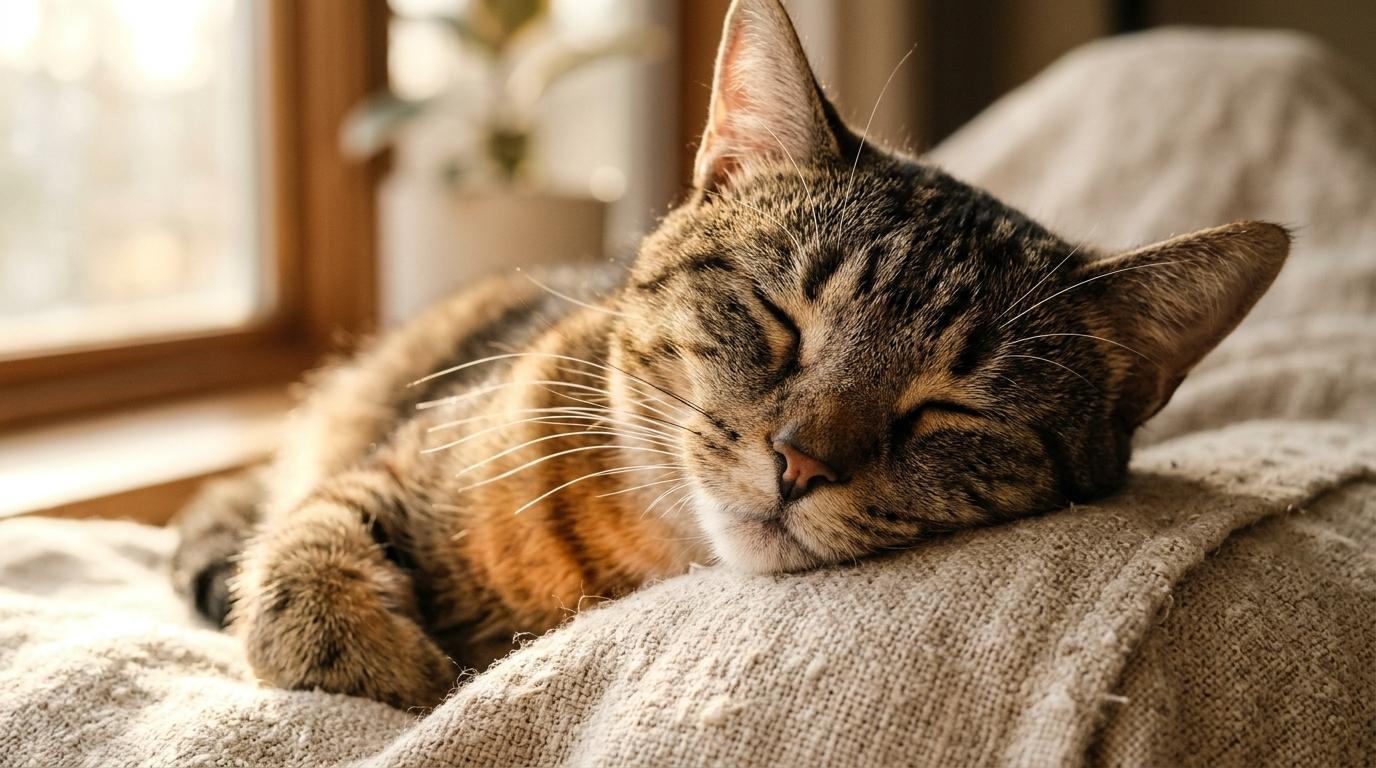
#Among the myriad vocalizations in the animal kingdom, few sounds are as universally recognized, comforting, and fundamentally misunderstood as the purr of a domestic cat. For centuries, folklore, casual pet ownership, and popular culture have treated the purr as the feline equivalent of a smile: an unambiguous acoustic declaration of pure contentment, safety, and affection. When a cat curls into a sunny patch of hardwood, kneads a soft wool blanket, and emits a rhythmic, motor-like hum, the emotional message seems obvious.
Yet veterinarians, animal behaviorists, and bioacoustic researchers encounter a far more complex reality every day. Cats do not only purr when lounging in blissful relaxation. Felines purr during acute physical distress, throughout the agonizing contractions of labor, when suffering from systemic shock, and during their final moments before euthanasia in veterinary clinics. A cat recovering from orthopedic surgery with multiple bone fractures will frequently purr vigorously while lying completely immobilized.
This paradox reveals that purring is not a mere emotional reflex. It is a sophisticated, metabolically conserved neuromuscular adaptation developed over millions of years of felid evolution. Understanding why and how cats purr requires looking beyond surface sentimentality into the intricate neurobiology of the mammalian brainstem, the biomechanics of intrinsic laryngeal musculature, the bioacoustic properties of low-frequency mechanical sound waves, and the evolutionary arms race of interspecies communication.
The Biomechanical Engine: The Neural Oscillator and Glottal Modulation
#For decades, the exact physical mechanism responsible for the feline purr was one of the most vigorously debated topics in comparative animal physiology. Early anatomical theories suggested that the sound was produced by blood rushing through the inferior vena cava, vibrating against the liver and diaphragm before reverberating through the bronchial tree. Other researchers hypothesized that false vocal cords, specialized palatal flaps, or vibrating membranes within the pulmonary vascular system generated the continuous resonance.
Modern electromyographic and acoustic research has thoroughly debunked these vascular hypotheses. The purr is an active, neuromuscular event generated by the synchronized interaction between the central nervous system and the larynx.
At the core of this system lies a specialized neurological circuit in the feline brainstem known as the central neural oscillator. This neural pacemaker generates rhythmic, rhythmic electrical impulses that travel down the laryngeal nerves to the intrinsic muscles of the larynx, specifically the cricoarytenoid and thyroarytenoid muscles. These electrical discharges fire at a consistent frequency of 20 to 30 cycles per second (Hertz).
When the neural oscillator fires, it causes the intrinsic laryngeal muscles to contract suddenly, pulling the vocal cords together and closing the glottis—the narrow aperture between the vocal folds. As the cat breathes, pulmonary air pressure builds up behind the closed glottis. Once the subglottic pressure exceeds the muscular tension, the vocal folds are forced apart, releasing a sudden, miniature burst of air into the upper respiratory tract. 
Immediately following this release, the neural signal subsides, the muscles relax, and the glottis snaps shut again, only to repeat the cycle milliseconds later. Each rapid opening and closing of the glottis chops the respiratory air stream into discrete acoustic pulses. These rapid pressure bursts resonate through the pharynx, oral cavity, and thoracic cage, producing the low-pitched, humming drone known as a purr.
Crucially, this mechanism operates independently of the vocal fold vibration used in meowing, hissing, or growling. In standard phonation, air forced past tense vocal folds induces self-sustaining aerodynamic oscillation, known as the myoelastic-aerodynamic principle of voice production. Purring, by contrast, relies on continuous, active neurological pacing, where every single vibration is governed by a direct, rhythmic motor unit firing from the brain.
Inhalation vs Exhalation: Why Cats Can Purr Continuously
#One of the defining acoustic characteristics of the feline purr is its uninterrupted continuity. Unlike human speech, canine barking, or standard feline meowing, which can only be generated during exhalation when air is expelled from the lungs, a cat can purr for hours on end without a perceptible pause. The sound rolls continuously across both phases of the respiratory cycle.
This continuous acoustic output is made possible by the bidirectional nature of the laryngeal oscillator. The central neural pacemaker maintains its rhythmic 20 to 30 Hz muscle contractions whether the diaphragm is contracting to pull air inward or relaxing to push air outward. 
During inhalation, sub-atmospheric pressure in the thorax draws ambient air down through the trachea. As the incoming air passes the rapidly opening and closing glottis, it is modulated into the same pulsed bursts as outgoing air during exhalation. 
Close acoustic spectrograms reveal subtle physical differences between the two respiratory phases:
- The egressive (exhalatory) phase is typically slightly louder, longer in duration, and characterized by a slightly lower fundamental frequency, as positive pulmonary pressure provides consistent driving force.
- The ingressive (inhalatory) phase tends to be marginally softer and higher in pitch, as atmospheric air enters against negative thoracic pressure, creating slight variations in glottal resistance.
- The transition between inspiration and expiration occurs so rapidly—often within 20 to 50 milliseconds—that the human ear perceives the alternating phases as a seamless, unbroken acoustic stream.
This ability to maintain uninterrupted phonation across both breath cycles provides unique physiological advantages. It allows a kitten to nurse while simultaneously signaling its location and well-being to the mother without interrupting milk ingestion, creating an unbroken feedback loop that reinforces maternal bonding.
Comparative Anatomy: The Purr vs Roar Divide
#Within the family Felidae, a fascinating morphological divide exists: some cats can purr continuously, while others can emit earth-shaking roars. With very few specialized exceptions, no single felid species can perform both.
This acoustic bifurcation stems from the structural anatomy of the hyoid apparatus—the delicate series of small bones that suspend the tongue, pharynx, and larynx from the base of the skull. 
In domestic cats (Felis catus) and other small felid species—such as cougars, cheetahs, lynx, bobcats, and ocelots—the hyoid apparatus is completely ossified. It forms a rigid, solid bony chain consisting of the stylohyoid, epihyoid, ceratohyoid, basihyoid, and thyrohyoid bones. This rigid skeletal structure provides a stable, unyielding mechanical anchor for the intrinsic laryngeal muscles. This firmness allows the rapid, precise muscular gating necessary to modulate airflow at 25 Hz across both inhalation and exhalation. However, this rigid anchorage prevents the vocal folds from stretching or billowing, making true low-frequency roaring physically impossible.
In the big cats of the genus Panthera—lions, tigers, jaguars, and leopards—the anatomy is completely transformed. In these apex predators, the epihyoid element of the hyoid chain is not ossified into bone; instead, it is replaced by an elongated, highly elastic fibro-elastic ligament. This elastic suspension allows the entire larynx to be pulled deep into the thoracic cavity during vocalization. 
Furthermore, the vocal folds of roaring cats are extraordinarily thick, deep, and cushioned by expansive subepithelial fat pads. When a lion or tiger expels high-velocity air through this descending, flexible acoustic tract, the massive vocal folds vibrate at high amplitudes, generating an explosive, low-frequency roar capable of traveling several miles across open savannah or dense jungle. 
Because the hyoid ligament is loose and elastic, it lacks the rigid mechanical rigidity required to support the rapid 30 Hz twitching of the laryngeal oscillator. Consequently, lions and tigers cannot produce a true, continuous, two-phase purr. Conversely, domestic cats, cougars, and cheetahs possess the rigid hyoid framework necessary to purr continuously across both breath phases, but their delicate, un-cushioned vocal folds cannot withstand the immense aerodynamic forces required to roar.
The Healing Frequency Hypothesis: 25 to 150 Hz and Tissue Regeneration
#One of the most compelling discoveries in modern feline bioacoustics is the specific frequency profile of the cat purr and its correlation with clinical regenerative medicine. 
When researchers record domestic cats purring and run the audio through digital Fourier transform analyzers, the acoustic energy does not disperse randomly across the audible spectrum. Instead, it concentrates in tightly clustered low frequencies. The fundamental frequency typically sits between 25 Hz and 50 Hz, with strong, resonant harmonics extending to 100 Hz, 120 Hz, and 150 Hz.
In orthopedic medicine, biomedical engineering, and sports rehabilitation, this exact frequency range—25 Hz to 150 Hz—is well established for its therapeutic and osteogenic effects. Low-intensity mechanical vibrations within this spectrum exert quantifiable physiological impacts on mammalian musculoskeletal tissue:
- Bone Density Stimulation: Bone tissue is dynamic and responsive to mechanical stress, a biological phenomenon known as Wolff's Law. High-frequency, low-magnitude mechanical vibrations between 25 Hz and 50 Hz stimulate osteoblastic activity—the cells responsible for synthesizing bone matrix—while downregulating osteoclasts, the cells that reabsorb bone. Clinical human trials utilize low-intensity vibration plates operating at 30 Hz to treat osteoporosis, prevent bone mineral density loss in immobilized patients, and accelerate the healing of non-union fractures.
- Tendon and Ligament Repair: Frequencies around 100 Hz to 120 Hz have been shown to stimulate local blood microcirculation, enhance collagen synthesis, and accelerate the repair of strained tendons and ligaments.
- Joint Mobility and Pain Modulation: Low-frequency acoustic vibrations between 50 Hz and 100 Hz relieve chronic joint stiffness, decrease inflammatory edema, and modulate somatic pain perception by triggering the release of endogenous opioids within the central nervous system.
- Dyspnea and Respiratory Relief: The gentle vibrational resonance through the feline thorax helps loosen pulmonary secretions, ease breathing difficulties, and reduce the physical effort required for ventilation.
From an evolutionary standpoint, this biomechanical phenomenon offers a profound explanation for the survival mechanics of cats. Felids are ambush predators that spend extended periods—often 16 to 18 hours per day—in total physical inactivity, lying dormant to conserve metabolic energy for explosive, high-intensity hunting sprints. 
In humans and canines, prolonged physical inactivity leads to rapid bone demineralization, muscle atrophy, and joint degeneration. The continuous internal emission of 25 to 150 Hz mechanical vibrations acts as an internal, low-energy cellular exercise simulator. By vibrating their own skeleton and musculature during rest, cats may maintain bone density, preserve muscular tone, and repair micro-damage without expending significant caloric energy. 
This biological mechanism also helps explain the remarkable survival rates of cats suffering from high-rise syndrome—falling multiple stories from open windows. Despite suffering severe initial trauma, feline recovery rates for shattered jaws, ruptured diaphragms, and complex pelvic fractures are remarkably high, supported by the self-soothing and osteogenic benefits of internal vibrational healing.
To understand how low-frequency acoustic vibrations travel through physical media, exploring the foundational principles of sound wave physics and acoustic frequencies provides valuable context on wave propagation, amplitude, and cellular resonance.
The Solicitation Purr: Acoustic Manipulation of Human Caregiving
#While the purr originated as a communicative and physiological tool among felines, domestic cats have evolved an ingenious acoustic modification tailored specifically to exploit the human auditory cortex: the solicitation purr.
In 2009, bioacoustic researchers at the University of Sussex conducted a groundbreaking study investigating how cats communicate with their human caregivers when requesting food. Cat owners frequently reported that their pets produced a distinctly annoying, urgent purr around breakfast time that was impossible to ignore or sleep through, despite being outwardly peaceful.
When researchers recorded and analyzed these feeding-context purrs, they discovered a hidden acoustic signature. Embedded directly within the deep, soothing, low-frequency 25 Hz fundamental purr was an anomalous, high-frequency acoustic peak oscillating between 220 Hz and 520 Hz. 
This high-frequency component is not a separate vocalization layered on top; it is produced simultaneously as the cat alters laryngeal tension during the purr cycle, embedding an acute, bird-like cry into the continuous motor hum.
Remarkably, this 220 to 520 Hz frequency band directly matches the acoustic frequency and pitch contour of a human infant's distress cry. Human brains are hardwired by evolutionary biology to respond with immediate urgency, heightened cortisol arousal, and an instinctual caregiving impulse whenever sound in this frequency range is detected. 
When researchers played audio recordings of solicitation purrs and non-solicitation contentment purrs to human test subjects—even individuals with no prior experience owning cats—the participants consistently rated the solicitation purrs as significantly more urgent, demanding, and less pleasant. 
By cloaking an infant-like distress cry inside an otherwise socially acceptable, non-aggressive purr, cats successfully trigger human nurturing behavior without provoking defensive irritation. It represents a masterclass in interspecies psychological manipulation.
Stress Purring and Pain Modulation: Endorphins in Clinical Trauma
#Perhaps the most clinically vital aspect of feline purring is recognizing when the sound signals severe distress rather than comfort. In veterinary hospitals worldwide, cats suffering from severe road traffic accidents, urinary blockages, advanced renal failure, and systemic infections often purr loudly on examination tables.
Why would an animal in extreme pain emit a sound associated with happiness?
The answer lies in the neurochemical and behavioral role of purring as an autocommunicative, self-soothing coping mechanism. Just as humans may nervous-laugh during a panic attack, rock back and forth during severe grief, or breathe deeply through physical pain, a distressed cat purrs to calm its own nervous system and modulate somatic pain.
When the feline brain experiences intense fear or physical trauma, the sympathetic nervous system triggers systemic stress responses. Purring stimulates the parasympathetic nervous system, inducing vagal nerve activation, slowing a galloping heart rate, and triggering the release of endorphins—the body's natural opiate-like pain relievers. The physical vibrations act as an endogenous massage, reducing muscular spasm and easing thoracic and abdominal tension.
Furthermore, in social feline dynamics, purring serves as an appeasement vocalization. A cat entering an unfamiliar territory or confronted by a dominant, aggressive rival will often purr while adopting a submissive posture. In this context, the purr communicates complete non-aggression: it signals to other animals that the cat is vulnerable, unthreatening, and seeking to avoid physical confrontation.
Failing to recognize stress purring can lead to catastrophic medical delays. When a pet owner assumes that a purring cat cannot be in serious pain, life-threatening internal injuries or acute diseases often go untreated.
Reading the Purr: Behavioral Context, Posture, and Vital Signs
#Because a purr can communicate either blissful serenity or critical physiological distress, interpreting the sound requires evaluating the entire animal. A purr must never be diagnosed in isolation; it must be deciphered through physical posture, facial expressions, eye morphology, and physiological vital signs.
A content, relaxed purr is accompanied by expansive, loose body language:
- The cat lies stretched out on its side or loosely curled with paws tucked underneath the chest.
- The facial muscles are relaxed, the whiskers point slightly forward or hang loosely, and the ears are in a natural, upright, forward-facing orientation.
- The eyes are half-closed, softly blinking, or engaging in slow-blink eye contact with trusted individuals.
- Respiratory effort is slow, rhythmic, and abdominal, without nasal flaring or abdominal pumping.
- The cat often kneads rhythmically with front paws, a neonatal reflex retained from nursing that stimulates maternal oxytocin release.
A distressed, painful, or trauma-induced purr presents an entirely different physical profile:
- The cat adopts a rigid, hunched, or crouched posture, pulling its limbs tightly underneath the body as if guarding the abdomen.
- The head is held low, often level with or below the shoulders, avoiding visual engagement.
- The ears are rotated sideways, pinned back against the skull, or twitching nervously in response to subtle environmental sounds.
- The eyes remain wide, hyper-alert, and glassy, with dilated pupils (mydriasis) that do not contract normally under bright room light.
- Whiskers are pulled tightly back against the cheeks in a defensive mask.
- Respiration may be shallow, tachypneic (rapid), or characterized by exaggerated abdominal effort.
- The cat may display a tense, flicking tail tip, remain rigidly unresponsive to petting, or actively pull away when specific anatomical regions—such as the spine, hips, or abdomen—are touched.
Clinical and Bioacoustic Comparison Matrix
#The following structural matrix outlines the mechanical parameters, frequency profiles, underlying anatomical drivers, and behavioral indicators across the primary categories of feline purring.
Mechanical and Bioacoustic Profile
#- Contentment Purr: Operates at a fundamental frequency of 25 to 50 Hz, with gentle harmonics up to 100 Hz. Driven by standard laryngeal oscillator pacing modulated by parasympathetic oxytocin release. Characterized by relaxed, open posture, soft eye blinking, and rhythmic front paw kneading.
- Solicitation Purr: Operates at a fundamental frequency of 25 to 50 Hz, but features an embedded high-frequency harmonic peak between 220 and 520 Hz. Driven by active vocal fold tensioning during laryngeal oscillator cycles. Characterized by persistent pacing, visual tracking of caregivers, and vocal urgency prior to scheduled feeding.
- Stress and Trauma Purr: Operates at a fundamental frequency of 20 to 45 Hz, characterized by irregular respiratory pauses and tense acoustic amplitude bursts. Driven by sympathetic crisis activation, endogenous endorphin release, and neurological pain gating. Characterized by a hunched posture, pinned ears, dilated pupils, rigid guarding of the abdomen, and flat facial expressions.
- Neonatal Bonding Purr: Operates at a fundamental frequency of 30 to 60 Hz, exhibiting low acoustic amplitude tailored for close-range tactile conduction. Driven by newborn sensory orientation to the mother's mammary vibrations. Characterized by active suckling, tactile searching against maternal fur, and maternal reciprocating purrs.
Anatomical Comparison: Purring vs Roaring Felids
#- Domestic Cats and Small Felids (Cougar, Cheetah, Lynx): Possess a fully ossified, rigid hyoid bone chain with thin, elastic vocal folds. Capable of continuous two-phase purring during both inhalation and exhalation. Incapable of roaring due to the lack of elastic tract elongation.
- Roaring Big Cats (Lion, Tiger, Jaguar, Leopard): Possess an un-ossified, flexible fibro-elastic epihyoid ligament with thick, massive, fat-padded vocal folds. Capable of generating explosive, deep-resonance roars reaching over 114 decibels. Incapable of continuous two-phase purring due to the absence of a rigid mechanical anchor for rapid laryngeal gating.
Frequently Asked Questions
#Can cats voluntarily control when they purr, or is it an involuntary reflex?
#Purring is a semi-voluntary neuromuscular behavior initiated by conscious emotional states but modulated autonomously once triggered. A cat can intentionally start or stop purring when interacting with a human or littermate, but the rhythmic 20 to 30 Hz contraction of the laryngeal muscles is driven by an automatic neural pacemaker in the brainstem, functioning similarly to human respiration.
Why do some domestic cats never purr at all?
#Individual domestic cats exhibit wide anatomical and behavioral variation. Some cats communicate predominantly through visual cues and body language rather than vocalizations, while others produce purrs so subtle and low in acoustic volume that they can only be felt as gentle throat vibrations rather than heard. Past trauma, respiratory abnormalities, or lack of early socialization can also suppress purring.
Does purring consume significant metabolic calories or tire the cat?
#No. Feline purring is an extraordinarily energy-efficient neuromuscular process. Because the laryngeal oscillator modulates natural respiratory airflow rather than forcing high-pressure expulsive vocalization like meowing or roaring, purring requires minimal metabolic energy. Cats can sustain continuous purring for hours without fatigue or elevated oxygen consumption.
Can listening to a cat's purr lower human blood pressure and anxiety?
#Yes. Clinical human health studies indicate that interacting with a purring cat stimulates vagal nerve activity, triggering parasympathetic nervous system dominance. The rhythmic 25 to 50 Hz acoustic hum promotes systemic muscle relaxation, reduces serum cortisol levels, lowers systolic blood pressure, and stimulates neurochemical release of oxytocin and dopamine.