When you pour hydrogen peroxide on a fresh scrape and see a rush of thick white foam, it feels like proof that the medicine is working. For generations, household lore claimed that fizzing meant the liquid was boiling away germs and disinfecting the cut.
It isn't. The bubbling has almost nothing to do with killing bacteria. What you are actually watching is your own damaged cells destroying the peroxide.
Your red blood cells and injured tissue contain an enzyme called catalase. The second hydrogen peroxide touches an open wound, catalase instantly tears it apart into plain water and oxygen bubbles. Even worse, modern emergency doctors and dermatologists no longer recommend using hydrogen peroxide on fresh cuts: while it does kill some surface bacteria, it also destroys the healthy new skin cells trying to heal your wound, leading to worse scarring and slower healing.
How Hydrogen Peroxide Actually Breaks Down
#Hydrogen peroxide is essentially water with one extra oxygen atom attached. That extra oxygen bond is chemically fragile and naturally wants to break apart into ordinary water and oxygen gas. 
Left alone in a cool, dark brown bottle in your bathroom cabinet, that breakdown happens at an imperceptibly slow crawl—losing roughly one percent of its strength per year. It sits in the bottle looking and acting just like plain, still water.
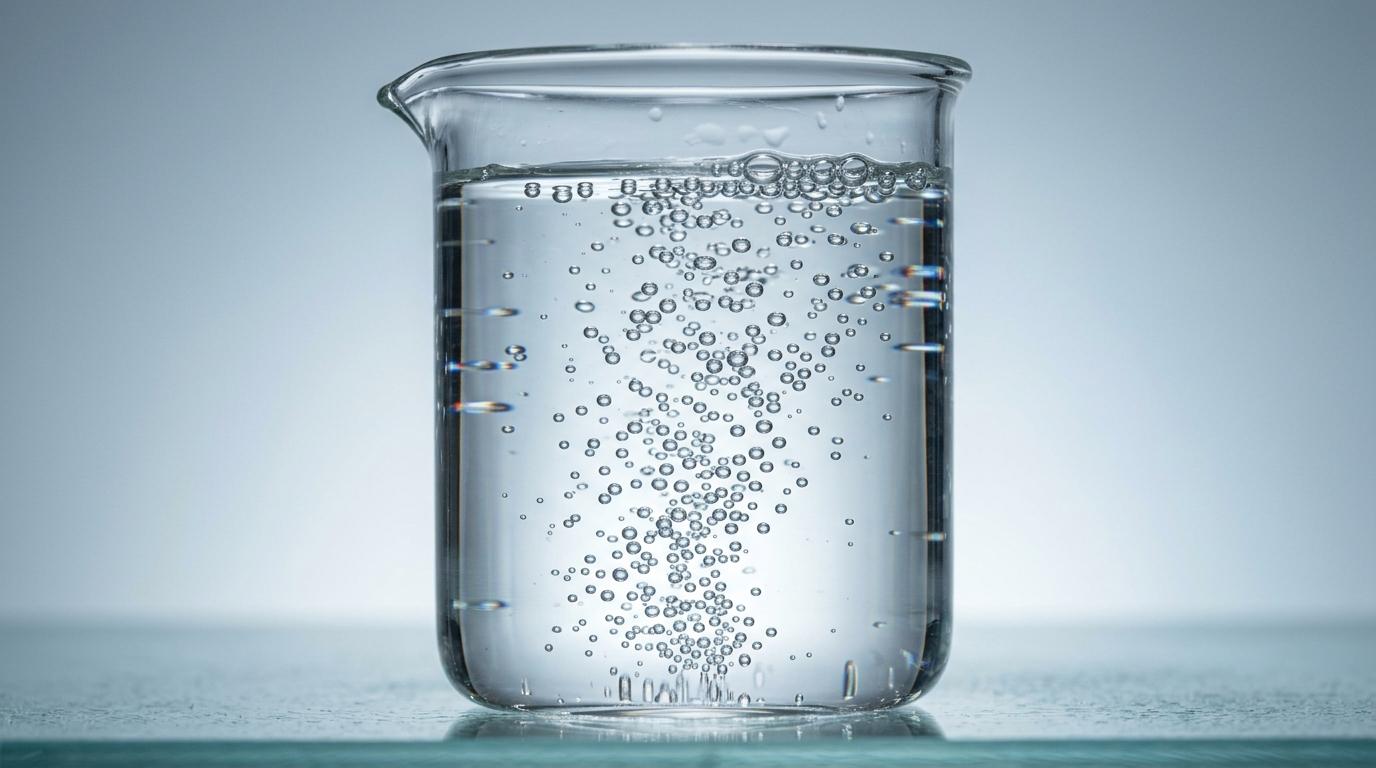
However, the moment you introduce a catalyst, that slow breakdown speeds up millions of times over. The activation barrier drops instantly, and the liquid transforms into water and oxygen gas in fractions of a second.
Meet Catalase: Your Cells' Built-In Shield
#The catalyst driving that sudden foaming is not dirt, and it is not environmental germs. It is an enzyme produced inside your own body called catalase.
Catalase exists in almost every oxygen-breathing organism on Earth. Its primary job is cellular self-defense. During everyday cellular metabolism, your mitochondria generate small amounts of toxic chemical byproducts, including hydrogen peroxide. If your cells left that peroxide alone, it would damage proteins, cell membranes, and DNA. To protect you from that internal damage, your cells keep stores of catalase ready to neutralize peroxide the moment it appears.
Catalase is one of the fastest, most efficient enzymes in human biology:
- A single molecule of catalase can break down up to forty million molecules of hydrogen peroxide every second.
- Nearly every time a hydrogen peroxide molecule bumps into the enzyme, it is cleaved instantly into water and oxygen.
- When you pour peroxide over a scrape, millions of catalase enzymes meet an enormous flood of liquid, releasing billions of tiny oxygen gas bubbles every millisecond.
Because this reaction happens in a wet pool of blood, lymph, and tissue fluid, surface tension traps the rushing oxygen gas, creating the crackling white foam you see in the sink.
Where the Enzyme Actually Comes From
#A common myth is that bacteria cause the bubbling. While some bacteria (like Staphylococcus aureus) do produce catalase, their numbers on a fresh scrape are far too small to create a visible layer of foam.
The real flood of catalase comes directly from your own torn tissues:
- Red Blood Cells (Erythrocytes): Red blood cells are packed with catalase to protect hemoglobin while ferrying oxygen through your body. When skin breaks and capillaries bleed, red blood cells burst open, dumping massive amounts of free catalase straight into the cut.
- Torn Skin Cells: The scrape rips open epidermal cells and deeper fibroblasts, spilling their internal contents directly into the wound bed.
- White Blood Cells: Your body's immune cells arrive at the cut to defend the area, carrying their own supply of catalase.
You are not watching germs get burned away. You are watching a chain reaction fueled by your own cellular fluids.
Why Hydrogen Peroxide Never Bubbles on Intact Skin
#If human skin is packed with catalase, why can you pour hydrogen peroxide over your dry arm or fingertip without seeing a single bubble?
The reason comes down to the outer protective layer of your skin, known as the stratum corneum. Dermatologists often compare this outer skin layer to a brick wall: dead, flattened skin cells act as the bricks, while dense natural oils and ceramides act as the mortar.
These outer skin cells are already dead, so they contain no active enzymes. More importantly, the waxy lipid mortar forms a tight waterproof seal that keeps topical liquids from reaching the living, catalase-rich cells underneath. Without access to active catalase, the peroxide sits quietly on your skin just like tap water.
The moment an object breaches that barrier—even a minor slice, as detailed in our analysis of why shallow paper cuts trigger intense nociceptive pain—the protective seal is broken. The peroxide pours directly into the living tissue beneath, meets the catalase waiting inside your ruptured blood cells, and begins foaming immediately.
| Situation | 3% Hydrogen Peroxide on Unbroken Skin | 3% Hydrogen Peroxide on an Open Cut |
|---|---|---|
| Skin Barrier | Intact, sealed stratum corneum | Breached, ruptured epidermal and dermal layers |
| Enzyme Exposure | Zero contact with active catalase | Massive contact with catalase from burst red blood cells |
| Visual Reaction | Liquid sits still with zero bubbles | Immediate crackling froth of trapped oxygen bubbles |
| Cellular Impact | Harmless; surface fluid evaporates naturally | Destroys healthy repair cells and fragile new capillaries |
| Healing Outcome | Normal skin remains unchanged | Delays wound closure and increases visible scar tissue |
Why Doctors Tell You Not to Use It
#If hydrogen peroxide does kill surface bacteria, why have emergency departments, the American Red Cross, and dermatologists around the world removed it from standard first-aid advice?
The problem is a lack of selective targeting. A helpful antiseptic should destroy harmful germs while leaving your body's repair cells alone. Hydrogen peroxide cannot tell the difference. It is an aggressive chemical oxidant that attacks any living cell membrane it touches.
At the standard three percent bottle concentration sold in pharmacies, hydrogen peroxide causes heavy collateral damage to the delicate healing process:
- It Kills Dermal Fibroblasts: Fibroblasts are the builder cells responsible for weaving new collagen fibers across a cut to knit it back together. Peroxide causes chemical burns to these cells, halting their repair work.
- It Destroys Migrating Skin Cells: For a cut to close, new skin cells (keratinocytes) must crawl across the open wound bed from the edges. Hydrogen peroxide wipes out these fragile new cells, keeping the cut open days longer than necessary.
- It Clots Fragile New Blood Vessels: Your body rapidly sprouts microscopic new capillaries to bring oxygen and nutrients to the injured area. Peroxide cauterizes and clogs these new vessels, starving the healing skin.
- It Increases Scarring: By killing off the body's natural repair cells and prolonging inflammation, peroxide triggers the production of thicker, more disorganized scar tissue.
- It Stings Intensely: Chemical burns on exposed nerve endings trigger sharp, unnecessary pain that offers zero medical benefit.
In short, using hydrogen peroxide to clean a cut is like using a flamethrower to get rid of weeds in your garden: you might kill a few weeds, but you also destroy the entire lawn in the process.
What Actually Works for Minor Cuts
#Modern wound care relies on gentle, evidence-based practices that protect your body's natural healing rhythm rather than burning it with harsh chemicals. 
A simple rule of thumb for minor scrapes: if you wouldn't comfortably put a liquid into your eye, don't pour it into an open cut.
Here is the straightforward routine doctors recommend for everyday cuts:
- Rinse Thoroughly with Running Tap Water: The best way to prevent infection is physical removal of dirt, not chemical sterilization. Hold the cut under clean, lukewarm running tap water for two to three minutes. The pressure of the running water safely flushes away grit and bacteria without burning delicate tissue.
- Wash the Surrounding Skin with Mild Soap: Clean the intact skin around the cut with gentle soap and a clean washcloth. Try to keep soapy lather from sitting directly inside the open wound bed.
- Apply Direct Pressure to Stop Bleeding: Press a clean cloth or gauze pad firmly over the wound for two to three minutes until clotting stops the flow.
- Keep It Moist with Plain Petroleum Jelly: Letting a cut dry out to form a hard, tight scab slows down healing and increases scarring. Applying a thin layer of plain petroleum jelly (like Vaseline) keeps the wound bed moist, allowing new skin cells to slide across the surface up to twice as fast.
- Cover with a Clean Bandage: Put on a sterile adhesive bandage to keep dirt out and protect the cut from rubbing against clothes. Change the bandage once a day, or whenever it gets wet or dirty.
- Watch for Real Signs of Infection: Minor scrapes usually look noticeably better within two to three days. Seek medical attention if you notice genuine infection signs: redness spreading outward from the cut, swelling, throbbing heat, yellow or foul-smelling drainage, or a fever.
That crackling white foam on a scrape is a fascinating demonstration of human biology and the speed of the catalase enzyme. But in your first-aid kit, that fizzing is a sign of healthy skin cells being destroyed, not germs being cured. Rinsing with plain water and keeping the cut clean and moist ensures your body can heal quickly with minimal scarring.