If you cook every day, especially with oil, masala, tadka, frying, or high heat, a ducted kitchen chimney is usually the best option if your home allows it.
Why? Because it works right where the problem starts: above the stove. It pulls up smoke, heat, steam, smell, and oily particles before they spread across the kitchen.
An exhaust fan is useful too, but in a different way. It improves basic ventilation and pushes hot or stale air outside. But it does not catch grease at the stove.
An air purifier can help with leftover smell or fine smoke particles in nearby rooms, but it should not be your main kitchen solution. It is not designed to deal with grease, steam, or heat from cooking.
Cooking smoke is not just smoke. It is a mix of:
- Heat
- Steam
- Oil droplets
- Food smell
- Fine particles
- Sometimes gas or fuel byproducts, depending on your stove and cooking style
And once this mix spreads, it does not stay politely in the kitchen. It can move into the living room, bedrooms, curtains, cabinets, sofa fabric, and even clothes.
So the best choice depends on what is actually bothering you.
If your cabinets feel sticky, you need grease control.If your kitchen feels hot and suffocating, you need outdoor exhaust.If food smell stays in the living room, you need better airflow, and maybe an air purifier as extra support.
Let’s compare a kitchen chimney, exhaust fan, and air purifier in a simple, practical way.
Quick Comparison: Kitchen Chimney vs Exhaust Fan vs Air Purifier
#Why Kitchen Ventilation Matters More Than You Think
#Most people think kitchen ventilation is only about smell. That is the first thing we notice, of course. Nobody wants the whole house smelling like fried onions or fish curry for hours.
But smell is only one part of the problem.
Without proper ventilation, smoke and oil slowly settle on:
- Cabinets
- Tiles
- Ceiling
- Exhaust fan blades
- Curtains
- Appliances
- Nearby furniture
- Open shelves
You may not notice it immediately. But after a few months, the kitchen starts feeling sticky. Tiles become harder to wipe. Cabinet handles feel greasy. The ceiling may start looking dull.
That is why source control matters.
The US Environmental Protection Agency, EPA, recommends using vented hoods or exhaust systems that send air outdoors whenever possible. The EPA also notes that properly sized, non-ozone air cleaners can help reduce some indoor pollutants, but they are not a replacement for ventilation and controlling pollution at the source.
The World Health Organization, WHO, notes that household fuel combustion can affect indoor air. In simple terms, what you cook, how you cook, what fuel you use, and how well your kitchen is ventilated all make a difference.
This article is not medical advice. It is about everyday kitchen comfort, cleaner surfaces, and better indoor air movement.
Option 1: Kitchen Chimney, Best for Daily Cooking Smoke and Grease
#A kitchen chimney, also called a range hood, sits above your stove. It pulls smoke, steam, oil droplets, heat, and food smell upward before they spread around the kitchen.
For regular cooking, especially Indian cooking, this is usually the strongest option.
A chimney makes sense if you:
- Fry food often
- Make tadka or temper spices
- Cook with lots of oil
- Use high heat
- Cook daily
- Have a closed kitchen
- Notice smoke collecting above the stove
- Find your cabinets getting sticky
The biggest advantage of a chimney is simple: it works close to the source.
Instead of waiting for smoke to fill the kitchen and then trying to remove it, a chimney catches much of it while it is still rising from the pan.
Ducted Chimney vs Ductless Chimney
#This is one of the most important choices.
A ducted chimney sends air outside through a duct or pipe. If your kitchen allows it, this is generally the better option. It removes smoke, heat, steam, smell, and oily air from the room.
A ductless chimney pulls air through filters and sends it back into the kitchen. It can reduce grease and some smell, but it does not remove heat or moisture from the room. It also usually needs carbon filters, which must be replaced from time to time.
If you cook heavily every day, a ducted chimney is usually more practical than a ductless one. Check the manufacturer’s manual for filter replacement needs before buying.
Why the Grease Filter Is So Important
#For oily cooking, the grease filter is not a small detail. It is one of the most important parts of the chimney.
A good grease filter helps stop oil from reaching:
- The motor
- The duct
- Cabinets
- Tiles
- Ceiling
- Nearby walls
Common grease filter types include:
- Baffle filters: Usually preferred for heavy Indian cooking because they separate grease from air more effectively.
- Mesh filters: Can work well, but they may clog faster if you cook oily food often.
- Filterless designs: These look convenient, but for heavy oily cooking, many people still prefer a visible, washable grease filter.
For daily Indian cooking, a ducted chimney with a good grease filter is usually much more useful than relying only on an exhaust fan.
Chimney Size and Installation Matter
#A chimney is not something you should choose only because it looks stylish.
A beautiful chimney that is too small, too high, badly centered, or connected to a poor duct route will not perform well.
Before buying, check:
- Hob width
- Chimney width
- Recommended mounting height
- Duct route
- Number of duct bends
- Wall strength
- Electrical point
- Kitchen layout
- Local building or apartment rules
Ideally, the chimney should be wide enough to cover the cooking area properly. If it is too narrow, smoke can escape from the sides.
Ducting also matters. A shorter, straighter duct usually performs better than a long duct with too many bends.
If you are unsure, ask the brand installer or a trusted local professional before buying. It is much easier to plan before installation than to fix problems later.
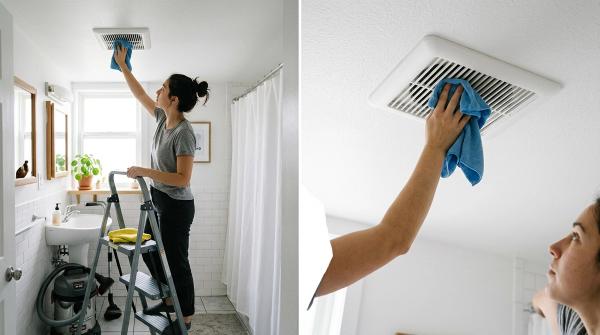
Option 2: Exhaust Fan, Best for Basic Ventilation
#An exhaust fan is simpler and usually cheaper than a chimney. It is fitted on an outside wall or window and pushes kitchen air outdoors.
It can help when your kitchen feels:
- Hot
- Humid
- Stale
- Smelly
- Closed up after cooking
It is also a practical option in rental homes where chimney installation or ducting is not allowed.
But there is one big limitation: an exhaust fan does not catch grease at the stove.
So if you fry often and use only an exhaust fan, oil droplets can still settle on tiles, cupboards, ceiling, shelves, and the fan itself. Over time, cleaning becomes harder.
When an Exhaust Fan Makes Sense
#An exhaust fan may be enough if:
- You cook lightly
- You mostly boil, steam, or make low-oil food
- Your kitchen has a good window
- You cannot install a chimney
- You need a budget-friendly option
- Your landlord does not allow drilling or ducting
- Heat and odour are bigger issues than grease
For heavy cooking, an exhaust fan is better as a support tool. It helps move air out, but it does not replace a proper chimney if grease and smoke are daily problems.
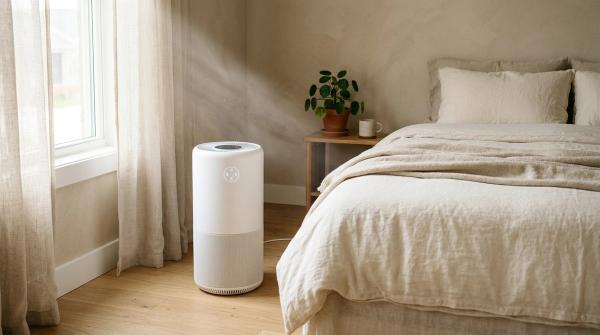
Option 3: Air Purifier, Best as Extra Support
#An air purifier can help with fine smoke particles and lingering smells after cooking smoke has already moved into nearby rooms.
But it should not be treated like a chimney.
An air purifier:
- Does not remove heat
- Does not remove steam
- Does not remove grease at the source
- Does not push kitchen air outdoors
- Can get clogged faster if exposed to oily smoke
Also, do not place an air purifier next to the stove. It may sound logical, but it is not a good idea. Grease, steam, and heat can damage the filters and reduce performance quickly.
If you use an air purifier for cooking-related smells, place it in:
- Dining area
- Living room
- Hallway near the kitchen
- Room where smell usually travels
Choose a right-sized, non-ozone air purifier and follow the manufacturer’s instructions.
Think of it as extra help, not the main solution.
So, What Should You Use?
#Here is the simple way to decide.
Choose a ducted kitchen chimney if:
#- You cook daily
- You fry, sauté, or temper spices often
- Your cabinets feel sticky
- Smoke collects above the stove
- Your kitchen gets greasy quickly
- You can install ducting outdoors
- You want the best source-capture option
For smoke, grease, heat, steam, and smell, this is usually the most complete solution.
Choose an exhaust fan if:
#- You cannot install a chimney
- You live in a rented home
- You need basic airflow
- Your kitchen has an outside wall or window
- Your cooking is light to moderate
- Heat and odour are bigger issues than grease
- You want something simple and affordable
It is useful, but it will not protect kitchen surfaces from grease the way a chimney can.
Choose an air purifier if:
#- Smoke or smell reaches the living room
- You already have some kitchen ventilation
- You want extra support after cooking
- You cannot improve kitchen exhaust right now
- You choose a non-ozone model sized for the room
Use it away from the stove, preferably in the area where smell usually lingers.
Use simple ventilation habits if:
#- You cook occasionally
- Your kitchen has good windows
- You can open a window before cooking
- You can close doors to stop smoke spreading
- You clean grease-prone surfaces regularly
- You switch on the fan or chimney before smoke builds up
That last point is important. Many people switch on the chimney or exhaust fan only after the kitchen is already smoky. Turn it on before cooking, or at least as soon as you start. It makes a real difference.
Buying Checklist for Apartments and Renters
#Apartment kitchens need extra planning. Before buying a chimney, exhaust fan, or air purifier, check these points.
- Check landlord and building rules. Can you drill through an outside wall for a ducted chimney?
- Check if outdoor exhaust is possible. A ducted chimney or exhaust fan needs a safe path to send air outside.
- Look at your stove position. A chimney should sit centered above the hob.
- Check duct space. Shorter and straighter ducting usually works better.
- Ask about filter maintenance. Baffle filters, mesh filters, and carbon filters have different cleaning or replacement needs.
- Think about rental reversibility. If you may move soon, avoid expensive permanent work unless the landlord agrees.
- Check noise levels. Read manufacturer details and, if possible, hear the unit before buying.
- Check electricity safely. Avoid loose extension cords near heat and moisture.
- Plan cleaning access. If the filter is hard to remove, you probably will not clean it often.
- Think about the whole home. Open kitchens need better source capture because smoke spreads faster.
Maintenance: The Part People Often Forget
#A chimney, exhaust fan, or air purifier only works well if you maintain it.
This is where many homes lose performance over time.
Grease Filters
#Grease filters collect oil, so they need regular cleaning.
If you cook oily food daily, wash metal filters often enough that they do not feel sticky or blocked. Many homes clean baffle or mesh filters every few weeks, but the right schedule depends on your cooking style and the brand’s instructions.
Ductless carbon filters are different. They are usually not washable like metal filters. They need replacement as per the manufacturer’s guidance.
So check filter replacement cost before buying, not after.
Ducting
#For ducted chimneys, the duct is just as important as the chimney.
Too many bends can reduce suction. A very long or awkward duct route can also reduce performance. Poor ducting may allow grease to collect inside over time.
Keep the duct route as short and direct as practical, and follow the installer’s and manufacturer’s guidance.
Noise
#Noise can come from:
- Motor
- High fan speed
- Loose mounting
- Duct vibration
- Clogged filters
- Poor installation
Before buying, check the manufacturer’s noise details. After installation, if the chimney becomes louder over time, clean the filters first. If the sound continues, call the service technician or installer.
Electrical Safety
#Kitchen appliances work near heat, steam, and moisture, so electrical safety matters.
Use the appliance only as instructed by the manufacturer. If you need a new socket, wiring change, or installation work, call a qualified professional.
Do not try DIY electrical work based on online videos. It can go wrong quickly.
Safety Notes Before Installing
#- Do not do DIY electrical work for chimneys, exhaust fans, or kitchen wiring.
- Do not cut walls, glass, or ducts without proper approval and professional help.
- Do not place an air purifier next to the stove.
- Do not block vents or ducts.
- Do not ignore heavy grease build-up on filters, fans, or ducts.
- Do not use loose extension boards near cooking heat or moisture.
- This article does not provide medical advice.
- For indoor air guidance, refer to official sources like EPA and WHO, and follow local building and appliance safety rules.
Practical Setups for Different Homes
#Small Rental Kitchen
#If you cannot drill for ducting, use the existing exhaust fan or window properly. Turn it on before cooking, not after the kitchen is full of smoke.
If smell still travels into the living room, an air purifier in the nearby room can help a little.
Indian Apartment Kitchen With Daily Tadka and Frying
#A ducted chimney with a suitable grease filter is usually the most practical choice, if installation is allowed.
Just be realistic about cleaning. Heavy cooking loads filters faster.
Open Kitchen Connected to Living Room
#In an open kitchen, source capture becomes even more important. Smoke and smell can spread into the living area very quickly.
A chimney above the hob helps stop smoke and grease before they travel. An air purifier in the living room may help with leftover smell, but it should not replace the chimney.
Kitchen With No External Wall Near the Hob
#Talk to a local installer before buying anything expensive.
Long duct routes or too many bends can affect performance. If ducting is not practical, you may need a combination of ductless chimney, exhaust fan, window ventilation, and better cooking habits.
Related AllBlogs Guides
#If you are improving indoor air and comfort at home, these related AllBlogs guides may help next:
- Air Purifier CADR and Room Size Guide for choosing an air purifier that fits the room.
- CO2 Monitor vs Air Purifier vs Open Window for understanding stuffy rooms and ventilation.
- Air Circulator vs Tower Fan vs Pedestal Fan for improving air movement in small rooms.
- Air Purifier vs Dehumidifier for Indian Monsoon Homes if damp smell, humidity or mustiness is also a problem.
Final Recommendation
#For most homes that cook daily, the best order is:
- Ducted kitchen chimney, for smoke, grease, heat, steam, and smell at the stove
- Exhaust fan, for basic outdoor ventilation when a chimney is not possible
- Air purifier, for nearby rooms and lingering fine smoke or smell
- Good ventilation habits, like opening windows early and cleaning filters regularly
If you are choosing between a kitchen chimney vs exhaust fan, remember the main difference:
A chimney works closer to the source and catches grease.An exhaust fan moves general kitchen air outside.
If grease and daily cooking smoke are your main problems, choose a chimney if you can. If your main issue is heat, stale air, or light odour, an exhaust fan may be enough.