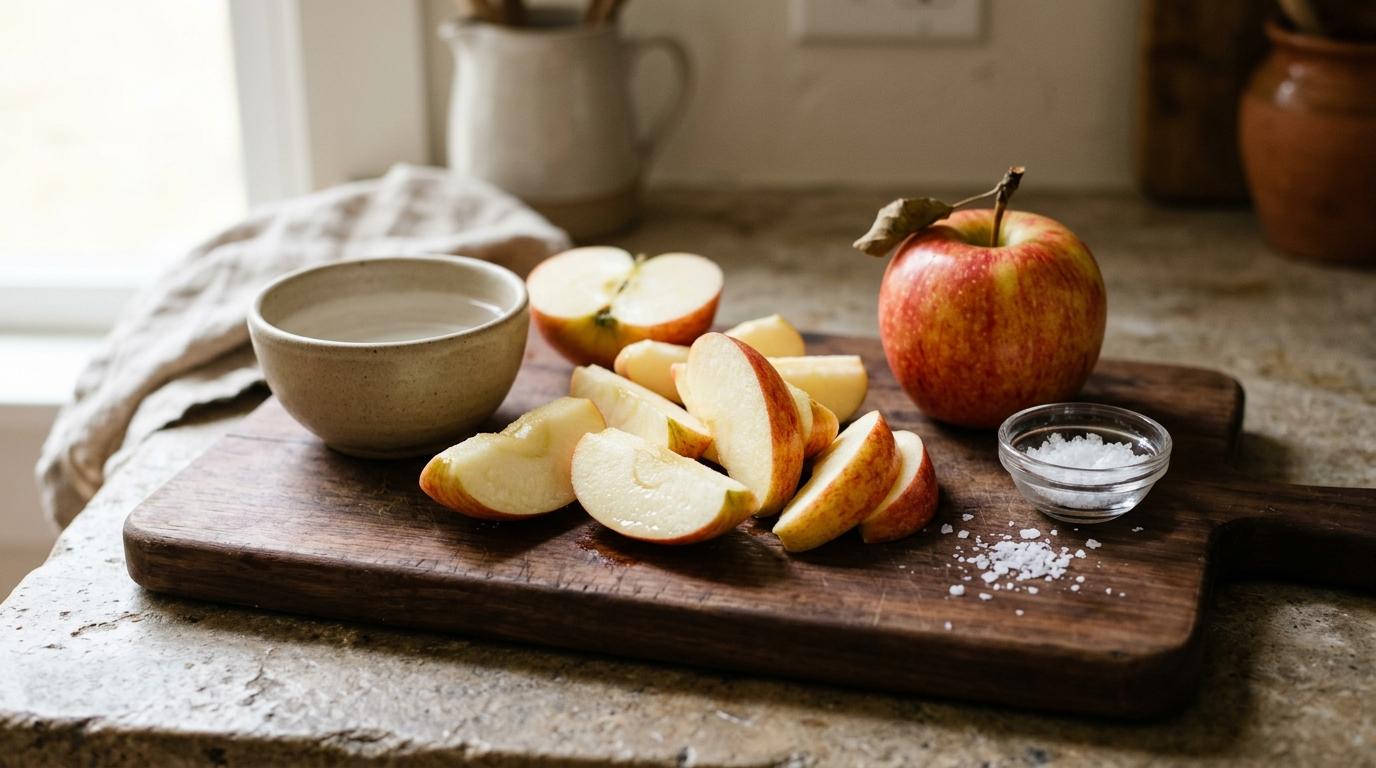
You slice a crisp, juicy Honeycrisp or Granny Smith apple for a lunchbox, arrange a beautiful fruit platter for guests, or dice apples for an autumn salad. Within ten to fifteen minutes, the pale, pristine flesh begins to blush with a dull tan hue. By thirty minutes, it has darkened into an unappetizing, muddy brown. 
The immediate reaction for many home cooks is disappointment. Some assume the fruit has spoiled or begun to rot. Others reach for the traditional kitchen remedy passed down through generations: squeezing fresh lemon juice over the slices. Yet while lemon juice slows the discoloration, it imparts a harsh, aggressively sour citrus flavor that completely overwhelms the natural sweetness of the fruit.
The browning of cut apples is not rot, bacterial contamination, or decay. It is a rapid, defense-driven biochemical process known in food science as enzymatic browning. When you bite, drop, or slice an apple, you trigger an evolutionary defense cascade involving cellular rupture, an ancient enzyme called polyphenol oxidase, and ambient atmospheric oxygen. 
Understanding the molecular chemistry of this reaction reveals why traditional remedies fall short—and why an unexpected, simple pantry solution based on mineral chemistry keeps sliced apples crisp and pristine for over twelve hours without altering their sweet flavor.
Cellular Compartmentalization: The Intact Apple's Defense
#To understand why an apple turns brown when cut, one must first appreciate how an apple stays white while whole.
A living plant cell is a marvel of microscopic compartmentalization. In an intact, undamaged apple hanging from a branch, the chemical ingredients necessary to produce brown pigment are all present inside the fruit, but they are physically separated by microscopic cellular membranes:
- The Vacuole: Plant cells contain large, fluid-filled central vacuoles that take up eighty to ninety percent of the cell's internal volume. The vacuole stores water, sugars, organic acids, and a rich reservoir of specialized defensive aromatic compounds known as polyphenols or phenolic phytochemicals (primarily chlorogenic acid, epicatechin, catechin, and procyanidins).
- The Plastids and Cytoplasm: Outside the vacuole, residing within the plastids (such as chloroplasts and leucoplasts) and the surrounding cytoplasm, lies an enzyme called polyphenol oxidase (PPO), also classified biochemically as tyrosinase, catechol oxidase, or monophenol monooxygenase.
Because polyphenols are locked safely inside the vacuolar membrane while PPO enzymes remain sequestered in the surrounding cytoplasm, the two chemicals never physically touch. Furthermore, an intact apple is sealed within a tough outer waxy cuticle that drastically restricts the inward diffusion of atmospheric oxygen. In the absence of contact and oxygen, the apple flesh remains crisp, pale, and stable for months.
The moment you drive a stainless steel knife through an apple, this exquisite cellular architecture is obliterated. The physical blade crushes, shears, and ruptures thousands of microscopic cell walls and vacuolar membranes along the cut plane. Vacuolar polyphenols spill out into the cytoplasm, mixing directly with polyphenol oxidase enzymes, while the newly exposed surface is instantly bathed in ambient atmospheric air containing twenty-one percent oxygen.
The cellular fuse is lit, and the enzymatic cascade begins.
The Enzymatic Cascade: From Phenols to Melanin
#Enzymatic browning is a multi-step oxidation-reduction reaction that progresses through distinct biochemical phases:
Phase 1: Hydroxylation and Oxidation via PPO
#Polyphenol oxidase is a metalloprotein that contains copper ions (^{2+}$) at its catalytic active site. The copper cofactor acts as an electron shuttle, enabling the enzyme to utilize atmospheric oxygen ($ ext{O}_2$) to oxidize phenolic substrates:
- First, PPO facilitates the hydroxylation of monophenols into o-diphenols (ortho-diphenols), a reaction known as cresolase activity.
- Next, PPO rapidly oxidizes these o-diphenols by stripping away hydrogen atoms and electrons, converting them into highly reactive chemical intermediates called o-quinones (specifically ortho-benzoquinones), a reaction known as catecholase activity.
During these initial enzymatic steps, the cut apple flesh has not yet changed color. The newly generated o-quinones are relatively colorless, highly unstable, electrophilic molecules.
Phase 2: Spontaneous Non-Enzymatic Polymerization
#Once o-quinones are generated, the enzyme's job is largely finished. The remaining cascade is a spontaneous, non-enzymatic chemical chain reaction. 
Because o-quinones possess extreme chemical reactivity, they aggressively seek stability by reacting with neighboring molecules:
- They react with other quinone molecules to form dimers and trimers.
- They cross-link covalently with free amino acids (such as cysteine and lysine), cellular peptides, and structural proteins exposed along the damaged cell walls.
Through continuous oxidative polymerization, these cross-linked complexes grow into large, complex, light-absorbing pigment molecules known as melanin. 
Melanin is the exact same dark biological pigment responsible for the color of human skin, hair, and freckles, as well as the ink ejected by defensive squids. The brown patches that appear on a sliced apple are literally patches of plant-synthesized melanin.
The Evolutionary Purpose: Why Do Plants Make Melanin?
#Why would an apple tree expend valuable metabolic resources to equip its fruit with enzymes that produce melanin upon injury?
In the wild, an apple is not being sliced for an elegant salad; it is being pecked by a bird, bitten by an insect, bruised by a fall from a branch, or punctured by fungal spores. In nature, an open wound on a sugar-rich fruit provides an ideal entry point for microbial pathogens, which can rapidly rot the fruit and destroy the seeds inside.
Enzymatic browning evolved as an emergency wound-healing and antimicrobial defense system:
- Toxicity to Pathogens: The intermediate o-quinones produced during the reaction are potent electrophilic biocides that bind to and destroy the bacterial cell membranes and fungal enzymes attempting to infect the wound.
- Physical Barrier Formation: The polymerized melanin forms a tough, cross-linked, water-impermeable scab over the damaged tissue, sealing the internal pulp against moisture loss and opportunistic fungal hyphae.
- Deterring Herbivores: Melanin polymers bind tightly to salivary proteins and digestive enzymes, creating an unpleasantly astringent, bitter taste that discourages animals and insects from continuing to feed on the injured fruit.
When our sliced apples turn brown, we are witnessing an ancient botanical immune response designed to ward off forest mold.
Enzymatic vs Non-Enzymatic Browning: The Kitchen Confusion
#Home cooks frequently confuse the browning of raw fruit with the browning that occurs during high-heat cooking. However, food science distinguishes sharply between these two fundamentally different chemical pathways:
| Chemical Characteristic | Enzymatic Browning (Apples, Pears, Bananas) | Non-Enzymatic Browning (The Maillard Reaction & Caramelization) |
|---|---|---|
| Temperature Range | Room temperature (10°C to 35°C); destroyed above 65°C | High heat (140°C to 180°C for Maillard; 160°C+ for caramelization) |
| Biological Catalyst | Requires active enzyme (polyphenol oxidase) | No enzymes; purely thermal chemical degradation and rearrangement |
| Required Reactants | Phenolic compounds + PPO enzyme + Atmospheric Oxygen | Reducing sugars + Amino acids (Maillard); Pure sugars (Caramelization) |
| Primary End Product | Melanin pigment polymers | Melanoidins (Maillard); Polymeric caramelans/caramelens (Caramelization) |
| Culinary Impact | Unappealing color, softened mushy texture, loss of vitamin C | Rich savory aromas, roasted flavors, complex culinary depth |
To understand how high-heat cooking transforms amino acids and sugars into the irresistible roasted flavors of browned steaks, roasted potatoes, and crusty breads, you can read our companion food science deep dive on The Maillard Reaction vs Caramelization.
Testing the Kitchen Remedies: What Actually Works?
#Because enzymatic browning requires four specific components—PPO enzyme, phenolic substrates, copper cofactors, and atmospheric oxygen—inhibiting any single component halts the reaction. 
Over the decades, culinary tradition and modern food science have developed numerous interventions to stop cut apples from browning. Here is how the most common methods work at a molecular level:
1. Acidification (Lemon, Lime, or Citrus Juice)
#The traditional method relies on coating apple slices in citrus juice.
- The Science: Polyphenol oxidase functions optimally within a narrow pH range of 5.0 to 7.0. The citric acid and malic acid present in citrus juice lower the surface pH of the apple slice to below 3.0. In an acidic environment, the excess hydrogen ions (^+$) disrupt the ionic and hydrogen bonds maintaining the tertiary structure of the PPO enzyme, causing the protein to unfold (denature) and rendering its catalytic site inactive.
- The Drawback: While lemon juice successfully blocks browning, it deposits a heavy layer of citric acid that overwhelms the delicate sweetness of the apple, leaving a sharp, puckering sourness that children and adults often find unpalatable.
2. Ascorbic Acid (Vitamin C Powder)
#Commercial pre-sliced apple packs frequently use pure ascorbic acid.
- The Science: Ascorbic acid does not act by denaturing the enzyme. Instead, it is a potent chemical reducing agent (antioxidant). As quickly as PPO oxidizes polyphenols into o-quinones, the ascorbic acid donates electrons and hydrogen atoms back to the quinones, reducing them back into colorless diphenols before they have the chance to polymerize into melanin.
- The Drawback: Ascorbic acid only works as long as unoxidized vitamin C remains on the surface. Once all the ascorbic acid has reacted with atmospheric oxygen, PPO resumes its oxidation unchecked.
3. Thermal Blanching (Heat Denaturation)
#Commercial apple processors often plunge sliced apples into hot water (70°C to 85°C) for ninety seconds.
- The Science: Like all proteins, PPO enzymes are sensitive to thermal kinetic energy. Heating the fruit above 65°C permanently denatures the enzyme's polypeptide chains, destroying its catalytic ability forever.
- The Drawback: Heat softens the apple's cellular pectin, destroying the crisp crunch of raw fruit and giving it the soft texture of pie filling—unsuitable for fresh snacking or lunchboxes.
4. Water Submersion and Plastic Wrap (Oxygen Deprivation)
#Storing sliced apples submerged in a bowl of plain water or tightly wrapped in plastic film.
- The Science: Because PPO requires molecular oxygen ($ ext{O}_2$) to execute catecholase activity, submerging fruit in water acts as a physical barrier that drastically limits oxygen availability.
- The Drawback: Water contains small amounts of dissolved oxygen, so browning still occurs, albeit at a slower pace. Furthermore, prolonged soaking in plain water leaches water-soluble sugars out of the fruit, leaving the slices bland and waterlogged.
The Superior Culinary Solution: The Science of the Saline Bath
#Among all household and professional culinary interventions, the most effective, elegant, and taste-neutral method is the dilute saltwater bath.
While the idea of putting salt on an apple may sound unappealing, the chemistry relies on a microscopic concentration of salt that leaves zero detectable salty taste after a brief cold-water rinse.
The Recipe:
#Dissolve half a teaspoon of fine table salt (2.5 grams) into four cups of cold water (1 liter). Submerge your freshly sliced apple wedges in this saline solution for exactly five minutes. Drain the slices through a colander, rinse them quickly under running cold tap water for three seconds, and pat them dry with a clean paper towel.
Why Saltwater Outperforms Lemon Juice:
#- Chloride Ion Inhibition: The sodium chloride ($ ext{NaCl}$) in the water dissociates into sodium (^+$) and chloride (^-$) ions. The chloride ion acts as a specific competitive inhibitor for the polyphenol oxidase enzyme. Chloride ions physically bind directly to the copper (^{2+}$) cofactors inside the catalytic active site of PPO. By occupying the copper site, chloride prevents atmospheric oxygen from binding, effectively locking the enzyme's chemical engine.
- Zero Alteration of Flavor: Because the salt concentration is only 0.25% by weight, and because a quick three-second surface rinse removes any lingering sodium, the apple retains one hundred percent of its natural, crisp sweetness. It does not taste sour like lemon-treated fruit, nor does it taste salty.
- Long-Lasting Protection: Slices treated with a five-minute saline soak and stored in an airtight container or resealable lunchbox bag remain bright, crisp, and completely free of brown discoloration for twelve to twenty-four hours at room temperature, and up to four days in the refrigerator.
An Alternative: The Honey Water Soak
#If you prefer not to use salt, a similar biochemical inhibition can be achieved using honey water. Whisk two tablespoons of raw honey into one cup of room-temperature water, soak the apple slices for five minutes, and drain. Honey contains a unique peptide compound that naturally deactivates polyphenol oxidase, keeping apples bright for up to eight hours while imparting a gentle, pleasant floral sweetness.
Why Some Apples Don't Brown: Opal and Arctic Apples
#If you browse the produce aisle of modern supermarkets, you may encounter apple varieties that naturally resist browning for hours or days after being cut:
1. Naturally Low-PPO Cultivars (The Opal Apple)
#Certain traditional apple cultivars—most notably the Opal apple (a cross between Golden Delicious and Topaz developed in Europe), as well as Cortland and Cameo varieties—naturally produce exceptionally low concentrations of the polyphenol oxidase enzyme. Because their cellular machinery possesses very few PPO enzymes, the oxidation reaction progresses at a glacial pace, allowing sliced Opal apples to sit exposed on charcuterie boards for hours without turning brown.
2. Genetically Modified Arctic Apples
#In the 2010s, biotechnology researchers developed the Arctic Apple (available in Golden Delicious, Granny Smith, and Fuji varieties). 
- Using a genetic technique called RNA interference (RNAi) gene silencing, scientists inserted additional copies of the apple's own PPO gene sequences into the plant genome.
- The plant's internal defense mechanisms recognized the duplicated sequences as viral genetic material and deployed internal enzymes to degrade the messenger RNA (mRNA) corresponding to polyphenol oxidase.
- Because the mRNA is destroyed before it can be translated into functional proteins, Arctic apples produce less than ten percent of the normal PPO levels found in conventional apples.
- When an Arctic apple is sliced, bitten, or bruised, the cells rupture normally, but there are virtually no functional PPO enzymes to synthesize melanin. The sliced fruit remains pristine white for weeks.
The Takeaway: Working With Food Chemistry, Not Against It
#The rapid browning of an apple on your kitchen cutting board is a window into the dynamic living biochemistry of the natural world. 
Your apple is not failing; it is deploying an ancient, copper-powered enzymatic shield designed to protect its seeds from microbial assault. By understanding the molecular players—polyphenol oxidase, oxygen, and phenolic compounds—you no longer have to endure sour, lemon-drenched slices or toss out unappealing lunchbox fruit. 
A simple five-minute dip in a mild saltwater bath neutralizes the enzyme at its catalytic core, allowing food science to preserve the crisp, sweet perfection of fresh fruit exactly as nature intended.