If your cat is bringing litter out of the box and spreading it across your apartment, the best fix is usually a mix of four things: low-tracking litter, a large litter mat, the right litter box, and smarter placement. Change one element at a time so your cat stays comfortable using the box.
In a small apartment, even a few grains feel like a lot. One bathroom trip from your cat and suddenly there is litter near the sofa, under your slippers, beside the bed, and somehow in places your cat has barely visited. Tile and marble floors make the problem even more obvious because every little piece feels crunchy underfoot.
The good news: you can reduce cat litter tracking a lot. The not-so-good news: there is rarely one magic product that fixes everything overnight. The best result usually comes from improving the whole litter zone.
Also, do not change the whole setup in one day. Cats can be particular about their toilet area. If the litter suddenly feels different, the box moves, and a strange new mat appears all at once, some cats may get stressed and avoid the box.
Start small. Change one thing at a time.
First, Know What Kind of Litter Problem You Have
#Before buying new products, identify the real problem.
Cat litter tracking means litter is leaving the box. It may be stuck to your cat’s paws, caught in paw fur, kicked out while digging, or scattered when they jump out.
Litter box smell is different. That usually needs more scooping, better airflow, or a cleaner box routine.
Litter box refusal is more serious. If your cat is peeing or pooping outside the box, crying while using it, visiting the box often with little output, or suddenly changing toilet habits, do not treat it like a simple mess issue. Sudden litter-box changes can be linked to discomfort, stress, or a health problem, so speak with a veterinarian.
This guide focuses on the everyday “why is there litter all over my floor?” problem while keeping your cat comfortable and willing to use the box.
The 4-Part Fix: Litter, Mat, Box and Placement
#In small homes, every part of the setup matters. A good mat will not help much if your cat jumps over it. A low-tracking litter will not solve everything if the box is overflowing. A high-sided box will not help if the entrance points straight into your living room.
Step 1: Switch to Low-Tracking Cat Litter Slowly
#Fine, lightweight litter often tracks the most. Tiny grains get stuck between paw pads, especially if your cat has fluffy feet. Then your cat steps out and carries litter around the apartment like tiny unwanted confetti.
A low-tracking cat litter usually has larger, heavier pieces. Options to consider include:
- Wood or pine pellets
- Larger-grain tofu litter
- Recycled paper pellets
- Heavier clay granules
These may reduce tracking, but your cat gets the final vote. A litter that looks perfect to you may feel strange or uncomfortable to them.
Change litter gradually over 7 to 10 days. Mix a small amount of the new litter into the old litter first. If your cat uses the box normally, add a little more after a couple of days. If your cat hesitates, avoids the box, or starts going outside the box, return to the old litter and try a slower change later.
Clean floors are great. A cat who refuses the litter box is not.
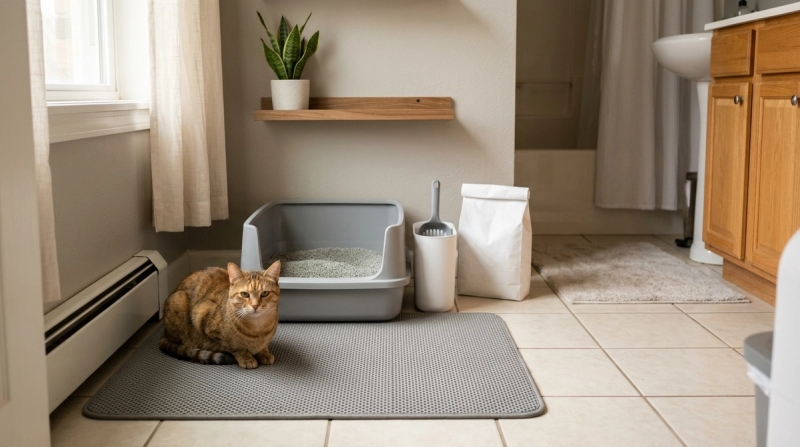
Step 2: Use a Bigger Cat Litter Mat
#A cat litter mat can make a big difference, but only if it is large enough and placed where your cat actually walks.
A common mistake is buying a small mat and placing it neatly outside the box. Many cats simply jump over it. Then they land directly on your tile, marble, rug or wooden floor, and the litter keeps spreading.
For a small-apartment cat litter setup, think of the mat like a runway. Your cat should take a few steps on it after leaving the box.
Look for a mat with:
- Enough length for your cat to walk across it
- A textured surface that catches litter without hurting paws
- A double-layer or honeycomb design if you want litter to fall into a lower layer
- Easy cleaning, because the mat itself will collect dust and litter
Place the mat in the direction your cat naturally exits the box. Do not just put it nearby. Put it exactly where their paws land.
If your cat refuses to step on the mat, the texture may be too rough, sharp, slippery or unstable. Try a softer or flatter one.
Step 3: Match the Litter Box to Your Cat’s Bathroom Style
#Cats have very different litter-box habits.
Some step in, do their business, cover politely, and leave like tiny responsible adults. Others dig like they are trying to reach the ground floor.
If your cat kicks litter over the sides, a high-sided litter box can help. This is especially useful when the mess is from digging rather than litter sticking to paws.
Covered litter boxes can reduce scatter for some cats, but they are not always the answer. They can trap smell if you do not scoop often, and some cats dislike feeling boxed in. Larger cats, senior cats and anxious cats may prefer an open box with room to turn.
In small apartments, it is tempting to hide the litter box under a shelf, inside a cabinet, or in the tightest corner possible. That can work only if your cat still has:
- Easy access
- Enough room to turn around
- Good ventilation
- A clear exit
- Space for a proper mat
If you change the box itself, keep the old one nearby for a few days if possible. Cats usually handle gradual changes better than sudden surprises.
Step 4: Place the Litter Box More Strategically
#Litter box placement matters a lot in a small home.
In a bigger house, tracked litter may stay near one room. In a studio or 1 BHK, one quick post-bathroom zoom can spread litter from the bathroom to the bedroom to the kitchen in seconds.
A good litter box spot should be:
- Quiet
- Easy for your cat to reach
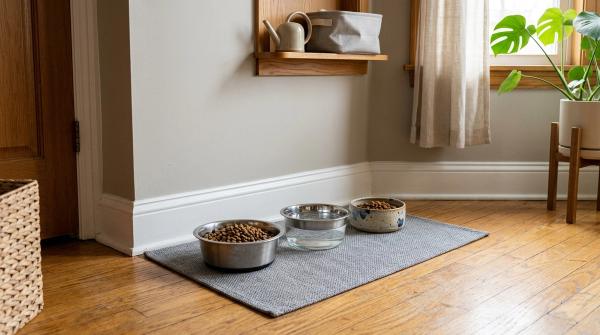
- Away from food and water bowls
- Away from doors that may accidentally close
- Dry and ventilated
- Big enough for a litter mat
For Indian apartments, possible spots include a dry bathroom corner, a quiet hallway nook, a utility area, or a safe sheltered balcony corner. Use a balcony only if it is fully safe, shaded, protected and comfortable for your cat. Avoid places that get wet, too hot, too noisy or difficult to access.
Try the Corner Trick
#If you have enough space, place the litter box in a corner and angle the entrance slightly toward a wall. Do not block your cat. Just create a slower, more guided exit.
This helps because your cat is less likely to leap straight into the room. It also encourages them to walk across the mat before reaching the main floor.
In a tiny bathroom, even turning the box slightly can help reduce tracking.
Small-Apartment Cat Litter Setup Checklist
#Use this checklist to reduce tracking without making the litter area stressful.
- Keep litter depth moderate: Around 2 to 3 inches is usually enough for many cats. If the box is overfilled, litter spills out more easily when your cat digs.
- Follow the cat-plus-one rule where possible: A common vet and behaviour guideline is one litter box per cat, plus one extra. In a small apartment, this may not always be realistic. If you can keep only one box, scoop it very regularly.
- Choose a mat your cat will actually use: Avoid mats that feel sharp, wobbly or too rough under paws.
- Use a large mat: A tiny mat may look tidy, but it will not help if your cat jumps over it.
- Angle the box exit: Make your cat walk across the mat before reaching the floor.
- Check paw fur: Long-haired cats, such as Persians and Himalayans, may carry litter in the fur around their paw pads. Ask a groomer or vet if trimming is needed.
- Scoop daily: In small homes, scoop at least once a day. Twice is better if the box gets dirty quickly.
- Empty the mat regularly: Shake clean trapped litter back into the box only if it is still clean; throw away dirty bits.
- Sweep or vacuum daily: A quick clean near the litter zone stops grains from spreading through the home.
- Change one thing at a time: If you change litter, mat, box and location together, you will not know which change your cat disliked.
A Simple Cat Litter Cleaning Routine for Small Homes
#You do not need to deep-clean the whole litter area every day. A short daily routine is more realistic and usually more effective.
Once or twice daily: Scoop the litter box.
Daily: Sweep or vacuum around the box and mat.
Every few days: Empty trapped litter from the mat.
As needed: Wipe the floor around the litter area, especially if you have tile or marble floors where dust and paw marks show quickly.
The goal is to stop litter before it travels. Once it spreads beyond the litter zone, it gets carried under slippers, rugs, furniture legs and sometimes even into bedding.
A two-minute daily clean is much easier than a big weekend cleanup.
Vet Red Flags: When It Is Not Just Litter Mess
#Most litter tracking is a setup issue. But sudden litter-box changes should not be ignored.
Contact your veterinarian if your cat:
- Suddenly stops using the litter box
- Starts peeing or pooping outside the box
- Visits the box often but produces little or nothing
- Cries, strains or seems uncomfortable while using the box
- Licks the urinary area more than usual
- Hides, seems stressed or changes toilet habits suddenly
Cats are not being “spiteful” when they avoid the box. Usually, something feels wrong, painful, scary or uncomfortable.
This article offers environmental and cleaning tips only. It is not medical advice. If your cat’s litter-box behaviour changes suddenly, speak with a qualified veterinarian.
What If Your Cat Hates the New Setup?
#Go back one step.
If the problem started after you added a new mat, remove it and try a softer or flatter one.
If your cat started avoiding the box after you changed litter, return to the old litter and try a slower transition later.
If your cat became uncomfortable after you moved the box, move it back if you can.
Cats like predictability, especially around their toilet area. The best small-apartment cat litter setup is not necessarily the prettiest one. It is the one your cat uses comfortably every single day.
Related AllBlogs Reading
#- Cat Litter for Beginners: Clumping, Tofu, Silica, Paper or Pine for Small Apartments
- How Much Cat Litter to Use: Depth and Cleaning Routine
- Cat Litter Smell in Small Apartments: Monsoon Guide for Indian Cat Parents
- Cat Not Using the Litter Box? Causes, Fixes and Vet Red Flags