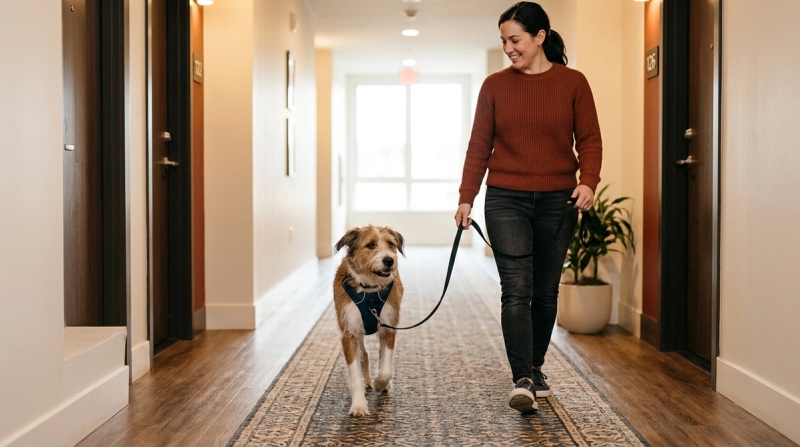
If your dog pulls on the leash, here’s the basic lesson we want them to learn:
The walk moves forward when the leash is loose. The walk pauses when the leash gets tight.
That’s it.
Of course, it sounds much easier than it feels when you actually open your apartment door and your dog rockets into the hallway like they’ve been personally invited to inspect every smell in the building.
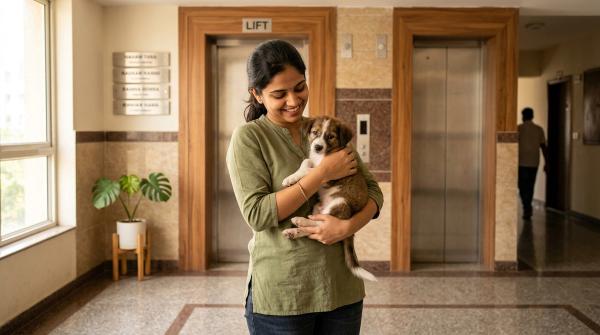
Apartment dogs have a tougher setup than a lot of people realize. Before you even make it to the sidewalk, you may have to get through the front door, hallway, elevator, lobby, building entrance, neighbors, delivery drivers, other dogs, traffic noise, and a thousand interesting smells.
So if your dog pulls from your apartment door all the way outside, you are definitely not alone.
The good news: you can teach loose-leash walking without leash jerks, yelling, punishment, choke chains, prong collars, or scary equipment. You just need a simple plan, good timing, and enough repetition for your dog to understand what actually works.
This guide gives you a 7-day loose-leash walking checklist designed especially for apartment dogs, plus gear tips, common mistakes, and signs it may be time to call a trainer or vet.
Why Dogs Pull on Leash, Especially in Apartments
#Dogs pull because pulling works.
If your dog pulls you to the elevator and then gets to ride the elevator, pulling worked.
If they drag you toward the grass and get to sniff it, pulling worked again.
If they hit the end of the leash and still make it to the park, well, that also worked.
That does not mean your dog is being stubborn, bossy, or “dominant.” Most dogs pull because they are excited, curious, nervous, undertrained, or overwhelmed by everything happening around them.
Apartment dogs often deal with a lot before the real walk even starts.
Common apartment triggers include:
- Hallways full of other dog smells
- Elevators with tight spaces and doors that suddenly open
- Neighbors turning corners unexpectedly
- Lobby noise and foot traffic
- Cars, bikes, and buses right outside the building
- Limited space to move away from distractions
- A dog who is already hyped up before stepping outside
The solution is not to correct harder. The solution is to make the rules easier for your dog to understand.
Your dog needs one clear pattern:
Loose leash means we move. Tight leash means we pause and reset.
What Positive Reinforcement Means Here
#This routine uses positive reinforcement dog training. In plain English, that means you reward the behavior you want instead of punishing the behavior you do not want.
You will reward your dog for things like:
- Walking near you
- Looking back at you
- Slowing down
- Keeping slack in the leash
- Waiting at doors
- Checking in around distractions
- Letting the leash loosen after pulling
You will not use:
- Leash jerks
- Choke chains
- Prong collars
- Shock collars
- Yelling
- Dragging your dog backward
- Forcing your dog into position
Veterinary behavior resources such as AVSAB, VCA, AKC and UC Davis support reward-based training and recommend professional help when fear, aggression, pain or serious stress may be involved.
For everyday leash pulling, a calm and repeatable plan is usually easier on both you and your dog.
Gear Table: Collar vs Harness for Dog Leash Pulling
#Gear can help, but gear does not train your dog by itself.
A harness will not magically teach loose-leash walking. Still, the right setup can make walks safer and easier to manage, especially in apartment buildings, elevators and busy sidewalks.
For most apartment dog parents dealing with leash pulling, a well-fitted front clip harness and a regular 4-to-6-foot leash is a practical place to start.
Before each walk, check the fit. Your dog should be able to breathe normally, move comfortably and walk without rubbing under the legs or across the chest.
Apartment Walk Setup Tips Before You Start
#Loose-leash walking gets a lot easier when the walk starts calmly.
That means training begins before you ever get outside.
Try this setup:
- Practice when you are not in a rush. If your dog desperately needs a potty break and you only have five minutes, that is not the best time for training.
- Keep treats near the door. Use small, soft treats your dog can eat quickly.
- Clip the leash on calmly. If your dog jumps, spins or barks, pause. Wait for a quieter moment, then continue.
- Reward before opening the door. Treat your dog for standing near you with a loose leash.
- Use the hallway as training space. Do not treat it like a race to the outside.
- Avoid peak traffic at first. If possible, practice when fewer people and dogs are moving through the building.
- Keep walks short. A successful 5-minute training walk is better than a 30-minute pulling rehearsal.
The goal is not distance.
The goal is rhythm.
The Core Loose-Leash Walking Rule
#Here is the rule you will use over and over:
When the leash is loose, walk forward. When the leash gets tight, stop. Wait for your dog to release the tension, then reward and move again.
Releasing tension can look like:
- Your dog turns back toward you
- Your dog steps backward
- Your dog stops leaning into the leash
- Your dog comes closer to your side
- Your dog makes eye contact
Do not yank the leash. Do not pull your dog back. Just stop, stay calm and wait for the leash to soften.
When it does, mark the moment with a cheerful “yes,” then give a treat.
Consistency is what makes this work. If pulling gets your dog where they want to go sometimes, they will keep trying it. If a loose leash works every time, the lesson becomes much clearer.
7-Day Loose-Leash Walking Checklist for Apartment Dogs
#Use this as a beginner routine.
If your dog needs more than one day on a step, that is completely fine. Stay where your dog can succeed. For puppy leash training, keep sessions very short. A few minutes is plenty.
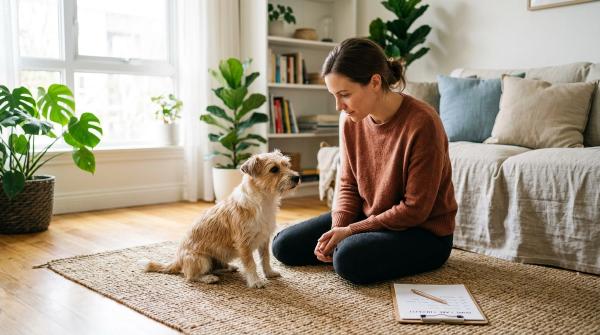
Day 1: Living Room Check-In
#Goal: Teach your dog that being near you pays.
Where: Living room or another quiet indoor space.
What to do:
- Put your dog’s harness and leash on indoors.
- Stand still.
- When your dog comes near your leg, say “yes” and give a treat.
- Feed the treat close to your side.
- Repeat several times.
Checklist:
- Dog wears the harness and leash calmly indoors
- Dog comes near your side without being pulled
- Dog takes treats and stays relaxed
- You keep the session short and easy
Do not worry about walking yet. First, make your side a valuable place to be.
Day 2: One Step, Treat, Repeat
#Goal: Teach your dog to move with you.
Where: Living room, kitchen or a quiet hallway inside your home.
What to do:
- Start with your dog near your side.
- Take one step.
- If the leash stays loose, say “yes” and treat.
- Take two steps, then treat.
- Turn gently and reward your dog for following.
Checklist:
- Dog can take one step with a loose leash
- Dog can follow a slow turn
- You stop calmly if the leash tightens
- Dog learns that slack leash makes walking continue
Keep it boring and easy. That is actually the point in the beginning.
Day 3: Apartment Door Practice
#Goal: Stop the front door from turning into a launch pad.
Where: Inside your apartment, then just outside your door.
What to do:
- Walk toward your apartment door.
- If your dog pulls, stop.
- Wait for the leash to loosen.
- Reward.
- Open the door slowly.
- If your dog rushes, gently close the door and reset.
- Step into the hallway only when the leash is loose.
Checklist:
- Dog can approach the door without dragging you
- Dog can wait while the door opens
- Dog exits with a loose leash
- You do not rush the transition
For many apartment dogs, this is one of the biggest steps. If you only improve the doorway, your walks may already feel much better.
Day 4: Hallway Manners
#Goal: Keep connection in a shared building space.
Where: Hallway outside your apartment.
What to do:
- Walk a few steps.
- Reward before your dog pulls.
- If your dog pulls toward a smell or door, stop.
- Wait for a check-in or softer leash.
- Reward, then continue.
Checklist:
- Dog can walk 5 to 10 steps with a loose leash
- Dog can pass one doorway calmly
- Dog can recover after smelling something interesting
- You reward often enough to keep your dog with you
Hallways are packed with scent. Your dog is not being “bad.” They are basically reading the neighborhood newspaper.
Day 5: Elevator or Stair Practice
#Goal: Teach calm movement through tight spaces.
Where: Elevator area or stairs.
What to do:
- Approach the elevator or stairwell slowly.
- Reward your dog for standing near you.
- If elevator doors open and your dog pulls, step back and reset.
- Enter only with a loose leash.
- Reward calm behavior inside.
Checklist:
- Dog approaches the elevator or stairs without lunging
- Dog can pause before entering
- Dog can stand near you in a tight space
- Dog can exit without rushing
If your dog is nervous in elevators, slow way down. Reward looking at the elevator, standing near it and walking away calmly. You do not have to force the whole process at once.
Day 6: Lobby and Building Entrance
#Goal: Handle the busiest indoor area without practicing more pulling.
Where: Lobby, mail area, front desk area or building entrance.
What to do:
- Walk in small sections.
- Reward check-ins.
- Stop if the leash tightens.
- Move away from distractions when needed.
- Do not force your dog to pass close to people or dogs.
Checklist:
- Dog can walk a short lobby route with breaks
- Dog can look at you after noticing a distraction
- Dog can pause at the building door
- You choose distance instead of pressure
If your dog cannot take treats in the lobby, the environment may be too hard right now. Go back to an easier spot and build up again.
Day 7: Sidewalk Mini-Walk
#Goal: Practice the same rules outdoors.
Where: Right outside your building.
What to do:
- Step outside calmly.
- Stay close to your building at first.
- Walk back and forth over a short distance.
- Reward loose-leash steps.
- Stop every time the leash gets tight.
- Let your dog sniff as a reward when the leash is loose.
Checklist:
- Dog can take a few loose-leash steps outdoors
- Dog can recover after pulling
- Dog can earn sniff breaks politely
- You keep the walk short and successful
Do not expect perfection outside. There are smells, cars, people, dogs, food wrappers, birds and about a hundred other things your dog may care about more than you in that moment.
That is normal. Keep the rules simple and keep practicing.
What to Do When Your Dog Pulls Toward Something
#Most pulling happens because your dog wants access to something.
A tree. A smell. Another dog. A person. The park gate. A random leaf that is apparently very important.
Use this reset:
- Stop walking.
- Keep your hands still.
- Wait for the leash to loosen.
- Say “yes.”
- Reward near your side.
- Continue forward, or let your dog sniff if it is safe.
If your dog wants to sniff a tree, sniffing can be the reward.
Ask for a loose leash or a quick check-in, then say “go sniff” and let them explore without dragging you there.
This teaches your dog that polite walking does not ruin the fun. It earns the fun.
When to Call a Trainer or Vet
#Some leash problems are not just manners. Pulling can be connected to fear, pain, frustration or overwhelming excitement.
Call a certified positive reinforcement trainer if:
- Your dog barks, lunges, growls or panics at dogs, people, bikes or cars
- Your dog is too stressed or excited to take treats outside
- Pulling is getting worse even with consistent practice
- You feel unsafe walking your dog
- Your dog bites the leash, jumps at you or grabs clothing during walks
Call your vet if:
- Pulling started suddenly
- Your dog limps or moves differently
- Your dog coughs, gags or seems uncomfortable on walks
- Your dog resists wearing a harness
- Your dog gets tired very quickly
- You suspect pain, breathing trouble or injury
If your dog is reactive or physically uncomfortable, do not just try to push through it.
Common Mistakes That Keep Dog Leash Pulling Going
#A few small habits can make pulling last longer than it needs to.
Letting pulling work when you are in a hurryDogs learn from what happens, not from what we meant to teach. If pulling gets them outside faster, pulling stays useful.
Rewarding too lateReward before your dog surges ahead. Catch the good moment early, even if it only lasts one second.
Walking too far too soonApartment dogs may need several short practice walks instead of one long walk where they pull the whole time.
Only training outsideIf your dog is already overexcited by the sidewalk, start indoors. Then move to the hallway, elevator, lobby, building entrance and finally outside.
Using the leash like a steering wheelTry not to drag your dog into place. Use treats, movement, turns and rewards instead.
Final Takeaway
#Dog leash pulling improves when your dog gets a clear, kind, repeatable message:
Loose leash means life moves forward. Tight leash means everything pauses.
Start inside your apartment. Reward often. Treat the hallway as part of training, not just the path to outside. Slow down at doors, elevators, lobbies and building entrances.
Use safe gear, such as a well-fitted front clip harness, and avoid punishment or leash jerks.
You are not trying to control every single step your dog takes.
You are teaching a walking rhythm together, one calm reset at a time.
Disclaimer: This article on AllBlogs is for educational purposes only and is not a substitute for veterinary or professional behavior advice. For severe pulling, fear, aggression, pain or sudden behavior changes, consult your veterinarian or a certified positive reinforcement trainer.