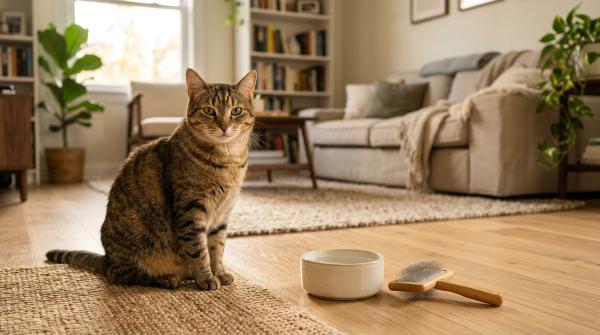
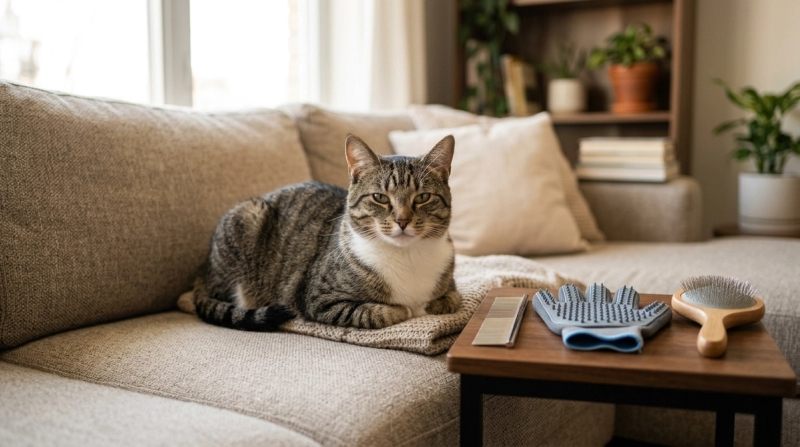
If you’re buying only one grooming tool for your cat, start with a stainless steel cat comb. It is the safest, most useful first pick for most indoor cats because it helps you check for hidden tangles close to the skin. For nervous short-haired cats, a grooming glove may be the gentler first step.
Indoor cats groom themselves well, but they still need help with loose fur, shedding, tangles and hard-to-reach spots. The right tool depends on your cat’s coat, shedding level, tolerance and your confidence as a pet parent.
Quick Buying Rule
#- Most cats: Start with a stainless steel cat comb.
- Nervous short-haired cats: Start with a grooming glove.
- Fluffy medium or long-haired cats: Start with a comb, then add a slicker brush.
- Heavy shedders: Add a deshedding tool only after your cat accepts grooming.
- Cats with tight mats: Do not force a brush or comb through them. Ask a groomer or veterinarian for help.
A brush can make the top coat look smooth while tangles are forming underneath. A comb tells you what is really happening close to the skin.
Why Indoor Cats Still Need Grooming Help
#Cats are excellent self-groomers. They lick their coat to remove loose hair, dirt and debris, and many cats manage this beautifully. But self-grooming has limits, especially for long-haired, senior, overweight or very fluffy cats.
Indoor cats can also shed steadily through the year because they live with artificial lighting, fans, AC, heaters and stable indoor temperatures. That means fur can show up on bedding, sofas, rugs, clothes and your laptop even when your cat looks perfectly clean.
Regular grooming helps you:
- Remove loose fur before it spreads around the home.
- Reduce tangles before they become mats.
- Notice skin changes, flakes, bald spots or sore areas early.
- Build a calm handling routine for vet visits and nail checks.
- Support senior or less flexible cats that cannot groom every area well.
This article is educational and not veterinary advice. If your cat has pain, wounds, swelling, sudden bald patches, strong skin odor or a sudden grooming change, contact a qualified veterinarian.
Comb vs Glove vs Slicker Brush vs Deshedding Tool
#Cat Comb: The Best First Tool for Most Cats
#A stainless steel cat comb is simple, easy to clean and useful across many coat types. It is especially helpful for medium-haired and long-haired cats because it reaches closer to the skin than many soft brushes.
Use a comb for:
- Checking behind the ears.
- Grooming fluffy tails.
- Finding tangles near the chest, belly and hips.
- Preventing small knots from becoming tight mats.
- Seeing whether your brushing routine is actually working.
Use short, slow strokes. Do not drag the comb from head to tail in one big sweep, especially on thick or fluffy fur. Work in small sections. If the comb stops, do not pull harder. Use your fingers to gently separate the tangle or pause and get help if it feels tight.
Grooming Glove: Best for Nervous Short-Haired Cats
#A grooming glove is the friendly beginner tool. You wear it on your hand, so grooming feels closer to petting than brushing. Many cats who dislike brushes tolerate a glove because it is softer, less poky and less suspicious-looking.
A glove works well for:
- Short-haired cats.
- Kittens learning to be handled.
- Cats who dislike grooming tools.
- Light daily shedding.
- Quick sofa-and-clothes fur control.
The downside is that a glove mostly removes surface fur. It may not find hidden tangles, thick undercoat or mats. For long-haired cats, use it as a trust-building tool, not the whole grooming plan.
Slicker Brush: Helpful for Fluffy Coats
#A slicker brush has fine pins that lift loose hair and separate fluffy fur. It can be useful for medium-haired and long-haired cats, but only with a gentle hand.
Use a slicker brush for:
- Fluffy coats.
- Loose undercoat.
- Puffy or clumpy-looking fur.
- Cats who already tolerate brushing.
The biggest mistake is pressing too hard. A slicker brush should glide through the coat. It should not dig into the skin. For many fluffy cats, a good routine is: use the slicker lightly, then follow with a comb to check whether the coat is clear near the skin.
Deshedding Tool: Useful, But Not Always the First Buy
#A deshedding tool can remove a surprising amount of fur in a few minutes. It can help heavy shedders and thick-coated cats, but it is not the gentlest beginner tool.
Use it carefully if your cat:
- Has a thick coat.
- Sheds heavily.
- Stays calm during grooming.
- Already accepts a comb or brush.
Avoid pressing hard, brushing the same area repeatedly, or using it every day. Deshedding tools can irritate skin if overused. For beginners, a comb or glove is usually safer.
Short-Haired vs Long-Haired Cat Guidance
#Short-haired cats
#Short-haired indoor cats usually need simpler grooming. Their main needs are loose fur removal, gentle skin checks and a routine they will tolerate.
Best first tool: grooming glove or cat combGood second tool: soft brush or fine combUse carefully: strong deshedding tools, especially on thin fur or sensitive skin
If your short-haired cat is nervous, start with a glove. If they shed heavily, add a comb later.
Medium-haired cats
#Medium-haired cats can be sneaky. They may look smooth on top while tangles form around the belly, hips, chest or back legs.
Best first tool: cat combGood second tool: slicker brushIf nervous: start with a glove, then slowly introduce the comb
Long-haired cats
#Long-haired cats usually need more frequent grooming because mats can form under the top coat.
Best first tool: stainless steel cat combGood second tool: slicker brushProfessional help: tight mats, painful areas or cats who panic during grooming
For long-haired cats, short frequent sessions work better than one long weekly battle.
A Low-Stress Cat Grooming Routine at Home
#The goal is not to finish the whole cat in one session. The goal is to make grooming feel normal, safe and boring.
- Choose a calm moment. Try after a meal, during a sleepy afternoon, or when your cat is already sitting near you.
- Let your cat inspect the tool. Place it nearby and let them sniff it before you start.
- Use the pet-brush-pet method. Pet with your hand, do one gentle stroke with the tool, then pet again.
- Start with 30 seconds. A tiny calm session is better than a long stressful one.
- Brush with the coat direction. Most cats dislike being brushed backward.
- Avoid sensitive spots at first. Start with shoulders, back and sides before belly, legs or tail base.
- Reward calm behavior. Use praise, a treat or a break while your cat is still relaxed.
- Stop early. Tail flicking, skin twitching, tense posture, ears back, swatting or biting mean it is time to pause.
Do not chase your cat with a brush. Letting them leave keeps grooming from becoming a fight.
Matting and Skin Safety Checks
#Mats are tight clumps of tangled fur. They often form behind the ears, under the front legs, on the chest, belly, hips, back legs or under a collar.
Small loose tangles may come apart with patient finger work and gentle combing. Tight mats are different. Do not yank through them and do not cut them out with scissors. Cat skin is loose and can pull into the mat, making accidental cuts easy.
Stop grooming and contact a professional groomer or veterinarian if you see:
- Mats tight against the skin.
- Broken skin, bleeding or swelling.
- Strong odor from the skin or coat.
- Sudden bald patches.
- Persistent scratching, licking or biting at one area.
- A greasy, clumpy or unkempt coat despite normal grooming.
- Crying, hissing or biting when one area is touched.
Grooming should not leave redness, soreness or bald-looking patches. Use light pressure and let the tool do the work.
What Should You Buy First?
#For most indoor cat parents, the best first buy is a cat comb. It is practical, low-clutter and useful for checking hidden tangles.
Choose a grooming glove first if your cat is short-haired, anxious or new to handling. Add a slicker brush if your cat has fluffy or medium-to-long fur. Consider a deshedding tool only if shedding is heavy and your cat already tolerates grooming well.
The best grooming setup is not the fanciest one. It is the one your cat accepts, you can use safely and you will actually keep using.