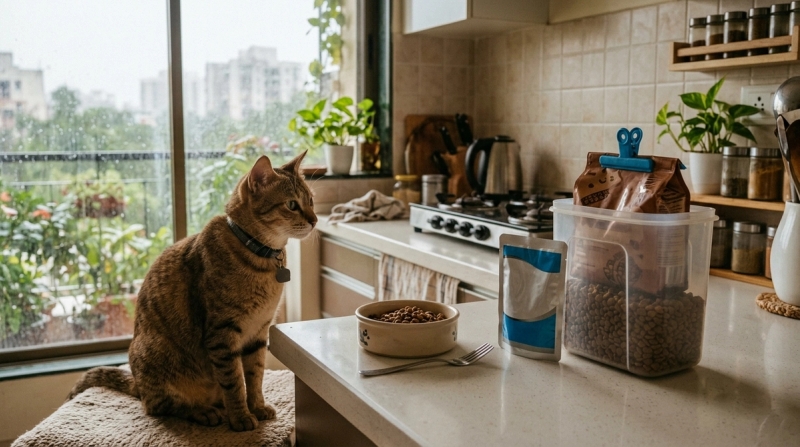
Direct answer: In the Indian monsoon, keep dry cat food in its original packet and place that packet inside a clean, airtight container. This protects it from humidity, ants, stale smells and mold. Opened wet cat food should be covered and kept in the fridge at around 2 to 4°C, then used within 3 days. Once wet food is served in the bowl, throw away leftovers after 2 hours, or after about 1 hour if the room is very hot and humid.
Why Cat Food Storage Gets Tricky in the Indian Monsoon
#Monsoon has a way of making even simple things annoying.
Your cat’s kibble is perfectly crunchy one day. The next day, the packet feels slightly soft, you spot ants near the bowl, and your cat sniffs dinner like you’ve personally offended them.
That’s monsoon humidity doing its job.
Damp air can make dry kibble lose its crunch, turn stale, smell odd, or even grow mold if it’s stored badly. Wet food is even more sensitive. Once a pouch or can is opened, it needs clean handling, quick refrigeration and a little common sense.
This guide is written mainly for Indian cat parents, especially those living in apartments with small kitchens, warm rooms, damp corners, ants, power cuts, limited fridge space, and cats who suddenly reject food because the smell or texture has changed.
The tips here follow general pet food handling advice from FDA, AVMA, PetMD and Purina, but with Indian monsoon realities in mind.
The Golden Rule for Dry Kibble: Keep the Original Bag Inside an Airtight Bin
#If you remember just one thing about dry cat food storage, remember this:
Don’t pour kibble directly into a random plastic dabba and throw the packet away.
It may look neat, but it’s not always the safest option.
The original cat food bag is designed to protect the food from air, light and moisture. It also has important information like the batch number, manufacturing details, expiry or best-by date, and feeding instructions. If there is ever a product issue or recall, that packet matters.
Best dry cat food storage method for monsoon
#- Keep the kibble in its original bag. Roll the top tightly or use a strong clip after every feeding.
- Place the entire bag inside an airtight container. Use a clean, completely dry bin with a tight lid. Food-grade plastic or stainless steel is ideal.
- Store it in a cool, dry cupboard. Avoid balconies, window areas, under-sink cabinets, damp corners and anywhere rainwater might seep in.
- Buy smaller bags during heavy monsoon. If your cat eats slowly, a large bag sitting open for weeks is risky.
- Don’t mix old kibble with new kibble. Finish the old food first. Then clean the container, dry it properly, and place the new packet inside.
This “original bag plus airtight bin” method gives you two layers of protection. The food packet protects the kibble, and the outer container protects it from rainy-season humidity.
Where to Keep Dry Cat Food in a Small Indian Flat
#Good places include:
- A closed kitchen cabinet away from the stove and sink
- A dry pantry shelf
- A drawer or cupboard that doesn’t smell musty
- A raised shelf away from floor-level ant trails
- A cool corner away from direct sunlight
- A cabinet that stays dry even during heavy rain
Avoid:
- Under-sink cabinets
- Open balconies
- Laundry areas
- Bathroom shelves
- Window ledges during rain
- Damp walls or cupboards
- Any spot where you’ve already seen ants
- Areas near gas stoves or other heat sources
Kibble should stay dry, firm and normal-smelling. If it starts feeling soft, sticky, oily, damp or stale, don’t ignore it just because the bag was expensive. Check it properly before feeding.
Wet Cat Food Storage: Opened Pouches, Cans and Fridge Safety
#Wet cat food is useful for many cats because it has more moisture and a soft texture. But once opened, it spoils much faster than kibble.
Unopened wet food pouches and cans should be kept in a cool, dry place. Don’t store them near direct sunlight, stove heat, damp walls or corners where insects keep showing up.
Once opened, wet food belongs in the fridge.
Opened cat food fridge rule
#After opening a pouch or can:
- Transfer leftovers to a clean, covered container, or cover the can properly
- Refrigerate it immediately
- Keep the fridge at around 2 to 4°C
- Use the opened food within 3 days
- Throw it away if it smells odd, looks different, or you can’t remember when it was opened
Don’t leave opened wet food on the counter “for later”. In monsoon humidity, “later” can become unsafe sooner than you think.
Wet Cat Food Fridge and Bowl Safety Table
#Bowl Hygiene: Small Habit, Big Difference
#Cat bowls can look clean when they really aren’t.
Wet food leaves a thin film. Kibble leaves crumbs and oily bits. During monsoon, both can start smelling bad faster and attract ants.
If possible, use stainless steel or ceramic bowls. Plastic bowls get scratched over time, and those scratches can trap food residue. Some cats also seem to dislike the smell of old plastic bowls.
A simple routine helps:
- Wash wet food bowls after every meal
- Wash dry food bowls at least once daily
- Rinse properly so no soap smell remains
- Dry the bowl before adding kibble
- Clean the floor around the feeding spot
- Don’t leave old crumbs under the bowl mat
- Wash bowl mats too, not just the bowls
- Check under bowl stands, because crumbs love hiding there
Cats have very sharp noses. Sometimes a cat refuses food not because the food is bad, but because the bowl smells stale.
Ants in the Feeding Area: What Indian Cat Parents Can Do
#Ants are one of the most irritating monsoon problems in Indian homes. Once they find cat food, they behave like they’ve signed a lease.
Try these steps:
- Keep the feeding area dry
- Wipe spills immediately
- Don’t leave wet food out after mealtime
- Store kibble in its original bag inside an airtight bin
- Move the bowl away from walls if ants are using wall edges as trails
- Wash the bowl stand, tray or mat regularly
- Don’t leave kibble crumbs around the bowl
- Check the feeding area at night, when ants often become more active
You can also try the moat method. Place your cat’s food bowl inside a wider shallow plate or tray with a little water around it. Make sure the food bowl itself stays stable and dry. Ants usually cannot cross the water to reach the food.
Avoid spraying insecticide near food bowls, water bowls, litter boxes or sleeping areas. If you use pest control at home, keep your cat away from treated areas as mentioned on the product label.
Mold and Dampness: What to Watch For
#Mold is not always dramatic or obvious. It may look like tiny spots, powdery patches, clumps, colour changes, or it may simply smell musty. In dry kibble, dampness may show up as a soft texture before you see visible mold.
During monsoon, check kibble more often than usual.
Look for:
- Soft or damp kibble
- Clumps inside the bag
- Musty smell
- Powdery or fuzzy growth
- Discolouration
- Tiny insects or mites
- Ants inside the food
- Oily or rancid smell
- Torn or wet packaging
- A packet that feels damp from the outside
If you find mold in a bag, don’t remove only the visible pieces and feed the rest. The safer thing is to discard the affected food.
Yes, it feels wasteful. But spoiled food can make your cat sick, and that is much worse.
Power Cuts and Wet Cat Food
#Power cuts are a real problem during heavy rain. Opened wet food depends on refrigeration, so outages can make things confusing.
If the power goes out:
- Keep the fridge door closed as much as possible
- Don’t keep opening the fridge to check again and again
- If the fridge stayed cold and the power cut was short, the food may be okay
- If the food feels warm, smells off, or you don’t know how long it was without cooling, throw it away
If your area has frequent power cuts, single-serve wet food pouches are very useful. Your cat finishes the portion in one meal, and you don’t have to worry about storing half-opened food in an unreliable fridge.
This is especially practical for cats who eat tiny portions or like to graze slowly.
How to Tell If Cat Food Has Spoiled
#Your cat may notice bad food before you do. If your cat suddenly refuses a familiar food, don’t immediately assume they’re being fussy. Pause and inspect the food and bowl first.
Spoilage signs in dry cat food
#Throw away kibble if you notice:
- Mold
- Dampness
- Clumping
- Soft or chewy texture
- Rancid, sour or chemical-like smell
- Ants, mites, weevils or other insects
- Torn packaging with unknown exposure
- Food stored past its expiry or best-by date
- Any strange smell that wasn’t there before
Spoilage signs in wet cat food
#Throw away wet food if you notice:
- Sour or unusually strong smell
- Change in colour
- Strange texture
- Gas, swelling or leaking in an unopened pouch or can
- Mold
- Food left out too long
- Opened food kept in the fridge for more than 3 days
- Any doubt after a long power cut
When in doubt, throw it out. Replacing a pouch is safer than risking spoiled food.
When to Call a Veterinarian
#This guide cannot diagnose or treat illness. But you should contact a veterinarian if you think your cat ate spoiled food and then shows signs like:
- Vomiting
- Diarrhoea
- Lethargy
- Refusing food
- Drooling
- Weakness
- Repeated retching
- Sudden behaviour change
- Anything that feels worrying or unusual to you
Call your vet sooner if your kitten, senior cat, pregnant cat, or cat with an existing health condition may have eaten spoiled food. These cats may need help faster.
Don’t try random home remedies without veterinary advice. Sometimes they can make things worse.
Quick Monsoon Cat Food Storage Checklist
#For dry kibble
#- Keep kibble in the original bag
- Put the original bag inside an airtight bin
- Store in a cool, dry cupboard
- Close the bag tightly after every feeding
- Check for ants, mold and dampness
- Avoid bulk buying if your cat eats slowly
- Wash and dry the storage bin before placing a new bag inside
- Don’t keep the food near damp walls or windows
- Don’t mix old crumbs with a fresh packet
For wet food
#- Store unopened pouches and cans in a cool, dry place
- Refrigerate opened food immediately
- Use opened wet food within 3 days
- Discard wet food left in the bowl for more than 2 hours
- Discard sooner if the room is hot and humid
- Use single-serve pouches if power cuts are common
- Don’t feed food that smells or looks unusual
- Write the opening date on the container if you tend to forget
For bowls and feeding areas
#- Wash wet food bowls after every meal
- Wash kibble bowls daily
- Keep the floor clean and dry
- Watch for ants
- Avoid damp mats under bowls
- Use stainless steel or ceramic bowls where possible
- Clean under the bowl stand too
- Replace scratched plastic bowls if they hold smell
Common Mistakes to Avoid
#Pouring kibble directly into a container
#This can expose food to old oils, moisture and container smells. You may also lose the batch number and expiry details from the original packet. Keep the packet and place the whole thing inside the container.
Keeping cat food near the sink
#Under-sink and near-sink areas are often damp, especially in monsoon. Moisture and kibble do not go well together.
Leaving wet food out because the cat “might come back”
#Many cats nibble slowly, but wet food should not sit out for long. Offer smaller portions instead. If your cat wants more, you can always serve a fresh spoon.
Not washing the bowl because it “looks clean”
#Wet food residue can stick to the bowl even when it looks fine. Kibble oils also build up slowly. Wash regularly. It takes two minutes and makes mealtime safer.
Ignoring ants
#If ants have entered the bowl or storage bin, discard the contaminated food and clean the area properly. Don’t just blow the ants away and serve the same food. It isn’t safe.
Buying huge bags in peak monsoon
#Bulk packs can save money, but if your home is humid and your cat eats slowly, the food may lose freshness before the bag is finished. Smaller packs may be the smarter choice during rainy season.
Source-Aware Notes
#This article follows general pet food safety and handling principles from FDA pet food storage and handling guidance, AVMA pet food handling and hygiene guidance, PetMD cat food storage guidance and Purina cat food storage guidance.
Always follow the storage instructions on your specific cat food label. And if you are worried about your cat’s health, contact your veterinarian.