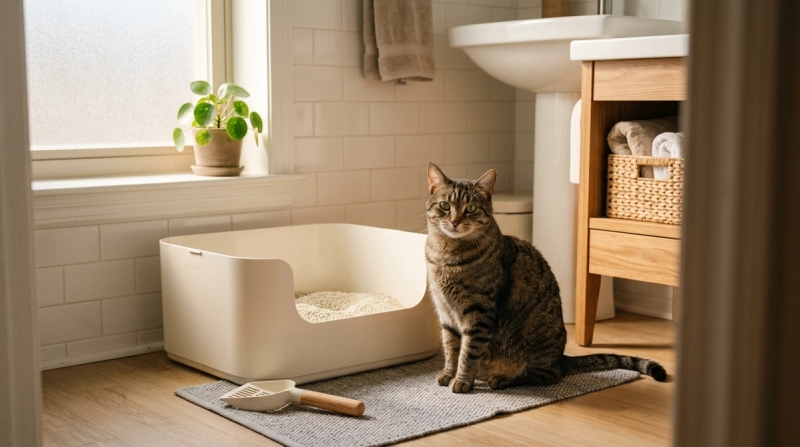
If your cat is not using the litter box, first check for medical warning signs. Straining with little or no urine, blood, crying, vomiting, weakness or lethargy needs urgent veterinary care, especially in male cats. If a vet rules out illness, focus on a clean, roomy litter box, unscented litter, quiet placement, enzyme cleaning and lower household stress.
Finding cat pee on a rug, bed or laundry pile can feel frustrating, but cats do not avoid the litter box out of spite. Most are reacting to pain, stress, poor box setup, litter they dislike, or an old urine smell that still pulls them back to the same spot.
The safest order is simple: rule out medical trouble first, then fix the box, then clean properly, then reduce stress.
Start With the Big Question: Could This Be Medical?
#Any sudden litter box change should make you ask: could my cat be in pain? Cats often hide discomfort, so peeing outside the box may be one of the first clear signs something is wrong.
Medical causes can include feline lower urinary tract disease, bladder inflammation, urinary tract infection, urinary crystals or stones, kidney disease, diabetes, constipation, arthritis, injury, weakness or senior-cat mobility issues.
You do not need to diagnose your cat at home. Your job is to notice the change and contact a qualified veterinarian. Depending on the symptoms, a vet may recommend an exam, urinalysis, bloodwork, imaging or other tests.
Emergency Warning: Cat Urinary Blockage
#A cat who is trying to pee but cannot pass urine needs urgent veterinary care. This can become life-threatening, especially in male cats because their urethra is narrower.
Call a vet or emergency animal hospital immediately if you notice:
- Straining with little or no urine coming out
- Repeated litter box trips without a normal pee
- Crying, yowling or obvious pain while trying to urinate
- Blood in urine or pink/red urine spots
- Vomiting
- Lethargy, weakness or collapse
- Hiding, refusing food or acting suddenly unlike themselves
- A male cat squatting again and again but not peeing
Do not try to treat a suspected blockage at home. Do not wait overnight to “see if it passes.”
Common Reasons Cats Avoid the Litter Box
#Litter Box Setup Checklist
#A good litter box setup does not need to be fancy. It should be clean, roomy, easy to reach, low-stress and not strongly scented.
1. Follow the One-Per-Cat-Plus-One Rule
#A practical guideline is:
- 1 cat: 2 litter boxes
- 2 cats: 3 litter boxes
- 3 cats: 4 litter boxes
Two boxes beside each other may feel like one bathroom to a cat. Spread boxes out where possible, especially in multi-cat homes.
2. Use a Box That Is Actually Big Enough
#Your cat should be able to step in, turn around, dig, squat and leave comfortably. If the back end hangs over the side, the issue may be box size, not “bad aim.”
3. Try an Uncovered Box
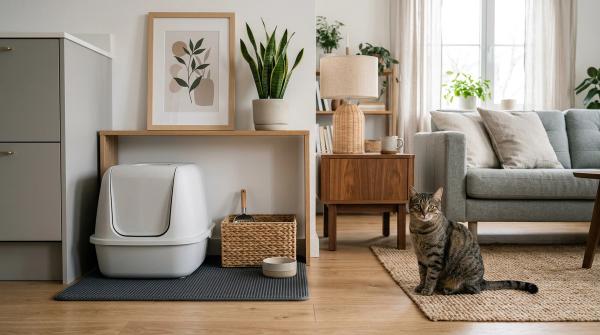
#Covered boxes look neater to humans, but some cats dislike trapped odor, tight space and limited escape routes. If your cat avoids a covered box, try a large uncovered one for a few weeks.
4. Choose Unscented Litter
#Scented litter is designed for human noses. Many cats prefer unscented, fine-grained clumping litter. If problems began after a litter change, switch back or transition slowly.
5. Keep Litter Depth Consistent
#Many cats do well with about 2 to 3 inches of litter. Too little can make digging unpleasant; too much may feel unstable.
6. Make Entry Easy
#High-sided boxes can help with litter scatter, but kittens, senior cats, overweight cats and cats with arthritis may need a low-entry box.
7. Scoop Every Day
#Scoop at least once daily. In a small apartment or multi-cat home, twice daily is often better. Regular scooping also helps you spot changes in urine, stool or blood early.
Litter Box Placement in a Small Apartment
#Apartment cat parents often have limited space. The best spot is not always the most hidden spot; it is the place your cat can reach safely and calmly.
Look for a location that is:
- Easy to access at all times
- Quiet but not behind a door that may close
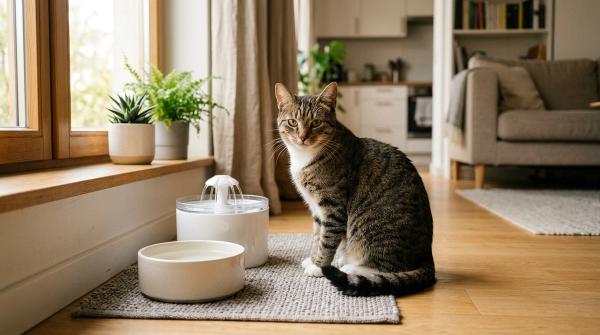
- Away from food and water bowls
- Away from loud appliances
- Not a tight corner where another pet can trap the cat
- Ventilated enough to prevent odor buildup
- Low-traffic enough for privacy
Good apartment spots may include a bathroom corner, quiet bedroom corner, hallway nook or living room corner with a little visual privacy.
Avoid placing the box beside washing machines, inside poorly ventilated closets, next to food bowls, behind closing doors, in busy walkways, or anywhere your cat must pass a dog or another cat to reach it.
Apartment Odor Tips That Actually Help
#The best odor control is removing waste and urine smell, not covering it with perfume.
Try this:
- Scoop daily or twice daily
- Use unscented clumping litter
- Keep litter depth consistent
- Wash the box with mild, unscented soap
- Replace scratched plastic boxes that hold odor
- Keep the area ventilated
- Clean accidents with an enzyme cleaner
Avoid strong fragrances, ammonia-based cleaners and essential-oil products around pets unless your veterinarian confirms they are safe.
Cleaning Cat Urine: Why Enzyme Cleaner Matters
#Cats can smell urine long after humans think it is gone. If the scent remains in a rug, couch, mattress, bath mat, gym bag or laundry pile, your cat may keep returning to that spot.
Use an enzyme cleaner labeled for pet urine.
- Blot first. Press with paper towels or a clean cloth; do not scrub.
- Apply enough enzyme cleaner. It needs to reach as deep as the urine did.
- Follow product directions. Some cleaners need contact time.
- Let it air dry fully. Enzymes need time to work.
- Repeat if needed. Old or soaked spots may need more than one treatment.
- Block access while drying. Use a closed door, gate, laundry basket or temporary cover.
For washable items, treat first if the fabric label allows it, then wash. If a cheap bath mat or old blanket keeps attracting your cat after repeated cleaning, replacing it may be easier.
The 7-Day Litter Box Reset Plan
#Use this plan only for non-emergency situations or after your vet has ruled out urgent medical problems.
Day 1: Call the Vet and Start Tracking
#Book a vet appointment if the behavior is sudden or repeated. Track when accidents happen, whether it is pee or poop, urine amount, blood, crying, vomiting, appetite changes, recent home changes, litter type, box type, placement and scooping frequency.
Day 2: Find and Clean Every Accident Spot
#Check rugs, carpet edges, bedding, laundry piles, bath mats, shoes, backpacks, corners, curtains and pet beds. Clean every urine spot with enzyme cleaner and block repeat areas temporarily.
Day 3: Improve the Box Setup
#Add one more box if possible. Choose large, uncovered, easy-entry boxes with unscented litter and a steady litter depth.
Day 4: Fix the Placement
#Move boxes to calm, easy-to-reach spots. In a small apartment, this may mean one bathroom box and one quiet bedroom or living-room corner.
Day 5: Make the Box Area Feel Safe
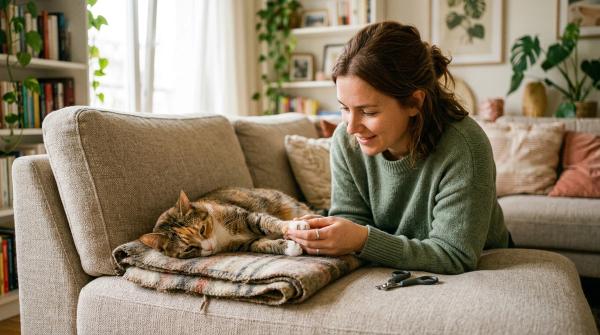
#Do not force your cat into the box, scold near it or hover while they use it. Avoid nail trimming, medicine or bathing near the litter area.
Day 6: Lower Stress at Home
#Consider recent changes: a new pet, guests, construction noise, furniture moves, schedule changes, closed rooms, less playtime or an outdoor cat near windows. Add predictable routines, daily play, hiding spots, scratching posts and separate resources.
Day 7: Review What Is Working
#Ask whether accidents are reducing, which box is used most, whether one location is ignored, whether another pet blocks access, and whether medical symptoms remain. If problems continue, follow up with your vet.
What Not To Do
#Avoid yelling, punishment, rubbing your cat’s nose in the mess, locking the cat away as a “lesson,” chasing after accidents, masking urine with strong fragrance, using ammonia-based cleaners, or assuming revenge.
Punishment can increase stress, and stress is already a common litter box trigger.
When to Call the Vet
#Call your veterinarian promptly if accidents happen more than once, your cat suddenly changes habits, urine amount changes, box visits increase, you see blood, your cat cries, a senior cat has new accidents, appetite changes, or your cat is hiding, vomiting, weak, constipated or licking the urinary area.
Seek urgent care right away for straining with little or no urine, a male cat repeatedly trying to pee without producing urine, blood with pain or distress, vomiting with urinary signs, lethargy, collapse or severe weakness.
Final Takeaway
#A cat not using the litter box is not being spiteful. They may be hurting, stressed, uncomfortable with the setup, or returning to a urine smell they can still detect. Start with medical safety, then improve the box, clean deeply and rebuild a calm routine at home.