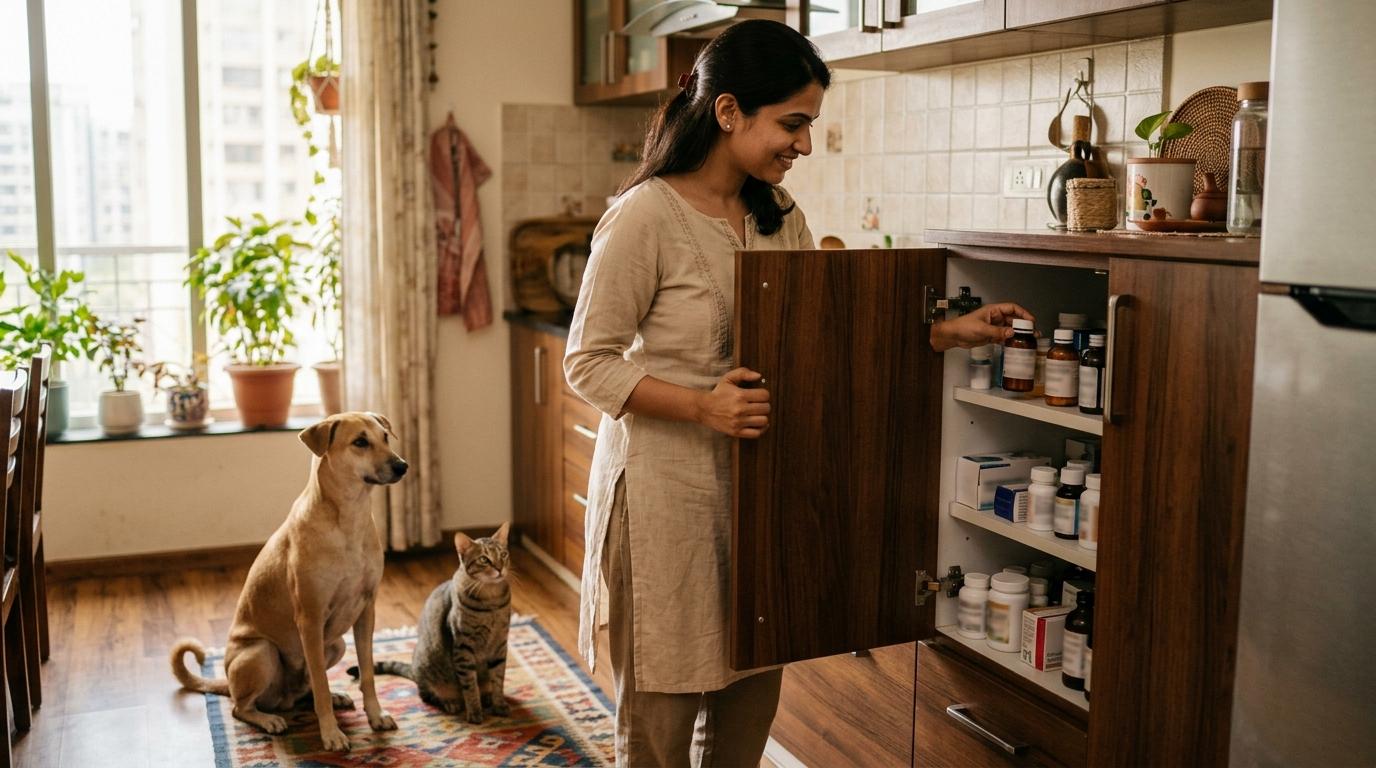
Please don’t give paracetamol to your cat. Not even a tiny piece. For dogs, paracetamol should only be given if a veterinarian has prescribed it for that specific dog.
This is not about being overcautious. Human painkillers can be seriously dangerous for pets.
Paracetamol, also called acetaminophen, can poison dogs if the dose is wrong. For cats, it can be life-threatening even in small amounts. So if your pet is limping, crying, dull, injured, hiding, or feels feverish, the safest thing to do is simple: call a vet first.
In many Indian homes, paracetamol is always around. Crocin, Dolo, Calpol, or a generic strip from the chemist sits in a drawer, handbag, bedside table, or medicine box. So when a dog suddenly starts limping or a cat looks weak, it’s natural to think, “Can I give just a little paracetamol?”
Please don’t.
Dogs and cats are not small humans. Their bodies process medicines very differently from ours. A tablet that feels routine for us can become an emergency for them.
This guide explains why paracetamol is risky for dogs and cats, what to do if your pet has already eaten it, and how to handle pain or fever more safely.
Why Human Painkillers Can Be Dangerous for Pets
#Human medicines are one of the common reasons pets end up poisoned. Sometimes a pet chews a medicine strip by accident. Sometimes a loving owner gives a tablet only because they want to reduce pain quickly.
The intention is good. The medicine may not be.
Paracetamol is especially risky because dogs and cats do not break it down the way humans do. In dogs, the safe range can be narrow and depends on many things, including:
- body weight
- age
- liver and kidney health
- other medical conditions
- other medicines being taken
- exact dose and tablet strength
In cats, the danger is much higher. Their liver cannot process paracetamol safely, which makes poisoning far more likely.
Paracetamol toxicity can damage the liver and red blood cells. That is why vets treat it as urgent. It is not something to “watch till morning.”
And it’s not only paracetamol. Other common human painkillers like ibuprofen and aspirin can also harm pets. They may damage the stomach, kidneys, liver, or blood clotting system.
So the safest rule is:
Do not give your own painkillers to your dog or cat unless your veterinarian specifically tells you to.
Dogs vs Cats: Is Paracetamol Safe?
#If Your Pet Has Already Eaten Paracetamol
#If your dog or cat has swallowed paracetamol, or if someone at home has already given it, act quickly.
Even if your pet looks normal right now, call a vet.
Here’s what to do:
- Call your veterinarian or an emergency pet clinic immediately.Don’t wait to see if symptoms appear.
- Do not try home treatment.Paracetamol poisoning needs proper veterinary advice and, in many cases, urgent treatment.
- Keep the medicine strip, bottle, or packet with you.The vet needs to know the exact medicine name and strength.
- Check how much may be missing.Count the tablets if you can. If you’re not sure, give your best estimate.
- Note the time.Tell the vet whether it happened 10 minutes ago, 2 hours ago, or sometime last night.
- Keep your pet calm and safe.Don’t let them run around, hide, or get access to more medicine.
- Go to the clinic if the vet advises it.With paracetamol, early treatment can make a big difference.
And please don’t feel embarrassed to tell the vet exactly what happened. Vets are there to help your pet, not judge you.
Symptoms of Paracetamol Poisoning in Dogs and Cats
#Call a vet immediately if your pet has eaten paracetamol, whether symptoms are visible or not.
Possible warning signs include:
- vomiting
- drooling
- loss of appetite
- weakness or extreme tiredness
- panting
- difficulty breathing
- swelling of the face or paws
- pale, blue, grey, muddy, or brownish gums
- fast heartbeat
- collapse
- yellowing of the eyes, gums, or skin
- dark-coloured urine
- restlessness
- confusion
- hiding or unusual quietness
A quiet pet is not always a comfortable pet. Cats, especially, are very good at hiding illness. They may look “just dull” until they are seriously unwell.
What Your Vet May Ask
#When you call the vet, try to keep the medicine packet nearby. The vet may ask:
- Is your pet a dog or a cat?
- What is your pet’s weight?
- What exact medicine was eaten?
- Was it plain paracetamol or a cold-and-flu combination tablet?
- What strength was the tablet or syrup?
- How much may have been swallowed?
- When did it happen?
- Has your pet vomited?
- Is your pet showing any symptoms?
- Does your pet have liver, kidney, stomach, or blood-related problems?
- Is your pet already taking any other medicine?
If you don’t know an answer, that’s okay. Just say, “I’m not sure.” That is much better than guessing.
What Not to Do at Home
#In a panic, many people try home remedies. Please avoid these mistakes:
- Do not give more medicine to “balance it out.”
- Do not give milk, ghee, turmeric, curd, coconut water, or any home remedy as treatment.
- Do not force your pet to vomit unless a vet specifically tells you to.
- Do not give salt water, mustard oil, or hydrogen peroxide on your own.
- Do not wait overnight to see if your pet improves.
- Do not search for a human dose online and reduce it by body weight.
- Do not give another pet’s old prescription.
Pet medicine safety starts with one basic rule: human painkillers are not casual pet medicines.
What Should You Do for Pain or Fever Instead?
#If your dog is limping, your cat is hiding, or your pet feels feverish, the safer choice is a veterinary consultation.
Pain and fever are signs of an underlying problem. They can happen because of:
- injury
- infection
- arthritis
- wounds
- dental pain
- stomach problems
- urinary issues
- fractures
- tick fever or other illnesses
- internal disease
So it’s not just about reducing pain or bringing down fever. The real question is: why is it happening?
Your vet can examine your pet and decide what medicine is safe. For dogs, vets may prescribe pain relief medicines made for veterinary use, or medicines that are suitable for that particular dog. For cats, vets choose options that are safer for their very different metabolism.
Even pet-safe medicines need the right dose. Species, weight, age, liver health, kidney health, and other medicines all matter.
The main point is simple:
There are safer options for dog pain relief and cat pain relief, but they should come from a veterinarian.
How to Prevent Accidental Paracetamol Poisoning at Home
#Most accidents happen in very ordinary ways.
A strip is left on the bedside table. A tablet falls near the sofa. A handbag is kept on the floor. A curious puppy chews a packet. A cat knocks something off a shelf.
To keep your pet safer:
- Store paracetamol, ibuprofen, aspirin, and other human medicines in closed cabinets.
- Keep medicine strips away from beds, dining tables, kitchen counters, pooja shelves, and low drawers.
- Don’t leave tablets in handbags, laptop bags, or open boxes.
- Keep syrups tightly closed and out of reach.
- Tell children, house help, elderly family members, and guests not to give medicine to your pet.
- Save your vet’s number on every family member’s phone.
- If you have a puppy or a cat who jumps everywhere, assume nothing is truly “out of reach” unless it is locked away.
A few minutes of prevention can save your pet from a frightening emergency.
Disclaimer: This article is for general pet-care information and is not a substitute for professional veterinary advice. If your dog or cat has eaten paracetamol or any human medicine, contact your veterinarian or an emergency pet clinic immediately.