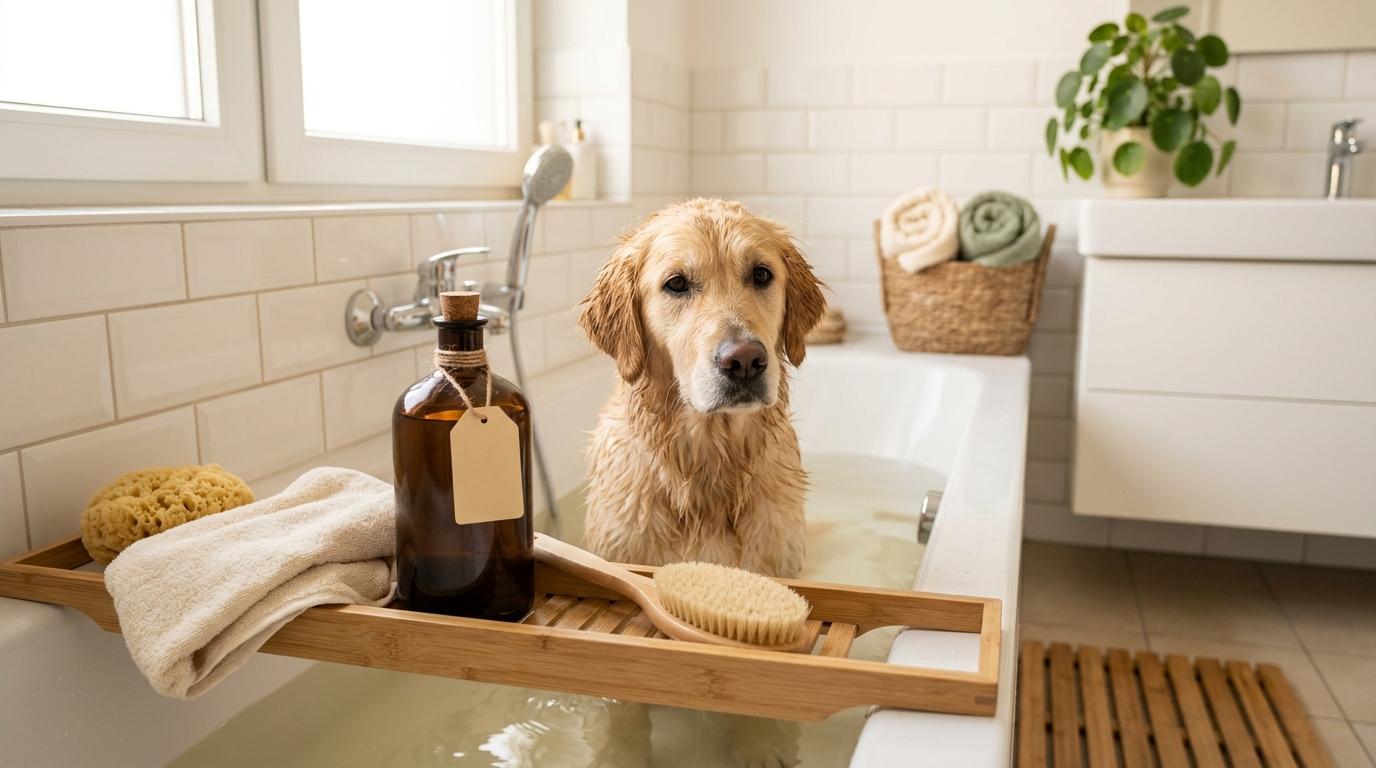
Can you use human shampoo on dogs? Usually, it’s better not to. Human shampoo is made for human skin, and dogs have different skin needs. What feels mild and harmless to us can leave a dog’s skin dry, itchy, flaky, or irritated.
That said, life with dogs is not always neat and planned.
Maybe your dog rolled in something awful. Maybe the pet store is closed. Maybe you have no dog shampoo at home and your dog smells like they made a very bad life choice.
In a true one-time emergency, you may be able to use the gentlest option available, very carefully. But for regular baths, a proper dog shampoo is the safer choice.
Bathing a dog at home sounds simple until your puppy escapes halfway through, your dog shakes water all over the bathroom, or you realise too late that the towel is in another room.
If that sounds familiar, you are not alone.
This guide keeps things simple: what is safe, what to avoid, and how to bathe your dog at home without upsetting their skin.
Why Human Shampoo Is Not Ideal for Dogs
#Human shampoo and dog shampoo can look almost the same. They both foam, smell nice, and clean hair or fur.
But they are not made for the same skin.
Human skin is usually more acidic. Dog skin is generally closer to neutral. Because of this difference, shampoos made for people can be too harsh for dogs, even if the bottle says “gentle” or “moisturising.”
Your dog’s skin has a natural protective barrier. It helps hold in moisture and keeps irritants out. Human shampoo can disturb that barrier and strip away natural oils. When that happens, your dog may start scratching, licking, or developing dry, flaky skin.
Some dogs may seem completely fine after one accidental wash. Others may react quickly, especially:
- Puppies
- Senior dogs
- Dogs with allergies
- Dogs with sensitive skin
- Dogs with existing skin problems
Fragrance is another issue. Many human shampoos have strong perfumes. We may enjoy that fresh, salon-like smell, but dogs have a much stronger sense of smell than we do. Strong scents can irritate their nose and sometimes their skin too.
So, for normal dog bathing at home, use shampoo made for dogs.
Dog Shampoo vs Human Shampoo
#What If You Have No Dog Shampoo?
#Sometimes you don’t have the perfect product at the perfect time. Your dog may have rolled in mud, garbage, oil, or something deeply mysterious and deeply smelly.
If you have no dog shampoo, the goal is simple: clean your dog with the least irritation possible.
Emergency Options for Bathing Your Dog
#1. Use plain lukewarm water first
#If your dog is only muddy, dusty, or sandy, try plain lukewarm water before reaching for any shampoo.
Use your hands to loosen the dirt and rinse the coat well. For many everyday messes, especially after walks, this may be enough until you can buy dog shampoo.
Avoid hot water. It can make dryness and irritation worse.
2. Use a damp cloth for small messes
#Not every dirty dog needs a full bath.
If only the paws, belly, tail, or legs are dirty, use a damp cloth and wipe the area gently. This is especially useful after rainy walks or if you live in an apartment and don’t want to turn the bathroom into a mini water park every day.
3. Use mild baby shampoo only if you truly have to
#A mild baby shampoo is usually gentler than many adult human shampoos. But it is still made for human skin, not dog skin.
If you have no other option and it is a genuine one-time emergency:
- Use only a tiny amount
- Avoid the eyes, ears, nose, and mouth
- Rinse much longer than you think you need to
- Watch your dog afterward for itching or redness
Do not make baby shampoo a regular replacement for dog shampoo.
4. Use dish soap only for extreme greasy messes
#Dish soap can cut through grease, which is why some people reach for it when a dog gets into something oily.
But dish soap can also strip natural oils from your dog’s skin. It is not suitable for regular bathing.
In rare cases, if your dog has something greasy or oily on the coat and you have no safer option, you may use a very small amount once. Rinse thoroughly and keep an eye on your dog afterward.
Do not use dish soap repeatedly. It can dry out the skin badly.
The Emergency Bath Rule
#If you use anything that is not made for dogs, even just once, watch your dog closely after the bath.
Look for:
- Redness
- Itching
- Flaking
- Swelling
- Excessive licking
- Restlessness
- Rubbing against furniture or the floor
- Any obvious discomfort
If something seems wrong, call your veterinarian.
And before the next bath, buy a proper dog shampoo.
What Not to Use on Dogs
#Some products may seem harmless because we use them ourselves, but they can be risky for dogs.
Avoid these unless your vet has clearly told you to use them:
- Human dandruff shampoo
- Human medicated shampoo
- Psoriasis or acne washes
- Strongly perfumed shampoo
- Products with lots of essential oils
- Harsh soaps or detergents
- Flea and tick shampoo not labeled for your dog’s age, weight, or species
- Cat shampoo on dogs, unless the label says it is safe for dogs too
- Dog shampoo on cats, unless the label says it is safe for cats too
Dogs and cats are not the same when it comes to grooming products. Some ingredients that are safe for one animal may be unsafe for another.
Always read the label properly.
How to Choose a Safe Dog Shampoo
#The pet aisle can be confusing. Every bottle seems to say “gentle,” “natural,” “soothing,” or “vet approved.”
But not every shampoo is right for every dog.
Here is a simple checklist.
Dog Shampoo Buying Checklist
#- Choose a dog-specific shampoo: The label should clearly say it is made for dogs.
- Check the age label: For a puppy bath, choose shampoo labeled safe for puppies.
- Avoid strong fragrance: Mild or fragrance-free is usually better, especially for sensitive dogs.
- Look for gentle ingredients: Oatmeal or aloe-based dog shampoos may suit dry or sensitive skin.
- Read the instructions: Some shampoos need to sit for a few minutes before rinsing.
- Be careful with flea and tick shampoos: Use only if suitable for your dog’s age, weight, and species.
- Do not use dog shampoo on cats: Unless the bottle clearly says it is safe for cats too.
- Do not assume “human safe” means pet safe: Dogs have different skin needs.
- Ask your vet if problems keep returning: Bad smell, constant scratching, or rashes may need treatment, not just shampoo.
Dog Shampoo for Sensitive Skin
#If your dog has sensitive skin, keep bath time boring.
That may sound funny, but simple is usually better.
Choose a mild dog shampoo, preferably fragrance-free or very lightly scented. Avoid heavy perfumes, strong cleansers, and random “natural” products packed with essential oils.
Also, rinse really well. Leftover shampoo is one of the most common reasons dogs itch after a bath.
Try not to change shampoos every time you bathe your dog. If your dog reacts, it becomes harder to figure out what caused the problem.
And if your dog has red skin, wounds, hot spots, scabs, constant scratching, or a bad smell that keeps coming back, don’t try to fix it with random shampoos from online.
A bath can clean the coat. It cannot diagnose the reason your dog’s skin is upset.
That is when your vet needs to step in.
When to Skip the Bath and Call a Vet
#Sometimes bathing is not the best first step.
Call your veterinarian if you notice:
- Red, painful, or inflamed skin
- Open wounds, cuts, scabs, or hot spots
- Pus, swelling, bleeding, or signs of infection
- Constant scratching, biting, or licking
- Sudden hair loss or bald patches
- Strong smell that comes back quickly after bathing
- Greasy, sticky, or very flaky skin
- Fleas, ticks, or flea dirt
- Your dog seems unusually tired, restless, or uncomfortable
- Skin problems that keep returning
Do not use human medicated shampoo on your dog unless your vet has specifically told you to. This includes dandruff shampoos and treatment shampoos made for human scalp issues.
Bathing Dogs in Humid or Monsoon Weather
#In many parts of India, dog grooming becomes trickier during humid and monsoon weather.
Dogs get muddy faster. Their coats stay damp for longer. Apartments may not have much drying space. And that damp smell can return quickly if the coat is not dried properly.
A few small habits can help.
Brush Before Bathing
#Brush your dog before the bath, especially if they have a long, curly, or thick coat.
Water can make mats and tangles tighter. Once that happens, brushing after the bath can become uncomfortable or even painful.
If you find a tight mat close to the skin, don’t pull at it. Ask a groomer or vet clinic for help.
Don’t Over-Bathe Just Because It Is Raining
#During monsoon, your dog may look dirty after almost every walk. But frequent full shampoo baths can dry out the skin.
For light dirt, rinse the paws, wipe the belly, and dry properly. Save full baths for when your dog really needs one.
Dry Your Dog Properly
#This is especially important in humid weather.
After a bath, towel dry your dog well. If your dog has a thick coat, moisture can stay trapped near the skin. That dampness may lead to irritation, itching, or smell.
You can use a pet-safe dryer on a cool or low setting if your dog is comfortable with it. Keep the dryer moving and never use high heat.
Do not leave a thick-coated dog damp in a closed, humid room.
Pay Attention to Paws and Skin Folds
#After rainy walks, clean and dry your dog’s paws.
If your dog has skin folds, like some Bulldogs, Pugs, or dogs with loose skin, gently dry those areas too. Moisture trapped in folds can cause irritation and bad odour.
Prepare Before the Bath
#Dog baths can turn chaotic very quickly, especially in small bathrooms.
Before bringing your dog in, keep everything ready:
- Dog shampoo
- Towels
- Brush or comb
- Non-slip mat, if you have one
- Cup or handheld shower
- Treats
- Damp cloth for the face and ears
A little preparation makes the whole thing calmer for both of you.
Simple Dog Bathing Routine at Home
#Here is an easy routine for beginners.
- Brush first: Remove loose hair and tangles before the coat gets wet.
- Use lukewarm water: Not hot, not cold.
- Wet the coat slowly: Avoid spraying directly on the face, ears, or eyes.
- Apply dog shampoo: Use the amount suggested on the bottle.
- Massage gently: Focus on dirty areas, but don’t scrub harshly.
- Rinse really well: Leftover shampoo can irritate the skin.
- Clean the face separately: Use a damp cloth instead of pouring water near the eyes.
- Dry properly: Towel dry first, then use a cool or low pet-safe dryer if needed.
- Give treats and praise: This helps your dog build a better relationship with bath time.
How Often Should You Bathe Your Dog?
#There is no perfect bathing schedule for every dog.
It depends on:
- Coat type
- Activity level
- Weather
- Skin health
- Allergies
- How dirty your dog gets
- Whether your dog lives mostly indoors or outdoors
A mostly indoor dog may need fewer baths. A dog that plays outside daily may need more cleaning.
During monsoon, you may need more paw rinses and wipe-downs, but not necessarily more full shampoo baths.
If your dog has sensitive skin, allergies, chronic smell, or repeated skin infections, ask your vet how often to bathe them and which shampoo to use.
Final Takeaway
#So, can you use human shampoo on dogs?
For regular baths, no. Dog shampoo is safer because it is made for dog skin and coat. Human shampoo can dry the skin, strip natural oils, and make itching or irritation more likely.
If it is a real one-time emergency, use the gentlest option you have, use very little, and rinse extremely well. Then watch your dog for any reaction.
Before the next bath, get a proper dog shampoo.
Clean is good. Safe is better.