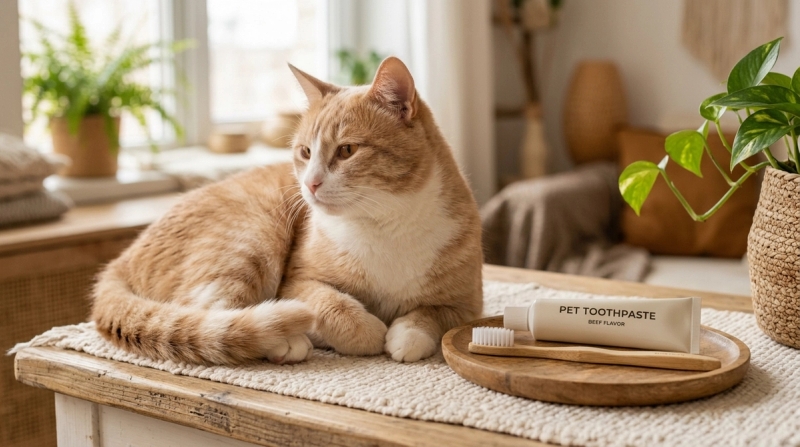
Cat dental care at home starts with patience, cat-safe toothpaste, and a soft pet toothbrush. Daily brushing is ideal, but even a few calm sessions each week can help slow plaque buildup. Keep it gentle, reward your cat often, and never force their mouth open. If you notice bad breath, drooling, bleeding gums, pain, swelling, or changes in eating, call your vet.
Trying to brush a cat’s teeth can feel awkward at first. You’re standing there with a tiny toothbrush, your cat is judging the entire situation, and the “routine” may end before it begins.
That’s normal.
Cat dental care at home is not about winning a wrestling match. It is about building a small, calm habit your cat can tolerate: short sessions, low drama, lots of rewards, no chasing and no forcing.
AllBlogs is not a veterinary clinic. This guide is for education only and does not replace care from your veterinarian. Dental pain, gum disease, tooth resorption, infection, broken teeth and tartar under the gumline need veterinary diagnosis and treatment.
Why cat dental care at home matters
#Cats can develop plaque, tartar, gingivitis and periodontal disease. Plaque is the soft film that builds up on teeth. If it stays long enough, it hardens into tartar. Once tartar forms, especially near or under the gumline, you cannot simply brush it away at home.
Home dental care helps slow plaque buildup. Veterinary dental care checks for pain, infection, tooth damage, gum disease and problems below the gumline that you cannot see.
So it is not really brushing or vet care. Your cat needs both.
Don’t try to be perfect on day one
#If you’re just starting, do not expect your cat to sit politely for a full brushing session right away. Most cats will not. Pushing too hard too soon is one of the fastest ways to make them hate the toothbrush.
Start smaller than you think you need to:
- Lift the lip once. Stop. Give a treat.
- Let your cat lick a little cat toothpaste. Stop. Give a treat.
- Touch the cheek gently. Stop before your cat gets annoyed.
That is not doing nothing. That is training.
Daily brushing is ideal because plaque keeps forming every day. But if daily brushing is not realistic yet, a few peaceful brushing sessions each week are still better than none.
Brushing vs wipes vs dental treats vs vet cleaning
#If you use cat dental treats, look for products with veterinary dental backing when possible, such as products accepted by the Veterinary Oral Health Council. Treats can be useful, but they are not the whole plan.
What you need before brushing your cat’s teeth
#You do not need a huge dental kit. Simpler is usually better.
You’ll need:
- Cat toothpaste, ideally enzymatic and made for pets
- A soft cat toothbrush, finger brush or sterile gauze
- Small treats your cat already loves
- A quiet, familiar place
- Patience
If you live in a small apartment, choose one calm spot and use it consistently. A sofa corner, bathroom mat, bed edge or your cat’s favorite blanket can work.
The big rule: do not chase your cat around with a toothbrush. If your cat walks away, the session is done.
What not to use for cat dental care at home
#Do not use human toothpaste
#Human toothpaste is not made for cats. Cats swallow toothpaste; they do not rinse and spit like we do. Some human toothpastes may contain ingredients that are unsafe for pets, including fluoride or sweeteners.
Use only cat toothpaste or pet-safe toothpaste. These are designed to be swallowed and often come in flavors cats are more likely to accept.
Do not force your cat
#Do not pin your cat down, pry their mouth open, scruff them tightly, or keep going while they struggle.
Force teaches your cat that dental care is scary. It also makes scratches and bites more likely.
A calm 10-second session is better than a forced two-minute fight.
Do not use sharp tools
#Do not use human dental scalers, metal picks, scrapers or sharp tools to remove tartar at home. It is very easy to slip and hurt your cat’s gums or damage the tooth surface.
Hard tartar and anything below the gumline should be handled by your veterinarian during a professional dental cleaning.
How to brush cat teeth, step by step
#This routine is slow on purpose. Some cats move through the steps quickly. Others need weeks.
Step 1: Choose a calm time
#Pick a time when your cat is relaxed. After a meal or during a sleepy evening moment can work well. Sit beside your cat instead of leaning over them. Keep your voice soft and have treats ready.
Step 2: Make face touching normal
#Before you brush, help your cat get used to gentle face handling. Touch the cheeks, chin and area near the lips. Then give a treat. Do this for a few days if needed.
Step 3: Lift the lip for one second
#Once your cat accepts cheek touching, gently lift the upper lip for just a second so you can see the side teeth. Do not brush yet. Lift, praise, treat and stop.
Step 4: Introduce cat toothpaste
#Put a small amount of cat toothpaste on your finger and let your cat sniff or lick it. Do not push it into their mouth. If your cat refuses one flavor, try another cat-safe option.
Step 5: Touch the teeth with your finger or gauze
#When your cat accepts the toothpaste, put a small amount on your finger or on sterile gauze wrapped around your finger. Gently rub the outside surface of a front tooth or canine tooth. Stop quickly and reward.
At first, you do not need to clean the inside of the teeth. Focus on the outside surfaces, especially near the gumline.
Step 6: Try a soft cat toothbrush
#Once your cat accepts finger or gauze wiping, introduce a soft cat toothbrush. Lift the lip gently. Place the brush at about a 45-degree angle where the tooth meets the gumline. Use small, gentle motions. Do not scrub hard.
Step 7: Slowly work toward the back teeth
#The larger back teeth often collect plaque and tartar, but they can be harder to reach. Work up to them slowly. You may only brush one side of the mouth in a session at first, and that is fine.
Step 8: Stop before your cat gets upset
#End the session before your cat gets angry, scared or wiggly. Praise them, give a treat and let them leave.
A successful brushing session is not always one where every tooth gets cleaned. A successful session is one your cat is willing to try again next time.
A beginner-friendly weekly routine
#Week 1: Build trust
#- Touch cheeks and chin
- Lift the lip briefly
- Offer cat toothpaste as a taste
- Reward every calm moment
Week 2: Touch the teeth
#- Use toothpaste on your finger or gauze
- Touch one or two teeth
- Keep sessions very short
- Stop if your cat pulls away
Week 3: Introduce the brush
#- Let your cat sniff the toothbrush
- Add cat toothpaste
- Brush a few outside tooth surfaces
- Focus on calm handling, not perfection
Week 4 and beyond: Make it routine
#- Aim for daily brushing if your cat allows it
- If daily is not realistic, brush as often as you can consistently
- Use dental wipes or treats as support, not a replacement
- Keep regular vet checks
Cat bad breath: what is normal and what is not
#A little food smell after eating can be normal. Strong, sour, rotten, metallic or really foul breath is different.
Cat bad breath often comes from bacteria, plaque, tartar, gum inflammation or infection. It can also happen with painful dental conditions that cats hide very well.
Some cats will still eat, groom and play even when their mouth hurts. So do not judge by appetite alone. Look at the whole picture.
Dental warning signs that need a vet
#Call your vet if you notice any of these signs:
- Bad breath that is strong, rotten, metallic or sudden
- Red, swollen or bleeding gums
- Drooling, especially if it is new or excessive
- Pawing at the mouth or face
- Dropping food while eating
- Chewing on only one side
- Refusing dry food or treats they used to enjoy
- Eating more slowly than usual
- Weight loss
- Visible tartar buildup
- Loose, broken or discolored teeth
- Swelling around the face or jaw
- Hiding, irritability or behavior changes around eating or touch
If your cat’s mouth seems painful, do not brush. Brushing a sore mouth can make the pain worse and may make your cat afraid of dental care later. Book a veterinary exam instead.
When your cat needs professional dental cleaning
#A professional cat dental cleaning is very different from brushing at home.
At the vet clinic, your cat can have a full oral exam and cleaning, including the areas under the gumline. Those areas cannot be safely reached at home.
Home brushing helps with soft plaque. It cannot remove hard tartar under the gumline, diagnose tooth root problems or treat painful dental disease.
Your vet may recommend a dental cleaning based on your cat’s age, mouth exam, tartar level, gum health, pain signs and overall health.
Kitten dental care: when to start
#Kitten dental care is mostly about comfort and training. You can start by gently touching your kitten’s cheeks, lips and mouth area when they are relaxed. Keep it playful, brief and positive.
Be careful during teething. Kittens can have sensitive gums while their baby teeth are changing to adult teeth. If your kitten seems sore, do not push brushing. Ask your vet when it is appropriate to begin a toothbrush routine.
What if your cat refuses brushing?
#Some cats need more time. Some accept toothpaste but not a brush. Some accept gauze but hate finger brushes. Some are suspicious of the entire project and need you to start at the very beginning.
Try this order:
- Cat toothpaste taste only
- Toothpaste on finger
- Toothpaste on gauze
- Finger brush
- Soft cat toothbrush
Avoid turning dental care into a daily argument. A cat who trusts you will usually make more progress over time than a cat who feels trapped.
Are dental wipes useful?
#Dental wipes can help remove some plaque from the tooth surface, especially if your cat allows finger contact but dislikes a toothbrush.
They are not as effective as brushing because they do not clean tiny spaces as well as bristles. Still, they can be a helpful stepping stone.
Use pet-safe dental wipes only. Do not use household wipes, disinfecting wipes, alcohol wipes, baby wipes or anything scented.
Are cat dental treats useful?
#Cat dental treats can be useful as a support tool, especially if they are designed for dental use. They may encourage chewing and may help reduce some plaque or tartar, depending on the product.
But they are not magic. They do not replace brushing. They do not treat gum disease. They do not remove tartar under the gumline.
They also add calories, so use them thoughtfully. If your cat has dental pain, avoid hard treats until your vet checks their mouth.
A calm routine for small-apartment cat parents
#In a small home, the biggest mistake is turning brushing into a chase. Your cat needs to feel like they can leave. Strangely enough, that freedom often makes them more likely to stay next time.
Try this:
- Keep the toothbrush and toothpaste in one easy spot
- Brush near a familiar resting area
- Do not block your cat’s escape route
- Use a towel or blanket as a comfort surface, not a restraint
- Keep the session short
- Reward and stop early
Quick daily cat dental care checklist
#- Check breath for strong or unusual odor
- Watch how your cat eats
- Look for drooling, dropping food or chewing changes
- Brush with cat toothpaste if your cat allows it
- Use wipes or gauze if brushing is still a work in progress
- Offer dental treats only as support
- Call your vet for pain, bleeding, drooling, swelling or eating changes
- Keep regular veterinary dental checks
Final takeaway
#Cat dental care at home works best when it is gentle, gradual and realistic. Use cat-safe toothpaste. Build trust slowly. Aim for regular brushing, but do not force it.
Bad breath, drooling, bleeding, pain, swelling or eating changes are reasons to call your vet. Home care can help protect your cat’s teeth between visits, but veterinary dental checks and cleanings are still important.