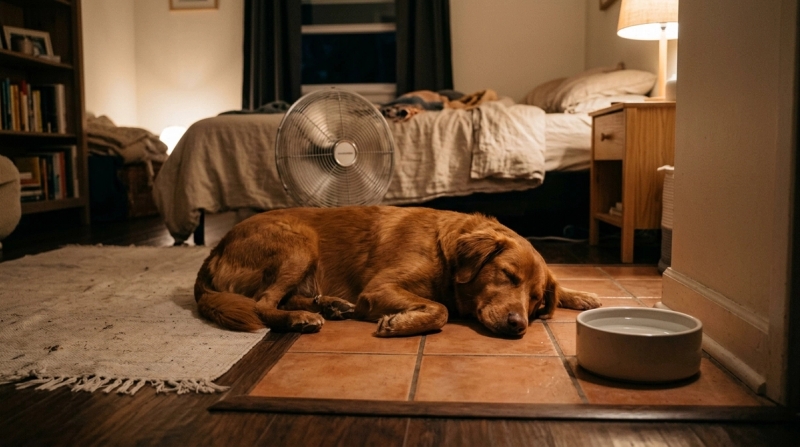
Dog panting at night in hot weather can be normal, especially if the room is warm, your dog settles after cooling down, and their gums look their usual healthy pink. Panting is one of the main ways dogs release heat. But heavy panting, restlessness, weakness, vomiting, dark red or purple gums, collapse, or panting in a cool room can be a warning sign. If something feels off, call your vet or an emergency veterinary clinic.
Hot nights are hard on dogs.
And if you live in India, especially in an apartment, you know the heat does not always disappear after sunset. Walls stay warm. Humidity sits in the room. The floor may be cooler than the bed. And during a power cut, a bedroom can become stuffy very quickly.
So let’s keep this simple and practical.
Sometimes your dog is just trying to cool down. Sometimes the panting is a sign that they are uncomfortable, overheated, anxious, in pain, or unwell.
This guide will help you spot the difference, know when to call a vet, and set up a cooler, safer sleeping space for your dog on hot nights.
Why dogs pant more at night in hot weather
#Dogs do not cool down like we do.
Humans sweat from many areas of the body. Dogs mostly rely on panting. When your dog pants, moisture evaporates from the tongue, mouth, and upper airway. This helps move heat out of the body.
Panting works better when the air is cooler and drier. It works much less well when the room is hot, humid, closed, or badly ventilated.
That is why dog panting in hot weather can become more obvious at night in:
- Top-floor apartments
- West-facing rooms that hold afternoon heat
- Rooms with poor airflow
- Homes without air conditioning
- Humid coastal cities
- Areas with frequent power cuts
- Rooms with thick bedding or rugs
- Apartments with very little cool floor space
Many dogs instinctively look for cooler surfaces. In Indian homes, that often means tile, marble, stone, or cement flooring. You may see your dog leave the bed, stretch out on the floor, lie near a door, or move closer to a fan.
That can be completely normal.
The key is how your dog looks overall. If they are bright, responsive, and able to settle once the room is cooler, it is usually less worrying.
But if your dog is panting hard while resting and cannot calm down, do not ignore it.
Normal panting vs warning panting
#This table can help you do a quick check. It is not a replacement for a vet exam, but it can help you decide whether your dog looks comfortable or concerning.
A helpful question to ask is:
“Does this panting make sense for what is happening?”
If the room is hot, your dog has just moved around, and the panting settles once you improve airflow, it may simply be normal cooling.
But if the room is cool, your dog has not been active, and the panting is heavy, strange, or persistent, it needs attention.
And honestly, if your gut says, “This is not normal,” take that seriously.
Vet red flags: when dog panting at night is not normal
#Heat-related illness can worsen quickly. Veterinary sources such as the Merck Veterinary Manual, Cornell University College of Veterinary Medicine, AAHA, and the Royal Veterinary College describe heat stress and heatstroke as serious and potentially life-threatening.
Call your vet or an emergency veterinary clinic urgently if you notice any of these signs.
Emergency red flags
#- Heavy panting that does not settle
- Dark red, purple, blue, pale, or grey gums
- Thick or excessive drooling
- Weakness, wobbliness, confusion, or collapse
- Vomiting or diarrhoea along with panting
- Shaking, tremors, or seizures
- Very rapid heartbeat with distress
- Panting with a bloated-looking abdomen
- Panting while resting in a cool room
- Struggling to breathe comfortably
- A flat-faced dog struggling in the heat
- A very young, senior, overweight, or unwell dog panting heavily
Do not wait to “see if it passes” if your dog looks weak, disoriented, or unable to settle. Heatstroke is an emergency.
Also, do not give human medicines, painkillers, sedatives, supplements, or random home remedies unless your vet has directly told you to. This article is not a diagnosis or a treatment plan.
Dogs at higher risk during hot nights
#Any dog can overheat, but some dogs need extra care in hot or humid weather.
Higher-risk dogs include:
- Flat-faced breeds such as Pugs, French Bulldogs, Bulldogs, Boxers, and Shih Tzus
- Senior dogs
- Puppies
- Overweight dogs
- Dogs with heart problems
- Dogs with breathing problems
- Dogs with thick or dense coats
- Dogs recovering from illness
- Dogs who get anxious during storms, fireworks, traffic, or construction noise
Flat-faced dogs are especially vulnerable because their airway shape can make panting less effective. So even if the weather feels only “a bit hot” to you, your dog may still be struggling.
If you have a flat-faced dog in a hot or humid city, keep a closer eye on them at night. It can make a real difference.
Night cooling checklist for dog parents
#If your dog is bright, responsive, and only mildly panting because the room is warm, your goal is to make the sleeping area cooler and safer.
Use this dog cooling checklist before bedtime.
1. Check the room before your dog settles
#Walk into the room and ask yourself:
- Does it feel stuffy?
- Is there airflow near the floor?
- Is the dog bed in a hot corner?
- Is the floor cooler than the bedding?
- Has the wall stayed warm from afternoon sun?
- Would this room still feel okay if the fan stopped for 20 minutes?
Apartments can hold heat long after sunset. A bedroom may feel manageable to you, but your dog is closer to the floor, covered in fur, and may experience the heat differently.
2. Let your dog choose the cool floor
#Many dogs naturally move to tile, marble, stone, or cement floors in hot weather. Let them.
You can:
- Move rugs away from the sleeping area
- Keep one cool floor space open
- Avoid forcing your dog onto a thick bed
- Let them change sleeping spots during the night
- Keep their favourite cool corner clean and uncluttered
If your dog keeps leaving the bed for the floor, the bed may simply be too warm. A fluffy bed may look cosy to us, but in summer, your dog may prefer something cooler and firmer.
3. Improve airflow at dog level
#Ceiling fans help, but they may not move enough air near the floor, especially for heavy-coated dogs.
Try:
- A pedestal fan
- A floor fan
- A fan angled across the room
- Safe cross-ventilation
- Keeping doors or windows open only if it is secure
You do not need to blast air directly into your dog’s face. Some dogs dislike that and will move away. Aim the fan near them or across the room so the air keeps moving.
4. Keep fresh water nearby
#Keep clean drinking water close to your dog’s sleeping area.
Do not force your dog to drink. Do not pour water into their mouth. Do not give home remedies because someone online recommended them.
For normal hot nights, fresh cool or room-temperature water is enough.
If your dog seems overheated, weak, confused, or distressed, call a vet immediately. Avoid extreme cooling methods like ice baths unless a vet specifically instructs you. Sudden intense cold can be unsafe, and heatstroke needs urgent professional care.
5. Use lighter bedding
#Thick plush beds can trap heat. In summer, some dogs do better with:
- A thin mat
- A breathable cot-style bed
- A cotton sheet
- A washable light cover
- Access to the bare floor
The softest bed is not always the coolest bed. If your dog prefers the floor, that is okay.
6. Brush out loose undercoat
#Regular brushing can help remove loose trapped hair and improve airflow through the coat.
For double-coated dogs, do not shave them just because it is summer unless your vet or a qualified groomer has advised it for a specific reason. Their coat also helps protect their skin. Brushing, shade, airflow, and sensible cooling are usually safer than drastic coat changes.
7. Avoid late-night heat triggers
#Before bedtime, try to avoid things that make your dog hotter than necessary.
For example:
- Heavy play in a warm room
- Long walks on hot evenings
- Excitement right before sleep
- Closed balconies or utility areas that hold heat
- Thick clothing or blankets on the dog
- Making them sleep in a poorly ventilated room
A calmer, cooler routine can reduce dog panting while resting at night.
What to do if your dog is panting heavily at night
#Stay calm, but do not dismiss it.
First, look at your dog, not just the room.
Ask yourself:
- Is my dog alert?
- Can they stand and walk normally?
- Are their gums their usual colour?
- Is the panting improving after moving them to a cooler place?
- Is there vomiting, diarrhoea, drooling, shaking, or collapse?
- Is this unusual for my dog?
- Do they seem normal, or do they look confused or distressed?
If your dog seems otherwise normal and the room is warm, improve ventilation, offer water, and let them rest in a cooler spot.
If your dog looks distressed, weak, confused, or the panting is heavy and not settling, call your vet or an emergency clinic right away.
Do not try to diagnose the cause at home. Night panting can happen because of heat, but it can also be linked to pain, anxiety, breathing trouble, heart problems, hormonal issues, or other illness. A vet is the right person to help you work out what is going on.
Heatstroke signs in dogs to take seriously
#Common dog heatstroke signs and severe overheating signs include:
- Excessive panting
- Heavy drooling
- Dark red or abnormal gum colour
- Vomiting
- Diarrhoea
- Weakness
- Wobbliness
- Collapse
- Seizures
- Confusion
- Dullness or not responding normally
These signs need urgent veterinary guidance. Heatstroke is not something to manage casually at home.
If you suspect heatstroke, contact an emergency vet immediately and follow their instructions. Do not give medicines unless a vet tells you to.
India-aware apartment tips for hot and humid nights
#Hot-weather dog care can look a little different in Indian apartments.
Heat builds up through the day and often stays trapped at night. Humidity makes panting less effective. And power cuts can turn a manageable room into an uncomfortable one very quickly.
Here are a few practical checks:
- If your home gets afternoon sun, start cooling the room before bedtime
- Keep your dog’s bed away from heat-retaining walls if possible
- Let your dog sleep in the room with the best airflow
- Keep drinking water accessible during power cuts
- Avoid closed balconies, utility rooms, and parked cars
- Watch flat-faced dogs closely on humid nights
- Remember that festivals, storms, traffic, and construction noise can also cause anxiety panting
- If one room stays much cooler than the rest, let your dog sleep there
Humidity matters more than many people realise. Even when the temperature is not extreme, sticky air can make it harder for your dog to cool down.
If your dog is panting more than usual on a humid night, pay attention.
When to call a vet for dog panting
#Call your vet if:
- The panting is new, intense, or unusual
- Your dog pants heavily while resting
- The room is cool but your dog keeps panting
- Your dog cannot settle
- Your dog seems painful, anxious, weak, or dull
- You notice abnormal gum colour
- There is vomiting, diarrhoea, shaking, or collapse
- Your dog is high-risk and struggling in warm weather
Call an emergency vet immediately if your dog collapses, has seizures, seems confused, has blue or purple gums, or cannot breathe comfortably.
When in doubt, it is safer to call. A quick conversation with a vet can help you decide whether your dog needs urgent care.
Related AllBlogs reads
#- Dog Cooling Mat vs Elevated Bed vs Fan: A Hot-Weather Safety Guide
- Monsoon Pet Care India: Walks, Paws, Smell, Vet Tips
- Dog Bathing in Monsoon: Indian Pet Parent Guide
This AllBlogs article is for general information only. It is not a diagnosis, treatment plan, or substitute for veterinary care. If your dog’s breathing, gum colour, energy level, or behaviour worries you, contact your veterinarian or an emergency veterinary clinic.