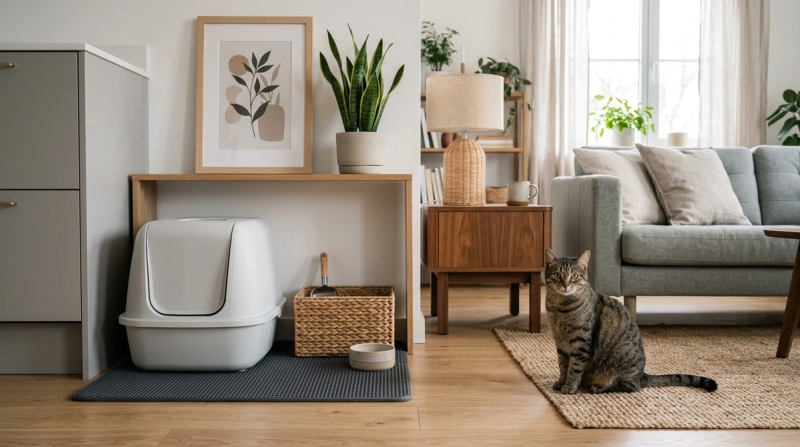
How Much Cat Litter Should You Use? A Simple Guide for Small Apartments
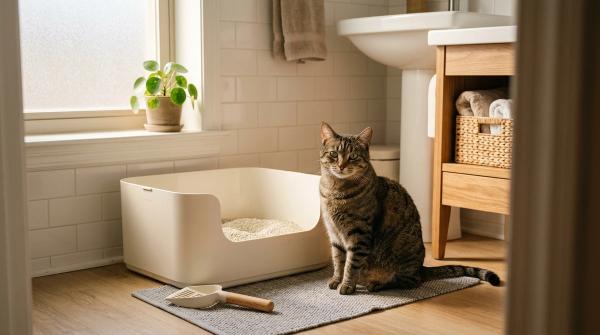
#If you’re wondering how much cat litter to use, start with this: 2–3 inches of litter is right for most adult cats.
That’s usually enough for your cat to dig, pee, poop, turn around, and cover everything without the litter box becoming a tiny indoor beach. Some cats will need a little adjusting, of course. One cat may dig like they’re excavating ancient ruins. Another may do the absolute minimum and walk away like it’s not their problem.
So think of 2–3 inches as your starting point, not a strict law.
In a small apartment, getting the litter depth right matters more than you might expect. Too little litter, and urine hits the bottom of the tray, which can make smells worse fast. Too much litter, and it ends up on the floor, in your slippers, under the sofa, and somehow in your bed.
If your apartment is humid or the litter box is in a bathroom with poor airflow, smells can build up even faster. The good news is that a simple routine makes a big difference.
Why 2–3 Inches Usually Works Best
#Most cats like having enough litter to dig and cover their waste. They don’t need a huge pile, but they also don’t want to scrape their paws against the plastic tray every time they use the box.
For most adult cats, 2–3 inches is the sweet spot.
What happens if you use too little litter?
#If the litter is too shallow, especially under about 1.5 inches, you’ll probably notice problems pretty quickly.
Your cat may struggle to cover their waste. Urine may soak through to the bottom of the tray and create sticky patches that are annoying to scoop. Once pee sits directly on the plastic, the smell gets stronger and is much harder to manage.
You might also see your cat scratching at the sides of the box or the floor around it. That can be a sign that there just isn’t enough litter for them to move around properly.
What happens if you use too much litter?
#More litter doesn’t always mean better odor control.
If the litter is too deep, around 4 inches or more, some cats feel unsteady. It can be like walking through loose sand. Deep litter also gets kicked out more easily, so you may find yourself sweeping several times a day.
And in a small apartment, scattered litter feels like it spreads everywhere instantly.
Adjust the Depth Based on Litter Type and Your Cat
#The 2–3 inch rule is a good starting point, but the right depth can change depending on the litter you use and your cat’s habits.
The best judge is your cat. If they use the box comfortably, cover their waste, and aren’t digging straight down to the plastic, your litter depth is probably fine.
Setting Up a Litter Box in a Small Apartment
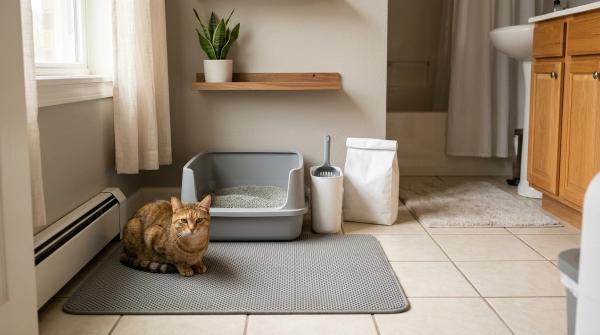
#In a small home, the litter box affects the whole space. You may not have a spare laundry room or faraway corner where smells can disappear. That means placement, cleaning, and airflow become really important.
General vet-style litter box advice usually focuses on a few things: easy access, enough space, quiet placement, and keeping the box clean and comfortable. The AAHA and AAFP recommend the one-box-per-cat-plus-one rule when possible:
- 1 cat = 2 litter boxes
- 2 cats = 3 litter boxes
- 3 cats = 4 litter boxes
In a compact apartment, that may not always be realistic. If you can’t place boxes far apart, just do your best. A clean, quiet, easy-to-reach box is still much better than one dirty box tucked away in a noisy or awkward spot.
Small-Apartment Litter Box Setup Tips
#Covered boxes can look tidier in a small flat, but remember: what smells “not too bad” to you may smell much stronger to your cat inside the box.
How Often Should You Scoop Cat Litter?
#If you’re asking how often to scoop cat litter, the short answer is: at least once a day.
In a small apartment, twice a day is often better, especially if:
- You have more than one cat
- Your cat pees a lot
- Your home is humid
- The box is in a bathroom, bedroom, or living area
- You use non-clumping litter
- Odor builds up quickly
A quick morning and evening scoop works well for many people. It only takes a few minutes, and it stops most smell problems before they become unpleasant.
A Simple Litter Box Cleaning Routine
#Here’s an easy routine that works well for small apartments.
Daily
#- Scoop urine clumps and solid waste at least once
- Scoop twice if the smell builds up quickly
- Check that the litter is still around 2–3 inches deep
- Smooth the litter surface after scooping
- Sweep or vacuum scattered litter around the box
Every 2–3 Days
#- Top up with fresh litter to bring it back to the right depth
- Wipe the outside of the box if it looks dusty or dirty
- Shake out or clean the litter mat
- Pay attention to changes in pee clump size, stool, or litter box use
Weekly Reset Checklist
#Use this as your small-apartment litter box reset.
- Empty and fully change non-clumping litter if it smells or feels saturated
- For clumping litter, check whether a full change is needed based on smell, dirty leftover litter, or clumps breaking apart
- Wash the empty tray during a full change
- Use warm water and mild, unscented soap
- Rinse well
- Dry completely before adding fresh litter
- Refill to 2–3 inches for most adult cats
- Check the box for scratches, cracks, or lingering odor
- Replace the box if it still smells even after washing
Full Change Timing by Litter Type
#You don’t need to follow a perfect calendar. The goal is simple: keep the box dry, scoopable, low-odor, and comfortable for your cat.
Common Mistakes That Cause Smell, Mess, or Litter Box Problems
#Mistake 1: Filling the box once and forgetting about the depth
#Every time you scoop, you remove some litter. A nice 3-inch layer can quietly turn into a thin layer after a few days.
Top it up regularly with small amounts of fresh litter.
Mistake 2: Adding lots of extra litter to control smell
#Odor control mostly comes from scooping, full changes, and washing the tray. Very deep litter may just create more tracking without solving the smell.
Mistake 3: Using strong scents to cover odor
#Strong fragrances can bother cats. Some cats really dislike scented litter, even if it smells clean to us.
A genuinely clean box usually works much better than a perfumed one.
Mistake 4: Putting the box somewhere noisy or awkward
#Cats need to feel safe when they use the litter box. A loud washing machine, a closed bathroom door, or a cramped covered box can make the box stressful or unpleasant.
And if the box feels unpleasant, your cat may start looking for another place to go.
Mistake 5: Assuming it’s “bad behavior” before checking health
#If your cat suddenly avoids the box, don’t assume they’re being stubborn. Pain, urinary discomfort, constipation, stress, or illness can all change litter box habits.
It’s always better to take sudden changes seriously.
Vet Red Flags: When to Call Your Vet
#Sometimes the problem isn’t the litter depth or the cleaning routine.
Contact your vet promptly if you notice:
- Straining to urinate
- Frequent trips to the litter box with little or no urine
- Blood in urine or stool
- Crying, pain, or unusual sounds in the box
- Sudden litter box avoidance
- Repeated accidents outside the box
- A trained cat suddenly peeing on beds, laundry, rugs, or near the box
These signs need veterinary attention. Don’t try to diagnose urinary problems at home, and don’t assume it’s just a litter preference issue.
Quick Formula to Remember
#If you want the simple version, here it is:
Start with 2–3 inches of litter. Scoop daily. Top up every few days. Fully clean based on litter type, smell, and your cat’s habits.
For small apartments, especially humid ones, be a little more consistent:
Scoop at least once a day, twice if needed, and don’t let wet litter sit.