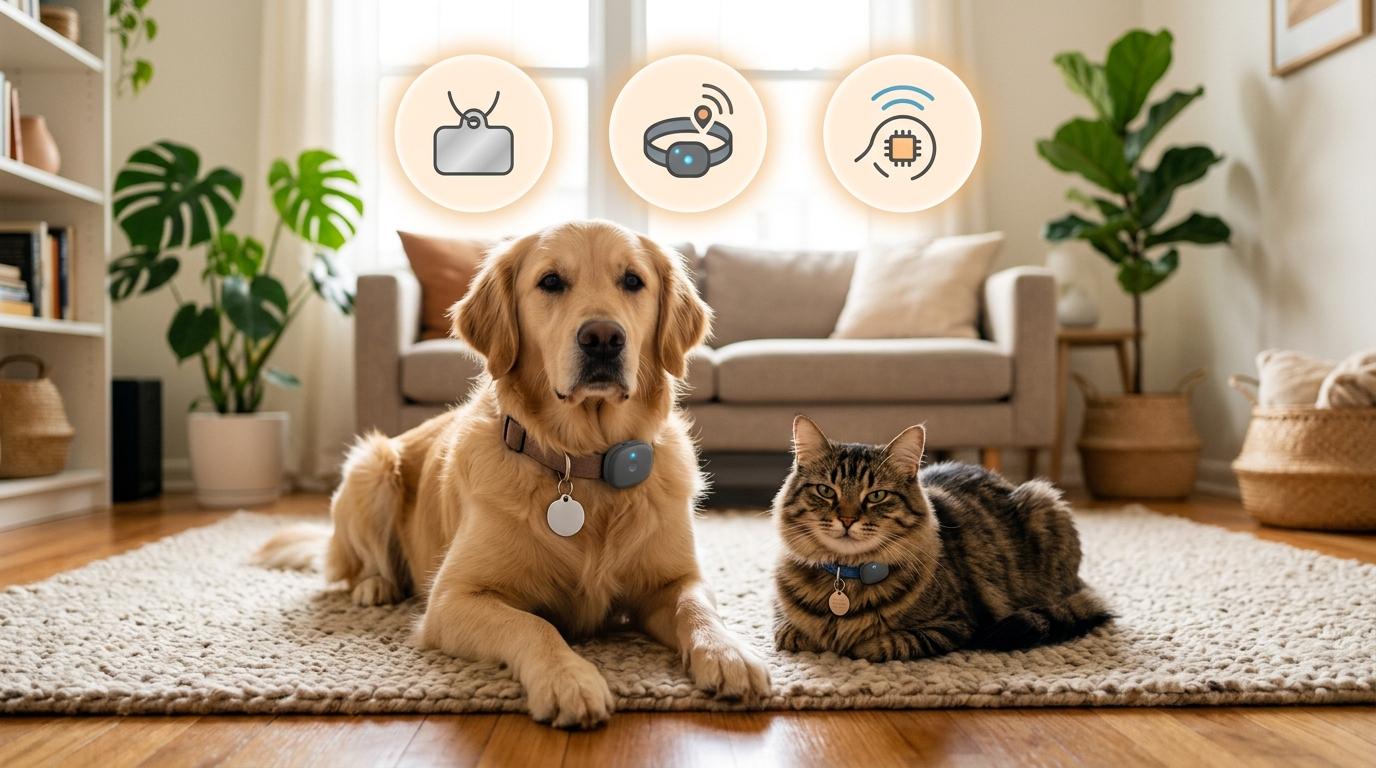
When pet parents compare a pet microchip vs GPS tracker vs ID tag, they’re usually hoping for one clear winner. The safer answer is to use them as layers: an ID tag for fast human contact, a registered microchip for permanent identification, and a GPS tracker for active location tracking while the device is charged and connected.
These tools do different jobs. A microchip is not GPS and cannot show your pet on a map. An ID tag cannot tell you where your dog ran after slipping through the gate. A GPS tracker can lose battery, signal, or the collar it is attached to. The best question is not “Which one wins?” but “What does each tool protect me from?”
Quick comparison: ID tag vs microchip vs GPS tracker
#The simple rule: use layers
#Lost-pet safety works best when you do not rely on one thing.
An ID tag is the fastest option if a neighbor, delivery driver, dog walker, or passerby finds your pet. They can look at the tag and call you immediately.
A microchip is the backup plan if the collar slips off, breaks, or is removed. If your pet ends up at a vet clinic or shelter, a scan can connect them back to you.
A GPS tracker helps before anyone else is involved. If your pet runs, you may be able to open an app and see where they are headed.
If you are starting from zero, begin with a visible ID tag. Then ask your veterinarian about microchipping. Add a GPS tracker if your pet escapes, hikes, travels, boards, spends time outdoors, or makes you nervous every time the door opens.
Pet ID tags: the fastest way for someone to reach you
#A pet ID tag is simple, low-cost, and still one of the most useful pet safety tools.
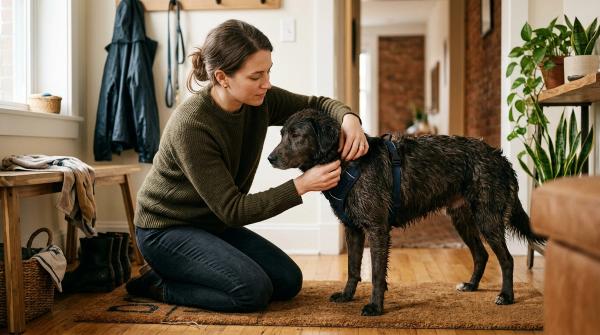
It hangs on your pet’s collar and usually includes your phone number. Some tags are engraved metal, some are silicone, and some use QR codes that link to an online pet profile.
An ID tag makes it easy for a person to help. Imagine your dog slips out while you are unloading groceries. They wander a few streets away, and someone spots them near a parked car. If your phone number is clearly visible, that person can call you right then.
No scanner. No shelter visit. No special equipment.
For cats, a small tag on a breakaway collar can also help, especially with indoor cats who slip into hallways, stairwells, parking areas, gardens, or neighboring buildings.
What an ID tag cannot do
#An ID tag cannot track your pet. It will not send an alert, show a map, or tell you which direction your pet went. It only helps if someone gets close enough to read it.
It also depends on the collar staying on. Tags can fall off, rings can loosen, engraving can fade, and collars can break. A frightened dog may run from people. A nervous cat may hide where no one can read the tag.
Check the tag every few months. Make sure your phone number is current, the engraving is readable, the ring is secure, and the collar fits properly.
Microchips: the permanent backup
#Microchips are incredibly useful, but they are also widely misunderstood.
A microchip is not GPS. It cannot track your pet, show live location, or tell you where your dog or cat is hiding.
A microchip is a tiny implanted device with a unique identification number. When a vet clinic, shelter, rescue, or trained professional scans it, that number appears. The number is then used to look up your contact details in a microchip registry.
That last part matters. The chip only helps if your registration information is correct.
A microchip for dogs and cats gives your pet permanent identification. Collars can slip off. Tags can fall away. Harnesses can break. But a microchip stays with your pet.
Veterinary organizations such as the American Veterinary Medical Association explain that pet microchips are identification devices, not GPS trackers. The American Animal Hospital Association also recommends permanent identification for dogs and cats using ISO-standard microchips where possible.
What a microchip cannot do
#A microchip will not:
- Show your pet on a map
- Alert you when your dog leaves the yard
- Track your cat under a porch
- Tell you which direction your pet is running
- Work like a phone or GPS device
It only helps after your pet is found, taken somewhere with a scanner, scanned successfully, and matched to your current details.
Update your registry whenever you change phone numbers, move homes, change email addresses, adopt or rehome a pet, or want to add an emergency contact. A good habit is to check the information once a year around your pet’s birthday or annual vet visit.
Microchipping should be done by a veterinarian or trained veterinary professional. If your pet has swelling, redness, discomfort, hair loss, or any skin concern near the microchip site, contact your vet.
GPS pet trackers: the active search tool
#A GPS pet tracker is the tool most people imagine when they think of tracking a lost pet.
It usually attaches to a collar and connects to a phone app. Many GPS trackers use satellite positioning plus cellular or network service to update your pet’s location.
Unlike a microchip, a GPS tracker is active. It needs battery power. It may need a subscription. It also needs a good enough signal to send location updates.
This is where the dog GPS tracker vs microchip question becomes important. A microchip helps identify your dog after someone finds them. A GPS tracker may help you find your dog while they are still moving.
The same applies to the cat microchip vs GPS tracker comparison. A cat microchip is permanent ID. A cat GPS tracker is an active device, but it must be light, safe, and comfortable enough for your cat to wear.
What a GPS tracker does best
#A GPS tracker is useful when every minute matters.
If your dog bolts from the yard, runs during a walk, or disappears on a trail, you may be able to open an app and see where they are going.
Some trackers also offer safe-zone or virtual fence alerts. These can notify you if your pet leaves a set area, such as your home, garden, boarding facility, or campsite.
GPS trackers can be especially helpful for escape-prone dogs, dogs who chase animals, hiking dogs, pets who travel, pets staying at boarding facilities, some outdoor cats, and pets in unfamiliar locations.
What a GPS tracker cannot do
#A GPS tracker is not permanent identification. If the collar comes off, the tracker stays with the collar, not your pet.
It also depends on battery life, network coverage, app connection, device fit, collar security, and your pet tolerating the device.
Bluetooth item finders, including AirTag-style devices, are not the same as dedicated GPS pet trackers. They rely on nearby compatible devices to update location. That may work in busy areas, but it can be unreliable in quiet parks, rural roads, fields, trails, or places with fewer people nearby.
Look for redness, hair loss, trapped moisture, tightness, or skin changes under the collar or tracker. If the device bothers your pet, remove it and ask your vet for guidance.
When should you use one, two, or all three?
#ID tag only
#An ID tag alone is better than nothing, and it is a good first step if you need something today. It can work for a quick neighborhood return, but only if the collar stays on and someone can read the tag.
ID tag plus microchip
#This is a strong baseline for most pets. The tag gives someone a fast way to contact you. The microchip gives permanent backup if the collar is lost.
Best for indoor cats, apartment dogs, senior pets, newly adopted pets, and pets who mostly stay close to home.
ID tag plus GPS tracker
#This helps with quick contact and active searching, but both tools are attached to the collar. If the collar comes off, both may be gone. That is why a microchip still matters.
Microchip plus GPS tracker
#This gives you permanent ID and active tracking, but misses the easiest contact method. If someone finds your dog outside their home, a visible tag lets them call you immediately.
ID tag plus microchip plus GPS tracker
#This is the most complete setup for escape-prone dogs, hiking dogs, dogs who chase wildlife, outdoor-access cats, boarding pets, traveling pets, pets who panic easily, and pets living near busy roads or open areas.
Real-life examples for dogs and cats
#The apartment cat
#Your cat lives indoors and seems content. But doors open. Guests visit. Carriers pop open. Maintenance workers come in. A scared cat can slip into a hallway or stairwell in seconds.
Best setup: ISO microchip plus a breakaway collar with a small ID tag. A GPS tracker may help some cats, but comfort and weight matter.
The backyard escape dog
#Your dog is sweet, friendly, and somehow always finds the one weak spot in the gate.
Best setup: ID tag, microchip, and GPS tracker. The tag helps a neighbor call you. The microchip helps if the collar comes off. The GPS tracker helps you react quickly when your dog leaves the safe area.
The hiking dog
#Your dog loves trails, smells, birds, squirrels, and every interesting thing in the woods.
Best setup: all three. A GPS tracker helps with active searching. An ID tag helps another hiker contact you. A microchip is still the backup if gear is lost.
Boarding and travel pets
#New places can make even calm pets act differently. A dog may panic at a rest stop. A cat may hide after arriving at a hotel or relative’s home. Boarding facilities, airports, cars, and unfamiliar houses all add escape risk.
Best setup: all three, if possible. Before travel or boarding, check tag details, microchip registry information, tracker battery, app access, collar or harness fit, and emergency contact numbers.
Step-by-step lost pet safety checklist
#- Start with a readable ID tag. Add your current mobile number and, if space allows, a second contact.
- Use the right collar. Dogs need a secure, properly fitted collar. Cats should wear breakaway collars.
- Ask your vet about microchipping. Discuss an ISO-standard microchip and how registration works.
- Register the microchip immediately. An unregistered chip may not help someone reach you.
- Keep registry details updated. Update your phone, email, address, and emergency contact when anything changes.
- Decide if a GPS tracker suits your pet. Consider one if your pet escapes, hikes, travels, boards, spends time outdoors, or lives near high-risk areas.
- Test the tracker before an emergency. Charge it, open the app, check location updates, and test safe-zone alerts.
- Inspect collars, tags, and trackers often. Look for loose rings, worn clips, rubbing, tightness, trapped moisture, dirt, or skin irritation.
- Review everything before travel or boarding. Confirm the tag, microchip registry, GPS tracker battery, app login, and emergency contacts before you leave.
Budget and maintenance at a glance
#If money is tight, start with a clear ID tag and ask your vet about microchipping options. If your pet has a higher chance of running or getting lost, add a GPS tracker when you can manage the charging and subscription.
Final takeaway
#In the pet microchip vs GPS tracker debate, the best answer is not either-or.
Use each tool for what it does best:
- Pet ID tag: fast human contact
- Microchip: permanent pet identification
- GPS tracker: active location tracking
A tag helps someone call you quickly. A microchip protects your pet if the collar is gone. A GPS tracker helps you search while your pet is still moving. Together, they give your dog or cat the best practical chance of getting home safely.