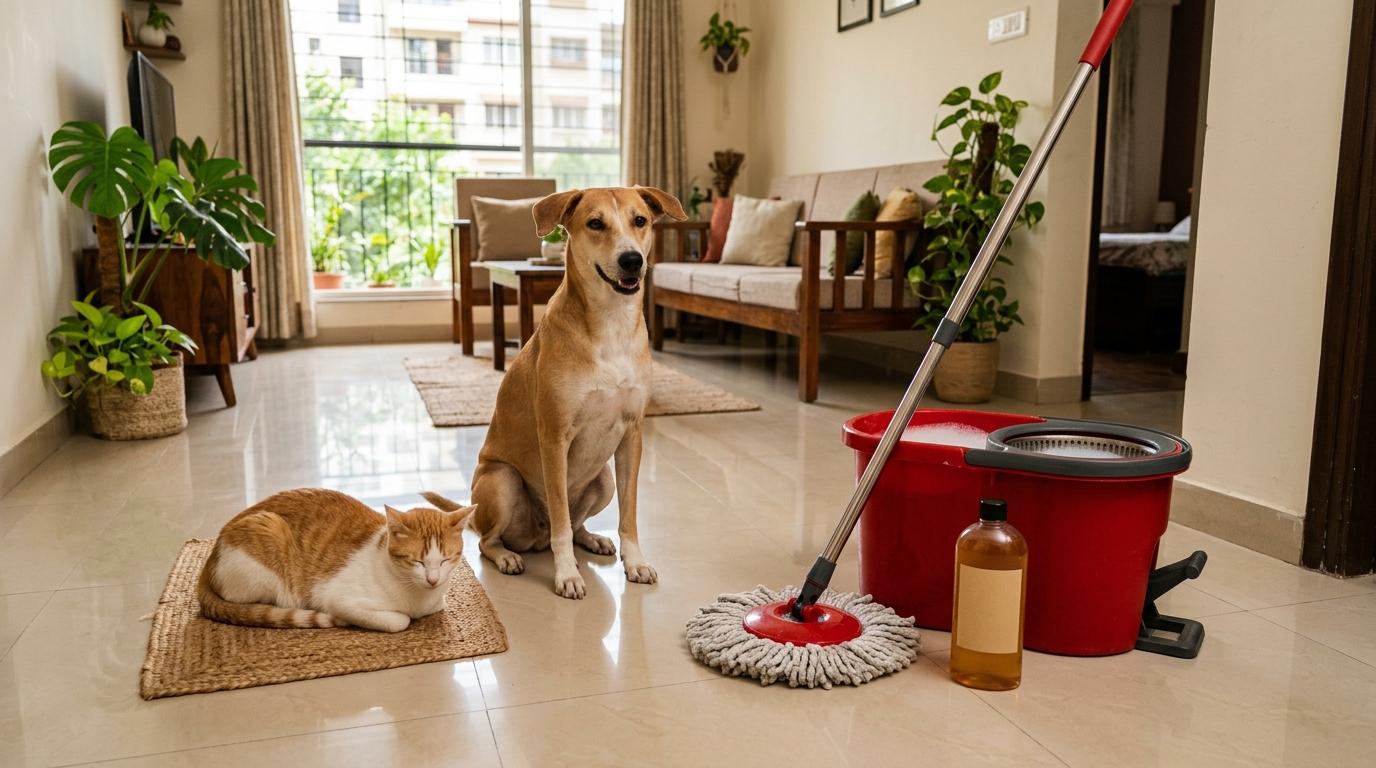
If you live with a dog or cat and you’re looking for a pet safe floor cleaner in India, the safest everyday option is usually simple: choose a cleaner that is phenol-free, bleach-free, ammonia-free, and clearly labelled as safe to use around pets.
Plant-based cleaners and enzyme cleaners can be good choices too, especially for pet messes, but only if you use them exactly as the label says.
The one rule that matters no matter what you use: don’t let pets walk on freshly mopped floors until the floor is completely dry.
Also, try not to use phenyl as your daily cleaner in pet areas, be extra careful if you have cats, and never mix cleaning products. If your pet licks wet cleaner or seems unwell after cleaning, call your vet.
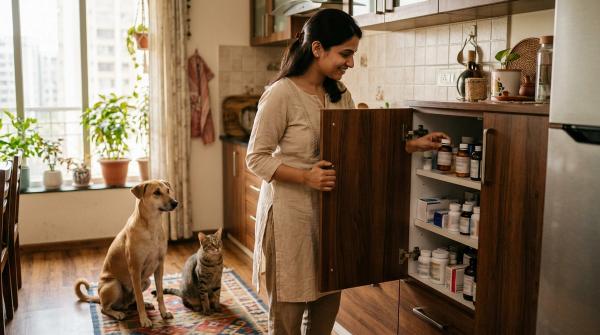
Indian homes need regular floor cleaning. Dust comes in through balconies and windows. Monsoon mud gets dragged inside. Dogs step on the floor and then lick their paws. Cats sleep on cool tiles and later groom every inch of themselves. So yes, clean floors matter.
But a strong “disinfectant” smell does not automatically mean your home is cleaner or safer.
This guide breaks it down in a practical way: phenyl, bleach, vinegar, enzyme cleaners, pet-safe cleaners, and a simple mop routine that works for Indian flats with dogs and cats.
Why Floor Cleaner Safety Matters When You Have Pets
#Pets live much closer to the floor than we do.
Dogs walk on it, sleep on it, sniff it, lick random things off it, and sometimes roll around like the whole house belongs to them. Cats sit on the floor, walk through residue, and then groom their paws and fur later.
So if your floor cleaner leaves behind residue, that residue can end up on paws, fur, and eventually in your pet’s mouth.
A cleaner does not have to be a “deadly poison” to cause trouble. It may still lead to paw irritation, excessive paw licking, drooling, vomiting, coughing from fumes, skin or eye irritation, or stomach upset.
Cats need extra care because they groom a lot and can be more sensitive to certain chemicals, especially phenolic compounds found in many traditional disinfectants.
The idea is not to panic every time you mop. The idea is to choose safer products, dilute them properly, rinse when needed, and keep pets away until the floor is dry.
Quick Comparison: Phenyl, Bleach, Enzyme Cleaners, Vinegar and Pet-Safe Cleaners
#Is Phenyl Safe for Dogs?
#For most homes with dogs, phenyl is not a great daily floor cleaner.
The problem is not just the strong smell. Traditional phenyl and some phenyl-type disinfectants may contain phenolic compounds, cresols, or other strong disinfecting agents.
Your dog walks across the floor, the residue gets on the paws, and later your dog licks those paws. If the floor is still wet, the risk is higher.
So if you’re asking, “Is phenyl safe for dogs if I dilute it?”, the honest answer is: dilution helps, but it does not magically make every cleaner pet-safe.
If phenyl has been used, keep your dog away until the floor is fully dry, open windows, switch on the fan, do a plain-water rinse if possible, and don’t let your dog lick wet floors or mop water.
For everyday mopping, a phenol-free pet-safe cleaner is a better choice.
What About Cats and Floor Cleaners?
#Cats need extra caution. A cat safe floor cleaner should ideally be free from phenols, chlorine bleach, ammonia, very strong fragrances, and heavy essential-oil smells.
Cats groom themselves constantly. If they walk over a freshly cleaned floor, whatever is on their paws can be swallowed later.
Also, be careful with products that sound “natural” but smell very strong. Essential oils are not automatically safe for cats. Some can be irritating or risky, especially in small flats where the smell lingers.
A simple test: if the smell feels too strong for you, it is probably too much for your cat too.
Choose mild, low-residue cleaners and always keep your cat away until the floor is completely dry.
Is Bleach Safe for Floors in Pet Homes?
#Bleach has its place, but it should not be your daily mopping liquid if you have dogs or cats.
Bleach can irritate paw pads, skin, eyes, nose, throat and breathing passages. It is also unsafe if a pet licks it while it is still wet.
The biggest danger with bleach is mixing. Never mix bleach with vinegar, ammonia, phenyl, toilet cleaner or other cleaning liquids.
Chemical mixing can release dangerous fumes, and that can become serious very quickly.
If you need bleach for a specific job, follow the label exactly. Keep pets out of the room, ventilate properly, and let the area dry fully before they return.
For living rooms, bedrooms and daily floor cleaning, choose something gentler.
Enzyme Cleaner for Pet Urine and Apartment Smell
#An enzyme cleaner for pet urine can be one of the most useful products in a pet home.
This is especially true if you have a puppy still learning toilet habits, a senior dog with accidents, a kitten, a cat with litter-box issues, or a dog who misses the pee pad.
Pet urine smell can stay because organic residue gets into grout lines, tile edges, corners and tiny cracks. Normal cleaners may make the surface smell nice for a while, but the odour can come back.
Enzyme cleaners work differently. They are designed to break down organic messes instead of just covering them with perfume.
This can help with apartment pet smell, especially in smaller Indian flats where one accident can make the whole room smell off.
Use the enzyme cleaner exactly as the label says, give it enough contact time, keep pets away while the area is wet, and expect repeat cleaning for old urine smells.
Is Vinegar a Good Pet-Safe Cleaner?
#White vinegar can be useful, but it is not a complete floor-cleaning solution.
It may help with light cleaning, mild smells and some hard-water marks. But many pets dislike the sharp smell. Also, vinegar is acidic, so it may damage certain floors, especially natural stone, marble, or delicate finishes.
Always test it on a small hidden patch first.
And most importantly: never mix vinegar with bleach.
For daily Indian home mess — kitchen oil, turmeric stains, balcony dust, muddy paw prints, food spills — vinegar alone may feel too weak. It is better as a light cleaner, not your entire cleaning plan.
How to Choose a Pet Safe Floor Cleaner in India
#When buying a pet safe floor cleaner for dogs and cats, don’t go only by the front label.
Words like “herbal,” “green,” “natural,” “fresh,” and “plant-powered” sound nice, but they don’t always mean safe for pets.
Look for these instead:
- Phenol-free
- Bleach-free for daily use
- Ammonia-free
- Low fragrance or mild fragrance
- No strong essential-oil smell, especially for cat homes
- Clear dilution instructions
- Label says suitable for use around pets
- No sticky residue after drying
- Suitable for your floor type: tile, granite, marble, laminate, vinyl, etc.
If the ingredient list is vague and the smell is very strong, be careful. If you have cats, be even more selective.
A good pet-safe cleaner should clean the floor without making the whole house smell like a chemical factory.
A Simple Indian Apartment Mop Routine for Pet Homes
#Here’s a practical routine for everyday Indian flats, especially smaller homes where you can’t keep pets away for hours.
1. Pick Up Bowls, Toys, Beds and Litter Mats
#Before mopping, remove anything your pet may lick later: food bowls, water bowls, chew toys, soft toys, pet beds, litter mats and pee pads if needed.
2. Dry Sweep or Vacuum First
#Pet hair plus mop water becomes a dirty paste. Sweep, vacuum or dry mop before using any floor cleaner, especially near doors, under sofas, around litter boxes, around food bowls, near balconies and wherever your dog sleeps.
3. Spot Clean Accidents Separately
#If there is urine, vomit or stool, clean that spot first. Pick up the mess with paper towels or a cloth. Then use an enzyme cleaner if needed.
Don’t drag the mess across the whole room with the mop.
4. Dilute Exactly as the Label Says
#More cleaner does not mean a cleaner floor. Usually, it just means more residue.
Residue can stick to paws and may be one reason for dog paw licking after mopping. If the bottle says one capful, don’t add three because you want the house to smell “extra clean.”
5. Use a Two-Step Mop When Switching Away From Harsh Cleaners
#If your home has been cleaned with phenyl or strong disinfectants for years, a plain-water rinse can help while switching to a gentler cleaner.
Mop with the diluted pet-safe cleaner, mop again with plain clean water, then let the floor dry fully before pets walk around.
6. Keep Dogs and Cats Away While the Floor Is Wet
#Even pet-safe cleaners are not meant to be licked while wet.
Wet floors can also be slippery, especially for senior dogs or pets with joint issues.
In a small flat, clean room by room so your pet always has one dry place to sit.
7. Ventilate the Room
#Open the windows if you can. Switch on the fan. Let the smell and moisture clear out.
This matters even more during monsoon, when floors take longer to dry and rooms feel damp.
8. Wash and Dry the Mop Head
#A dirty mop spreads smell. Rinse the mop well, squeeze it properly, and let it dry in a ventilated place.
If your mop smells sour, your floor will probably smell sour too.
Dog and Cat Safety Warnings
#Call your veterinarian promptly if your dog or cat may have licked, walked through, or been splashed with a strong floor cleaner and you notice anything worrying.
Watch for excessive drooling, vomiting, paw licking that does not stop, red or irritated paw pads, coughing, wheezing, trouble breathing, unusual tiredness, mouth redness, appetite changes, trembling, collapse, or sudden severe behaviour change.
Cats may hide when they feel sick, so don’t wait for dramatic symptoms if you know there was exposure to phenyl, bleach, or concentrated cleaner.
When to Call a Veterinarian
#Call a vet if your pet drank mop water or cleaner, licked wet phenyl or bleach, had cleaner spilled on their paws or fur, is drooling or vomiting, or if your cat walked through a strong disinfectant.
Don’t give home remedies. Don’t try to induce vomiting unless a vet specifically tells you to.
If you can do it safely, move your pet away from the cleaned area, stop them from licking their paws or fur, and keep the product bottle or label ready when you call the vet.
This is especially important with cats, small dogs, puppies, kittens and senior pets.
Practical Do’s and Don’ts
#Do
#- Use a clearly labelled pet-safe floor cleaner for daily mopping.
- Keep pets away until floors are fully dry.
- Rinse with plain water after harsh cleaners if needed.
- Use enzyme cleaners for urine, vomit and organic smells.
- Read labels before trying a new product.
- Use the correct dilution.
- Keep cleaning bottles closed and out of reach.
- Ventilate rooms while cleaning.
Don’t
#- Don’t use phenyl as your default daily cleaner in pet areas.
- Don’t let dogs or cats walk on wet floors.
- Don’t mix bleach with vinegar, ammonia, phenyl or any other cleaner.
- Don’t assume “natural” means safe for cats.
- Don’t use extra concentrate just for a stronger smell.
- Don’t ignore repeated paw licking after mopping.
- Don’t leave mop water where pets can drink it.
Final Takeaway
#For Indian homes with dogs and cats, the best daily floor cleaner is usually a phenol-free, bleach-free, ammonia-free pet-safe cleaner with mild fragrance and clear dilution instructions.
Avoid using phenyl every day in pet areas. Use bleach only when truly needed and never mix it with other cleaners. Keep enzyme cleaners handy for urine and organic messes. Most importantly, keep pets away from wet floors and let everything dry properly before they come back.
Clean floors are important. But with pets, safer cleaning matters just as much.
Disclaimer: This article is for general information only. It does not diagnose, treat, or replace veterinary advice. If you suspect cleaning-product exposure, contact your veterinarian.