Bringing a rescue dog home is one of the most rewarding commitments you can make, but the first week rarely resembles the joyful montage people picture. Instead of eager tail wags and immediate gratitude, you might find a dog that presses their face into the back corner of a crate, flinches at the hum of your refrigerator, ignores a bowl of fresh food, or paces restlessly through the night. 
These behaviors are entirely normal. Shelter environments are noisy, unpredictable, and flooded with chemical stress signals. When a dog leaves the kennel and walks through your front door, their sensory world changes completely. Their nervous system is saturated with cortisol, the hormone responsible for fight-or-flight responses. To thrive in your home, they do not need instant training classes, trips to the pet store, or a party of excited relatives. They need time to decompress.
Canine decompression is the biological and emotional process of returning a dog's nervous system to a calm, baseline state after trauma or disruption. By following a structured approach rooted in the recognized 3-3-3 framework, you can help your rescue dog transition safely, build genuine confidence, and lay the foundation for lifelong companionship.
Understanding the 3-3-3 Rule: Biology Over Expectations
#Animal shelters, veterinary behaviorists, and rescue coordinators use the 3-3-3 rule as a practical guideline for the stages of canine adjustment. It divides a dog's integration into three distinct phases: three days, three weeks, and three months. While every animal adapts at their own pace, these milestones help adopters replace anxiety with realistic expectations.
| Phase | Canine Mental State | Typical Behaviors | Primary Owner Focus |
|---|---|---|---|
| First 3 Days | Acute shock and sensory overload | Sleeping 16 to 20 hours, refusing meals, hiding, panting, indoor accidents | Quiet containment, decompression, absolute predictability |
| First 3 Weeks | Baseline settling and learning routines | Testing house boundaries, showing genuine appetite, beginning leash awareness | Consistent daily structure, gentle boundary setting, positive reinforcement |
| First 3 Months | Security, attachment, and authentic personality | Full bond formation, true energy level emerges, confidence in household life | Advanced training, slow socialization, lifelong habits |
During the first 72 hours, your dog is in survival mode. They do not know who you are, whether your home is permanent, or if they are in danger. They may not eat, or they may drink water compulsively. Some dogs become statues; others whine or bark at faint outside sounds. 
By the third week, their adrenaline has cleared. They start to memorize your daily patterns, such as when you wake up, when food appears, and which door leads to the yard. You may also see behaviors that were hidden during initial shutdown, such as jumping, alertness to passing dogs, or resource guarding. This is not behavioral regression; it is the dog feeling safe enough to show how they respond to stress.
By the third month, your dog understands that they are home. The chronic fear of abandonment fades, replaced by secure attachment. Trusting the 3-3-3 timeline prevents you from making hasty judgments about your dog's temperament during their first volatile week.
The First 72 Hours: Cortisol, Sleep and Survival Mode
#When a dog enters a new territory, their body undergoes an acute physiological stress response. The adrenal glands flood their bloodstream with cortisol and adrenaline. In wild and domestic canines alike, elevated cortisol shuts down non-essential bodily functions, including digestion and social curiosity.
This biological reality explains the two most common early behaviors:
- Profound physical exhaustion: It is common for rescue dogs to sleep between 16 and 20 hours a day during their first three days. Shelters are loud, high-alert environments where deep, restorative REM sleep is almost impossible. Once placed in a quiet space, their bodies collapse into catch-up rest. Never wake a sleeping rescue dog, and do not interpret heavy sleeping as laziness or illness unless accompanied by physical symptoms like fever, vomiting, or pale gums.
- Appetite suppression and digestive distress: Cortisol diverts blood flow away from the stomach toward large muscle groups to prepare for flight. A dog that refuses kibble for 24 to 48 hours is usually overwhelmed, not stubborn. Diarrhea and loose stools are equally common as stress speeds up intestinal transit time.
Give your dog space to let those hormones dissipate naturally. Cortisol takes anywhere from several days to two full weeks to clear completely from a dog's system. Pushing social interactions while their chemistry is in overdrive only prolongs their panic.
Setting Up the Decompression Safe Zone
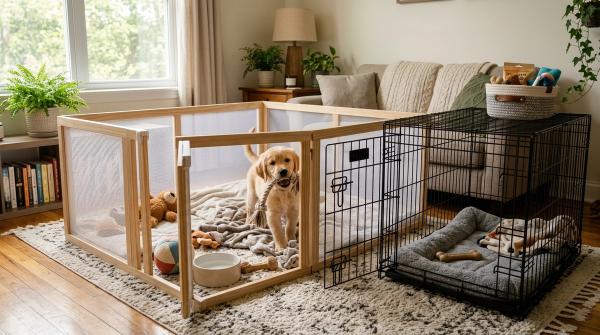
#Before your dog arrives, designate and prepare a single, quiet room as their safe zone. This should be a spare bedroom, an office, or an undisturbed corner of a living area away from main hallways, kitchen traffic, and front doors.
Your safe zone setup requires four foundational components:
- A properly sized wire or plastic crate: Keep the crate door latched open with a zip tie or clip so it cannot swing shut and trap or frighten the dog. Place a comfortable orthopedic pad or thick washable blanket inside. Drape a dark, breathable sheet or blanket over the top and three sides to create an enclosed den.
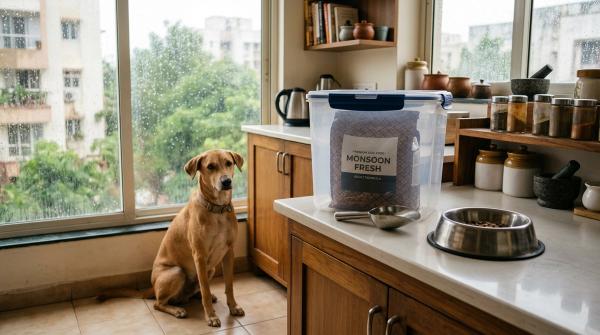
- Fresh water and a separate food station: Position water bowls several feet away from the bed so the dog does not worry about spilling their water while settling.
- Physical boundaries: Install tall baby gates or an exercise pen to confine the dog to this zone. Giving a rescue dog free run of a multi-room house or apartment on day one is one of the quickest ways to induce panic, house-training accidents, and destructive chewing. A small, defined space feels safe and defensible to an insecure dog.
- Low sensory input: Keep televisions low, dim bright overhead lights, and avoid running loud appliances like vacuum cleaners directly next to their room during the initial days.
Let the dog choose whether to remain inside the crate or rest on a nearby rug. Never drag a dog out of their crate. That crate must remain an untouchable sanctuary where no hands reach in to grab, collar, or pet them.
The 7-Day Low-Pressure Routine: Feeding, Sleep and Bathroom Protocols
#Dogs find comfort in predictability. A rescue dog cannot understand your words, but they quickly learn sequences of events. If your schedule changes constantly during week one, the dog remains in a perpetual state of vigilance.
Here is a balanced daily rhythm designed to minimize decision fatigue for both you and your rescue dog.
Morning Protocol: Wake Up and First Relief
#- Start at the exact same hour every morning, ideally between 6:30 AM and 7:30 AM.
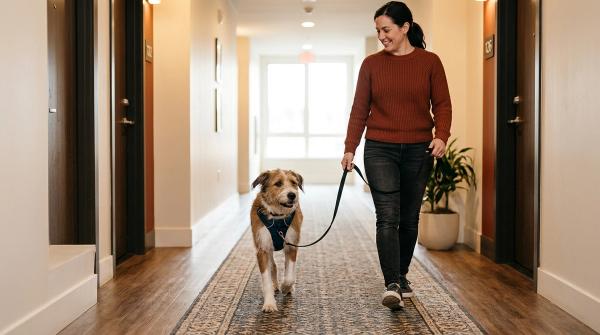
- Clip a 6-foot fixed leash onto your dog's harness before opening any interior gates or exit doors. Never use retractable flexi-leads, which can snap, jam, or generate sudden startling tension.
- Walk your dog directly to a single, dedicated bathroom spot in your yard or quiet street curb. Do not wander around the neighborhood. Stand quietly in one spot and give them up to ten minutes to sniff and eliminate.
- The instant they relieve themselves outside, deliver calm, quiet praise and a soft high-value treat (such as a small cube of plain boiled chicken).
- Return immediately indoors to the safe zone.
Breakfast Protocol
#- Offer breakfast at a set time, approximately 15 to 30 minutes after the morning bathroom trip.
- Feed the exact brand and formula of food provided by the rescue or shelter. Abrupt dietary switches combined with transition stress guarantee gastrointestinal distress.
- Set the bowl down inside or directly next to their crate, then step away. Give the dog 15 minutes of uninterrupted solitude to eat.
- If the dog does not eat, pick the bowl up quietly without scolding, coaxing, or hovering. Offer the meal again at dinner. Ensure clean water remains accessible at all times.
Midday Protocol: Routine Potty and Passive Bonding
#- Provide a midday relief break every 3 to 4 hours. Even adult dogs with solid bladder control can leak or forget their manners under stress.
- Keep outdoor trips short, focused, and low-stimulation.
- Spend one to two hours in the same room with your dog while ignoring them. Read a book, work on a laptop, or listen to music through headphones. Sitting near your dog without staring, speaking, or reaching toward them teaches them that human presence does not equal an unavoidable demand.
Evening Protocol: Dinner and Decompression Sniffing
#- Serve dinner at the same scheduled hour every evening.
- After an evening bathroom break, offer a calming sensory activity. Sniffing and licking actively stimulate the vagus nerve, releasing endorphins that lower canine heart rates.
- Provide a durable rubber toy stuffed with plain canned pumpkin or soaked kibble, or scatter a handful of treats across a textured snuffle mat. Let the dog work through the puzzle at their own speed inside their safe zone.
Night Protocol: Final Relief and Bedtime
#- Take your dog out for their final bathroom trip right before lights out, typically between 9:30 PM and 10:30 PM.
- Walk them to their safe room or crate. If you prefer to have the dog sleep in your bedroom, place a crate or dog bed on the floor next to your bed. Being able to hear your breathing and smell your scent prevents overnight abandonment panic and howling.
- Turn off overhead lighting and keep nighttime quiet and consistent.
The Five Critical Mistakes Adopters Make in Week One
#Most problems that arise during rescue transitions stem from well-meaning human enthusiasm rather than canine stubbornness. Avoiding these five common mistakes protects your dog from behavioral triggers and reduces your own stress.
1. Hosting a Welcome Party for Friends and Family
#New adopters naturally want to show off their new companion. However, parading your dog in front of aunts, uncles, neighbors, and friends turns your home into a revolving carnival of strangers.
Every new person carries unfamiliar scents, voices, heights, and movement patterns. To an insecure dog, strangers entering their territory represent potential threats. Keep a strict no-guest policy for the first 7 to 14 days. Let your dog develop complete trust in your immediate household before introducing anyone else.
2. Showering the Dog with Smothering Affection
#Humans express comfort through hugging, kissing, direct eye contact, and tight physical embraces. In canine body language, leaning over a dog, staring into their eyes, and wrapping arms around their neck are dominant, threatening postures.
A rescue dog backed into a corner by an eager human trying to hug them may growl, snap, or freeze in terror. Never force affection. Let the dog make the decision to approach you. If they choose to stay across the room on their bed, respect that boundary. Independence in the early days is a sign of healthy self-regulation, not rejection.
3. Granting Full Freedom of the House Immediately
#Unrestricted access to the entire home overwhelms a rescue dog. A sprawling floor plan increases anxiety, makes it harder for the dog to locate their water or bedding, and invites unwanted behaviors such as chewing furniture, raiding trash cans, or marking rugs.
Use baby gates and closed doors to restrict your dog to one or two rooms. Expand their territory gradually over the second and third weeks only after they demonstrate consistent house-training and comfort in their initial space.
4. Taking the Dog to High-Stimulation Public Spaces
#Trips to the local dog park, bustling outdoor coffee shops, and crowded pet supply retailers should never happen during week one. These environments present sensory overload: dozens of barking dogs, rattling shopping carts, roaring traffic, and unpredictable children running in unpredictable patterns.
Introducing high-stress public spaces before your dog has built trust in you can cause leash reactivity, panic bolting, and fear aggression. Keep all walks boring, quiet, and brief for the first 14 days.
5. Overreacting to Accidents and Setbacks
#Finding a puddle on your rug or discovering that your dog chewed a shoe while you were in the shower can test your patience. However, yelling, rubbing the dog's nose in waste, or using physical punishment destroys any emerging trust instantly.
Dogs do not associate punishment with an action completed minutes earlier; they simply learn that you are volatile and unsafe. Clean up indoor accidents with an enzymatic cleaner to eradicate scent markers, evaluate whether your bathroom schedule was too infrequent, and gently guide the dog toward the outdoor potty area next time.
Reading Stress Signals: Calming Signals vs Fear Responses
#Dogs communicate their emotional state through subtle shifts in body posture long before they ever growl or snap. Understanding these indicators allows you to intervene and give your dog space before their stress escalates.
Canine stress signals fall into two main categories: low-level calming signals and acute flight-or-fight signs.
Low-Level Calming Signals
#These subtle behaviors are self-soothing gestures that dogs display when they feel slightly uneasy:
- Lip licking and tongue flicks when no food is present
- Yawning when well-rested
- Turning their head or whole body completely away from you
- Shaking off their coat as if wet after a brief human interaction
- Sudden sniffing of the ground during a walk or room transition
If you notice your dog performing these gestures while you are standing near them or petting them, take a step back. Your dog is asking for breathing room.
Acute Fear and Threat Signals
#When stressors accumulate without relief, a dog shifts into active defense or shutdown:
- Whale eye: Showing the white sclera around the rim of the eyeball
- Tightly closed mouth, stiff posture, and completely frozen body
- Flattened ears pinned straight back against the skull
- Tucked tail pressed firmly against the belly
- Low, guttural growls or hard, unblinking stares
If your dog displays acute fear signals, do not approach, scold, or attempt to comfort them with hugs. Turn your body sideways, drop your gaze to the floor, and slowly give them space to retreat to their safe haven.
The 3-Second Consent Test: How to Touch a Fearful Dog
#Many bites in rescue households happen when well-intentioned owners pet a dog that is silently enduring touch rather than enjoying it. The 3-second consent test is an objective method to determine whether your dog genuinely wants physical contact.
Follow these four steps every time you interact with your new dog during their first week:
- Approach passively: Sit on the floor or a nearby chair with your side turned toward the dog. Do not lean directly over them or extend your hand into their face.
- Gentle side stroke: If the dog approaches you, gently stroke them on the side of their neck, chest, or shoulder for exactly three seconds. Avoid reaching over the top of their head, grabbing their paws, or petting their tail.
- Stop completely: Pull your hands back to your lap and stay still.
- Observe the response: Watch what the dog does in the next 5 seconds.
- If the dog nudges your hand, steps closer, leans their body weight against your leg, or gives a soft tail wag, they have consented to more contact. Pet them for another three seconds and repeat the test.
- If the dog remains still, licks their lips, steps away, turns their head, or walks back to their bed, they are asking for space. Respect their choice and let them rest quietly.
Practicing the consent test teaches your rescue dog that their boundaries are respected, which drastically reduces defensive behaviors and accelerates bonding.
When to Call the Vet or a Certified Behaviorist
#While anxiety and awkwardness are part of normal decompression, certain physical and behavioral symptoms demand professional intervention.
Contact your veterinarian immediately if you observe:
- Complete refusal to drink water for more than 24 hours
- Inability to hold down food or persistent vomiting
- Bloody diarrhea, lethargy so severe that the dog cannot stand, or pale gums
- Signs of untreated pain, such as severe limping or crying out when shifting positions
For behavioral hurdles, connect with a credentialed positive reinforcement behaviorist (such as an IAABC-certified behavior consultant) if you experience:
- Severe resource guarding where the dog snaps over bowls, toys, or sleeping spots
- Frantic separation anxiety that results in self-injury or chewing through doors
- Unprovoked bites or lunging directed at household members
Do not hire balanced or aversive trainers who use choke chains, prong collars, or electronic shock devices on a newly adopted dog. Applying physical punishment to a frightened rescue dog suppresses warning signs and turns fear into deep-seated aggression.
The Path Forward: Patience Over Perfection
#The first seven days with a rescue dog are about quiet observation and steady support. You are not trying to produce a finished, perfectly trained pet by Sunday evening. You are offering a bewildered animal a predictable environment where they can finally exhale, sleep without one eye open, and realize that their world is safe.
Give your dog the gift of a boring first week. Follow the 3-3-3 rule, protect their safe space, keep their world small, and let trust grow at the dog's pace. The patience and restraint you practice today will pay dividends in unconditional loyalty and companionship for years to come.