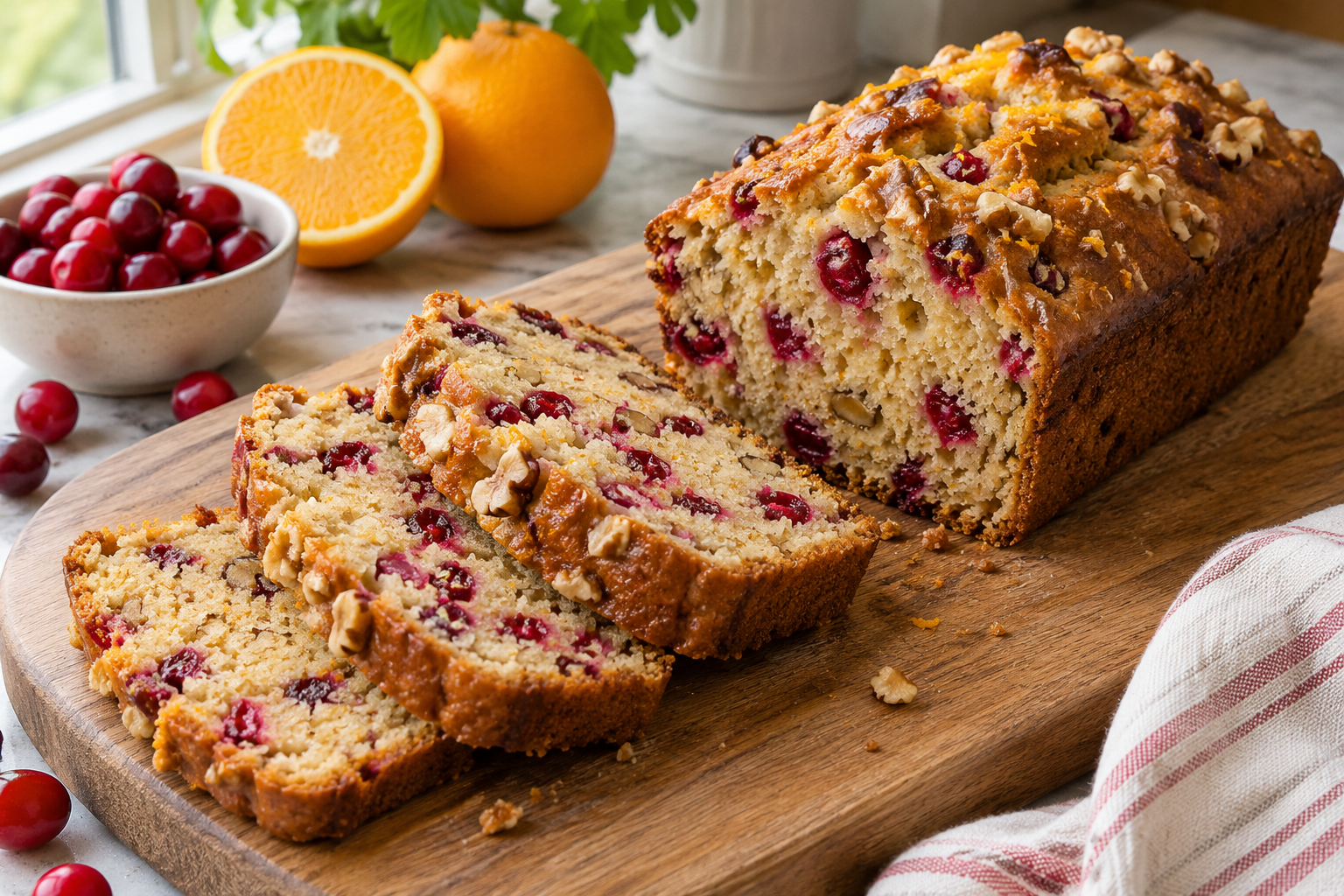
The first slice tells me more than the top of the loaf does. From above, cranberry orange bread can look ready: a little split down the middle, a strip of golden crust, a few berries peeking through. Then the knife reaches the middle and drags a line of batter through the slice. I’d let the loaf take its time in the oven and on the rack. Both waits make the difference between bread you can wrap for someone and a slice that falls apart on the plate.
For this cranberry orange quick bread, I’d put coarsely chopped fresh cranberries and orange zest in a simple one-loaf batter. Bake it in a 9-by-5-inch pan at 350°F (175°C) for about 55 minutes, until a toothpick comes out clean from the center. Give it 15 minutes in the pan before moving it to a rack. The center will be easier to judge once you know how to tell a cranberry smear from wet batter.
What I’d do with the cranberries and orange
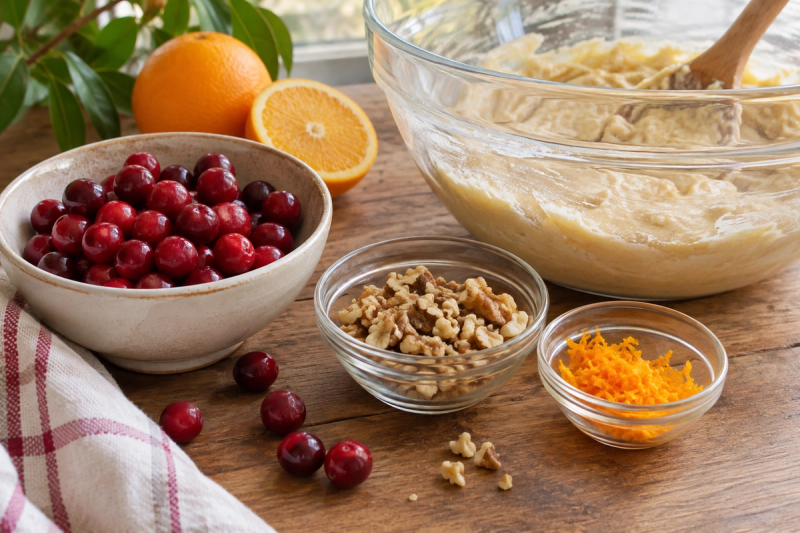
#Start with firm fresh cranberries and pick out any soft or damaged ones. Rinse them, then pat them dry. Chop them roughly so you get a mix of halves and smaller pieces. I want little tart pockets in most slices, with an occasional bigger piece that makes me reach for the next sip of coffee. A pulpy bowl of fruit would make a different loaf.
Zest the orange before you juice it. Two things make this easier: holding a whole orange while you grate it, and checking the color as you turn it. Shave off the orange surface and move on when you reach the white layer. Measure the juice separately. If you’ve only got one orange and it comes up short, top up the measure with plain orange juice. Adding water to make up a big difference gives you less orange flavor in the bread.
Give the walnuts a rough chop too. I’d keep the pieces small enough for a thin slice to hold together. When a whole walnut half sits next to a large bit of fruit, the knife can push both right through the crumb. The walnuts bring a little crunch and make the tart berries easier to appreciate, especially if you serve the loaf plain.
One loaf, one pan, two bowls
#| Ingredient | Amount | What I’d check |
|---|---|---|
| All-purpose flour | 2 cups | Spoon into the cup and level it |
| Granulated sugar | 1 cup | Use the full amount for the first loaf |
| Baking powder | 1½ teaspoons | Measure level |
| Fine salt | 1 teaspoon | Measure level |
| Baking soda | ½ teaspoon | Keep this separate from the baking powder |
| Orange juice | ¾ cup | Measure after zesting |
| Finely grated orange zest | 1 tablespoon | Use the colored peel |
| Vegetable shortening | 2 tablespoons | Soften enough to mix easily |
| Large egg | 1 | Beat before adding |
| Fresh cranberries | 1½ cups | Measure whole, then chop coarsely |
| Walnuts | ½ cup chopped | Keep the pieces small |
I’d grease the loaf pan before mixing anything. A strip of parchment down the long sides gives you handles if you want to lift the loaf out. Set the rack near the middle of the oven and preheat fully. If you only have a smaller pan, check how much batter it holds before committing to it. A deep fill changes how long the center takes to bake. The timing here is for the 9-by-5-inch pan.
Whisk the flour, sugar, baking powder, salt and baking soda in one bowl. In the other, whisk the beaten egg with the orange juice and zest. Work the softened shortening into the dry ingredients with a fork, then stir in the orange mixture. The batter will look thicker than cake batter. Fold in the cranberries and walnuts just until they’re spread through the bowl and there are no dry patches left.
A flexible spatula helps here. Sweep around the bottom of the bowl once more before tipping the batter into the pan. If an unmixed pocket of flour is hiding there, it’s a lot easier to fix now than after it turns into a chalky patch on the bottom of the loaf. Level the top so the two ends are roughly the same height, then put the pan in the oven.
How I’d check the loaf before taking it out
#Start checking near 55 minutes. Look at the center of the loaf, where the batter is deepest. Insert a toothpick straight into the middle. If the pick comes up streaked with red, try a fresh one a little to the side. A cranberry can stain the pick. A paste the color of the batter means there’s still cooking to do.
If the top is browning quickly and the center is wet, lay a loose piece of foil over the pan and give it a little longer. Recheck the middle after a few minutes. Keep the foil clear of the heating element. A longer stint in the oven is easier to recover from than trying to put a partly sliced loaf back together and finish it later.
Once the toothpick comes out clean, put the pan on a rack. After about 15 minutes, loosen any stuck ends and lift the loaf onto the rack. Let it cool before you slice or wrap it. If you only have a short window before leaving the house, set the loaf somewhere it can keep cooling and make wrapping the last job before you go.
| What you see | What I’d do |
|---|---|
| A red mark and a clean second check | Take the loaf out |
| A smear of pale, wet batter | Return it to the oven and check again |
| A dark top with a wet center | Shield the top loosely with foil and keep baking |
| A slice that tears immediately after baking | Give the rest of the loaf more time to cool |
Where I’d make changes and where I’d keep the formula
#I’d change the serving before I changed the batter. A thin slice with salted butter changes how the orange comes through. A spoonful of thick plain yogurt makes the same slice feel more like breakfast. A little marmalade gives extra citrus and sweetness, so I’d taste the loaf on its own before deciding it needs a glaze. If I were taking it to someone, I’d bring the glaze or butter separately and let people add what they want.
Frozen cranberries are the closest swap. Measure the same amount and chop them while they’re still firm enough to handle safely. A very hard berry can roll under a knife, so let a stubborn batch soften just enough to chop. Fold the fruit in while it’s still cold, and expect to judge the bake by the center rather than the clock alone. Dried cranberries give a sweeter, chewier result and distribute differently in the batter. I’d save those for a formula written around dried fruit.
The orange has two jobs. The juice supplies liquid and acidity. The zest supplies the concentrated citrus aroma. Extra juice is a tempting way to make the loaf smell more orange, but it also changes the wet-to-dry ratio. An orange topping or a little more aroma at the table is a smaller gamble. For the same reason, I’d avoid cutting the sugar significantly on the first bake. Fresh cranberries are sharp, and the sugar helps the crumb stay tender as well as balancing the fruit.
If you’re baking it the day before
#I’d leave the loaf whole once it’s cool and slice it just before serving. The end pieces get the most crust. The middle usually shows off the berries best. If I’m putting some aside for later, individual slices are easier to freeze and pull out as needed. Separate them with parchment before wrapping so you can take just one.
The timing matters more than the wrapping method. Putting a warm loaf into a closed container traps steam against the top. By morning that can leave a damp crust where you wanted a dry one. Wait until the bottom and center of the loaf feel cool, then wrap it. If you add a perishable topping, follow the storage needs of that topping too.
For a breakfast table, I’d cut one or two pieces first, then leave the rest of the loaf beside the knife. There’s something satisfying about people choosing their own thickness. The person who wants a sliver with coffee can have one, and the person who comes back for the walnut-heavy heel knows where to find it.