If your carbon monoxide detector is beeping four times, then pausing, then beeping four times again, take it seriously. Don’t troubleshoot first. Get everyone outside into fresh air and call emergency services. If it is chirping once every minute or so, it is usually a maintenance warning such as low battery, fault, or end of life.
Carbon monoxide, or CO, is a poisonous gas you can’t see, smell, or taste. It can come from fuel-burning appliances and equipment such as gas heaters, furnaces, fireplaces, generators, water heaters, stoves, and boilers when combustion or ventilation is unsafe.
In many homes, especially in India, fuel use may also include LPG cylinders or PNG connections. But a carbon monoxide alarm is not the same thing as a kitchen gas leak detector.
They are made for different dangers.
First Things First: What to Do If Your CO Alarm Sounds
#If your carbon monoxide alarm is making a loud, repeating emergency sound, don’t stay inside trying to figure out why.
Do this instead:
- Assume the alarm is real. A loud repeating CO alarm should always be treated as a possible emergency.
- Get everyone outside into fresh air. Take children, elderly family members, guests, and pets with you.
- Leave quickly. Don’t stop to collect valuables or inspect appliances.
- Open a door while leaving only if it is quick and safe. Do not stay inside to “air out” the home.
- Call emergency services from outside. Use your local emergency number, such as 112 in India and many other countries, 911 in the United States, or your local fire service number.
- Do not go back inside until emergency responders or qualified professionals say it is safe.
If anyone has symptoms such as headache, dizziness, nausea, confusion, weakness, chest pain, shortness of breath, or fainting, mention that clearly when you call for help.
Carbon Monoxide Detector Beeping: What the Sounds Usually Mean
#Most CO alarms use different sound patterns for different problems. The exact pattern can vary by brand and model, so always check your alarm’s manual if you have it.
Still, many common alarms follow similar patterns.
A simple way to remember it: a real CO alarm is loud and repeating. A maintenance chirp is usually short and occasional.
If you are ever unsure, choose safety first. Get outside and call for help.
Real CO Alarm vs Maintenance Chirp
#A real carbon monoxide alarm is designed to be hard to ignore. It usually sounds like four fast, loud beeps, followed by a pause, then four fast, loud beeps again. It is meant to wake you up and make you leave the home.
A maintenance chirp is usually a single short chirp every 30 to 60 seconds. It may mean the battery is low, the alarm has a fault, or the device has reached the end of its life.
A maintenance chirp is not the same as an emergency alarm, but you should not ignore it.
Don’t remove the alarm from the wall and forget about it. Don’t take the batteries out just to stop the noise. A chirping CO detector is telling you something needs attention.
If it needs a new battery, replace it. If it is expired, replace the whole unit. If it is faulty, do not rely on it.
Carbon Monoxide Detector vs Smoke Alarm vs Gas Leak Detector
#A carbon monoxide alarm, a smoke alarm, and a gas leak detector are three different safety devices. They may look similar, but they do different jobs.
CO alarm vs smoke alarm
#A carbon monoxide alarm detects carbon monoxide gas. CO has no smell, no color, and no taste.
A smoke alarm detects smoke particles from a fire.
A standard smoke alarm does not detect carbon monoxide. A standard CO alarm does not detect smoke.
Some alarms are combination units and can detect both smoke and carbon monoxide. If you want that, make sure the product label clearly says it detects both.
Carbon monoxide detector vs gas leak detector
#A standard CO alarm does not detect raw LPG, PNG, methane, propane, or natural gas leaks.
If a gas stove knob is left open without a flame, or if an LPG cylinder connection is leaking, a carbon monoxide detector may not make any sound. That’s because the danger is unburned combustible gas, not carbon monoxide from unsafe burning.
For kitchen gas leaks, you need a combustible gas leak detector made for the type of gas you use, such as LPG, PNG, natural gas, methane, or propane.
Here’s the simplest way to think about it:
- Smoke alarm: detects smoke from fire
- CO alarm: detects carbon monoxide from unsafe combustion
- Gas leak detector: detects leaking LPG, PNG, natural gas, methane, or propane
Each one has a different job.
Battery, End of Life, Placement, and Maintenance
#A carbon monoxide detector is not something you install once and forget forever. It needs basic care, and after a certain number of years, it must be replaced.
Low battery chirp
#A carbon monoxide alarm low battery warning is one of the most common reasons for chirping.
If your alarm uses replaceable batteries, replace them as soon as possible.
Some alarms have sealed long-life batteries. In those models, you may not be able to replace the battery yourself. If a sealed unit starts giving an end-of-life or fault warning, the entire alarm may need to be replaced.
End of life
#CO alarms do not last forever. Their sensors wear out over time.
Many carbon monoxide alarms last around 5 to 7 years, while some newer models are rated for up to 10 years. Check the manufacturing date or replacement date printed on the back or side of the unit.
If your alarm gives an end-of-life signal, often five chirps every minute on many models, don’t keep trying new batteries. Replace the entire alarm.
An expired CO detector is not dependable protection.
Testing your CO alarm
#Use the Test button according to the manufacturer’s instructions. Many manufacturers and safety organizations recommend testing alarms regularly, often once a month.
The test button checks that the alarm’s electronics and sounder are working. It does not always prove that the sensor will detect every real CO condition, which is why the replacement date still matters.
Where to place a carbon monoxide detector
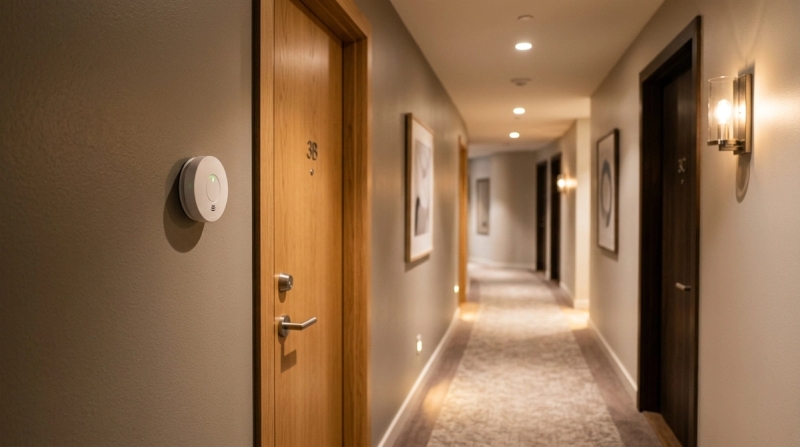
#Always follow the instructions that come with your specific alarm. Different models are designed for different placements, including wall outlets, walls, or ceilings.
In general, CO alarms are commonly recommended:
- On every level of the home
- Near sleeping areas
- In or near bedrooms, if the manual recommends it
- Close enough that sleeping people can hear the alarm
- In apartments, near the areas where people sleep and spend the most time
Avoid placing CO alarms:
- Too close to fuel-burning appliances, unless the manual says otherwise
- Inside bathrooms or very humid areas
- Near windows, fans, vents, or strong airflow
- In dusty, greasy, or dirty areas
- Behind curtains, furniture, or anything that blocks airflow
And remember: in kitchens using LPG or PNG, a CO alarm is not a substitute for a gas leak detector.
Buying Checklist for Homes, Apartments, and Smart Homes
#When buying a carbon monoxide detector, don’t overcomplicate it. The best alarm is one you will actually install properly, hear clearly, maintain easily, and replace on time.
Look for these features:
- Recognized safety certification: Choose a product that meets applicable safety standards in your region. Labels may include UL, EN, CE, or other recognized marks.
- Clear sound patterns: The manual should explain the emergency alarm, low battery chirp, malfunction warning, and end-of-life signal.
- Battery backup: Useful for plug-in or hardwired alarms, especially during power cuts.
- Sealed battery option: A sealed long-life battery can reduce battery replacement problems, but the whole unit still expires eventually.
- Loud alarm: The alarm should be loud enough to wake sleeping people.
- Digital display, if useful: Some models show CO levels in parts per million, or PPM. This can be helpful, but it does not replace proper emergency action.
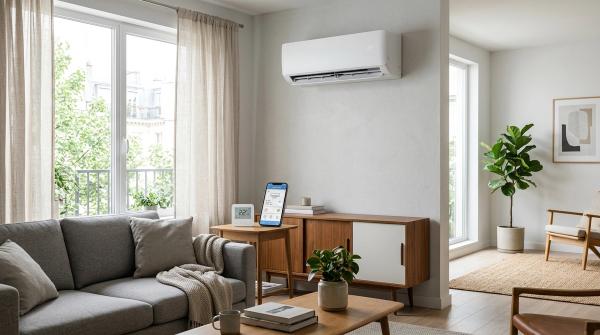
- Smart alerts: Wi-Fi or app-connected alarms can send notifications to your phone. These are useful for larger homes, frequent travelers, or people keeping an eye on elderly family members.
- Combination smoke and CO detection, if clearly labeled: If you want one device for both smoke and carbon monoxide, make sure it clearly says it detects both.
- Separate gas leak detection if needed: For LPG, PNG, natural gas, methane, or propane leaks, buy a detector specifically designed for combustible gas.
If you rent your home or live in an apartment, check what your landlord, builder, or housing society has already installed. But don’t assume one device covers every risk. Read the label.
A smoke alarm alone is not a CO alarm. A CO alarm alone is not a gas leak detector.
What Not to Do When a CO Alarm Beeps
#It’s good to stay calm. But it’s not okay to ignore the alarm.
Do not:
- Remove the batteries just to stop the sound. Replace the battery or the alarm, depending on the warning.
- Ignore a loud four-beep emergency pattern. Leave first. Call for help from outside.
- Assume everything is fine because you cannot smell anything. Carbon monoxide has no smell.
- Use a CO alarm as a kitchen gas leak detector. It will not detect raw LPG, PNG, methane, propane, or natural gas unless it is specifically designed as a combustible gas detector.
- Try to repair appliances, cylinders, pipes, vents, wiring, or fuel-burning equipment yourself. Call emergency services, your gas provider, building maintenance, or a licensed professional.
- Go back inside just because the alarm stopped. Wait until emergency responders or qualified professionals say the home is safe.
- Ignore end-of-life chirps. If the alarm has expired, replace it.
Related AllBlogs Guides to Link
#- Carbon Monoxide Detector Placement: Room-by-Room Home Safety Checklist
- Smoke Alarm vs Carbon Monoxide Detector vs Gas Leak Detector: What Do You Actually Need at Home?
- Smoke Alarm Placement Checklist: Where to Put Alarms at Home
- LPG Gas Leak Checklist India: Emergency Safety Steps
Final Takeaway
#When your carbon monoxide detector is beeping, the pattern matters.
Four loud beeps and a pause usually means a possible CO emergency. Leave immediately and call emergency services.
One short chirp every minute is often a low battery or power issue.
Three chirps may mean the alarm has a fault.
Five chirps often mean the alarm has reached the end of its life and needs to be replaced.
Keep your CO alarms installed, tested, and replaced on schedule. Use smoke alarms for fire smoke. Use gas leak detectors for LPG, PNG, natural gas, methane, or propane leaks.
Each device has its own job, and together they make your home safer.