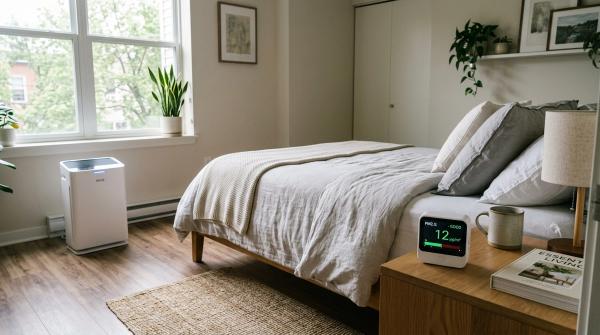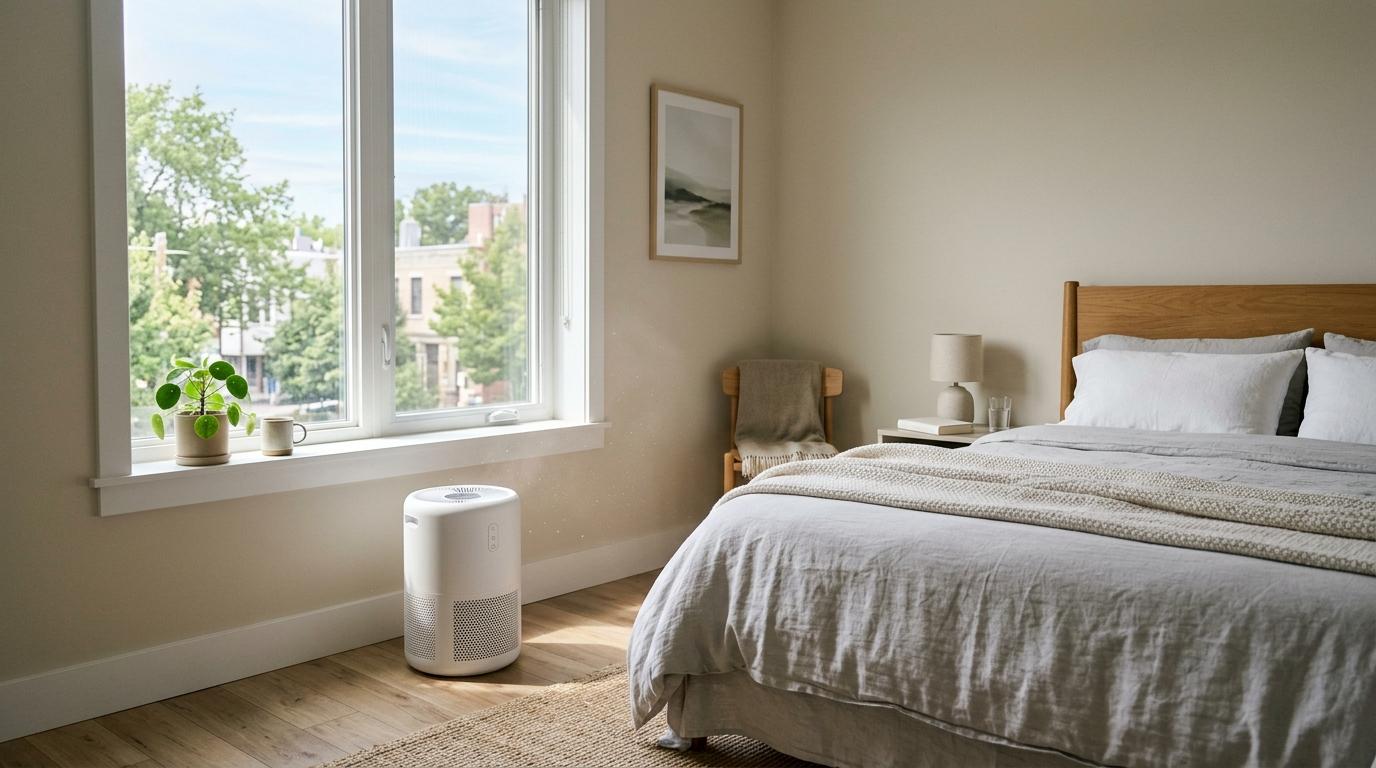
If you’re choosing between an air purifier ionizer vs HEPA, the safer choice for most homes is usually a properly sized HEPA air purifier. HEPA filters physically trap airborne particles, while ionizers charge particles so they may settle on surfaces. Some electronic air cleaners can also produce ozone. For bedrooms, children’s rooms and apartments, choose HEPA, match CADR to room size, and avoid ozone generator air purifiers in occupied rooms.
Air purifier marketing can make this decision feel more complicated than it needs to be. You may see phrases like “active oxygen,” “ion technology,” “filter-free cleaning,” or “medical-grade air.” Some claims are useful. Some are vague. A few should make you pause.
The basic difference: filtering, settling and ozone
#Most home air cleaners fall into three practical groups.
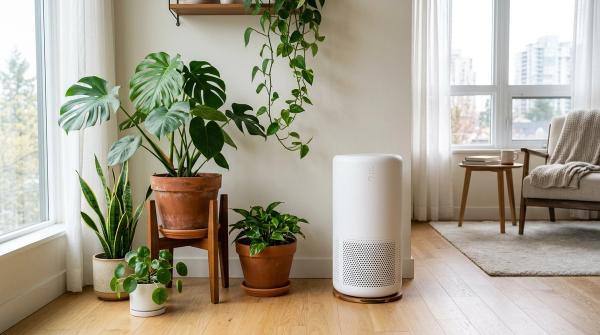
A HEPA air purifier uses mechanical filtration. It pulls air through a dense filter that captures particles such as dust, pollen, smoke particles, pet dander and fine particulate matter.
An ionizer air purifier uses electrical charging. It gives particles a charge so they stick to walls, curtains, floors, furniture or collection plates inside the device.
An ozone generator air purifier intentionally releases ozone gas into the room. Ozone can irritate the lungs, so official indoor-air guidance treats ozone-generating air cleaners very cautiously.
For everyday home use, the simple rule is: use HEPA, be cautious with ionizers, and avoid ozone generators.
HEPA vs ionizer vs ozone generator comparison
#Why HEPA is usually the better choice
#A HEPA purifier is simple. It does not need to “energize” the air or release anything into the room. It moves air through a filter and traps particles along the way.
That simplicity is useful in bedrooms, nurseries, living rooms and rental apartments. A good HEPA air purifier can help reduce dust, pollen, pet dander, smoke particles, fine particle pollution and some particles from cooking.
It will not solve every indoor air problem. It does not replace cleaning, ventilation, kitchen exhaust, bathroom exhaust or controlling pollution at the source. It also does not remove most gases or odors unless the purifier has a proper activated carbon filter.
But for airborne particles, HEPA is the most dependable starting point.
What ionizers actually do
#Ionizers often sound impressive because they are advertised as “filter-free” or “active purification.” But an ionizer is not the same as a filter.
Ion generators charge particles in the air. Once charged, those particles may stick to walls, floors, tables, curtains, furniture or collection plates. That creates two practical problems.
First, the particles may not really be removed from the room. They may simply move from the air onto surfaces. Second, those settled particles can get stirred up again by walking, sweeping, dusting, opening curtains or turning on a fan.
Some electronic air cleaners can also produce ozone as a byproduct. Not every ionizer is identical, but if your HEPA purifier has an optional ionizer button, the safer everyday choice is usually to leave it switched off.
Why ozone generator air purifiers are riskier
#Ozone generators are different from normal HEPA purifiers. A HEPA purifier removes particles by trapping them in a filter. An ozone generator adds ozone gas to your indoor air.
Ozone can react with some substances, which is why these machines are sometimes marketed for odors, smoke or “deep cleaning.” But that does not mean they are safe to use in rooms where people are present.
For normal home use, do not buy an ozone generator for bedrooms, living rooms, children’s rooms or apartments. Also watch for softer-sounding terms such as activated oxygen, energized oxygen, fresh oxygen, ozone cleaning and oxygen purification.
If the cleaning method is ozone generation, skip it.
Air purifier buying checklist
#1. Start with one room
#Most portable air purifiers are meant for one room at a time. If budget is limited, start with the bedroom because the door can usually be closed and you spend several hours there.
2. Measure the room
#Measure length and width, then multiply them. For example: 12 ft × 15 ft = 180 sq ft.
3. Match CADR to the room
#CADR means Clean Air Delivery Rate. It helps compare how quickly an air purifier delivers filtered air. A common AHAM-style rule is to choose a smoke CADR that is at least about two-thirds of the room’s square footage, assuming a normal ceiling height.
For a 180 sq ft room: 180 × 2/3 = 120. So you would look for a smoke CADR around 120 or higher.
4. Do not rely only on “coverage area” claims
#Some purifiers advertise large coverage areas without clearly saying the fan speed, air changes per hour or test conditions. CADR is usually more useful than a vague “covers up to” claim.
5. Choose real HEPA language
#Look for True HEPA or clear filtration testing. Be careful with terms like HEPA-like, HEPA-style and HEPA-type because they may not mean the purifier uses a real HEPA filter.
6. Add activated carbon if smells matter
#HEPA captures particles, not most gases or odors. If cooking smells, smoke odor or VOC concerns matter, look for HEPA plus a replaceable activated carbon filter.
7. Check noise and filter costs
#A purifier only helps if you run it. If it is too loud at useful speed, you may turn it down. Also check replacement filter price and availability before buying.
8. Look for ozone safety information
#If the purifier has electronic features, check for CARB certification or clear ozone emission details. If it is an ozone generator, do not use it as a normal home purifier in occupied rooms.
India-aware apartment notes
#In Indian apartments, air purifiers often matter most during seasonal PM2.5 spikes, dustier months, nearby construction, traffic pollution or smoky festival periods.
A portable purifier works best in a closed or mostly closed room. If outdoor air is very polluted and windows are open, the purifier has to keep cleaning a constant stream of dirty air and may not keep up.
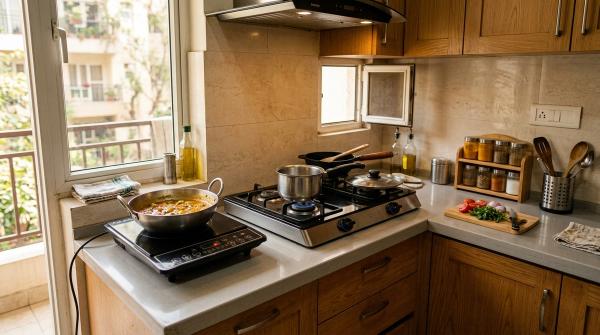
Indian cooking can also create particles and odors, especially during frying, tadka, grilling or high-heat cooking. A HEPA purifier can help with some particles, but it is not a replacement for a chimney, exhaust fan or ventilation when outdoor air is acceptable.
Open-plan apartments need extra attention. If the living room connects to the dining area, kitchen or corridor, do not size the purifier only for the corner where it sits. Think about the connected air space.
When ventilation is still needed
#An air purifier filters indoor air. It does not bring in fresh outdoor air.
You may still need ventilation when cooking creates smoke or steam, cleaning products have been used, indoor air feels stale, moisture builds up in bathrooms or kitchens, outdoor air quality is better than indoor air, or odors are trapped inside.
A practical routine works best: ventilate when outdoor air is acceptable, close windows and run the purifier when outdoor pollution is high, use kitchen exhaust while cooking, and use bathroom exhaust for moisture.
What to avoid when shopping
#Be careful with claims such as “no filter replacement ever,” “ozone fresh air,” “activated oxygen,” “hospital-grade” without clear CADR or filter details, “covers up to 1000 sq ft” without test conditions, “HEPA-type” with no filtration standard, and “removes all pollutants.”
A useful product page should clearly show filter type, CADR, recommended room size, noise levels, replacement filter details, whether it has an ionizer, and whether it produces ozone.
Best choice for most homes
#For most families, renters and apartment residents, the best choice is a properly sized HEPA air purifier with CADR matched to the room, activated carbon if odors matter, no ozone generation, regular filter replacement and ventilation when outdoor air allows.
You do not need the most complicated machine. You need a purifier that safely moves enough air through a real filter for the room you actually use.