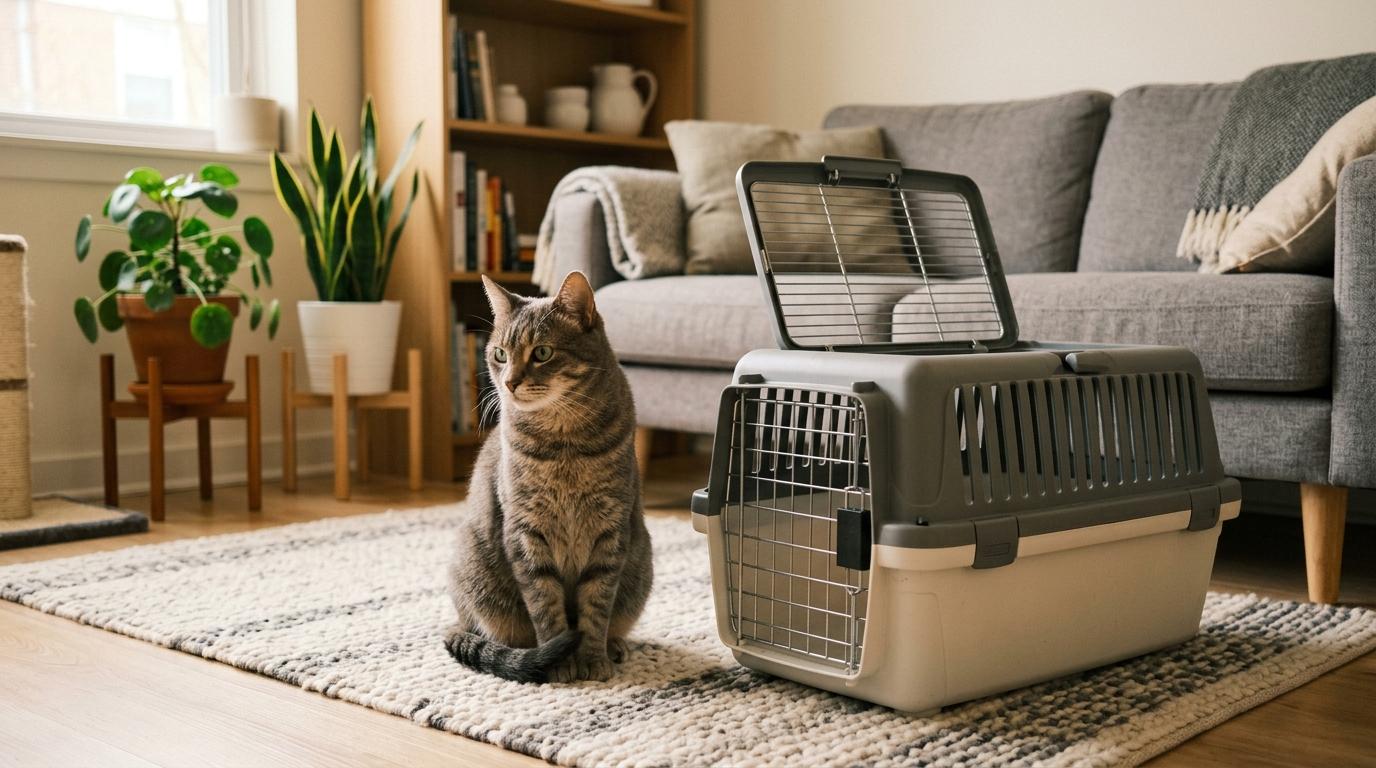
If you’re buying a carrier mainly for vet visits, here’s the short version: most cats do best in a hard-sided carrier with a top opening.
It’s sturdy, it’s easier to clean after accidents, and it gives the vet team more options if your cat decides to become a furry brick at the back of the carrier. Which, let’s be honest, is a very popular cat strategy.
Soft carriers can work well for calm cats and quick trips. Backpack carriers can be useful if you walk to the clinic, live in an apartment, or need your hands free. But for a nervous cat, they’re not always the easiest or safest choice.
The best carrier isn’t necessarily the cutest one. It’s the one that keeps your cat secure, steady, and as calm as possible from your front door to the exam room and back again.
Why vet-visit carriers are different from airline carriers
#A lot of people buy a “cat travel carrier” and assume it’ll work for everything. Sometimes it will. But vet visits have their own little challenges.
Airline carriers are often soft because they need to fit under a plane seat. A carrier for vet visits has a different job. It needs to:
- Keep your cat safely contained.
- Stay stable while you carry it and drive.
- Give the vet or nurse easy access to your cat.
- Be easy to clean if your cat pees, vomits, drools, or sheds from stress.
- Offer privacy without blocking airflow.
- Reduce the chance of escape in a parking lot, waiting room, or clinic lobby.
Most cats don’t hate the carrier at first. They learn to hate what it predicts: the car, strange smells, barking dogs, slippery exam tables, and people poking around their ears.
A good carrier won’t magically make your cat love going to the vet. That would be nice. But it can make the visit safer, calmer, and much less chaotic.
Hard vs soft cat carrier vs backpack: quick comparison
#Which cat carrier should you choose?
#Hard-sided carrier
#For most cat owners, a hard-sided carrier with a top-loading door is the safest and most practical option for vet visits.
Look for one that opens from the front and the top. Even better, choose a carrier where the entire top half can be removed.
That removable top is incredibly helpful. If your cat freezes in the back and refuses to come out, the vet may be able to take the top off and examine them while they stay in the bottom half. That is often much less stressful than trying to pull a frightened cat through a small front door.
Hard carriers are also easier to clean. If your cat has an accident, you can usually wipe the carrier down properly. That matters a lot for nervous cats, kittens, senior cats, and cats with bladder, stomach, or mobility issues.
The main downside is storage. Hard carriers take up space. But if you can, don’t hide it away. Leave it out with a soft blanket inside so it becomes part of everyday life instead of the mysterious box that appears five minutes before disaster.
Soft-sided carrier
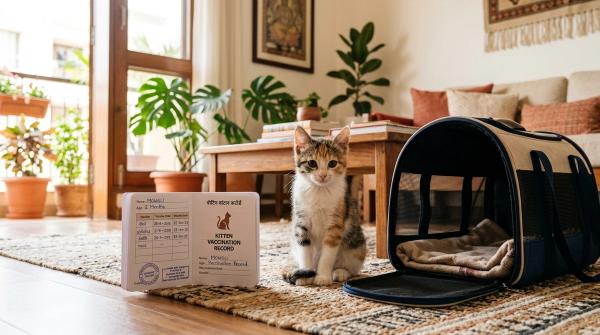
#A soft-sided carrier can be a good choice for a calm cat, especially for short trips. They’re usually lighter, easier to carry, and much easier to store. Some fold almost flat, which is very useful if your home has approximately one cupboard and it’s already full.
The tradeoff is that soft carriers vary a lot in quality.
Some sag when you pick them up. Some have weak mesh. Some have zippers a determined cat can push open. And fabric can hold onto smells, especially urine.
If you want to use a soft carrier for vet visits, check for:
- A firm base that does not bend too much.
- Strong mesh that won’t tear easily.
- Secure zippers that don’t split or leave gaps.
- A top opening, if possible.
- Washable or easy-clean fabric.
- Enough structure so the carrier doesn’t collapse inward.
Soft carriers aren’t bad. They just need a closer look before you trust them with a stressed cat.
Cat carrier backpack
#Cat carrier backpacks look very convenient, and sometimes they are. If you live in an apartment, use public transport, walk to the vet, or need both hands free, a backpack can make the trip easier for you.
But for a nervous cat, be careful.
Backpacks can bounce, sway, or tilt as you move. Some cats hate that feeling. Many backpacks also have smaller openings, which can make it harder for the vet team to get your cat out calmly. If your cat has to be pulled through a tight opening, stress can build quickly.
Be extra cautious with bubble-style backpacks or very enclosed designs. They may look cute online, but some don’t offer enough airflow, space, or stability.
If you do use a cat carrier backpack, choose one with:
- Strong ventilation on multiple sides.
- A stable, firm base.
- Secure zippers and seams.
- Enough space for your cat to stand, turn, and settle.
- A design that doesn’t tip or collapse.
And please test it at home before using it for a real appointment. The vet parking lot is not the ideal place to discover your cat hates it.
Important safety notes
#A cat carrier is not just a bag. It’s safety equipment.
Please don’t carry your cat loose in your arms, in a laundry basket, in a tote bag, or wrapped in a blanket without a secure carrier. Even a calm cat can panic near traffic, in a parking lot, or in a waiting room with dogs.
Also avoid carriers that are cracked, taped together, missing screws, or weak around the door or latch. If a carrier pops open at the wrong time, it can become very serious very fast.
If your cat has extreme travel fear, breathing problems, repeated vomiting during trips, or has injured themselves trying to escape before, talk to your vet before the next appointment. They may recommend a different travel setup, calming medication, or special handling advice.
Cat carrier size guide
#Your cat should have enough room to be comfortable, but not so much room that they slide around.
A good carrier should allow your cat to:
- Stand up naturally.
- Turn around without getting stuck.
- Lie down comfortably.
- Sit without their head being pressed hard against the top.
Bigger is not always better. A huge carrier might seem generous, but during travel it can make your cat feel less secure because they shift and slide around.
Carrier safety checklist
#Before buying a new carrier, or using one that’s been sitting in the cupboard for years, run through this checklist.
- Correct size: Big enough for standing, turning, sitting, and lying down, but not oversized.
- Strong base: The floor should not sag when your cat is inside.
- Good ventilation: Airflow on more than one side is best.
- Secure doors: Latches should close firmly. Zippers should not split or leave gaps.
- Top access: A top-loading door or removable top is very helpful for vet visits.
- Easy cleaning: Smooth plastic is easiest. Fabric should be washable or easy to spot-clean.
- No sharp edges: Check for rough plastic, wire ends, broken pieces, or exposed seams.
- Stable handle: The handle should feel strong, but you should still support the carrier from underneath.
- Escape-proof design: Gently test doors, corners, seams, zippers, and latches.
- Comfortable lining: Add a towel, blanket, or absorbent pad that doesn’t slide too much.
Small apartment storage and odor tips
#If you live in a small apartment, the issue isn’t just which carrier to buy. It’s also where you’re supposed to put the thing.
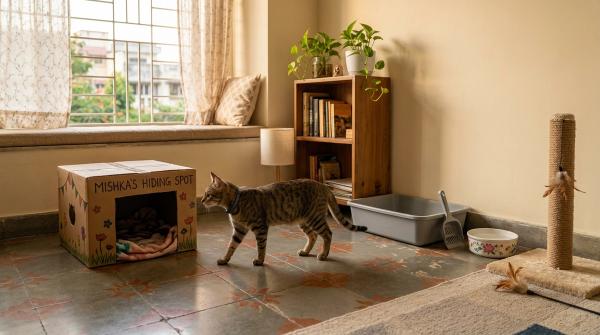
A hard carrier can feel bulky, but hiding it away can actually make vet visits harder. If your cat only sees the carrier right before an appointment, they learn the pattern quickly.
Carrier appears. Bad day begins.
Instead, try making the carrier part of normal life:
- Keep it in a quiet corner.
- Leave the door open or remove it if your carrier allows that safely.
- Put a familiar blanket inside.
- Let your cat nap in it between appointments.
- Place treats near it now and then.
- Don’t make a huge fuss when your cat investigates it.
The goal is for the carrier to become boring. Boring is perfect.
For odor control, clean accidents as soon as you can. An enzyme-based pet cleaner can help with urine smells. Remove dirty towels or pads right away, and let everything dry fully before storing or using the carrier again.
Also, avoid strong-smelling cleaners when possible. Cats have sensitive noses, and a carrier that smells like harsh chemicals may make them even less willing to go inside.
A simple 7-day cat carrier training plan
#Carrier training works best when you are not already late for an appointment and quietly panicking.
Go slowly. If your cat is shy, stretch this plan over two or three weeks. There’s no prize for rushing.
Day 1: Let the carrier appear
#Put the carrier in a room your cat already likes. Leave the door open.
Do not pick up your cat and put them inside. Just let the carrier exist.
Your cat may sniff it, ignore it, or stare at it like it owes them money. All normal.
Day 2: Add something familiar
#Put a soft towel or familiar blanket inside. If your cat has a favorite blanket, use that.
You can place a treat nearby, but don’t hover. Cats absolutely know when we’re being weird.
Day 3: Treats near the entrance
#Place a few treats just outside the carrier door. If your cat eats them comfortably, put one right at the entrance.
No pushing. No closing the door. Keep it easy.
Day 4: Treats just inside
#Move the treats slightly inside the carrier.
If your cat steps in, great. If they stretch their neck as far as possible and steal the treat without putting a paw inside, that still counts.
Day 5: Meal near the carrier
#Place your cat’s food bowl near the carrier. If they seem relaxed, move it closer to the entrance.
For a cautious cat, keep the bowl outside and try again another day.
Day 6: Meal inside the carrier
#Move the food bowl just inside the carrier, then gradually farther in if your cat is comfortable.
If your cat goes fully inside, stay calm. Do not suddenly shut the door because you finally got the chance. Tempting, yes. Helpful, no.
Day 7: Brief door practice
#When your cat is inside and relaxed, close the door for just a few seconds. Open it again, praise gently, and offer a treat.
Repeat once or twice. Keep it short and positive.
Over time, you can slowly increase how long the door stays closed. The goal is not to trick your cat. It’s to teach them that the carrier is safe, predictable, and not always followed by a stressful car ride.
Vet visit checklist for cat owners
#Use this on appointment day.
- Prepare early: Set up the carrier before your cat notices something is happening.
- Add a familiar scent: Use a blanket, towel, or worn T-shirt that smells like home.
- Line the bottom: A washable towel or absorbent pad helps with accidents.
- Check every latch: Make sure all doors, zippers, and openings are fully closed.
- Support from below: Carry the carrier with one hand underneath, not swinging it by the handle only.
- Cover lightly if needed: A towel over part of the carrier can reduce visual stress, but don’t block airflow.
- Keep distance from dogs: In the waiting room, keep the carrier on your lap or on a stable raised surface if available.
- Stay calm: Speak softly. Avoid repeatedly opening the carrier to check on your cat.
- Bring notes: Write down symptoms, appetite changes, medication details, and questions before you arrive.
If your vet clinic offers special options for nervous cats, use them. Some clinics may let you wait in the car until the exam room is ready.
Common cat carrier mistakes to avoid
#Waiting until vet day to bring out the carrier
#This is the big one. If the carrier only appears before stressful events, your cat will learn to hide the second they see it.
Leave it out when you can.
Choosing only by looks
#A cute carrier is not automatically a safe carrier. Check the base, airflow, doors, latches, zippers, and cleaning access first.
Yes, the stylish ones are tempting. Still check.
Using a carrier that is too small
#Your cat should not be squeezed inside. If they can’t turn around, it’s too small.
Using a carrier that is too large
#A huge carrier might seem kinder, but it can make your cat slide around during travel and feel less secure.
Carrying it like a swinging suitcase
#Even a sturdy carrier can jolt your cat if you carry it by the top handle only. Support the bottom with your other hand or hold the carrier close to your body.
Forcing a frightened cat through a tiny front door
#This can turn into a wrestling match very quickly. A top-loading carrier usually makes loading easier and can make the vet visit calmer too.
Putting two cats in one carrier
#Even cats who love each other at home can behave differently when stressed. Separate carriers are safer for most vet visits.
Ignoring weak zippers or latches
#If you can push open a gap with your fingers, your cat may be able to push through it too. Don’t risk it.