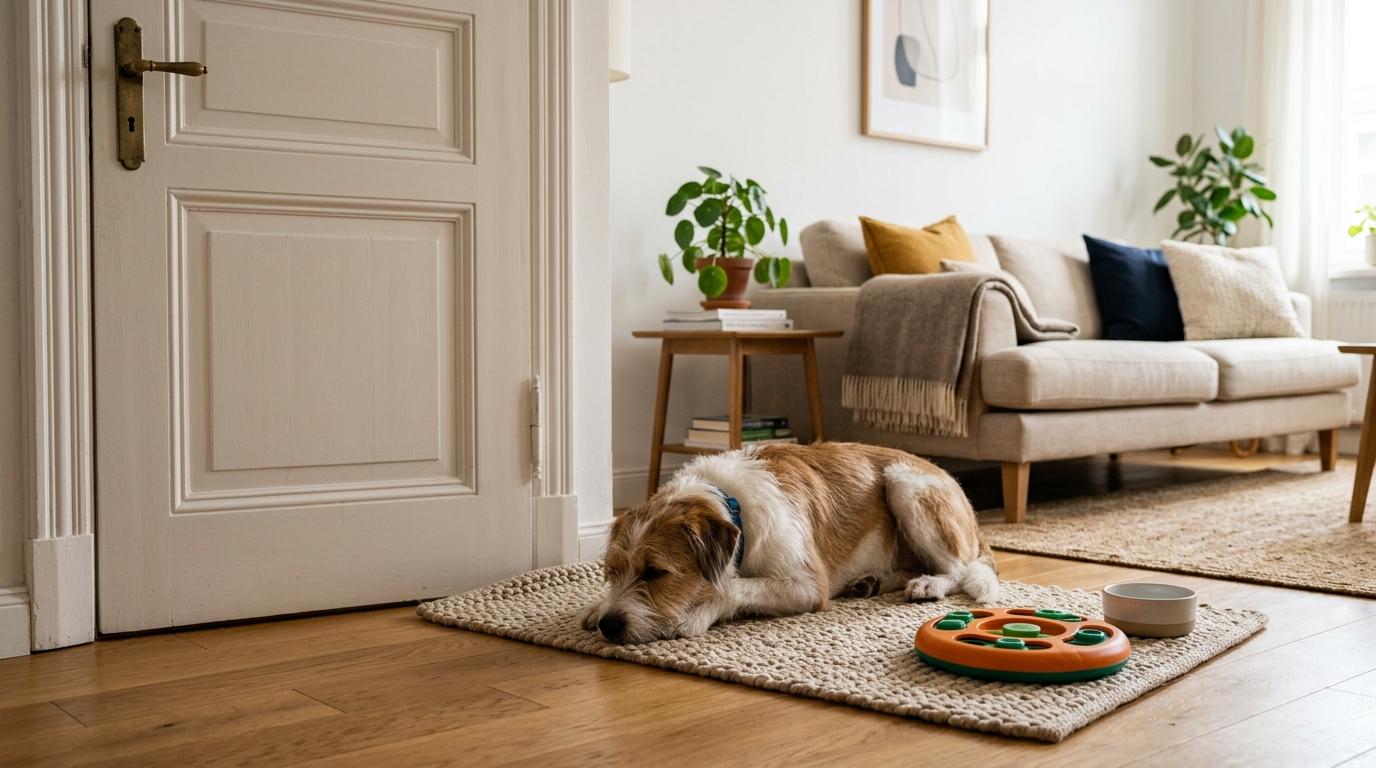
If your dog barks, cries, paces, scratches the door, drools, chews, or seems to panic the moment you leave, start with safety, observation, and tiny steps your dog can handle. Dog separation anxiety in apartments is best managed with a calm setup, short practice departures, and vet-aware support—not punishment or “cry it out” training.
Why separation anxiety can feel worse in an apartment
#Separation anxiety is stressful anywhere, but in an apartment it can feel extra intense because the problem is rarely private. If your dog barks, howls, scratches the main door, or reacts to lift sounds, your neighbours may hear it before you know how bad things have become.
In many Indian apartment buildings, the environment can be busy: delivery bells, lift doors, security guards, children in corridors, other dogs barking, and constant movement near the entrance. For a sensitive dog, these sounds can add pressure.
There are also safety concerns. A panicking dog may jump, chew, dig, squeeze through gaps, or try to escape. Balconies, sliding doors, windows, and grills need extra attention.
The most important thing to remember is this: separation anxiety is not revenge. Your dog is not punishing you for leaving. They may be scared, confused, or overwhelmed. Fear does not improve through scolding. It improves through safety, predictability, and slow confidence-building.
Signs of dog separation anxiety in an apartment
#Dogs bark, chew, dig, and have accidents for many reasons. A puppy may still be learning toilet control. An adult dog may be bored. Some dogs are reacting to sounds outside the door.
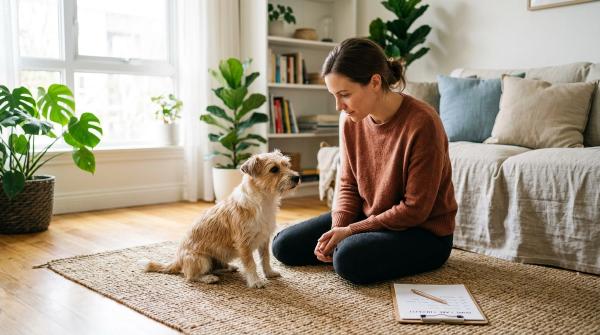
Before you decide it is separation anxiety, try to see what is actually happening. Use a pet camera, old phone, laptop, or audio recorder. Leave normally and check what happens in the first few minutes.
Common signs of separation-related distress include:
- Barking, crying, whining, or howling soon after you leave
- Pacing, circling, trembling, or heavy panting
- Drooling more than usual
- Scratching or chewing doors, windows, crates, gates, or balcony areas
- Trying to escape from a room, crate, or pen
- Ignoring favourite treats or food when alone
- Urinating or passing stool indoors only when left alone
- Following you constantly before you leave
- Getting anxious when you touch keys, shoes, your work bag, helmet, handbag, or wallet
One sign alone does not confirm separation anxiety. The pattern matters. A dog who naps peacefully for two hours and then barks at a delivery person may be reacting to noise. A dog who panics within two minutes of your leaving is showing a different pattern.
Is it boredom, hallway noise, or separation anxiety?
#Use this table as a starting point, not a diagnosis. If you are unsure, record your dog and show the video to a veterinarian or qualified behaviour professional.
Apartment setup checklist for dog separation anxiety
#Before you practise leaving, make your home as safe and calm as possible.
Choose a safe space away from the main door
#For many dogs, the front door becomes emotionally loaded. It is where you disappear, visitors arrive, and corridor noises come from.
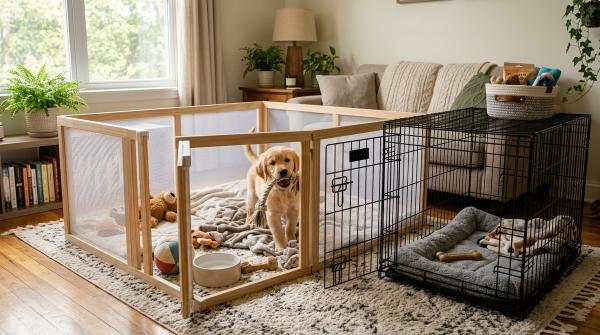
If possible, set up your dog’s resting area away from the entrance. Good options include a quiet bedroom, a dog-proofed section of the living room, an exercise pen, or a crate only if your dog already feels relaxed inside it.
Your dog’s space should have water, comfortable bedding, safe chew items, and nothing dangerous within reach.
Secure balconies, windows, and exits
#A frightened dog may do things they would never normally do. Before leaving, check that balcony doors are locked, low windows are secured, sliding doors cannot be pushed open, trash and medicines are out of reach, and your dog cannot reach railings or open balcony gaps.
Also make sure the space is cool enough, especially in hot or humid weather.
Reduce hallway and building triggers
#Apartment dogs hear more than we realise. Try closing curtains if outdoor movement triggers barking, using white noise or a fan to soften hallway noise, moving the bed away from the front door, and keeping departures boring and predictable.
Small changes can make the room feel less like a lookout post.
Meet your dog’s needs before training
#Training is harder if your dog needs the toilet, has too much energy, or is already overstimulated. Before alone-time practice, offer a toilet break, age-appropriate exercise, sniffing time, and a short settling period.
For puppies, keep expectations realistic. Puppy separation anxiety should be taken seriously, but young puppies also need toilet training, sleep, socialisation, and gentle independence practice.
Track what actually happens
#A simple log is more useful than guessing. Write down the date, time, how long you left, what your dog did before you left, when signs started, whether your dog ate the treat, and any unusual building noise that day.
Your goal is to practise below your dog’s panic point, which means you return before distress builds.
The calm training method: stay below panic
#The main training approach for separation anxiety is gradual desensitization. That means your dog experiences tiny, manageable versions of being alone and slowly learns that they are safe.
Keep these rules in mind:
- Start easier than you think you need to
- Return before barking, scratching, or panic begins
- Keep exits and returns calm
- Do not scold when you come back
- Repeat short, successful sessions
- Step back if your dog struggles
If your dog panics at 30 seconds, your starting point may be 5 seconds or even 2 seconds. That is not failure. That is useful information.
14-day starter checklist for apartment dogs
#This checklist is a starter plan, not a guaranteed cure. Some mild cases improve steadily. Moderate or severe cases often need a slower pace and professional support.
Some dogs love a stuffed food toy when you leave. Others ignore food once anxious. If your dog stops eating as soon as you go, the absence is probably too hard right now.
What not to do with dog separation anxiety
#Do not punish barking, chewing, or accidents
#Punishment after the event does not teach your dog how to feel safe alone. It can make departures and returns even more stressful. If you come home to damage or house-soiling, clean it quietly and adjust the plan.
Do not use “cry it out”
#Letting a distressed dog bark until exhausted is not a good training plan. In apartments, it can also lead to neighbour complaints quickly. More importantly, it does not teach calm independence.
Do not force a crate if your dog panics inside it
#Crates can be useful for dogs who already like them. But for some dogs with separation distress, confinement makes things worse. If your dog bites crate bars, digs, drools heavily, breaks nails, or tries to escape, stop using the crate for alone time and speak with a professional.
Do not rely only on gadgets
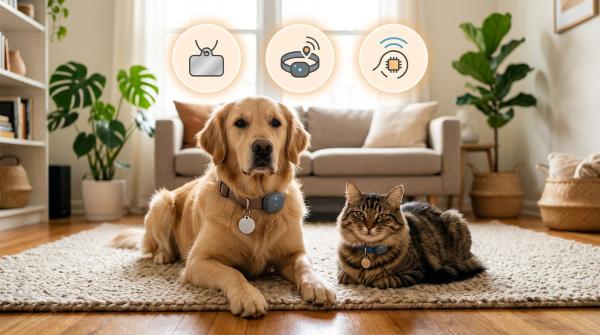
#Cameras, treat dispensers, calming music, puzzle toys, and white noise can help. But they do not replace gradual training or veterinary care when distress is severe.
When to consult a veterinarian or behaviourist
#Please consult a veterinarian if the behaviour is sudden, severe, or connected with physical symptoms. A medical issue can look like a behaviour problem, especially when there is house-soiling, restlessness, pain, appetite change, or sleep change.
Get help promptly if you see self-injury, attempts to escape, repeated house-soiling in a previously house-trained dog, vomiting, diarrhoea, heavy drooling, refusing food or water when alone, severe trembling, sudden behaviour change, aggression, extreme fear, panic around confinement, or distress that does not improve with a careful plan.
A veterinarian can rule out medical causes and guide the next step. For complex cases, ask about a board-certified veterinary behaviourist or a qualified certified behaviour professional who uses humane, evidence-informed methods and can work with your vet.
Do not give medication or supplements without veterinary guidance. This article does not diagnose your dog or provide medication advice.
How to talk to neighbours while you train
#Apartment living adds a social layer. If your dog’s barking is already bothering neighbours, a calm conversation or short note can help.
You can say: “My dog is struggling with alone-time training. We are working on it with a gradual plan and monitoring. Please let me know if you notice barking at specific times.”
This helps you find patterns and shows people that you are taking the issue seriously. If complaints are increasing, reduce your dog’s alone time while you train and get professional help sooner.
Source-aware guidance used
#This guide is aligned with separation-anxiety guidance from ASPCA, VCA Animal Hospitals, ACVB veterinary behaviour resources, and AAHA behaviour support principles.