A hairball usually ends with a damp, tube-shaped clump of fur. Vomiting is more forceful and may include food, bile, foam or liquid. Regurgitation is often sudden and passive, usually with undigested food soon after eating. A cough can sound like a hairball but often produces nothing. If vomiting repeats, your cat seems unwell, or breathing looks affected, call a veterinarian.
If you have a cat, you know the sound: sudden hacking from another room, a pause, and then the rush to check whether your cat is okay. Most cat parents call all of this “throwing up,” but a cat hairball, vomiting, regurgitation and coughing are not the same thing.
This guide is not meant to diagnose your cat at home. It helps you notice the right clues, describe the episode clearly to your vet, and spot red flags earlier.
Before You Clean It Up, Take a Quick Look
#If your cat is safe, breathing normally and not in distress, pause for a moment before cleaning. What happened right before the mess appeared can be just as useful as what is on the floor.
Notice:
- Did your cat’s belly heave?
- Was there drooling, lip licking or repeated swallowing first?
- Did food come up suddenly with little effort?
- Did your cat hack and hack, but nothing came out?
- Was it hair, food, liquid, yellow bile, foam or blood?
- Did it happen right after eating?
- Has this happened before?
- Is your cat acting normal afterward?
If you can, take a short video. A coughing cat and a cat trying to vomit can look very similar when described over the phone.
Hairball vs Vomit vs Regurgitation vs Cough
#What a Hairball Usually Looks Like
#Hairballs happen because cats groom themselves. Their rough tongues catch loose hair, they swallow that hair, and most of it should pass normally through the digestive tract and come out in the stool.
Sometimes hair collects in the stomach and forms a clump. The medical term is trichobezoar. When a cat brings up a hairball, it usually does not look like a neat ball. It often looks more like a wet cigar or short tube because it passes through the esophagus on the way out.
A typical hairball may be damp, matted, brownish or fur-colored, tube-shaped, and mixed with a little fluid or food.
Your cat may crouch, gag, retch or make a rough hacking sound before it appears. It can look intense, even when the hairball itself is not an emergency.
But frequent hairballs should not be brushed off as “just cat stuff.” Even long-haired cats should not be bringing up hairballs constantly. Regular hairballs can mean your cat is swallowing too much fur, shedding heavily, overgrooming, or having trouble moving hair through the digestive tract normally.
What Vomiting Looks Like
#True vomiting is usually more forceful than a hairball or regurgitation. With vomiting, the stomach and abdominal muscles are involved. Your cat may look nauseous before anything comes up.
You might see belly contractions, drooling, lip licking, repeated swallowing, restlessness, a hunched posture, or food, fluid, foam or bile coming up.
Vomit may contain partially digested food. It may be yellow if bile is present, or it may look clear and foamy.
There are many reasons for cat vomiting. Sometimes it happens after a quick diet change, eating too fast, or swallowing something irritating. But repeated vomiting can also point to something more serious, including problems outside the stomach.
So if you find yourself saying, “My cat throws up all the time,” it is worth discussing with your vet. Common does not always mean normal.
What Regurgitation Looks Like
#Cat regurgitation is easy to confuse with vomiting, but it is a different process. The biggest clue is effort.
Regurgitation is usually passive. Your cat may lower their head and food simply comes back up. There may be no dramatic heaving, no obvious nausea and very little warning.
Regurgitated food often looks undigested, tube-shaped, like a soft sausage of food, similar to what your cat just ate, and less sour-smelling than vomit.
It often happens soon after eating because the food has not reached the stomach properly, or has not stayed there long enough to digest.
Sometimes a cat throws up food right after eating because they ate too fast. That can happen. But if it happens again and again, do not just change the bowl and hope for the best. Repeated regurgitation can involve the esophagus and needs veterinary evaluation.
What a Cough Looks Like
#A cat cough can look almost exactly like a cat trying to bring up a hairball. Your cat may crouch low, stretch the neck forward and make a dry hacking sound.
But then nothing comes out.
That detail matters. Hairballs and vomit involve material coming up from the digestive tract. Coughing is related to the airways or lungs. If your cat keeps hacking and no fur, food, foam or liquid appears, it may not be a hairball at all.
If the pattern repeats, take a video if you can and call your vet. Repeated coughing, wheezing, labored breathing, or hacking with nothing produced should always be taken seriously.
Vet Red Flags: When to Call Urgently
#One random hairball in a bright, hungry, playful cat is usually not a reason to panic. But it is not safe to assume everything is fine just because “cats throw up.”
Call your veterinarian urgently, or contact an emergency clinic, if you notice:
- Repeated vomiting, especially more than once or twice in 24 hours or vomiting that keeps happening over days or weeks.
- Lethargy, hiding, weakness or unusual quietness.
- Appetite loss, especially for around 24 hours or longer.
- Blood in vomit, including bright red blood or dark coffee-ground-like material.
- Pain, crying, belly guarding, a swollen or hard abdomen, or a tense hunched posture.
- Dehydration signs such as sticky gums, weakness, sunken-looking eyes or skin that does not settle back quickly after gentle lifting.
- Suspected obstruction, such as swallowed string, ribbon, thread, toy pieces or unsafe objects.
- Repeated unproductive hacking where nothing comes out.
- Kitten or senior cat concerns.
- Sudden worsening or any episode where your gut says your cat looks really wrong.
A simple rule: one isolated hairball in an otherwise normal cat is very different from repeated vomiting, appetite changes, hiding, pain, blood, or a cat who cannot keep food or water down.
What to Tell Your Vet
#When you call the clinic, share your cat’s age, how many times it happened, when it started, what came out, whether your cat is eating and drinking, whether litter box habits changed, and whether there was possible access to string, plants, human food, medications, toys or cleaning products.
If you have a video, mention it. This helps your vet decide how urgent the situation is and what kind of problem they may be dealing with.
Indoor Cat Hairball Prevention Checklist
#Indoor cat hairball prevention is mostly about reducing how much hair your cat swallows and supporting normal digestion.
Brush Before Your Cat Swallows the Hair
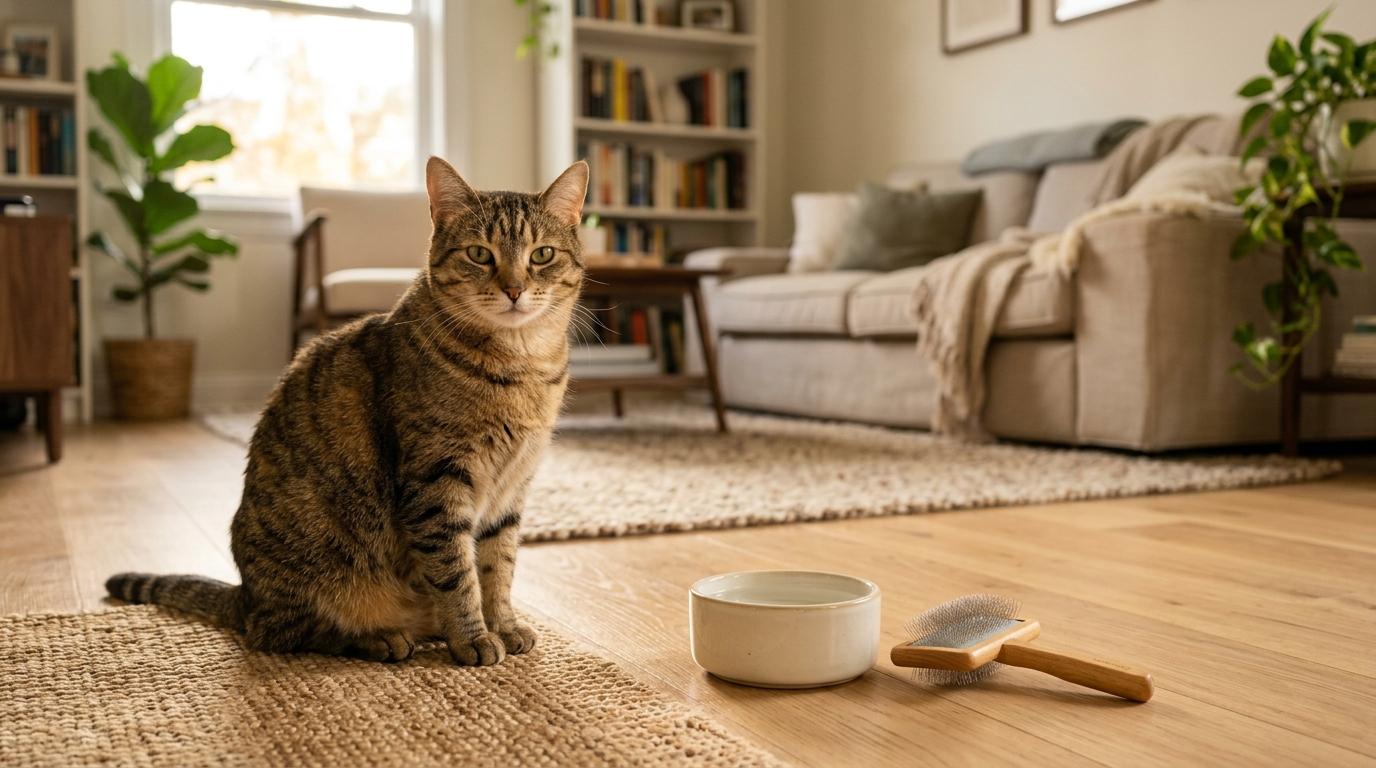
#The best hairball is the one that never forms. Brush short-haired cats regularly, brush long-haired cats more often, and increase brushing during shedding seasons. Keep sessions short if your cat gets annoyed and reward calm brushing.
If your cat hates brushing, start with one or two gentle strokes. For many cats, forcing a long grooming session just creates stress.
Help Your Cat Stay Hydrated
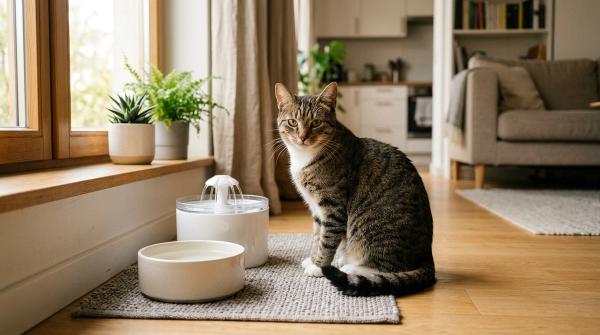
#Cats are not always enthusiastic drinkers. Keep fresh water available, offer more than one water bowl, place water away from the litter box, try a pet water fountain if your cat likes moving water, and ask your vet whether wet food makes sense for your cat.
Avoid sudden diet changes. Any food change should be gradual and appropriate for your cat’s health.
Ask Your Vet About Diet and Fiber
#Some cats benefit from hairball-control diets designed to help swallowed hair move through the digestive tract. But do not switch foods or add supplements blindly, especially if your cat has vomiting, diarrhea, appetite changes, weight changes or any medical condition.
Watch for Stress and Overgrooming
#Overgrooming can make hairball problems worse because your cat swallows more hair than usual. In indoor cats, stress or boredom may show up as excessive licking, thin patches of fur, grooming the belly or legs more than usual, restlessness, hiding or sudden behavior changes.
Helpful enrichment can include daily play sessions, scratching posts, window perches, puzzle feeders, safe hiding spots and predictable routines.
If your cat is licking bald patches or seems unable to stop grooming, call your vet. Skin irritation, pain, parasites, allergies and anxiety can all be part of the picture.
Keep Risky Objects Out of Reach
#String, thread, ribbon, hair ties, toy pieces and plant material may be swallowed. These can cause serious problems, especially string-like objects. Keep risky items tucked away and check toys for loose parts.
What Not to Do at Home
#Avoid giving human medications, using hairball gels or laxatives without veterinary guidance, forcing food or water into a vomiting cat, pulling string from your cat’s mouth or rear, waiting days when vomiting repeats, waiting when your cat stops eating, or assuming every hack is a hairball.
Over-the-counter hairball products may help some cats, but they are not a substitute for a veterinary exam when signs are frequent, painful, or paired with appetite or behavior changes.
The Bottom Line
#A hairball is usually a damp, tube-shaped clump of fur. Vomiting is more forceful and may include food, bile, foam or fluid. Regurgitation is often passive and may happen soon after eating. Coughing often produces nothing at all.
You are not expected to diagnose your cat on the living room floor at midnight. You are expected to notice what happened, take a video if you can, and call your vet when something feels off.
That is good cat parenting.
This article is for informational purposes only and does not replace veterinary medical advice. Always consult a licensed veterinarian if you are concerned about your cat’s health, and never give human medications or attempt home treatment without veterinary guidance.