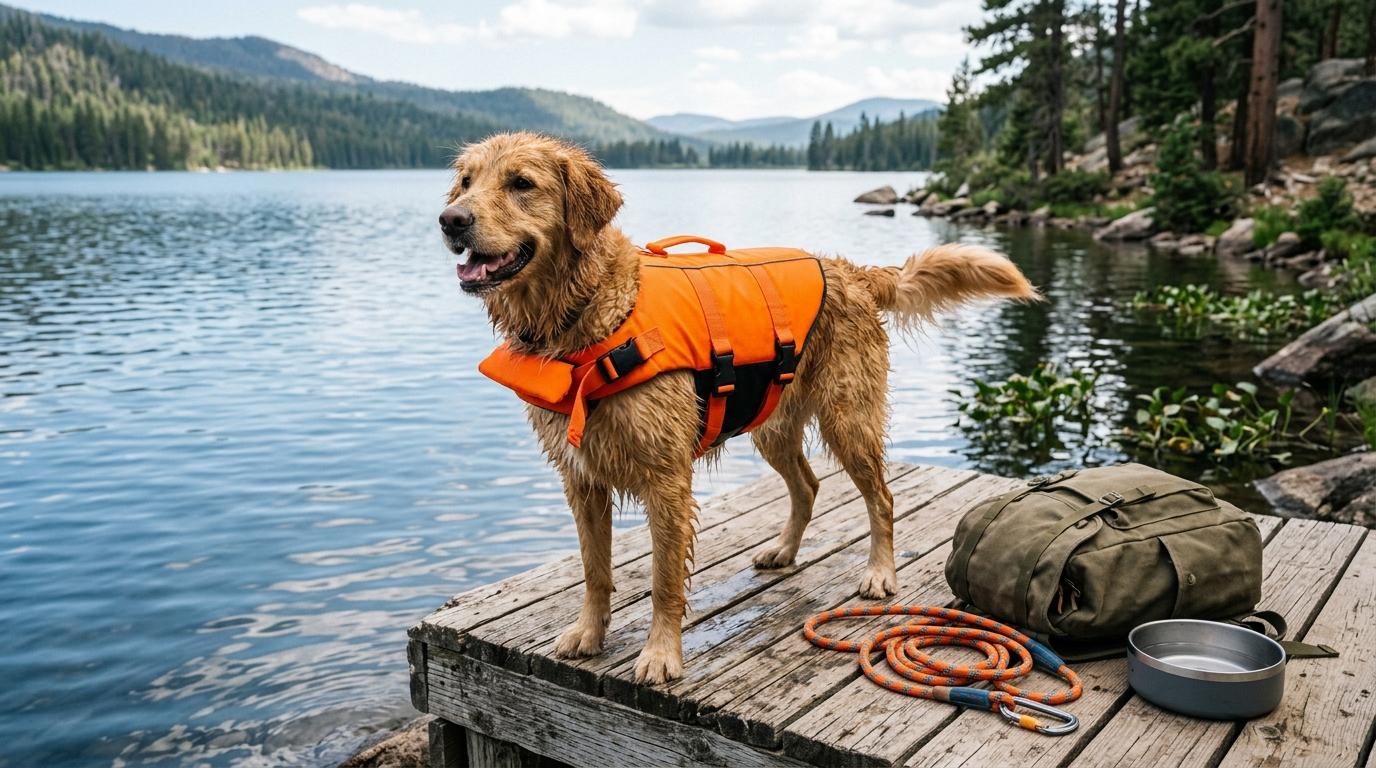
A dog life jacket should do a few simple things really well: fit snugly around your dog’s chest, match their weight range, stay secure with reliable straps, include a strong top handle, and be easy to see in the water.
That last part matters more than people sometimes think. A bright orange or neon yellow vest may not be as cute as the one with little sharks on it, but when your dog is bobbing in a lake, near a dock, or beside a boat, visibility matters a lot.
Even dogs who love swimming can get tired, startled, or overwhelmed. Open water is different from splashing in a shallow pool. There may be waves, current, slippery ramps, boat wakes, cold water, or a dock that is harder to climb back onto than expected.
A dog life vest does not make water completely safe. It is not a guarantee. But it can add buoyancy, help your dog stay more visible, and give you a safer way to guide or lift them when they need help.
This is especially important if you live in an apartment and travel to water instead of having a backyard pool. Your dog may be dealing with rental boats, unfamiliar beaches, hotel pools, lakes, rivers, busy docks, or vacation homes where the water setup is totally new.
The goal is not to buy the fanciest or most expensive vest. The goal is to choose a comfortable, secure dog flotation device that supports your dog’s body, lets them move naturally, and gives you more control when water gets unpredictable.
Most water-safety advice comes back to the same basics: even strong swimmers can fatigue, and before trusting any vest, you should check the fit, weight range, handle strength, strap security, and visibility.
When Dogs Need Life Jackets
#Not every dog needs a life jacket every time they walk near water. But there are plenty of situations where wearing one is the smarter, safer choice.
Boating, Kayaking, Canoeing, and Paddleboarding
#A dog life jacket for boating is usually an easy yes.
Boats, kayaks, canoes, and paddleboards come with risks that a calm backyard pool does not. Your dog could slip, fall overboard, get surprised by a wake, land in cold water, or end up farther from shore than they are used to.
Even a confident swimmer may panic after suddenly falling off a boat or board. A jacket with a strong top handle gives you a better way to help them back up without grabbing their collar, legs, or fur.
Beaches, Lakes, Rivers, and Unfamiliar Water
#Travel water can be tricky.
A beach may have rough waves. A lake may drop off suddenly. A river may look calm on top but still have a strong current underneath. A dock at a rental house may tempt your dog to jump before you have checked the depth or exit route.
In new places, a dog life vest gives you a little more safety while you figure out the environment.
Pools and Backyard Swimming
#Some dogs are great in pools. Others are not.
Pool edges can be confusing, especially in a new place. Your dog may not know where the steps are at a friend’s house, apartment pool, pet-friendly hotel, or vacation rental.
A life jacket does not replace supervision. You still need to watch your dog closely. But it can help reduce fatigue during pool play and make your dog easier to spot.
New Swimmers and Dogs Building Confidence
#Some dogs paddle naturally. Others splash straight up and down, sit low in the water, twist sideways, or struggle to find a steady rhythm.
A well-fitted dog flotation device can help your dog hold a more comfortable swimming position while they learn.
Keep early swims short and calm. Stay close. Use praise and rewards. If your dog is scared, do not force them into the water. Fear can turn into panic quickly, and a qualified trainer can help you introduce water more slowly and safely.
Senior Dogs, Injured Dogs, and Dogs With Health Concerns
#Older dogs, overweight dogs, dogs recovering from injuries, and dogs with medical issues may get tired faster in water. They may also have trouble climbing out of pools, boats, or lakes.
Ask your veterinarian before swimming or boating with a dog who has:
- Pain or stiffness
- Breathing trouble
- Mobility issues
- Recent surgery
- Weakness
- Heart, lung, or neurological concerns
- Any ongoing medical condition
A life jacket can help, but it does not remove the need for medical guidance.
Flat-Faced and Top-Heavy Breeds
#Flat-faced dogs, including Bulldogs, French Bulldogs, Pugs, and similar breeds, need extra caution around water.
Their body shape and breathing challenges can make swimming harder and, in some cases, dangerous. Some are also top-heavy, which can affect their balance in the water.
Talk to your vet before introducing these dogs to swimming. If water activity is safe for your dog, choose a vest with good front support, a comfortable neck area, and a very careful fit.
If your dog gets anxious, reactive, or panicky near water, a trainer can also help you work through that safely.
Features to Check Before Buying
#When comparing a dog life jacket or dog life vest, try not to get distracted by cute prints or dramatic product claims. The practical details matter most.
What to Avoid When Buying a Dog Life Jacket
#Some dog life jackets look great online but do not work well in real life. A good vest should feel sturdy, fit securely, and let your dog move comfortably.
Avoid these common mistakes:
- Trusting vague safety claims. No vest should be treated like it prevents drowning. It is a buoyancy aid, not a substitute for supervision.
- Buying by weight alone. Weight matters, but dog life jacket fit depends heavily on chest girth and body shape.
- Choosing dark or low-visibility colors. Style is nice, but being able to spot your dog quickly is more important.
- Ignoring handle quality. If the handle feels weak on land, do not trust it in the water.
- Accepting a loose fit. A loose vest can twist, ride up, or slip over your dog’s head.
- Choosing a vest that restricts movement or breathing. Your dog should be able to breathe deeply and move their shoulders and hips naturally.
- Using a life jacket as everyday walking gear. Most are too bulky for normal walks and may trap heat if worn too long on land.
- Skipping the dry fit test. Do not wait until you are at the dock or beach to discover the jacket does not fit properly.
Step-by-Step Dog Life Jacket Fit Checklist
#Before buying a vest, use a soft measuring tape and check the manufacturer’s size chart. Every brand fits a little differently, so do not assume your dog wears the same size in every jacket.
1. Measure Chest Girth First
#Wrap the tape around the widest part of your dog’s ribcage, usually just behind the front legs.
This is often the most important number for dog life jacket size because it tells you whether the vest can sit securely without squeezing your dog’s chest.
Write the number down. Guessing often leads to a poor fit.
2. Check Your Dog’s Weight
#Weigh your dog or use a recent vet weight. Compare that number with the product’s recommended weight range.
If your dog’s girth suggests one size but their weight suggests another, follow the manufacturer’s instructions. If the chart is confusing, contact the seller or choose a vest with clearer sizing.
3. Measure Neck and Back Length
#Measure around the lower neck where the vest will sit. Then measure from the base of the neck toward the base of the tail.
The vest should not reach so far back that it interferes with your dog’s hips, tail, or hind-leg movement.
4. Try the Vest on Indoors
#Start somewhere calm, like your living room, hallway, or apartment.
Let your dog sniff the vest first. Then gently place it on them and fasten the straps without rushing.
If your dog seems unsure, reward calm behavior. Some dogs need a few short sessions before they feel comfortable wearing something new.
5. Adjust the Straps Evenly
#Tighten the belly and neck straps so the jacket is snug but not tight. In most cases, you should be able to slide two fingers under the straps.
Check both sides. Uneven straps can make the vest twist once your dog starts swimming.
6. Check for Slipping
#Gently lift the handle just enough to see whether the vest stays in place. Do not yank your dog upward.
The jacket should not slide forward over the shoulders or backward toward the hips. Also check the neck opening. It should not press into the throat or make breathing look restricted.
7. Test Movement on Land
#Have your dog walk, sit, turn, and lie down while wearing the vest.
Watch for:
- Rubbing under the front legs
- Stiff or awkward movement
- Refusal to move
- Panels bumping into the legs
- Straps digging into the body
- The jacket shifting from side to side
Some dogs freeze because the vest feels new. Others freeze because the fit is uncomfortable. If your dog still cannot move normally after a slow introduction, try another size or style.
8. Try Shallow Water First
#Before boating, paddleboarding, beach play, or deep-water swimming, test the jacket in calm, shallow water.
Stay right beside your dog. Watch how the vest floats, whether it tips your dog forward or sideways, and whether it stays secure once wet.
A dry fit can look perfect, but water reveals problems quickly.
Water Safety Cautions Every Dog Parent Should Know
#The biggest rule is simple: a dog life jacket does not prevent drowning.
It can add buoyancy, improve visibility, and help you assist your dog, but it does not make water risk-free.
Keep these safety tips in mind:
- Supervise constantly. Never leave your dog alone near a pool, beach, lake, river, dock, or boat, even with a vest on.
- Watch for fatigue. Strong swimmers can still get tired. If your dog slows down, sits lower in the water, splashes more, or tries to climb on you, take a break.
- Be careful with currents and waves. Moving water can overpower dogs faster than you may expect.
- Do not force fearful dogs. Fear can become panic. Go slowly, and ask a trainer for help if your dog is anxious around water.
- Rinse after saltwater or pool use. Fresh water helps remove salt, chlorine, sand, and debris from both the vest and your dog’s coat.
- Dry the vest fully. Let the jacket air dry before storing it so the straps, buckles, and fabric stay in better condition.
- Use the handle carefully. The handle is for controlled assistance, not rough lifting unless truly needed. Support your dog calmly whenever possible.
- Plan the exit before entry. Before your dog gets in, know how they will get out. Look for pool steps, a beach slope, a dock ramp, or a safe spot where you can help.
For dogs with medical concerns, breathing issues, age-related weakness, injuries, or fear, talk to your vet or a qualified trainer before planning water activities.
Simple Travel Checklist for Dog Water Safety
#Before you leave home, run through this quick list:
- Dog life jacket fitted and tested
- Bright color or reflective details checked
- Handle and buckles inspected
- Leash packed for docks, ramps, and beach entry
- Fresh drinking water packed
- Towel packed for your dog and the vest
- Shade or rest area planned
- Vet guidance followed for seniors, injured dogs, flat-faced dogs, or dogs with health issues
- Safe exit route identified before swimming
- Constant supervision planned
This checklist is especially helpful for apartment dog parents who travel to beaches, pools, lakes, rivers, or rental stays. You may not control the whole environment, but you can control how prepared you are.