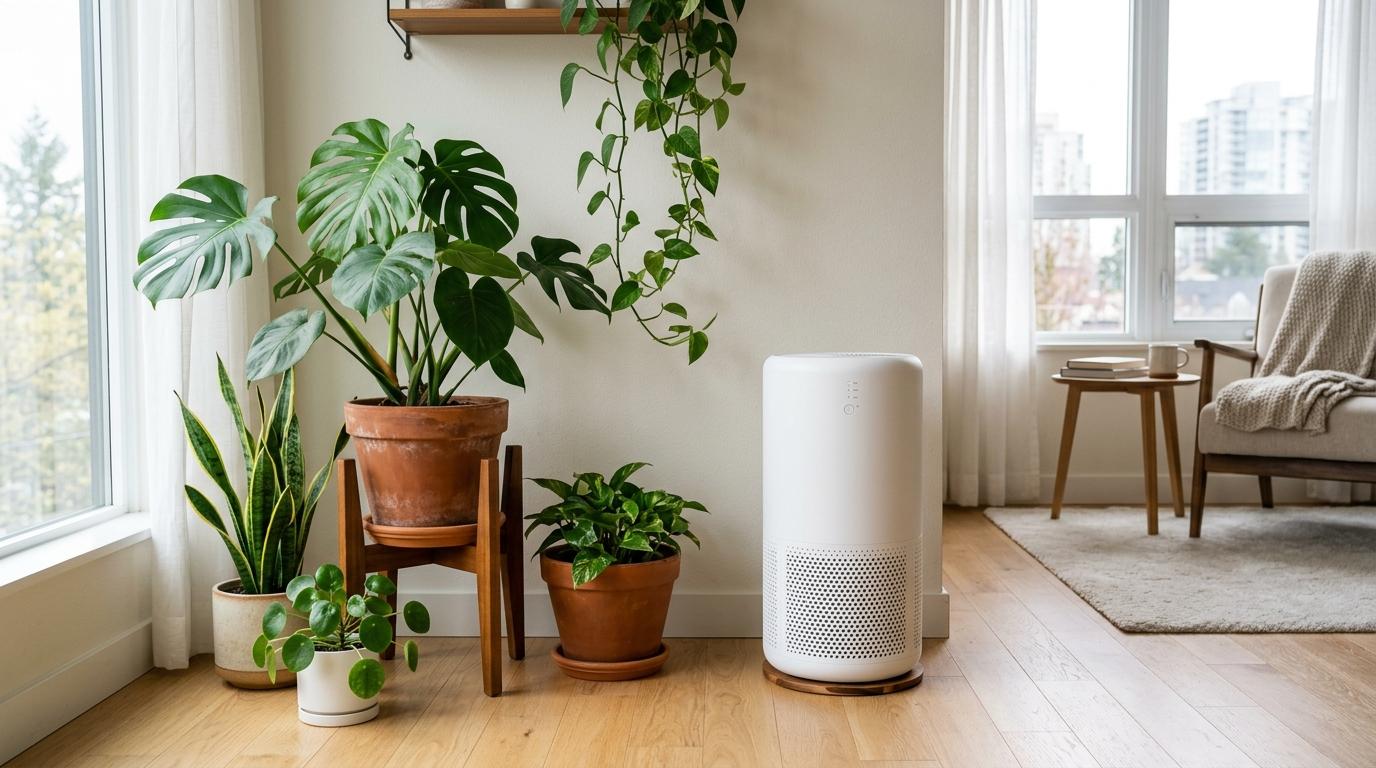
If you’re choosing between indoor plants vs air purifier for cleaner air at home, here’s the simple answer: an air purifier does the actual air-cleaning work much better.
Plants can make a room feel calmer and more welcoming, but they do not clean normal indoor air fast enough to replace source control, ventilation or filtration. If dust, PM2.5, pollen, smoke particles, pet dander or odors are the concern, use a properly sized HEPA air purifier with the right filters.
Indoor Plants vs Air Purifier: Quick Comparison
#Why People Think Plants Purify Air
#The idea of “air-purifying plants” became popular mostly because of a NASA study from 1989. That study looked at plants in small, sealed laboratory chambers and found that some plants and root-zone microbes could reduce certain volatile organic compounds under controlled conditions.
The study was real, but a normal home is not a sealed laboratory chamber. Doors open, windows leak air, fans run, people cook, clean, burn incense, bring in dust and live normal lives. In real rooms, plants do not process enough air quickly enough to make a meaningful difference.
That is why source-aware indoor air guidance focuses on three practical steps: reduce pollution sources, ventilate when outdoor air is cleaner and filter the air when needed. Plants can improve how a room feels, but they are not air-cleaning equipment.
What Actually Improves Indoor Air Quality?
#For most homes, the most useful approach is simple:
- Source control: reduce the things that pollute your indoor air.
- Ventilation: bring in outdoor air when it is cleaner than indoor air.
- Filtration: use a suitable air purifier or HVAC filter when particles and odors need active removal.
1. Source Control
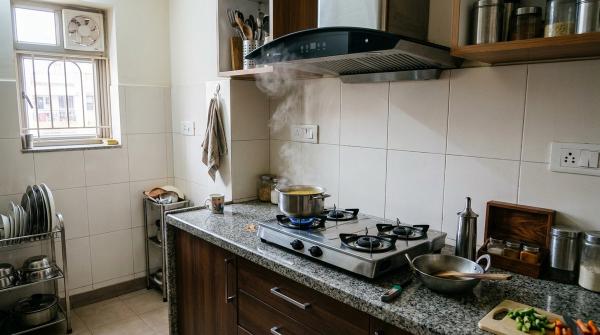
#Source control means preventing indoor air problems at the start. Do not allow smoking indoors. Use a kitchen exhaust fan while cooking. Avoid burning incense, candles, dhoop or mosquito coils in closed rooms if they worsen air quality. Store paints, solvents, fuels and strong chemicals away from living spaces. Fix leaks quickly so dampness and mold do not become larger problems.
An air purifier can help with particles already floating in the air, but it cannot make a strong pollution source harmless. If smoke, gas, severe mold or chemical fumes are present, fix the source and get qualified help rather than relying on plants or a consumer purifier.
2. Ventilation
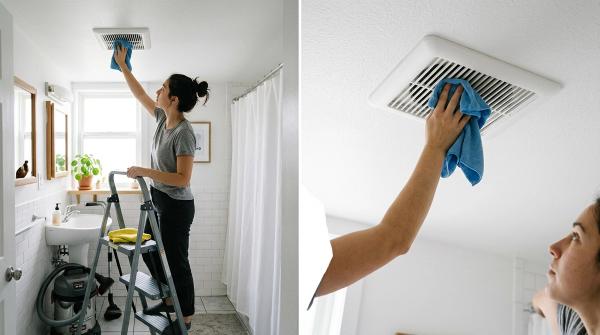
#Ventilation replaces stale indoor air with outdoor air. When outdoor air is cleaner, opening windows or using exhaust fans can dilute indoor pollutants. Kitchen and bathroom exhaust fans are useful because they remove moisture, cooking fumes and smells close to the source.
But ventilation is not always simple. If you live near traffic, construction, waste burning or seasonal smog, opening windows may bring in more dust and PM2.5. Time ventilation for cleaner hours when possible, and close windows when outdoor air is visibly dusty, smoky or polluted.
3. Filtration
#Filtration means pulling air through filters that trap particles or adsorb some gases. This is where a HEPA air purifier becomes useful. A purifier works because a fan keeps moving room air through filters again and again. Plants do not do that.
A good purifier can reduce fine dust, PM2.5, pollen, pet dander, airborne mold spores, some smoke particles and some odors if it has enough activated carbon. It does not replace cleaning, ventilation, leak repair or professional help for serious hazards.
HEPA, CADR and Activated Carbon Basics
#HEPA Filter
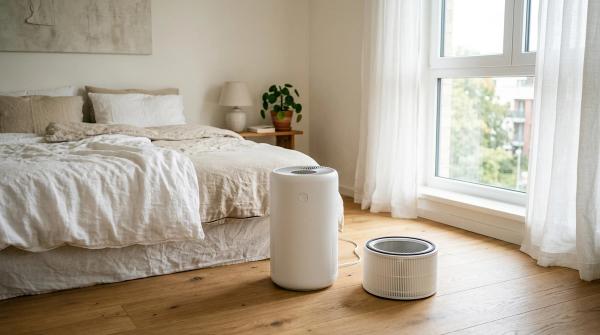
#A true HEPA filter is designed to capture very small airborne particles. In home use, HEPA filtration can help reduce dust, pollen, pet dander, mold spores, smoke particles and PM2.5. Be careful with vague labels like “HEPA-like” or “HEPA-type”; they may not perform the same as a true HEPA filter.
CADR
#CADR means Clean Air Delivery Rate. It tells you how quickly an air purifier can deliver filtered air. A higher CADR usually means the purifier can clean a larger room or clean the same room faster. Always match CADR to the room where the purifier will actually run.
Activated Carbon
#HEPA filters capture particles, not most gases or smells. Activated carbon can help with some cooking odors, smoke smells, traffic fumes and VOCs. More carbon usually works better than a very thin carbon sheet, but carbon filters get used up and need replacement.
Activated carbon is not a fix for LPG leaks, carbon monoxide, serious chemical exposure or fire smoke damage.
India-Aware Notes for Apartments and City Homes
#In many Indian apartments, the air problem is a mix of road dust, construction dust, PM2.5, cooking fumes, incense, mosquito coils, monsoon dampness, poor cross-ventilation and neighbors’ smoke or smells entering through shafts or balconies.
A practical setup is often better than one expensive purchase:
- Use exhaust fans while frying, doing tadka, grilling or high-heat cooking.
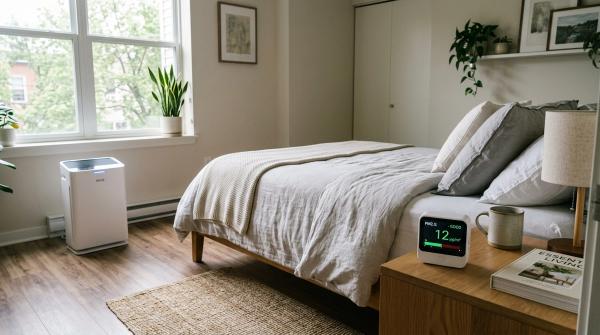
- Keep bedroom doors and windows closed when running the purifier.
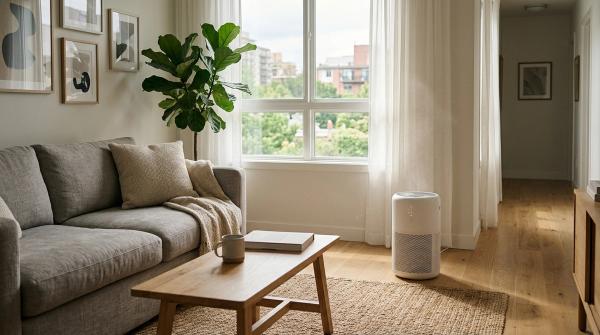
- Place the purifier in the room where you sleep or spend the most time.
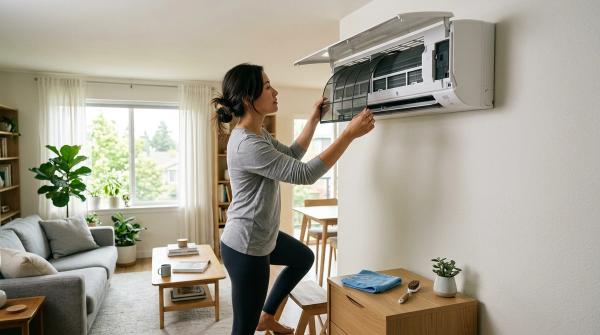
- Clean fan blades, window tracks, curtains and AC filters regularly.
- Damp mop instead of sweeping dry dust into the air.
- Ventilate when outdoor air is cleaner, not during visible dust or smoke.
- Keep plants if you enjoy them, but avoid overwatering in humid rooms.
For renters, a portable purifier can be practical because you can take it when you move.
Where Indoor Plants Still Help
#This is not an anti-plant argument. Plants are wonderful for comfort, decor and mood. Snake plant, pothos, spider plant, peace lily, areca palm and ZZ plant can make a home feel softer and more personal.
Just call them indoor plants, not air-cleaning equipment. Overwatered plants can also create damp soil, fungus gnats or moldy pots, so keep plant care simple and clean.
When an Air Purifier Makes More Sense
#An air purifier is worth considering if you live near a busy road, experience high seasonal pollution, see dust settling quickly, have pets indoors, cannot open windows often or want cleaner air in a bedroom or study.
This does not mean every home needs the most expensive purifier. A correctly sized purifier with affordable replacement filters is better than a costly model placed in the wrong room with clogged filters.
Air Purifier Buying Checklist
#- Choose the room first. Air purifiers work room by room, not for the whole house at once.
- Match CADR to room size. An undersized purifier will struggle.
- Look for true HEPA. This matters for dust, pollen, pet dander and PM2.5.
- Add activated carbon for odors. Useful for cooking smells, smoke smell and some VOCs.
- Check filter replacement cost. Filters must be available and affordable.
- Avoid ozone-producing devices. For everyday homes, mechanical HEPA plus carbon is usually the simpler choice.
- Use it correctly. Keep doors and windows closed, avoid blocking airflow and replace filters on time.
Simple Use Checklist
#- Place the purifier in the room where you spend the most time.
- Keep it away from walls, curtains and large furniture.
- Close doors and windows when outdoor air is polluted.
- Run it longer than 20 minutes; air cleaning takes repeated circulation.
- Clean washable pre-filters if the model has them.
- Replace HEPA and carbon filters as recommended.
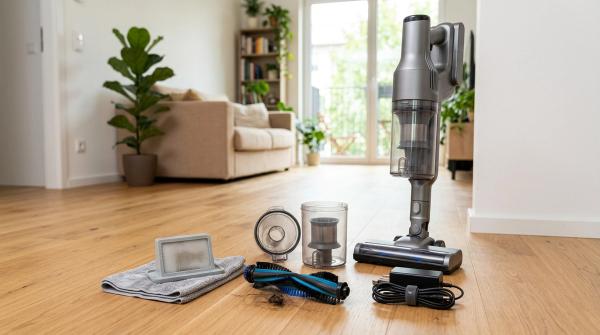
- Keep floors, curtains, bedding and shelves clean to reduce dust sources.
Important Safety Note
#Plants and consumer air purifiers are for everyday indoor air quality support. They are not emergency tools. Get professional or emergency help if you suspect carbon monoxide exposure, LPG or gas leaks, severe mold growth, heavy indoor smoke, chemical fumes, fire-related smoke damage or severe breathing symptoms.
So, Which Is Better?
#For cleaning indoor air, an air purifier is better. For making a home feel pleasant, plants are lovely. The best setup may include both: a few well-kept plants, good kitchen exhaust habits, regular dust control, smart window timing and a correctly sized purifier in the main room.