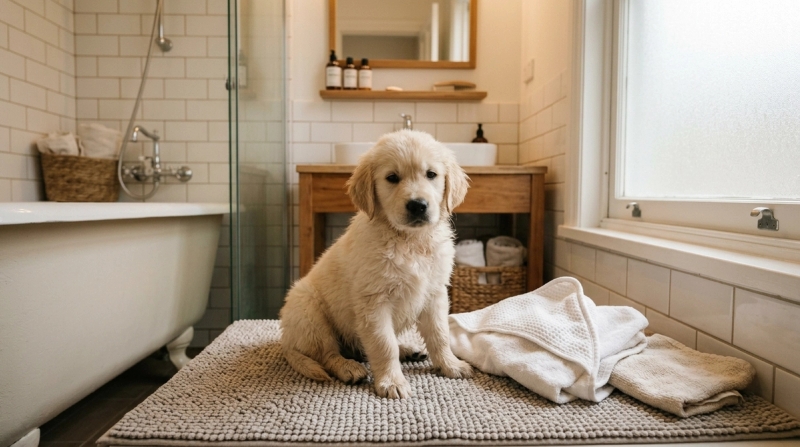
Most puppies should be old enough, healthy, and warm before a full bath. Use lukewarm water, puppy-safe shampoo, a non-slip surface, and a calm voice. Wash from the neck down, keep water and shampoo away from the eyes and ears, rinse properly, and dry your puppy in a warm, draft-free room.
A puppy’s first bath can be a little dramatic. Your puppy may wriggle, try to climb out, shake water all over you, or stare at you as if you have personally ruined their day. That is very normal.
The main goal is not to make your puppy smell like a shampoo commercial. The goal is to keep them safe, clean the parts that actually need cleaning, and help them learn that bath time is not scary.
This guide is for new dog parents who want to bathe a puppy at home, especially in apartments, small homes, and Indian weather, where drying a puppy properly can take a little extra care.
Before You Start: When Not to Bathe a Puppy
#Do not give your puppy a full bath just because they smell a bit “doggy.” Puppies are still small, sensitive, and easily chilled. They can also get stressed if they are handled too much or too roughly.
If you are unsure, it is always better to check with your vet first.
Avoid bathing your puppy and speak to a vet if:
- Your puppy is very young, unless your vet has clearly advised safe cleaning.
- Your puppy seems unwell, such as vomiting, diarrhea, unusual tiredness, weakness, or not eating properly.
- There are wounds, stitches, sores, or raw patches on the skin.
- You see many fleas, ticks, or other parasites. Do not try strong home remedies, chemical dips, or harsh products without veterinary advice.
- Your puppy’s skin looks red, flaky, swollen, smelly, greasy, or painful. A bath is not a cure for skin disease.
- Your puppy is already shivering, cold, or very stressed.
Also, puppies do not need frequent baths. Bathing too often can dry out or irritate their skin. Many times, wiping muddy paws, cleaning the belly, and brushing the coat is enough between proper baths.
Choose the Right Place to Bathe Your Puppy
#You do not need a fancy dog bathtub. A simple, safe setup works perfectly well.
Good options include:
- A bathroom floor with a bucket and mug
- A shower area with a handheld shower on low pressure
- A large sink for very small puppies, only if it is safe and non-slip
- A plastic tub placed on the floor
Avoid bathing your puppy on a high table, counter, or any surface they could fall from.
Keep the room warm. Close windows if there is a breeze. Turn off strong fans, and avoid direct AC during and after the bath. Once puppies are wet, they can get cold quickly.
Apartment and India-Aware Setup Notes
#If you live in a flat, you already know how slippery bathroom tiles can get. Add water, shampoo, and excited puppy paws, and the whole thing can become chaotic very quickly.
Set up the space before you bring your puppy in:
- Place a rubber mat or thick towel under your puppy’s feet.
- Keep the bathroom door closed so your puppy cannot run out wet.
- Keep shampoo, towels, treats, and the mug within reach.
- Use a bucket and mug if the shower pressure is too strong.
- During monsoon, plan extra drying time because humidity can keep the coat damp for longer.
- Do not dry your puppy directly under a fan, in an AC draft, or near a cold window.
A steady puppy is a calmer puppy. If they are not slipping around, they are much less likely to panic.
Puppy Bathing Checklist
#Step-by-Step Bath Routine
#How to Wash Your Puppy Safely
#Start slowly. Let your puppy sniff the bathroom, towel, mug, and shampoo bottle before the bath begins. Talk to them in a soft, relaxed voice. If they try to climb out, pause and steady them gently instead of rushing.
Begin by wetting the body, not the head. Most puppies dislike water near their face, and one bad splash in the eyes or ears can make them nervous about baths later.
Use only a little puppy shampoo. More shampoo does not mean a cleaner puppy. It usually just means more rinsing, and rinsing is often the part puppies have the least patience for.
Massage gently with your fingers. Do not scrub hard.
Focus on areas that usually get dirty:
- Belly
- Legs
- Paws
- Tail area
- Chest
- Neck folds, if your puppy has them
Avoid pushing water into the ears. Keep water and shampoo away from the eyes, nose, and mouth. For the face, a warm damp cloth is usually enough.
Rinsing Matters More Than You Think
#Rinsing is one of the most important parts of learning how to bathe a puppy. If shampoo is left in the coat, it can dry on the skin and cause itching, flakes, or irritation.
Rinse slowly and carefully:
- Lift the legs gently to rinse underneath.
- Check the chest and belly because shampoo often hides there.
- Rinse the paws and between the toes.
- Feel the coat with your fingers. It should not feel slippery or soapy.
- If you are not sure, rinse one more time.
This is not the step to rush. A proper rinse can make your puppy much more comfortable after the bath.
Drying Your Puppy After the Bath
#Dry your puppy right away. Wrap them in a towel and hold them gently for a minute, especially if they are shivering or looking overwhelmed.
Instead of rubbing roughly, press and squeeze the towel softly into the coat. This is gentler on the skin and helps avoid tangles, especially in long-coated puppies.
For short-coated puppies, towel drying may be enough if the room is warm.
For thick-coated or long-coated puppies, drying can take longer. If you use a dryer, keep it on a cool or low-warm setting. Hold it away from the skin and keep it moving. Test the air on your own hand often. If it feels too hot for you, it is too hot for your puppy.
Never leave a wet puppy in a cold room, strong fan draft, direct AC, balcony breeze, damp bed, or closed humid bathroom.
Monsoon Drying Tips
#During monsoon, drying needs extra patience. Your puppy’s coat may feel dry on top but still be damp near the skin.
After towel drying, check under the belly, armpits, between the toes, under the tail, around the neck, and behind the ears without putting anything inside the ear canal.
Keep your puppy indoors in a warm, dry space until the coat is properly dry. Do not let them run onto a cold balcony or sleep on a damp floor right after the bath.
How Often Should You Bathe a Puppy?
#Most puppies do not need frequent baths. Bathe your puppy when they are genuinely dirty, smelly, or have rolled in something that really needs washing off.
Between baths, you can usually manage with brushing, paw wiping, belly wiping, and spot cleaning with a damp cloth.
Bathing too often can irritate your puppy’s skin, especially when they are young. If your puppy is itchy, flaky, greasy, smelly, or uncomfortable even after gentle grooming, speak to a vet instead of giving repeated baths.
First Bath Tips for Nervous Puppies
#Some puppies handle their first bath like nothing happened. Others act as if the bathroom is the most suspicious place in the world. Both reactions are normal.
Try this:
- Let your puppy explore the dry bathroom before bath day.
- Place them on the non-slip mat for a few seconds, then reward them.
- Let them hear running water before you wet them.
- Keep the first bath short.
- Use treats and praise for calm behavior.
- Pause if your puppy gets too stressed.
- Do not shout, scold, or hold them down harshly.
Your puppy is learning. A gentle first bath can make future baths much easier, even if the first one is messy.
Common Mistakes to Avoid
#- Using hot or cold water
- Bathing in a chilly room
- Using human shampoo
- Pouring water over the puppy’s head
- Letting shampoo get near the eyes or ears
- Not rinsing fully
- Leaving the puppy damp after the bath
- Bathing too often
- Ignoring skin problems, wounds, parasites, or illness
- Leaving a wet puppy unattended on a slippery surface
A safe bath is not about finishing quickly. It is about warmth, control, patience, and gentle handling.
Quick Puppy First Bath Checklist
#Before the bath:
- Puppy is healthy enough for a bath
- No wounds, stitches, skin flare-ups, heavy parasites, or illness
- Room is warm and draft-free
- Non-slip mat or towel is in place
- Puppy shampoo is ready
- Lukewarm water is ready
- Towels are within reach
- Treats are nearby
- Drying area is prepared
During the bath:
- Wet from neck down
- Avoid eyes and ears
- Use a small amount of shampoo
- Clean face with a damp cloth only
- Rinse very thoroughly
- Keep the mood calm and positive
After the bath:
- Towel dry immediately
- Keep puppy warm
- Check damp areas, especially during monsoon
- Reward with praise and treats
- Watch for shivering, stress, or skin irritation