Bringing home your first cat is exciting until you reach the cat litter aisle. For most first-time cat parents in small apartments, the easiest starting point is unscented clumping clay litter or low-dust tofu cat litter for an adult cat. Use a large, uncovered litter box, scoop every day, avoid strong fragrances, and switch litter slowly. For very young kittens, non-clumping paper pellets may be a safer starter option.
Quick Comparison: Which Cat Litter Should Beginners Buy?
#The “best” cat litter is the one your cat uses consistently. If your cat already used a specific litter before adoption, start with that for the first few days or weeks, then transition slowly if you want to change.
Clumping vs Non-Clumping Cat Litter
#Clumping litter forms solid lumps when your cat urinates. You scoop out urine clumps and stool daily, then top up fresh litter as needed. This is usually easier for beginners because you can clearly remove soiled litter.
Non-clumping litter absorbs urine without forming firm clumps. You remove stool daily, but urine remains absorbed in the tray until you replace the litter. This means non-clumping litter often needs more frequent full changes.
For most adult cats, clumping litter is simpler. For very young kittens, many cat parents start with non-clumping paper pellets because kittens may explore litter with their mouths. If a kitten eats litter, vomits, stops pooping, hides, refuses food, or seems painful, contact a veterinarian.
1. Clumping Clay Litter
#Clumping clay is one of the most common starter options. It usually clumps well, controls urine odor when scooped daily, and feels familiar to many cats because of its sandy texture.
Choose clay litter if you want an easy scoop-and-refill routine. Look for unscented, low-dust, and firm-clumping options. Avoid very dusty bags and heavy perfumes. In small flats, clay can track into corners or stick to floors, especially during humid weather, so use a litter mat and sweep around the box often.
Beginner verdict: A solid first choice for adult cats, as long as it is unscented and not overly dusty.
2. Tofu Cat Litter
#Tofu cat litter is usually made from compressed soybean fiber. It has become popular with apartment cat parents because it is often lighter, less dusty, and softer under paws than some clay or pine options.
It can be a strong choice for small apartments where dust, tracking, and carrying heavy bags matter. However, it needs dry storage. In Indian apartments during monsoon or in humid bathrooms, plant-based litter can break down faster or smell sooner if it stays damp.
Some tofu litter brands claim to be flushable. Be careful. Check the brand instructions, building plumbing, local rules, and waste guidance. If you are not completely sure, bag used litter and dispose of it properly.
Beginner verdict: Excellent for many small apartments, especially if dust is a concern. Scoop often and keep unused litter sealed and dry.
3. Silica Crystal Litter
#Silica litter uses absorbent crystals to trap moisture. Most silica litters do not clump. You remove stool daily, stir the crystals if the brand recommends it, and replace the tray once the crystals are saturated.
Silica can be lightweight and low dust, but some cats dislike the crunchy feel. In a small apartment, don’t wait for a strong urine smell before replacing it. Your cat may notice the saturated tray before you do.
Beginner verdict: Useful if your cat accepts the texture and you replace it on time. If your cat avoids the box after switching to crystals, slow down or return to the previous litter.
4. Paper Pellet Litter
#Paper pellets are usually made from recycled paper. They are soft, low dust, and non-clumping. This makes them a sensible option for young kittens and cats who need a gentler litter.
The tradeoff is odor control. Paper pellets often need more frequent partial and full changes because wet areas can soften and smell. Adult cats that prefer sandy textures may also reject pellets.
Beginner verdict: A good kitten starter option and useful for very low-dust needs, but expect more frequent cleaning.
5. Pine Pellet Litter
#Pine litter is made from compressed wood pellets. When wet, the pellets usually break down into sawdust, so it often works best with a sifting litter box.
It may track less than fine clay and can be economical, but texture is the big question. Some cats dislike firm pellets under their paws. Wet sawdust also needs regular removal so the box does not smell damp.
Beginner verdict: A natural option if your cat accepts pellets and you can manage sifting or frequent cleaning.
Litter Box Setup Matters as Much as Litter
#A great litter in a tiny, dirty, badly placed box can still fail. Veterinary and feline behavior guidance usually comes back to the same basics: enough boxes, clean boxes, large boxes, and easy access.
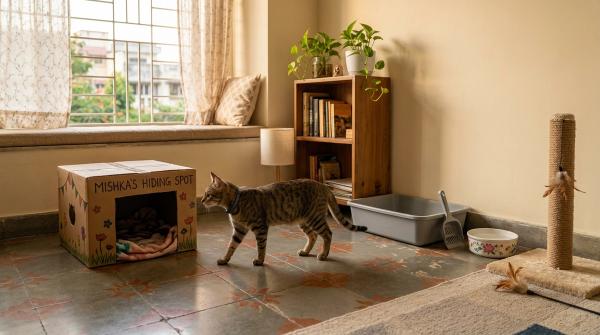
A practical rule is one litter box per cat, plus one extra. One cat ideally gets two boxes; two cats ideally get three. In a small apartment, that may feel like a lot, but it gives your cat options if one box is dirty, noisy, blocked, or too close to activity.
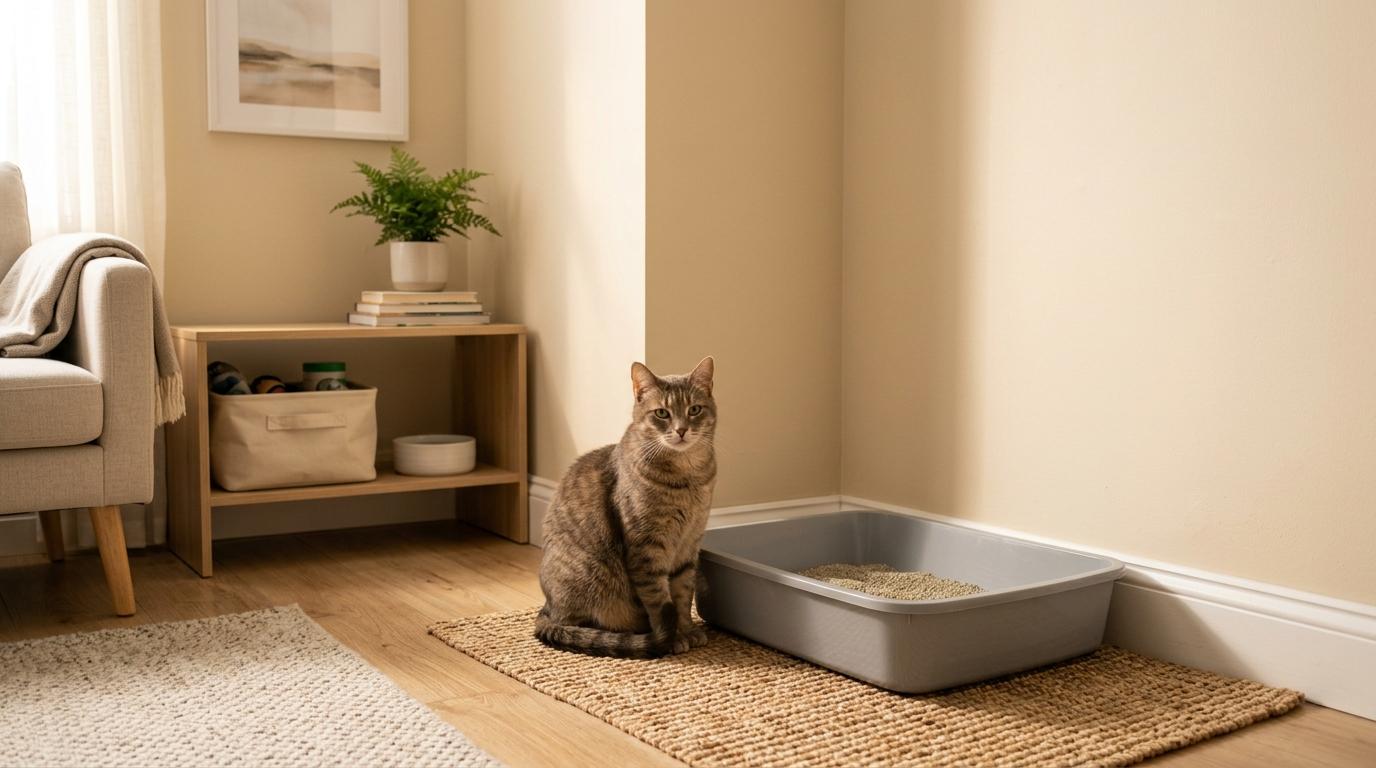
Choose a box large enough for your cat to enter, turn around, dig, squat, and cover waste comfortably. A useful guideline is a box at least about 1.5 times the length of your cat. Uncovered boxes often work better because they provide airflow and do not trap smells. Covered boxes may look neater to humans, but some cats feel trapped or avoid them.
Place the box somewhere quiet, accessible, and away from food and water. Avoid loud washing machines, blocked balconies, damp bathrooms, or corners where your cat can feel cornered.
Small-Apartment Odor Control Checklist
#Good odor control comes from routine, not perfume.
- Scoop urine clumps and stool at least once daily.
- Scoop twice daily if your flat is small or humid.
- Keep litter around 2 to 3 inches deep unless the brand says otherwise.
- Use a litter mat to reduce tracking.
- Keep the box in a ventilated but safe area.
- Store unused litter somewhere dry.
- Wash the tray regularly with warm water and mild unscented soap.
- Avoid strong scented litter, ammonia cleaners, and harsh-smelling disinfectants.
- Replace scratched plastic boxes if they keep smelling after washing.
A clean unscented box is usually better than a dirty scented one. Strong fragrances can bother cats and may make some cats avoid the litter box.
Cleaning Routine by Litter Type
#For clumping clay or tofu litter, scoop once daily, top up as needed, and fully empty and wash the box every two to three weeks or sooner if it smells.
For paper pellets, remove stool daily, remove wet sections often, and expect more frequent full changes.
For silica litter, remove stool daily, stir if the brand recommends it, and replace fully when the crystals are saturated.
For pine pellets, remove stool daily and sift or discard wet sawdust regularly.
Whatever litter you choose, let the tray dry fully before adding fresh litter. Moisture trapped under clean litter can cause smell quickly.
How to Switch Cat Litter Safely
#Cats like routine. A sudden switch from clay to tofu, paper, pine, or silica can make some cats avoid the box.
Try this gradual transition:
- Days 1–3: 75% old litter, 25% new litter.
- Days 4–6: 50% old litter, 50% new litter.
- Days 7–9: 25% old litter, 75% new litter.
- Day 10: 100% new litter if your cat is using the box normally.
If your cat hesitates, pees outside, or avoids the box, go back to the previous mix and slow down. For a newly adopted cat, avoid changing the litter, box type, and location all at once.
Common Litter Box Problems
#Litter box problems are not revenge. They usually point to discomfort, stress, cleanliness problems, location problems, or health concerns.
If your cat scratches the sides of the box, the box may be too small, the litter may be too shallow, or the texture may feel wrong. If your cat stands half in and half out, the box may be cramped or hard to enter. If your cat pees near the box but not inside, the box may be dirty, the sides may be too high, the location may feel unsafe, or there may be a medical issue.
If a problem begins suddenly, do not ignore it.
When to Contact a Veterinarian
#This guide can help with litter choice and setup, but it cannot diagnose your cat.
Contact a qualified veterinarian promptly if you notice straining in the box, crying while trying to pee or poop, repeated trips to the box, very little or no urine, blood in urine or stool, sudden peeing outside the box, ongoing diarrhea, hard dry stool, vomiting, weakness, hiding, or loss of appetite along with litter box changes.
Seek urgent veterinary care if your cat is straining and producing little or no urine, especially if your cat is male. A urinary blockage can be life-threatening. Do not give human medicines, painkillers, antibiotics, or home remedies unless a licensed veterinarian tells you to.
Final Takeaway
#For most new cat parents, start simple: choose an unscented litter your cat accepts, use a large clean box, scoop daily, and avoid sudden changes. Clumping clay is easy for many adult cats. Tofu cat litter is strong for small apartments where dust matters. Silica can work if your cat likes crystals. Paper pellets are often a sensible kitten starter. Pine is natural and practical only if your cat accepts the pellet feel.
Your cat’s behavior is feedback. If they enter the box comfortably, dig normally, use it consistently, and do not seem stressed, you are probably on the right track.