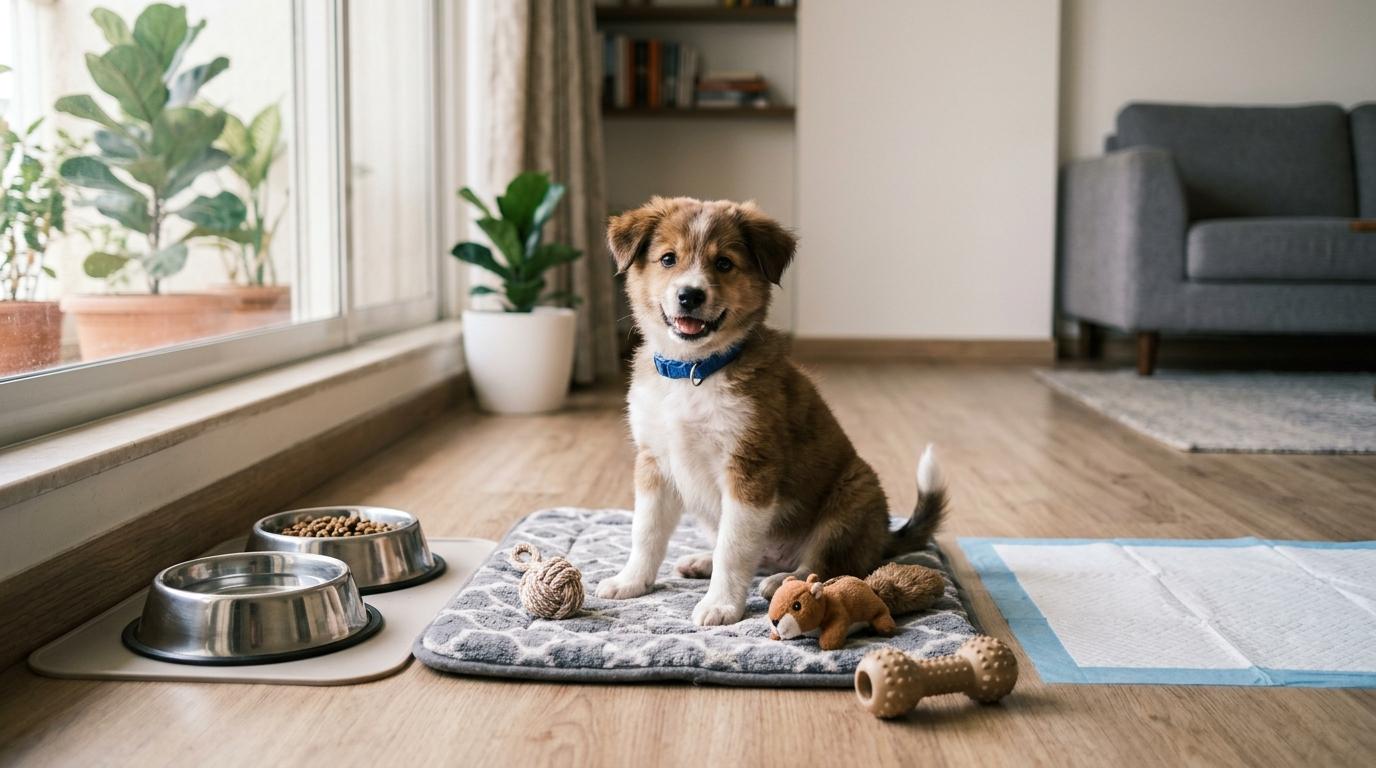
A new puppy in an Indian apartment needs a safe sleeping area, one fixed potty spot, basic supplies, familiar food, an early vet visit, safe chew toys and a calm daily routine. Do not rush public walks before your vet clears vaccine safety. The first 30 days are about trust, health and simple habits — not perfection.
Bringing home a puppy is exciting, but the first few days can also feel chaotic. There is pee in unexpected places. Someone in the family wants to cuddle the puppy every five minutes. The doorbell keeps ringing. The puppy may cry at night. You may suddenly wonder if you bought the right food, whether the balcony is safe, and when you are allowed to take them downstairs.
A good new puppy checklist India does not need to be complicated. In the first month, your puppy mainly needs four things:
- A safe place to rest
- Basic supplies
- An early vet visit
- A simple routine for food, potty, sleep and play
That’s it. Not perfection. Not fancy accessories. Not a fully trained dog in 30 days.
Your goal in the first month is to help your puppy feel safe, stay healthy and slowly understand how life works in your home.
This puppy care checklist India is written especially for apartment homes, where you may be dealing with lifts, balconies, tiles, society rules, house help, traffic sounds, neighbours, delivery people and street dogs around the building.
Whether you are adopting an Indie puppy, bringing home a rescue pup, or getting a puppy from a breeder or family, this guide will help you get through the puppy first 30 days with more confidence.
First 30 Days Checklist for a New Puppy in India
#Use this as your quick plan before going into the details.
Before Your Puppy Comes Home: Set Up the Apartment
#You do not need to turn your home into a pet store before the puppy arrives. In fact, buying too much in the beginning can make things more confusing.
Start with the basics: safety, hygiene and routine.
For an apartment or small city home, divide the space into simple zones:
- Sleep zone
- Food and water zone
- Potty zone
- Play and chewing zone
- No-puppy zones, such as the kitchen, balcony edge, shoe rack, puja area, or rooms with loose wires
Do not give your puppy access to the whole house on day one.
It may feel kind to let them roam everywhere, but free roaming usually leads to hidden pee spots, chewed slippers, swallowed objects and a very stressed puppy parent.
A smaller safe area is much easier. Your puppy settles faster, and you can supervise properly.
Puppy-proofing for Indian apartments
#Before your puppy comes home, check these common trouble spots:
- Loose charging cables and Wi-Fi wires
- Floor cleaners, phenyl, detergents and mosquito repellents
- Open dustbins
- Chappals, shoes, socks and children’s toys
- Low-hanging curtains
- Balcony gaps and railings
- Small objects under sofas and beds
- Houseplants within chewing reach
- Open apartment doors during deliveries or guest visits
Be extra careful with balconies.
Do not assume the balcony is safe because your puppy is small. Puppies can squeeze through gaps, climb on buckets or chairs, or get startled by loud traffic sounds.
Balcony time should always be supervised, especially in the first few weeks.
What to Buy vs What to Skip
#This is the practical part of the first time dog owner checklist. Buy what helps your puppy stay safe and follow a routine. Skip things that only look cute but may be chewed, peed on or outgrown very quickly.
What to buy first
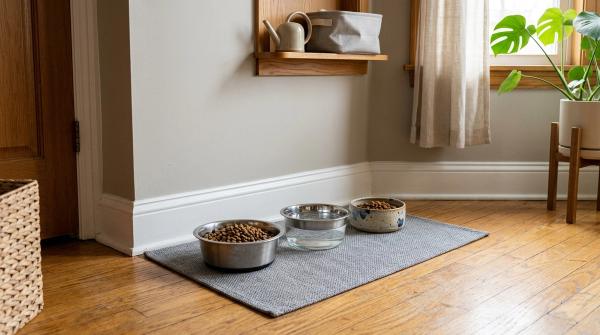
#1. Stainless steel food and water bowls
#Stainless steel bowls are simple, durable and easy to clean.
They are usually better than decorative plastic bowls, especially in warm or humid weather where food residue can get smelly quickly.
Keep one bowl for food and one for fresh water. Wash both daily.
2. Puppy food
#Start with the same food your puppy was eating at the shelter, foster home, breeder or previous home.
Day one is not the time to experiment.
Sudden food changes can upset a puppy’s stomach. If you want to change food later, do it slowly over several days. If your puppy is very young, weak, underweight, recently rescued or unwell, speak to your vet before changing anything.
3. Flat collar with ID tag
#Even if your puppy is not going for walks yet, an ID tag is useful.
Apartment doors open all the time for deliveries, guests, house help and maintenance staff. A small engraved tag with your phone number can make a big difference if your puppy slips out.
Check the collar fit often. Puppies grow fast, sometimes almost overnight.
4. Standard 4-6 foot leash
#A normal leash gives better control than a retractable leash.
You can use it for short indoor practice before outdoor walks begin. Your puppy can learn to wear a collar, follow you gently and get used to leash movement inside the home.
If you are unsure whether to use a collar or harness later, see the AllBlogs guide on Dog Harness vs Collar: What Should New Dog Parents Buy First?
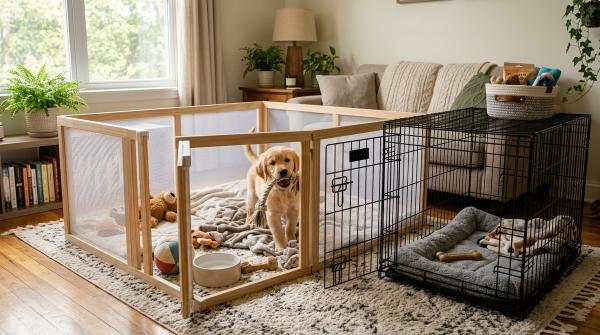
5. Puppy pen or crate
#A puppy pen or crate is not a punishment space.
Think of it as your puppy’s safe bedroom. It helps when you cannot supervise every second, which is very normal in a busy home.
You can use a pen or crate for:
- Nap time
- Night sleep
- Short breaks from excitement
- Preventing chewing accidents
- Supporting potty training
Keep the space positive. Add a washable towel or blanket. Avoid expensive beds at first because puppies may pee on them, chew them, or drag them across the house.
6. Washable bedding
#Fancy beds can wait.
In the first month, washable bedding is much more useful. Soft towels, thin blankets, or washable mats are easier to clean after pee accidents, vomit, spilled food or general puppy mess.
7. Safe chew toys
#Puppies explore the world with their mouth.
If you do not give them safe things to chew, they will choose your furniture, slippers, wires, curtains or fingers.
Choose toys that are the right size for your puppy. Avoid anything that breaks into sharp pieces or is small enough to swallow.
For more help, see Puppy Chewing Everything? Apartment-Safe Training Checklist on AllBlogs.
8. Puppy pads or indoor potty setup
#For Indian apartments, many puppies start with puppy pads, a washable mat, or a fixed bathroom or balcony potty spot.
This is especially helpful before your vet clears outdoor walks.
For a step-by-step routine, see Puppy Potty Training in Indian Apartments: Balcony, Pads and Routine Checklist on AllBlogs.
What to skip for now
#You can wait before buying:
- Expensive plush beds
- Retractable leashes
- Too many toys at once
- Costumes and accessories
- Fancy feeding gadgets
- Strong perfumes or deodorizing sprays
- Outdoor walking gear that may not fit after a few weeks
Keep the first month simple. Your puppy needs routine more than shopping.
Day 1: Arrival, Food, Potty and First Night
#Your puppy has just left a familiar place.
Even if they seem playful, they may be confused, tired or overwhelmed. Some puppies follow you everywhere. Some hide under furniture. Some cry. Some sleep a lot. Some pee every few minutes.
All of this can be normal.
It does not mean you are doing something wrong.
Keep the home quiet
#It is tempting to call relatives, friends and neighbours to meet the puppy immediately.
Try not to do that on day one.
Keep the home calm. Let the puppy explore only the safe zone. Avoid loud handling, too many people and constant picking up.
If there are children at home, teach them three simple rules:
- Sit down before interacting with the puppy
- Do not chase the puppy
- Let the puppy sleep when tired
A tired puppy can become bitey, cranky or scared. Many times, the puppy is not being “naughty”. They just need sleep.
Feed the same food
#Do not change food on the first day.
Continue whatever the puppy was already eating. Avoid giving random human foods because the puppy “looks hungry” or because someone at home feels bad.
Also avoid starting milk, curd, paneer, chapati, biscuits or leftovers without your vet’s guidance.
Many puppies get loose stools or vomiting from sudden diet changes. Dairy can also upset some dogs’ stomachs.
If you want to move to a different puppy food or a balanced homemade diet, ask your vet and transition slowly.
Show the potty spot early
#As soon as you reach home, take your puppy to the chosen potty spot.
This could be:
- A puppy pad
- A washable grass mat
- A dry balcony corner
- A bathroom area
Do not expect your puppy to understand immediately. The first few days are about repetition, not perfection.
Take your puppy to the potty spot:
- After waking up
- After meals
- After play
- After drinking water
- Before sleep
- Whenever they start sniffing, circling or suddenly walking away
Praise calmly when they get it right. Clean accidents without scolding or drama.
First night expectations
#The first night can be emotional for everyone.
Your puppy may cry because they are alone, confused, cold, or need to potty.
Keep the sleep area close enough that they do not feel abandoned. At the same time, try not to start habits you do not want long-term. If you do not want your adult dog sleeping on your bed, avoid making that the default from night one.
Before bedtime:
- Offer a potty break
- Keep the room calm
- Avoid rough play late at night
- Keep water available unless your vet advises otherwise
- Use washable bedding
Comfort your puppy gently. You can sit nearby for a few minutes. But try not to turn every cry into playtime, because puppies learn patterns very quickly.
Week 1: Build the Routine
#The first week becomes much easier if the whole family follows the same routine.
Puppies like knowing what happens next. Your schedule does not need to be exact to the minute, but the order should feel familiar.
A simple day may look like this:
Young puppies often eat 3-4 small meals a day, depending on age, size, health and vet advice.
Follow your vet’s guidance or the puppy food label. If your puppy is very young, weak, rescued or has health concerns, do not randomly change meal amounts.
Vet Visit in the First Few Days
#Book a vet visit soon after bringing your puppy home.
AAHA recommends scheduling a veterinary visit early after bringing a puppy home. This first appointment is not only about vaccines. It is also about checking whether your puppy is healthy, growing well and ready for a normal home routine.
Your vet may check:
- Weight and body condition
- Teeth and gums
- Skin and coat
- Ears and eyes
- Heart and lungs
- Stool or parasite concerns
- Deworming status
- Vaccination records
- Feeding plan
- Signs of illness, weakness, or discomfort
Carry whatever records you have.
If your puppy came from a rescue, foster, breeder, or previous home, bring vaccine cards, deworming notes, food details and medicine history.
Do not guess vaccine dates. Let your vet review the records properly.
Vaccination Safety Caveats for Indian Puppies
#Vaccines are important, but schedules should not be copied blindly from the internet.
WSAVA gives broad global vaccine guidance, but your local veterinarian should decide the exact schedule based on your puppy’s age, previous vaccines, health, local disease risk and exposure.
In India, vets commonly pay close attention to diseases such as:
- Parvovirus
- Distemper
- Leptospirosis
- Rabies
Timing can vary. Many puppies begin core vaccination around 6-8 weeks, with boosters after that. Rabies vaccination is usually planned later as advised by the vet.
For apartment parents, the main point is simple:
Until your vet says it is safe, avoid letting your puppy walk on public or shared ground where unknown dogs may have been.
That includes:
- Society gardens
- Parking areas
- Footpaths
- Pet relief corners
- Public parks
- Common walking paths
- Areas where street dogs or unvaccinated pets pass through
For detailed timing and local caveats, see Puppy Vaccination Schedule in India: First-Year Checklist for New Dog Parents on AllBlogs.
When to call the vet urgently
#Do not wait too long if your puppy seems seriously unwell. Puppies can go downhill faster than adult dogs.
Call your vet quickly if your puppy has:
- Sudden extreme tiredness
- Repeated vomiting
- Bloody or black stool
- Refusal to eat or drink for many hours
- Pale gums
- Difficulty breathing
- Severe diarrhea
- Weakness or collapse
It is always better to call early than to regret waiting.
Apartment Potty Setup Without Creating Confusion
#Potty training in an apartment is mostly about timing, location and patience.
Choose one potty spot and stick to it.
If you keep moving the pad from bathroom to balcony to bedroom, your puppy will not understand what you want.
Good apartment potty spots include:
- A dry balcony corner, if safe and supervised
- A bathroom corner
- A washable mat area
- A puppy pad placed away from food and bed
Avoid placing the potty spot too close to the sleeping area. Puppies naturally prefer to keep their bed clean, but very young puppies cannot hold for long.
What to do after accidents
#Accidents will happen.
Do not scold, hit, or rub your puppy’s nose in it. That only creates fear and can make potty training harder.
Instead:
- Clean the area properly.
- Reduce free roaming.
- Take your puppy to the potty spot more often.
- Praise successful potty trips.
- Watch for patterns, like accidents after play, meals or waking up.
Chewing, Biting and Safe Play in the First Month
#Puppy biting is normal.
It does not mean your puppy is aggressive. Most of the time, biting means your puppy is exploring, teething, tired, excited or overstimulated.
Your job is to teach them what is okay to bite.
Keep safe chew toys in the puppy zone. When your puppy bites your hand, ankle, dupatta, slipper or furniture, calmly redirect them to a toy.
Avoid:
- Wrestling with bare hands
- Screaming every time they bite
- Giving old shoes as toys, because puppies cannot understand old shoes vs new shoes
- Leaving wires or small plastic items within reach
- Playing rough when the puppy is already tired
Short play is better than long, wild play.
Puppies often become more bitey when they actually need a nap.
Sleep Setup for an Indian Apartment
#Sleep is a huge part of puppy care.
A tired puppy is harder to train, more likely to bite and more likely to have potty accidents.
Set up the sleep area in a calm part of the home. It should be away from direct AC blast, strong sunlight, kitchen heat and constant foot traffic.
A good sleep setup includes:
- Puppy pen or crate
- Washable bedding
- Access to water
- Safe chew toy if appropriate
- No loose wires nearby
- No small objects that can be swallowed
If your home has loud doorbells, lift sounds, traffic noise, pressure cooker whistles, or mixer-grinder sounds, do not try to silence the whole world.
Instead, help your puppy get used to normal household sounds slowly, from a safe distance, while they feel secure.
Weeks 2-4: Gentle Training and Safe Socialization
#By the second week, your puppy may start showing more personality.
Some become bold. Some become clingy. Some test boundaries. Some suddenly act like they forgot everything from yesterday.
This is normal.
Now you can begin very short training sessions.
Focus on:
- Name response
- Coming when called indoors
- Sitting before food
- Calm handling of paws and ears
- Wearing a collar or harness briefly
- Settling in the pen
- Following you on leash inside the home
Keep sessions short and positive. A few minutes is enough.
Puppies do not need long training classes at home. They need small wins repeated often.
Safe socialization before outdoor walks
#AVMA supports gradual puppy socialization, but it should be done with a veterinary plan.
Socialization does not mean putting an under-vaccinated puppy into risky public spaces.
Before your vet clears normal walks, you can expose your puppy safely by:
- Playing traffic, thunder, or fireworks sounds at low volume
- Letting them hear the mixer, pressure cooker, vacuum, or doorbell from a distance
- Carrying them in your arms or a secure carrier to see the building lobby
- Letting them watch people and vehicles from a safe distance
- Inviting one calm, healthy, vaccinated dog only if your vet says it is okay
- Allowing gentle handling by family members
Do not force interaction.
If your puppy looks scared, increase the distance and make the experience easier.
Good socialization should feel calm and safe, not dramatic.
Related AllBlogs Guides to Read Next
#These existing AllBlogs guides support the first-month puppy plan without replacing it:
- Puppy Vaccination Schedule in India: First-Year Checklist for New Dog Parents
- Puppy Potty Training in Indian Apartments: Balcony, Pads and Routine Checklist
- Puppy Chewing Everything? Apartment-Safe Training Checklist
- Dog Harness vs Collar: What Should New Dog Parents Buy First?
End of First Month: What Good Progress Looks Like
#By the end of 30 days, your puppy does not need to be fully trained.
That is not realistic.
Good progress looks like this:
- Your puppy knows the sleep area
- Potty accidents are reducing
- They are eating consistently
- They are more comfortable with household sounds
- They respond to their name sometimes
- They can settle for short periods
- They chew toys more often than furniture
- You have a vet plan for vaccines and deworming
- You understand their meal, potty, play and sleep rhythm better
The first month is not about raising a perfect dog.
It is about building trust.
You are learning your puppy, and your puppy is learning your home.