Quick answer: During the first 30 days with an adopted cat, keep things calm, predictable, and safe. Begin with one quiet safe room, secure all balconies and windows, place the litter box away from food and water, and let your cat hide if they need to. Book a basic vet visit, check vaccination and deworming records, build a simple routine for meals, water, play, sleep, and scratching, and watch for warning signs like not eating, straining to urinate, repeated vomiting, or extreme tiredness.
Bringing home an adopted kitten or adult rescue cat is exciting, but it can also be confusing. You may imagine your new cat walking out of the carrier, sniffing around the house, and curling up beside you. What often happens instead? The cat disappears behind a suitcase, under the bed, inside a cupboard, or stays frozen in the carrier wondering what just happened.
That is normal. For a first-time cat parent, the first month is not about making your cat friendly quickly. It is about helping them feel safe enough to eat, drink, pee, poop, sleep, explore, and slowly trust you.
In Indian apartments, this matters even more. There may be doorbells, house help coming in and out, balcony grills, pressure cooker whistles, mixer grinders, traffic, construction noise, festival crackers, ceiling fans, open windows, and delivery people at the door. To us, it is normal home life. To a newly adopted cat, it can feel overwhelming.
Use this practical cat adoption checklist for India to prepare your home, reduce stress, and know when to call a veterinarian.
Before Your Cat Comes Home: Prepare the Apartment
#If possible, set up the home before your cat arrives. Once a scared cat is loose in the house, it becomes much harder to fix gaps, move wires, or block unsafe corners calmly.
Cats are experts at finding places you did not know existed. They can squeeze behind cupboards, jump onto high shelves, slip through half-open doors, and hide inside tiny gaps.
Secure balconies and windows properly
#For apartment cat care, this is one of the most important steps.
Many Indian homes have sliding windows, balcony grills, mosquito mesh, pigeon netting, bathroom ventilators, utility areas, and half-open doors during deliveries. Do not assume these are cat-safe just because they look covered. A scared or curious cat can push through loose mesh, climb weak netting, or slip through surprisingly small gaps.
Check these areas carefully:
- Balcony grills and gaps
- Pigeon netting and how firmly it is fixed
- Sliding windows and window locks
- Mosquito mesh
- Bathroom ventilators
- Utility areas
- Washing machine corners
- Gaps behind cupboards, beds, sofas, and appliances
- The main door, especially during food deliveries or when guests arrive
Use strong, properly installed netting or safe grills for balconies and windows. Thin mosquito mesh is usually not enough for an active cat.
Also be careful with ceiling fans in the first few days. Keep fans off in the safe room until you are sure your cat cannot jump close to them from a wardrobe, loft, shelf, curtain rod, or tall furniture.
Remove obvious hazards
#Take a slow walk around your home and try to look at it from a cat’s point of view.
Look for:
- Loose electrical wires and phone chargers
- Open buckets
- Open toilet lids
- Small items that can be swallowed
- Glass décor or fragile objects on shelves
- Cleaning liquids, phenyl bottles, and floor cleaners
- Open dustbins
- Human medicines
- Plastic bags
- Rubber bands and hair ties
- Toxic plants such as lilies, aloe vera, pothos, and money plant
You do not need to make your house perfect. You just need to make it safer.
Set Up a New Cat Safe Room
#Do not give your adopted cat the whole apartment on the first day. It may feel kind to let them explore everything, but for many cats, a full home is too big, too noisy, and too overwhelming. One quiet room feels much safer.
Choose one room as the new cat safe room. A spare bedroom is ideal. A dry, safe, well-ventilated bathroom can work for a short time if it is not too busy.
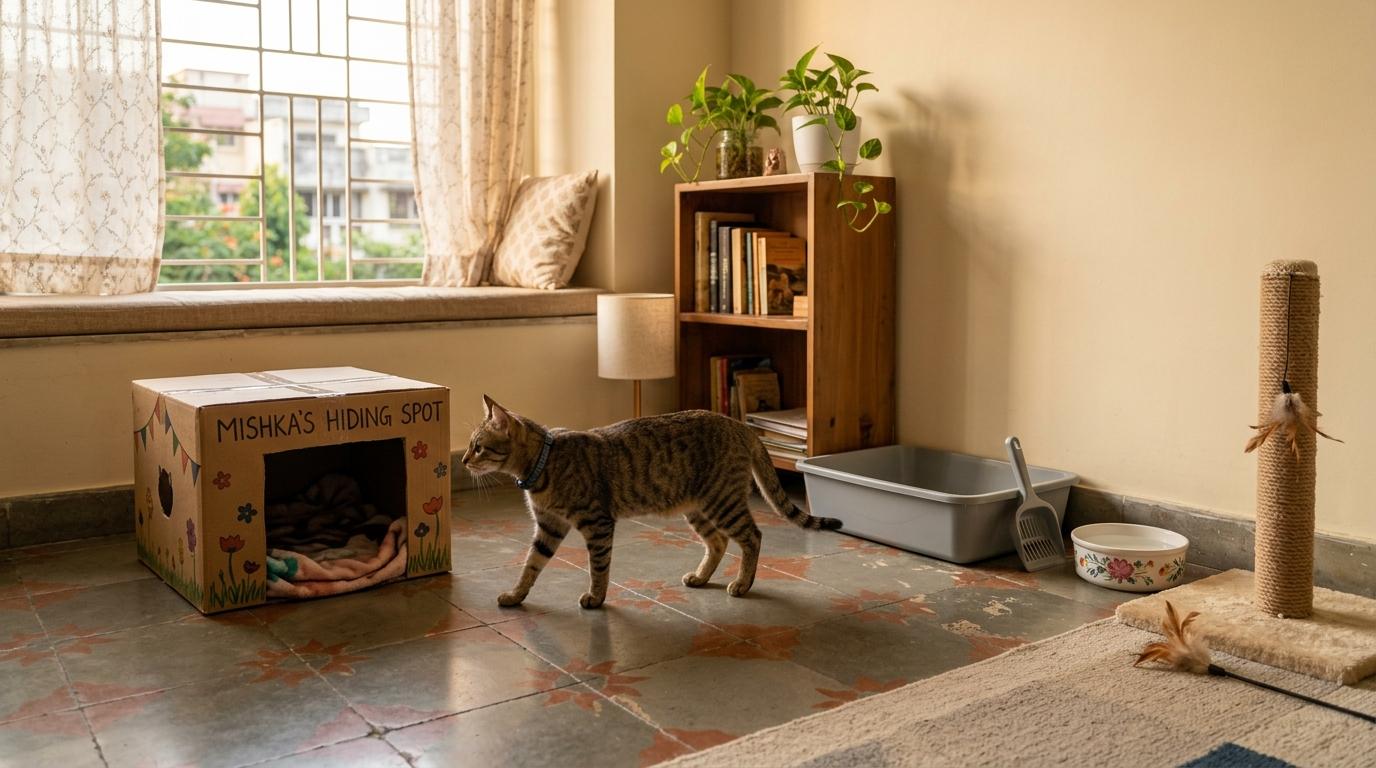
Keep these things inside the room:
- The carrier, with the door left open
- A hiding spot, such as a cardboard box or covered cat bed
- Food bowl
- Water bowl
- Litter box
- Soft towel, blanket, or bedding
- Scratching pad or post
- One or two simple toys
Keep the room calm. Do not invite everyone in the family, neighbours, or friends to meet the cat immediately. Your cat does not need a welcome party. They need peace.
If your rescue cat is hiding, do not pull them out. Hiding is not rejection. It is how many cats cope with fear. You can sit in the room quietly, speak softly, read a book, work on your laptop, or simply be present without staring at them. For a nervous cat, calm company is much more reassuring than repeated touching or picking up.
Litter Box Setup and Smell Control
#A good litter box setup makes the first month much easier.
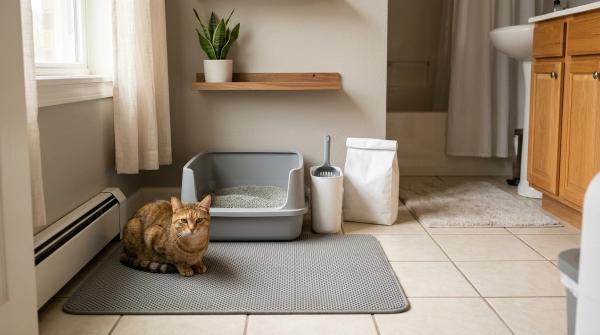
Place the litter box in a quiet corner of the safe room. Keep food and water on the other side of the room. Most cats do not like eating near their toilet area.
Basic litter box rules:
- Scoop at least once daily; twice is better
- Keep the box away from food and water
- Avoid strong perfumes and harsh cleaners
- Wash the box with mild, unscented soap
- Replace litter regularly, depending on the type you use
- Keep the box in a quiet, low-traffic area
In humid or closed Indian apartments, smell control is mostly about regular scooping, not fragrance. Strong scented litter may smell nice to us, but many cats dislike it and may avoid the box.
If you want to move the litter box later from the safe room to a bathroom or utility area, do it slowly. A sudden move can confuse a new cat and lead to accidents.
The First 30 Days: Week-by-Week Checklist
#You may hear people talk about the “3-3-3 rule”: around 3 days to decompress, 3 weeks to understand the routine, and 3 months to truly feel at home. It is not a strict rule. Some cats settle in quickly. Others take longer. But it is a helpful reminder that adjustment takes time.
Week 1: Keep Things Quiet and Predictable
#The first week is mainly about safety and stability. Your cat may not act like themselves yet. They may hide, eat only when no one is watching, or freeze at every sound. That does not mean you are doing anything wrong.
Week 1 checklist
#- Keep the cat in the safe room
- Do not force cuddles
- Do not keep picking them up
- Feed at regular times
- Check if they are eating and drinking
- Check litter box use every day
- Keep windows, balconies, and doors secured
- Allow hiding
- Speak softly and move slowly
- Book the first vet visit, ideally after 2 to 3 days of settling, unless the cat seems unwell
What you may notice
#- Hiding under furniture
- Eating only at night
- Low appetite on the first day
- Meowing at night
- Startling at household sounds
- Avoiding eye contact
- Staying inside or near the carrier
This can be completely normal in the first few days. Your cat has moved from a shelter, foster home, street, or previous home into a place that smells and sounds completely different.
Week 2: Let Them Explore Slowly
#If your cat is eating, drinking, using the litter box, and coming out more often, you can allow gentle exploration.
Week 2 checklist
#- Open the safe room door while you supervise
- Let the cat decide whether to come out
- Keep the safe room available as a retreat
- Watch for wire chewing or unsafe climbing
- Keep balcony and window access blocked
- Introduce one room at a time if the cat is nervous
- Continue the same feeding and litter routine
Do not carry your cat around the house to show them every room. It feels helpful to us, but many cats find it stressful. Let them explore on their own feet.
Indian homes can be loud. A mixer grinder, pressure cooker, doorbell, traffic, or drilling sound may send your cat running back to the safe room. That is okay. Let them retreat.
Week 3: Build a Simple Routine
#By the third week, many cats begin to understand the rhythm of the home. They may come out more often, ask for food, play a little, sit near you, or start choosing favourite spots.
Week 3 checklist
#- Keep regular feeding times
- Add short daily play sessions
- Place scratching options near common areas
- Keep water in more than one place
- Start gentle brushing if your cat allows it
- Continue checking litter box habits
- Offer attention when the cat asks for it
- Avoid forcing interaction
This is a good time to create a simple routine: play, then meal, then rest. Cats usually feel better when life is predictable. A short play session before dinner or bedtime can help them settle.
Use wand toys or chase toys to mimic hunting. Avoid using your hands as toys, especially with kittens. Tiny playful bites may seem cute now, but they can become painful habits later.
Week 4: Strengthen the Bond and Finalise the Setup
#By the end of the first month, your cat’s real personality may start showing. Some cats become cuddly. Some stay independent. Some follow you from room to room but still hate being picked up. Some sit next to you but not on you. All of this can be normal.
Week 4 checklist
#- Decide the permanent litter box location
- Keep scratching posts where your cat actually spends time
- Continue regular feeding and play routines
- Keep grooming short and calm
- Recheck vaccines, deworming, parasite prevention, and sterilisation plans with your vet if needed
- Keep cat-proofing in place, even if the cat seems settled
Do not rush balcony access or open-window time. A confident cat is not always a safe cat. Once cats become comfortable, they often become bolder and more curious.
Feeding, Hydration, Play, and Scratching
#Feeding
#Ask the shelter, rescuer, or foster what your cat was eating before adoption. If possible, continue the same food for the first few days while your cat adjusts. Sudden food changes can upset the stomach, especially when the cat is already stressed.
Feed at regular times. Kittens usually need more frequent meals than adult cats. Senior cats, underweight cats, or cats with medical issues may need a specific diet, so ask your vet what is suitable.
If you want to change food, do it gradually over several days unless your veterinarian advises otherwise.
Hydration
#Cats often do not drink large amounts of water at once. In Indian summers, hydration becomes especially important.
Helpful habits:
- Keep fresh water available all the time
- Place water away from the litter box
- Try more than one water bowl in the home
- Wash bowls regularly
- Offer wet food if it suits your cat and your vet agrees
Some cats do not like drinking water right next to their food bowl. If your cat ignores one bowl, try placing another in a different room.
Play
#Apartment cats need daily stimulation. A bored cat may climb curtains, bite ankles, scratch furniture, knock things off shelves, or become very active at night.
Try:
- Wand toys
- Soft balls
- Crinkle toys
- Short chase games
- Cardboard boxes
- Paper bags with handles removed
Keep play short and fun. Ten to fifteen minutes of focused play is often more useful than leaving many toys around all day. A good routine is: play, then meal, then rest. It matches a cat’s natural hunt-eat-sleep rhythm.
Scratching
#Scratching is normal cat behaviour. It stretches muscles, keeps claws healthy, relieves stress, and helps cats mark territory.
Give your cat proper scratching options:
- A tall, sturdy scratching post
- A horizontal scratcher
- Cardboard scratch pads
- A scratcher near the sofa or bed if that is where they are tempted
If your cat scratches furniture, calmly redirect them to the scratcher. Do not shout or punish. Your cat is not being bad. They are doing something natural and need an acceptable place to do it.
The First Cat Vet Visit
#Plan a cat vet visit within the first week, unless your cat looks unwell sooner.
If your cat is very stressed but still eating, drinking, and using the litter box, many pet parents wait 2 to 3 days before the appointment so the cat can settle a little. But if there are worrying symptoms, do not delay.
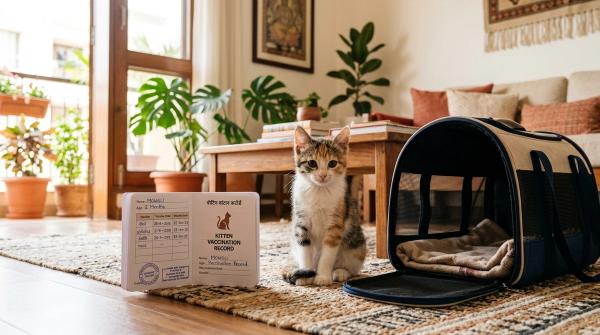
Use a secure carrier. A cloth shopping bag, open basket, or cardboard box is not safe for a frightened cat.
Take these with you:
- Adoption papers
- Vaccination records
- Deworming details, if available
- Previous medical notes
- Photos or videos of symptoms, if you noticed anything unusual
Ask the vet about:
- Vaccine record review
- Core vaccines, including FVRCP and rabies as advised by your vet
- Deworming status
- Flea and tick prevention
- Spay or neuter timing, if not already done
- Diet and weight
- Eye, skin, stool, appetite, breathing, or behaviour concerns
Be careful with vaccine records from informal adoptions. Sometimes dates are missing, stickers are not attached, or records are incomplete. Do not guess or restart vaccines on your own. Let the veterinarian decide what is valid and what your cat needs.
Warning Signs That Need a Veterinarian
#Some hiding, nervousness, and cautious eating can happen in the first few days. But certain signs should not be ignored.
Contact a veterinarian quickly if you notice:
- Not eating or drinking anything for more than 24 hours
- Straining to urinate
- Repeated litter box visits with little or no urine
- Crying while trying to urinate
- Severe lethargy
- Repeated vomiting
- Severe watery diarrhoea
- Breathing difficulty
- Collapse or extreme weakness
- Injury after a fall or escape attempt
Straining to urinate is especially urgent in male cats. If your cat is trying to pee but cannot, do not wait and watch. Call a vet immediately.
This guide is not for diagnosis or treatment. When in doubt, speak to your veterinarian.
Final Thoughts
#The first 30 days with an adopted cat are not about rushing affection. They are about building trust.
Your cat may not understand on day one that they are home. But every quiet meal, every clean litter box, every safe hiding spot, and every calm interaction teaches them that this new place is okay.
Go slowly. Keep the apartment safe. Follow a predictable routine. Let your cat come to you in their own time.
That is how a scared new arrival slowly becomes family.
Disclaimer: This article is for general pet-parent education only. It does not replace professional veterinary advice, diagnosis, dosage, or treatment. Always consult your local veterinarian for your cat’s specific needs.