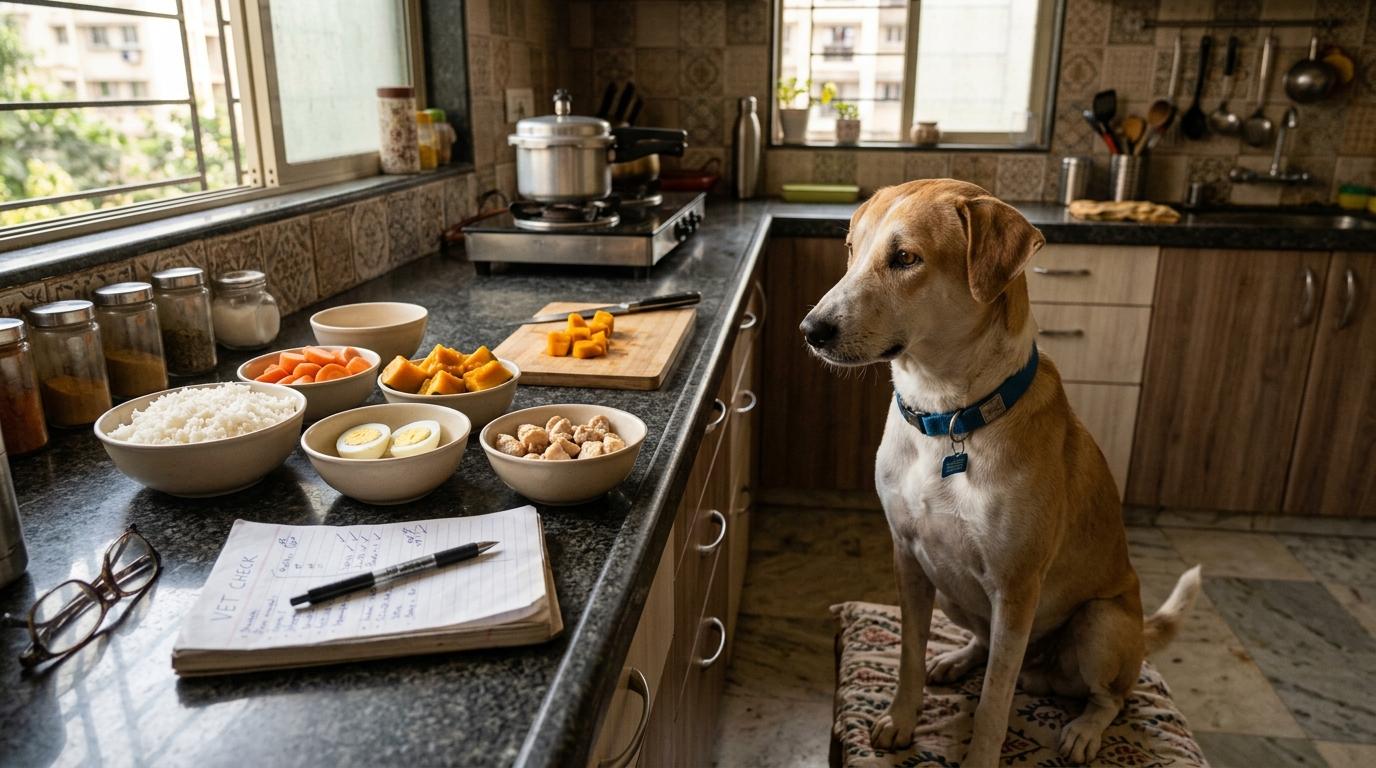
Homemade dog food in India can be safe when it is cooked separately, kept plain, balanced properly, and reviewed by a veterinarian or qualified pet nutritionist. Regular family food like dal, roti, sabzi, chicken curry, or curd rice is not automatically safe for dogs because it may contain onion, garlic, salt, oil, spices, or may be nutritionally incomplete.
Why Indian Dog Parents Love Homemade Food
#In many Indian homes, food is love. We show care by cooking fresh meals, saving soft rotis, and making something special when someone feels unwell. So when your dog sits near the kitchen while you cook rice, dal, eggs, or chicken, it feels natural to wonder if fresh homemade food is better.
It can be. But dogs are family, not humans. Their bodies do not handle food exactly the way ours do.
A safe homemade dog diet is not the same as putting leftovers into your dog’s bowl. A rice-and-chicken bowl may look healthy but still be nutritionally incomplete. A spoon of dal may feel harmless, but if it has onion, garlic, salt, chilli, tadka, or too much oil, it can be unsafe.
The better question is not whether homemade food is good or bad. The real question is whether it is cooked safely and checked for balance.
Why Regular Indian Family Food Is Usually Not Right for Dogs
#Most Indian food is cooked for flavour. We use onion, garlic, masala, salt, oil, ghee, tadka, chutneys, pickles, gravies, and sometimes sugar. For dogs, that can be a problem.
Common family foods that should not become your dog’s regular meal include dal with tadka, chicken curry, sabzi cooked with onion or garlic, biryani, pulao, paratha, curd rice with tempering, sweets, cakes, biscuits, and salty snacks.
Plain rice, plain chicken, plain curd, or plain vegetables may suit some dogs. The issue is how we cook them for ourselves.
If you want to feed Indian homemade dog food, cook it separately. Keep it plain: no salt, no chilli, no masala, no onion, no garlic, and no tadka. It may look boring to us, but for dogs, boring is often safer.
Safe Indian Kitchen Ingredients to Discuss With Your Vet
#Many everyday Indian kitchen ingredients can be safe for dogs when cooked simply and used in the right amount. These are not automatically a complete diet by themselves, but they may be part of a vet-reviewed homemade meal plan.
Plain cooked proteins
#Possible protein options include boiled chicken without skin, bones, salt, or masala; fully cooked boiled eggs; plain cooked fish with all bones removed; and small amounts of plain paneer or unsweetened curd if your dog tolerates dairy.
Chicken should always be cooked properly and served without bones. Eggs should be fully cooked. Fish needs extra care because tiny bones can easily be missed.
If your dog gets vomiting, loose motions, itching, gas, or discomfort after a new food, stop feeding it and speak to your vet.
Plain carbohydrates
#Common carbohydrate options include plain boiled white rice, plain brown rice if your dog digests it well, plain oats, and plain roti only if your dog tolerates wheat.
Plain roti is not toxic by itself, but it should not contain ghee, butter, salt, stuffing, or curry. Roti is also not complete dog food. It should not become the main diet unless your vet has approved a full plan.
Plain vegetables
#Some vegetables that may be used in dog meals include pumpkin, bottle gourd, carrot, green beans, cooked sweet potato, and cucumber cut into safe pieces.
Vegetables should be washed well. Many dogs digest them better boiled or steamed. Remove seeds, hard skins, and tough fibrous parts where needed. Avoid turning the meal into a random bowl of boiled sabzi; dogs need balance, not just volume.
Dog-safe fruits as occasional treats
#Some fruits can be given as small treats: apple slices with core and seeds removed, banana, watermelon without seeds or rind, and papaya without seeds and skin.
Fruit should be a treat, not a main meal. Too much fruit can upset the stomach or add unnecessary sugar.
Safe vs Unsafe Food Table
#Foods Dogs Should Not Eat
#Some foods are not just unhealthy for dogs; they can be dangerous. Veterinary and animal safety organisations commonly warn pet parents about several household foods that can harm dogs.
Onion and garlic
#Onion and garlic are unsafe for dogs, including powdered forms. This includes pyaaz, lahsun, onion paste, garlic paste, fried onions, onion-garlic masala, and gravies cooked with them.
This is one of the biggest risks in Indian kitchens because onion and garlic are used in dal, sabzi, chicken curry, egg curry, pulao, chutneys, and many snacks.
Grapes and raisins
#Grapes and raisins, or angoor and kishmish, are considered toxic to dogs. Raisins can hide in cakes, biscuits, sweets, trail mixes, festive food, and dry fruit boxes. Do not test whether your dog can tolerate them. Avoid them completely.
Chocolate
#Chocolate is unsafe for dogs. Dark chocolate and cocoa-rich desserts are especially concerning, but all chocolate should be kept away. Be careful with chocolate cake, brownies, chocolate biscuits, chocolate ice cream, cocoa powder, and children’s chocolate treats.
Xylitol
#Xylitol is an artificial sweetener found in some sugar-free products. It may be present in chewing gum, sugar-free sweets, some baked goods, some nut butters, and diet products. Always read labels before sharing packaged food.
Cooked bones
#Cooked bones can splinter and injure your dog’s mouth, throat, stomach, or intestines. Avoid chicken curry bones, tandoori chicken bones, mutton bones, fish bones, pressure-cooked bones, and bones from leftovers.
Alcohol, caffeine, and sweets
#Dogs should not have tea, coffee, alcohol, energy drinks, mithai, cake, ice cream, sweet biscuits, or sugary desserts. Many are too sugary, too fatty, or may contain unsafe ingredients.
If Your Dog Eats Something Toxic
#If your dog eats chocolate, grapes, raisins, onion, garlic, xylitol, cooked bones, or any unknown harmful food, contact a veterinarian or emergency pet clinic immediately.
Do not wait for symptoms. Keep details ready: what your dog ate, how much they may have eaten, when they ate it, your dog’s weight, symptoms, and the wrapper, packet, label, or ingredient photo.
Do not try home remedies. Do not force vomiting unless a veterinarian specifically tells you to.
Why a Vet Check Matters Before Switching Fully to Homemade Food
#A homemade diet can look healthy and still be incomplete. Fresh food feels better because you know what went into it, but fresh does not always mean balanced.
Dogs need the right amount of protein, fat, fibre, vitamins, minerals, and calories. They also need these nutrients in the right relationship to each other.
A rice-and-chicken diet may lack important minerals. A meat-heavy diet may not have the right calcium balance. Random leftovers change too much from day to day. Too many treats can disturb the whole diet.
Puppies, large-breed dogs, senior dogs, pregnant dogs, underweight dogs, overweight dogs, and dogs with kidney, skin, digestive, or allergy concerns need individual planning.
Before making homemade food your dog’s full-time diet, speak to a registered veterinarian or qualified veterinary nutritionist. Ask them to check whether the diet suits your dog’s age, weight, breed size, activity level, body condition, health history, and current food habits.
Do not add calcium, multivitamins, fish oils, powders, or immunity boosters on your own. More is not always better.
Why This Guide Does Not Recommend Raw Diets
#This guide does not recommend raw diets. Veterinary safety guidance commonly cautions against feeding raw or undercooked animal products because of bacterial risks that can affect pets and people handling the food.
This matters in Indian homes and apartments where the same sink, fridge, counter, knife, chopping board, and utensils may be used by the whole family.
If you feed meat, cook it thoroughly and keep it plain. After handling meat, wash your hands, utensils, chopping boards, and kitchen surfaces properly.
Indian Home Kitchen Safety Checklist
#Before putting anything in your dog’s bowl, ask:
- Was this cooked separately for my dog?
- Is it free from onion and garlic?
- Is it free from salt, chilli, masala, tadka, sauces, and excess oil?
- Are all bones, seeds, pits, and hard parts removed?
- Is the meat fully cooked?
- Is this suitable for my dog’s age and health?
- Has a vet reviewed the full diet if I am feeding this daily?
If the answer is no, pause. One bite may feel small, but daily habits add up.
When Homemade Dog Food May Be a Good Fit
#Homemade food may work well if you have time to cook separately, your family can follow strict no-scrap rules, you are willing to keep the diet consistent, and you can work with a vet or nutritionist.
It may not be the right choice if you need something quick, flexible, and low-planning. In that case, a good commercial dog food or a mixed plan discussed with your vet may be easier and safer.
Some dogs do well on commercial food. Some do well on vet-planned homemade food. Some may need a mix. The safest diet is the one that is complete, suitable, and practical enough to follow every day.
Final Takeaway
#Homemade dog food in India can be safe, loving, and practical, but it needs more care than sharing family food. Use plain dog-safe ingredients, avoid toxic foods completely, skip raw diets, and consult a veterinarian or qualified pet nutritionist before making homemade food your dog’s full-time diet.
Fresh food is a good start. Safe, balanced, vet-checked food is the real goal.
This article is educational and not a substitute for professional veterinary advice, diagnosis, or treatment. Always consult your veterinarian before changing your dog’s diet, especially if your dog is a puppy, senior, pregnant, underweight, overweight, or has any existing health condition.